Dr. Anyaoku on Harmful Bias in Healthcare
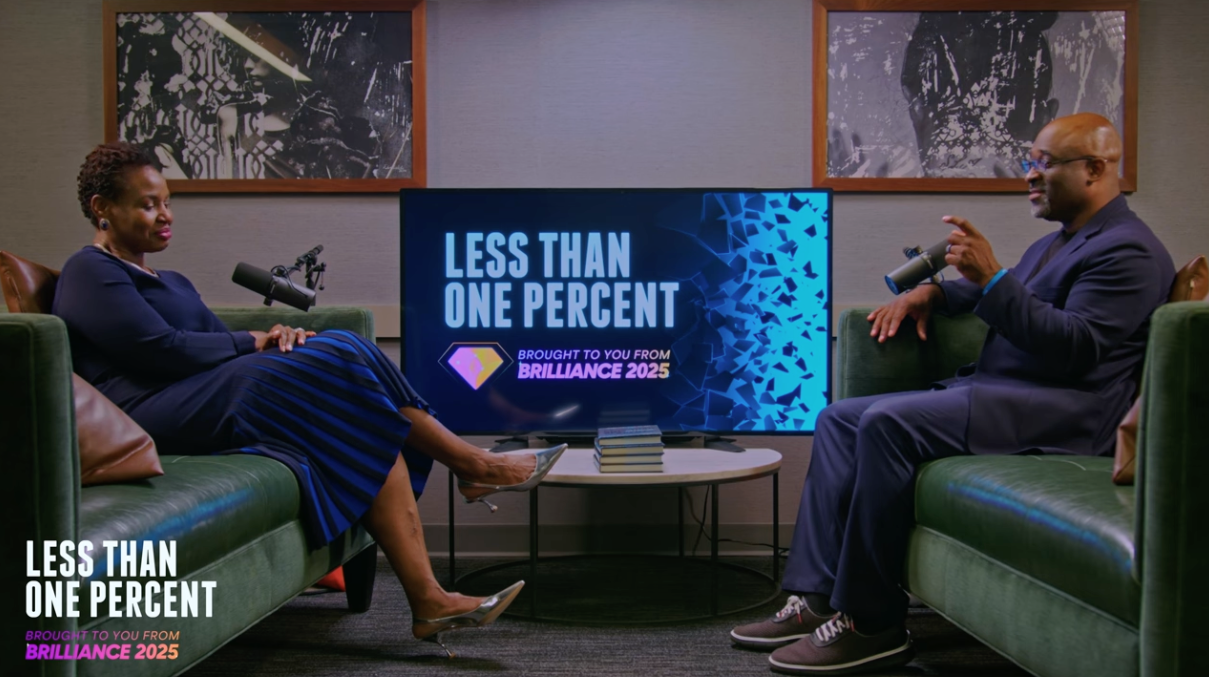
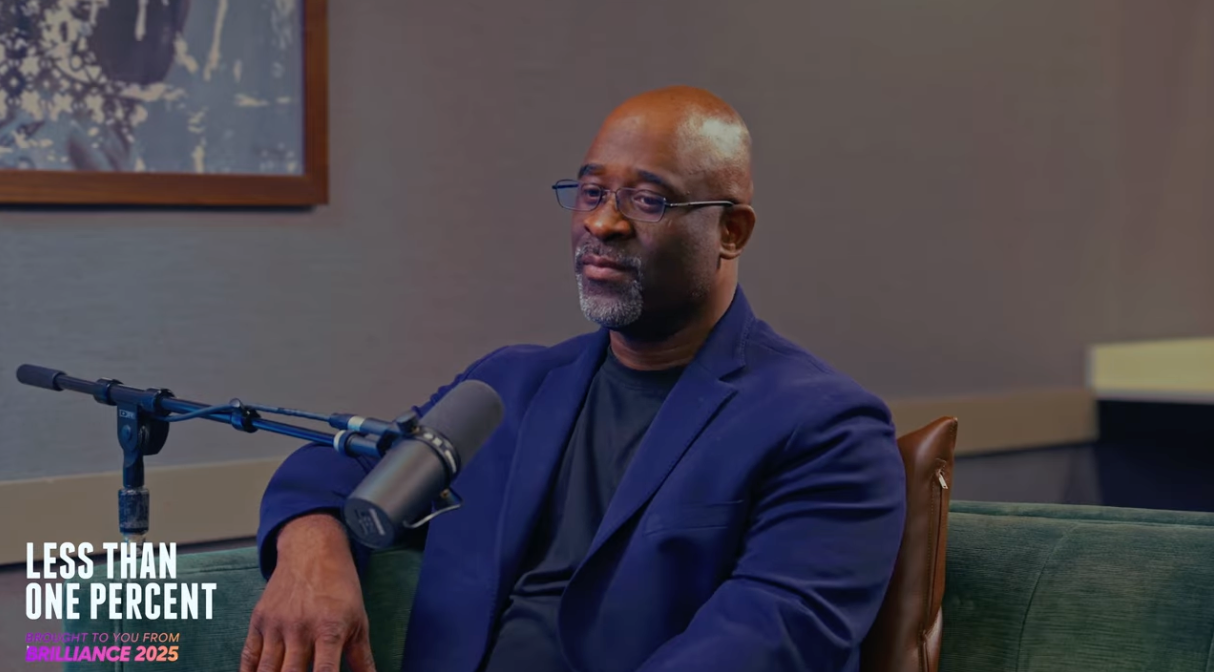
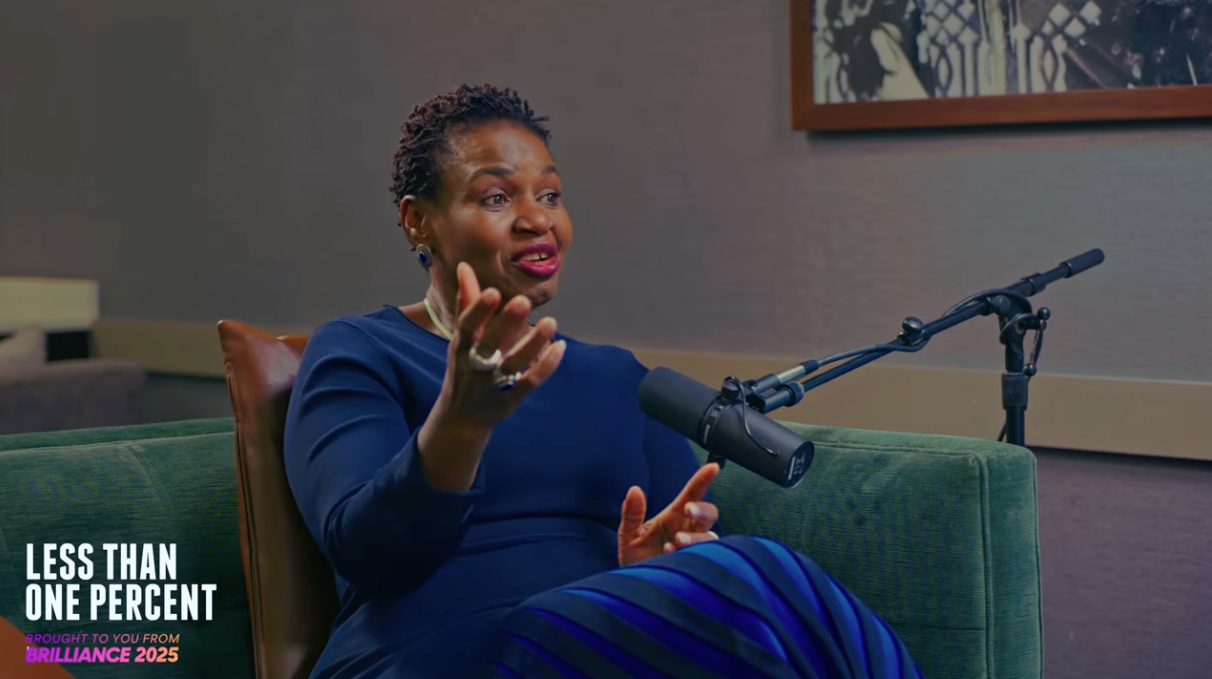
In this Brilliance Series episode of the Less Than One Percent Podcast, recorded live at Brilliance 2025 in Chicago, Mu sits down with Dr. Nwando Anyaoku, physician executive, leadership coach, and advocate for equity in healthcare. From navigating leadership as a Black woman in medicine to confronting bias head-on, Dr. Anyaoku reflects on pivotal moments that shaped her career and what they reveal about the system. This is how Dr. Nwando Anyaoku disrupted the narrative, by challenging inequities, owning her story, and pushing leaders to rethink what healthcare leadership should look like.
Also listen on:





Timestamps
Transcript

02:18
And there's more there.
2:21
Well, so my big boys, my jumbo shrimp, I
2:24
call them. Um,
2:28
uh, they are my world, as you can
2:30
imagine. Um, uh, they are everything and
2:34
they inspire everything that I do, which
2:37
they wouldn't believe cuz, you know,
2:39
we're always at it
2:41
as kids are. But, you know, coming
2:44
through as a as a physician in in
2:47
America, a black woman in America,
2:50
raising two black men in America, um,
2:54
gives you a different sensibility to
2:57
the, you know, people talk about when
2:58
you have children, it's like your heart
3:00
walking outside your body
3:02
all the time and in the way that you're
3:04
anxious and worried about
3:06
and and I think when you're raising
3:08
black men, that's a whole other level of
3:09
anxiety. And um and thinking about how
3:13
the healthare system, how they interact
3:15
with it, how it interacts with them, how
3:17
the world interacts with them.
3:19
You know, makes me think about how can
3:21
we get people to see an individual. You
3:25
know, my boys are big. And when people
3:27
see big mind, they're like, "Oh, he's
3:29
scary. Can I?" But I'm not there to tell
3:31
them that they're gentle giant. I'm not
3:34
there to tell them they're kind and that
3:36
they are considerate and that they're
3:40
caring about people. People just see
3:43
these two big people and and that's kind
3:45
of the essence that you worry about when
3:48
we talk about disparities and and
3:50
inequities because people assume things
3:52
about others and we engage with them
3:54
based on our assumptions. And so how do
3:57
we make sure that you actually, you
3:59
know, don't think about equity or
4:02
inclusivity as some generic thing, but
4:04
really think about it as understanding
4:06
the person in front of you and their
4:08
value as a human being just there and
4:11
just engaging with that person. That's
4:13
what I think about and that's the energy
4:15
that I I get. Well, that was the energy
4:18
I saw and it was the same energy
4:20
uh that I have, you know, with my kids.
4:23
And I told I told my wife we should
4:25
never have kids. If I get to come back
4:27
in my next life, I don't I don't want to
4:29
cuz I don't want to feel like that about
4:31
anything. There's just I don't want to
4:33
do that. You and and don't tell anybody,
4:36
okay,
4:36
that when I was on stage, I got choked
4:38
up. Don't do that, okay? Cuz
4:41
that wasn't supposed to happen.
4:41
It'll be our secret.
04:43
Yeah. Um,
4:45
are you are you are you tired of
4:48
healthcare leadership?
4:50
I know that's a loaded question and I'm
4:52
going to get back to Rhonda. You have a
4:55
long So, she has a long history of
4:58
amazing healthcare leadership, but is
5:01
there is there did you need a break from
5:03
it? Did it did it did it
5:07
I I don't know quite how to answer that
5:10
question. I think healthcare leadership
5:12
in the way that a lot of us have been
5:14
doing it feels like admiring the
5:16
problem.
5:18
It feels like we pick it up every
5:19
morning, we turn it over and we're like,
5:21
"This is bad. Maybe we should do this."
5:23
And then we turn it over and we put it
5:24
back down. And then we have another
5:26
huddle and then we pick up the problem
5:27
and we turn it over.
5:29
And and I really think that to the
5:31
essence of the conversation today,
5:32
disruption is necessary.
5:34
We need to re-imag what healthcare 3.0
5:37
should look like. And who better to do
5:39
it than those of us who are already in
5:41
it, who've been part of the front lines.
5:43
But it's hard to reinvent when you're
5:45
sitting right there because you know the
5:48
structure is designed to protect and
5:50
improve status quo. And if you're trying
5:53
to disrupt, you sort of have to step
5:55
away from it and then look back at it
5:57
with new eyes. And new eyes informed by
5:59
your history, new eyes informed by your
6:01
experience. And so I don't know that I'm
6:03
tired of it. I think it needs new eyes.
6:06
It needs a new way. And you what you say
6:08
new eyes um but you also want to
6:12
educate. You mean I know that you you
6:16
want to do coaching or you are doing
6:17
coaching
6:18
and so when you are you advising
6:21
healthcare leaders or is it just
6:22
physicians in general or is it anybody?
6:25
I advise and coach leaders, healthcare
6:29
leaders, business leaders particularly
6:31
women. Um, and the reason I do that is
6:34
because I think that, like I said, we
6:36
need to look at it with new eyes, but
6:38
those new eyes need to be informed by
6:40
our experiences. And so I want people
6:42
who have been, you know, trying to make
6:44
it work to say, hey, I actually have
6:47
within me the knowledge, the expertise,
6:50
and the experience to actually pivot to
6:52
look at these things a different way.
6:54
And particularly for women leaders, they
6:56
struggle with the story. How do you tell
6:59
the story of all that you bring to the
7:01
table? How do you use that to to get
7:04
yourself hurt? That's a problem. Um, how
7:07
do you make sure that your experience is
7:10
not dropped behind the couch, right?
7:12
That that everything that you've learned
7:14
along the way is of service to this new
7:16
world that we're trying to create. Um,
7:18
so you know, people who are in
7:20
technology trying to get into health
7:22
systems, have you thought about the
7:23
people who are going to use this, the
7:25
patient as well as the physicians, as
7:27
well as the business decision makers?
7:29
Have you thought about that whole
7:30
continuum of people who you want to look
7:32
at your product and and the problem that
7:34
you're trying to solve?
07:35
And so I think
7:36
that for me it's really a passion work
7:39
to have people understand that all that
7:42
they bring is valuable to the next step.
7:44
So, if I'm I'm a I'm a I'm for pretend
7:48
I'm a young woman. Um I'm then let's say
7:50
I'm at a middle manager, you know, maybe
7:53
I'm a um you know, I'm an ED director or
7:57
you know, a unit director um or
8:00
something like that or I'm a VP, you
8:03
know, on the operations side.
8:04
Yeah. you've been through a lot and I
8:08
know you're not somebody who hold
8:10
grudges or you know um dwell on bad
8:14
things that have happened to you. That's
8:15
not your personality.
8:17
But you've had you probably I anticipate
8:19
had some experiences where people
8:21
treated you poorly as a black woman
8:23
leader in healthcare.
8:25
Yeah.
8:25
You know I mean so I want to ask two
8:28
questions. one, could you tell me about
8:30
it some one of those times if you could?
8:32
And then what would you advise,
8:35
you know, young leaders that know that
8:38
that's coming and how to deal with that?
8:42
Sorry.
8:42
Yeah, we're going to need more wine.
8:45
Wait, you haven't got no wine yet.
8:47
Okay,
8:47
so let's get some wine. Let's get some
8:49
wine.
8:50
Um, you know, I think the first
8:53
statement you made is correct. I don't
8:55
dwell on negativity. I think whatever
8:58
happens to you is education. It's all
9:00
information, right? So if people come
9:04
into your space and they judge you
9:06
because of whatever they their
9:08
predisposition was, you can't control
9:10
that. What you can control is how do you
9:12
engage? How do you show up? And how do
9:15
you show them that they're wrong? And
9:16
sometimes, you know, you can, sometimes
9:19
you can't. But you always have to be
9:21
true to yourself, your why, and your
9:23
integrity. And so, oh boy, in this long
9:27
journey that I have, I don't even know
9:29
how I could pick one example.
9:30
But tell me, tell me one that I mean, I
9:32
want to I want to know the one that
9:35
sticks with you the most cuz I think be
9:38
and the reason I'm going there is
9:40
because I think it's theoretic for
9:42
people. I think it's sort of a, you
9:44
know, it's like me getting pulled over
9:46
at gunpoint on the ground in my own
9:49
neighborhood thinking I'm going to die.
9:50
Yeah.
9:51
Like it's just theoretic. you start
9:52
talking about this and that, but when
9:54
people tell the story of what happened
9:55
to them, you're like, that's terrible.
9:57
So that's
9:59
I guess the one that comes to mind right
10:02
at this moment would be when my
10:04
compensation was questioned, right? I
10:06
was told, yeah, we're, you know, we're
10:08
doing this new comp model, but
10:11
if we use it, you've been so productive
10:14
that if we use it the way that we
10:16
envision it, you're going to get paid
10:17
too much.
10:18
Like too much for what?
10:20
Yeah.
10:20
Too much for who? Yeah,
10:21
right. Because clearly I should not make
10:24
all of that in their perspective
10:26
and you know and had looked at me in my
10:30
face and said if you want to make more
10:32
money you need to work you need to
10:34
consider working harder. And I thought
10:36
I'm already grinding
10:39
top of the rung.
10:40
I am maxed out. I'm you know leaving my
10:44
children in the morning to get to work
10:46
and then go back and take them to you
10:47
know I'm doing you want me to work
10:49
harder. Um,
10:52
and I realized that that narrative
10:54
repeated not just for me, but for the
10:57
three other black women in our group,
10:59
not for anybody else.
11:00
Wow.
11:01
And I don't even know if they realize
11:02
that that's what happened. But within a
11:06
year, all of us were gone
11:08
because you they people can tell you
11:11
whatever they tell you, but the way they
11:13
treat you shows you how whether you're
11:15
valued or not. Yeah.
11:16
And um and that's, you know, you look at
11:19
it and and the lesson I took from that
11:21
is to never let myself be defined by
11:24
someone else.
11:25
To make sure I tell my story in a way
11:27
that gives the narrative that I want so
11:30
that people understand my impact, so
11:32
people understand the value that I bring
11:34
because nobody's going to look for it. I
11:36
have to actually tell them. And you
11:38
know, especially and this is part of the
11:40
reason why I love to work with women
11:41
leaders. We've grown up with being
11:43
taught to be modest and to not, you
11:46
know, talk too much and not all of those
11:48
things. Just keep your head down, your
11:50
work will speak for you. Yeah. Work does
11:53
not speak. You have to speak. And that's
11:55
something that many of us have to learn.
11:58
And so, like I said, every experience
12:00
that happens, I take it as an education.
12:02
What did I learn from that? Speak. Tell
12:04
people what you do. So that in telling
12:06
them, a you're telling yourself, but b
12:09
you're keeping the record straight.
12:10
Yeah. I mean, that's great, great
12:12
advice. Great advice, frankly, to
12:14
anybody. Even when you know that the
12:16
thing, the bad thing is going to happen.
12:18
I love the idea of telling your own
12:19
narrative.
12:20
Yeah.
12:20
I've I I think I shared um or maybe I
12:24
didn't share this with you. Um I share
12:26
this a lot. just my development, my
12:29
growth as a leader
12:31
and me hiding parts of myself. Um, you
12:34
know, forever. Like I've been in it nine
12:36
years and I still haven't fully exposed
12:39
who Truly Moo is, but I mean I think
12:41
things like the podcast, my book, um, I
12:45
kept all those things hidden and
12:47
separate, but they're actually part of
12:49
me as a leader. And it took some people
12:51
to say, "Hey, this is good stuff." Or,
12:53
you know, keep going. So, I I love that
12:55
that you're um doing that for for up and
12:58
cominging leaders. So, something I ask
13:01
Oh, you had some.
13:02
Yeah. I I wanted to say that sometimes
13:03
people worry about telling their story
13:06
because they're like, "Well, maybe
13:07
nobody cares." You know, I was talking
13:08
to a lady as I was coming out of the
13:10
session and she said, "Well, I'm brash
13:12
and loud and so I don't want to be brash
13:14
and loud." I'm like, "There's somebody
13:16
out there who's brash and loud who needs
13:17
to hear from you." Yes. That brash and
13:19
loud girls can do well, too. Right. and
13:21
they and and your particular narrative
13:23
is of importance to somebody and to some
13:26
subset of the populations and you're not
13:27
going to know if you don't share it,
13:29
right? And so I I think it's really
13:31
important that whatever it is you bring
13:33
that is your journey and somebody needs
13:35
to hear it.
13:37
Um something I ask everybody um
13:39
superpower.
13:42
Do you have a superpower? Do you know
13:42
what it is? Um it can't be your own
13:45
time. It can't be something simple. has
13:47
to be something unique to you that no
13:49
one else can do as well as you do.
13:52
I will tell you that my superpower is
13:54
taking complex ideas and breaking it
13:56
down so they're accessible. I can
13:59
explain anything to anyone.
14:01
Um, and I didn't actually always realize
14:04
that because early in my career, I I
14:07
judged myself for not using all the big
14:10
words and the corporate words that
14:11
everybody else used. And I'm like, "Oh,
14:13
I guess I should say it in this way,
14:15
right?" And then I realized that
14:17
actually I can take all of that distill
14:20
it down and feel oh that's what they
14:21
meant. I'm like yeah that's what they
14:22
meant. It means do this in this way and
14:24
people it becomes accessible it becomes
14:27
actionable and that applies whether I'm
14:29
talking about clinical care or
14:30
operational leadership or AI governance
14:33
you know how do you take complicated
14:35
concepts and make it accessible to
14:37
people? That's my superpower. I
14:35
I
14:39
I want to know your impression of the
14:41
conference so far. What do you think of
14:42
the conference so far?
14:43
I think it's fantastic. I mean, I as I
14:46
was getting ready to come here, I
14:47
wondered if there was anything else like
14:48
this out there, like a gathering for
14:51
women, for women leaders, right? You
14:53
know, like I said, that's a it's a
14:55
uniquely challenging space. And just
14:58
seeing over 200 women here cheering each
15:01
other along, saying, "I I see you. You
15:04
get me. You understand my struggle."
15:06
It's just been absolutely phenomenal.
15:08
And it's only halfway.
15:10
Yeah.
15:10
It's been amazing.
15:11
Yeah. And you still have you still have
15:12
your your breakout.
15:13
Yes. No, I I think I I do think it is
15:16
unique because of the focus. I think
15:20
that there are other conferences that I
15:22
think people it's almost like
15:25
conferences are built to make money and
15:27
so they're like, "Oh, let's put women in
15:29
there. Oh, let's put it, you know, this
15:31
in there or that in there." And I think
15:33
that this is, I think, going to be one
15:35
that hopefully is just focused on
15:37
bringing value uh to the people that
15:39
that that come, you know. We appreciate
15:41
it on behalf of all the women.
15:43
Oh, that's awesome. I apprec Yeah. And I
15:45
I like I said, I lost it on stage
15:46
because, you know, it's it's a passion
15:49
of mine and it's weird because I'm not a
15:51
woman.
15:52
Well,
15:52
and uh
15:53
we need allies.
15:54
Yeah. Yeah. It's weird. It's weird how
15:55
passionate it is when you guys know. I
15:57
mean, this is not this is not something
15:59
that we need to do, but we need to do
16:03
it. You know what I mean? So,
16:04
so what would you want to leave? uh
16:08
people are look you know seeing this
16:09
podcast you this is going to be put
16:11
together with several of the other
16:13
amazing leaders that were on stage
16:14
today. What one thing would you want to
16:16
leave you know people and not just women
16:19
frankly and you know anybody who would
16:21
who would watch this.
16:23
I want people to know that
16:26
the world is changing healthcare is
16:28
changing and your unique history and
16:31
story is necessary to define where we're
16:33
going. M
16:34
so tell your story, capture it and tell
16:36
your story.
16:38
That's awesome. That's that's simple.
16:40
Awesome. Amazing. Dr. Wando Aneka. I say
16:43
that
16:44
mess it up that way.
16:46
Let me say it again. Say say it for me
16:48
again.
16:48
Dr. Wando Anoku.
16:50
Okay, that's good. Okay.
16:53
Thank you so much. Amazing. Dr. Wando
16:56
Anyoku. There you go.
16:57
Anyu.
17:00
Dr. Enyoku. Dr. Anyoku.
17:01
There you go.
17:02
Dr. Wando and Yokub uh here on on
17:06
Brilliance
17:07
but also on the less than 1% podcast.
Key Takeaways
- Equity and inclusivity are not simply “boxes” to check.
- Your past, present, and future are more valuable than you think.
- Your work cannot speak, but you can.
Share with a friend
Episode Guests
Dr. Nwando Anyaoku
Dr. Nwando Anyaoku is a nationally recognized physician executive, executive coach, and strategic advisor based in Seattle. With over two decades of experience in clinical operations, health system leadership, and executive development she empowers organizations and leaders to thrive in dynamic and complex environments.
A board certified pediatrician, Dr. Anyaoku brings a systems-thinking approach to healthcare transformation, leadership development, and organizational performance. She has served in senior executive roles across large healthcare systems at the intersection of clinical care, business strategy, and innovation most recently as Chief Health Equity and Clinical Innovation Officer for Providence, a $26bn health system spanning 7 states.
Dr Anyaoku has advised global technology companies on the voice of the customer, helping the tech industry understand and navigate barriers to adoption and implementation of new and existing technologies offering insight into the thinking of both decision makers and end users. She is deeply committed to leadership excellence and has mentored, coached, and advised physicians, health executives, and startup founders.
A two-time TEDx speaker and respected national voice, Dr. Anyaoku is passionate about reimagining healthcare through inclusive leadership, bold innovation, and purposeful strategy. She holds an MD from the University of Nigeria, an MPH from Johns Hopkins Bloomberg School of Public Health, and an MBA from the University of Washington Foster School of Business.
Visit https://nwandoanyaoku.com/ to learn more.
