How Disruptors Think: Lessons in Leadership from Charlene Li
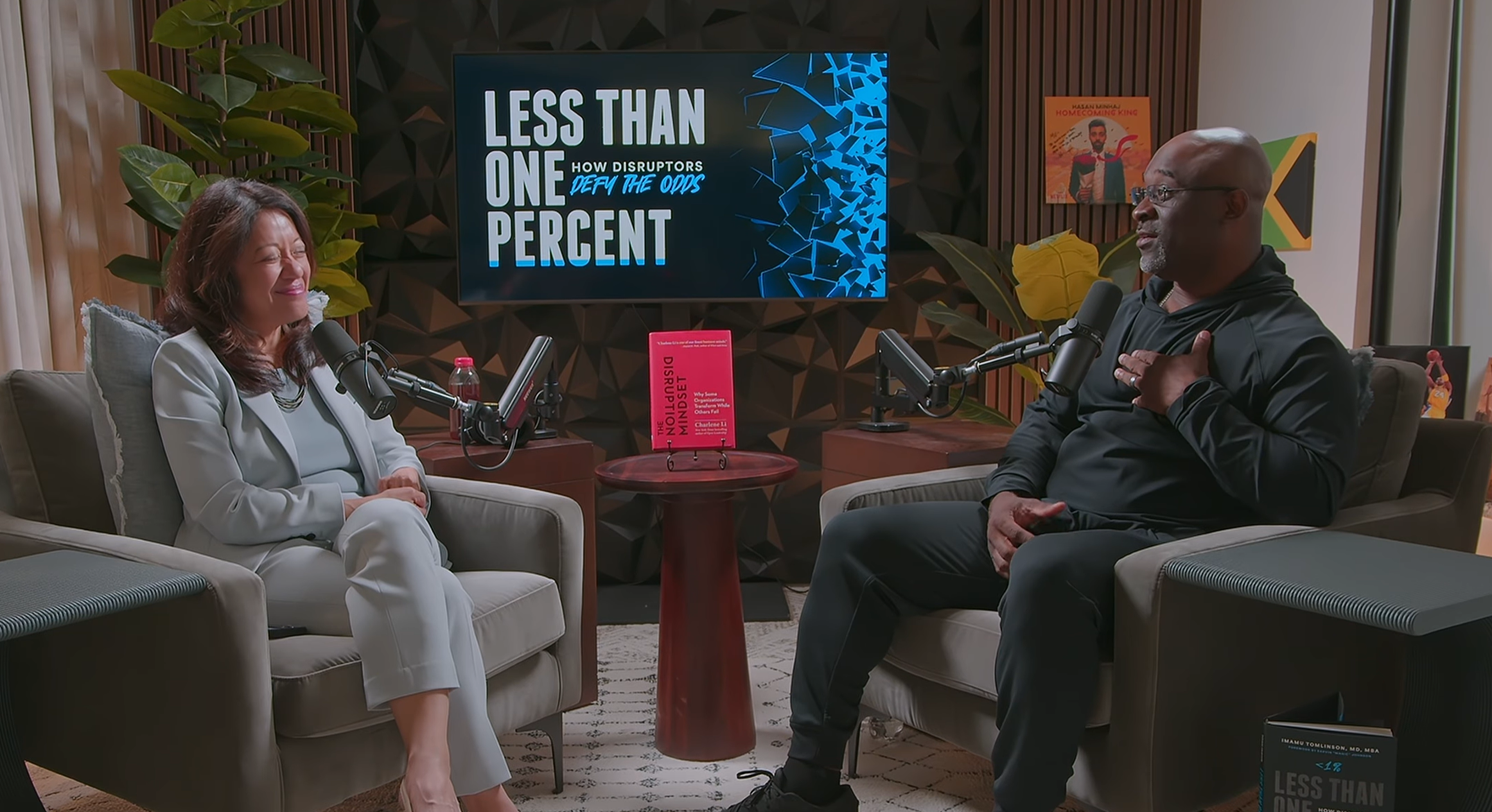
If your palms aren’t sweaty, are you disrupting hard enough? In this episode of Less Than One Percent, Dr. Imamu Tomlinson sits down with Charlene Li, renowned disruption strategist, bestselling author, and one of the most influential voices in digital leadership. From the boardrooms of Silicon Valley to the pages of her game-changing books, Charlene has spent her career breaking boundaries and reimagining what is possible.
They explore how disruption is a learned skill, why confidence is the difference between anxiety and excitement, and how to lead teams through bold, necessary change. Charlene shares how her lived experience as an Asian American woman shaped her voice in rooms where she was often the only one, and how her calm, focused approach makes her a force for lasting impact.
This is how Charlene Li disrupted disruption, by simplifying complexity, building resilient teams, and turning chaos into clarity.
Also listen on:

All Clips
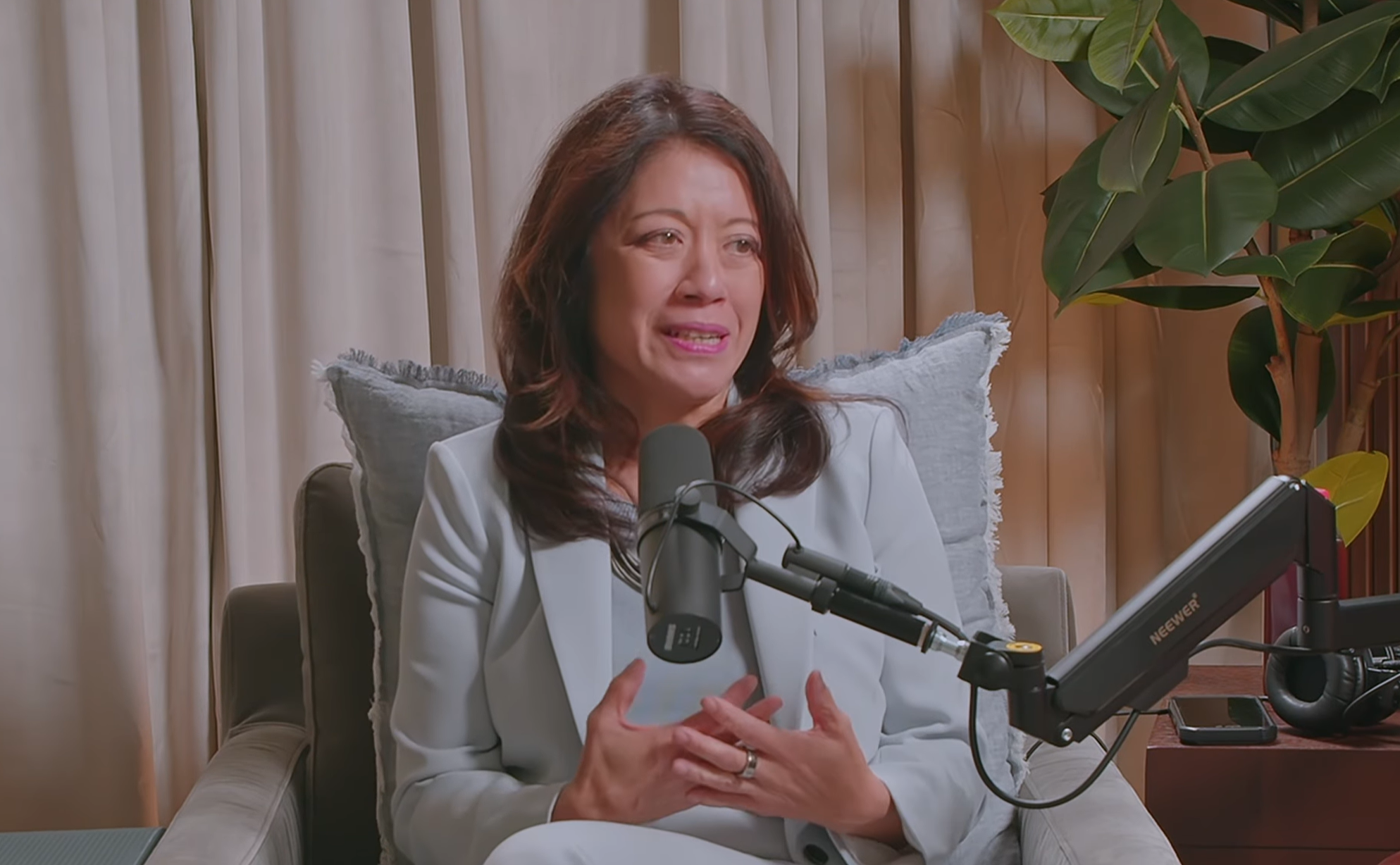

Meet Charlene Li
Why Charlene raised her hand
How Charlene would disrupt healthcare
The three questions you must always answer
Charlene’s superpower
Life is full of big gulp decisions
The difference between anxiety and excitement
Why being a disruptor is sometimes lonely
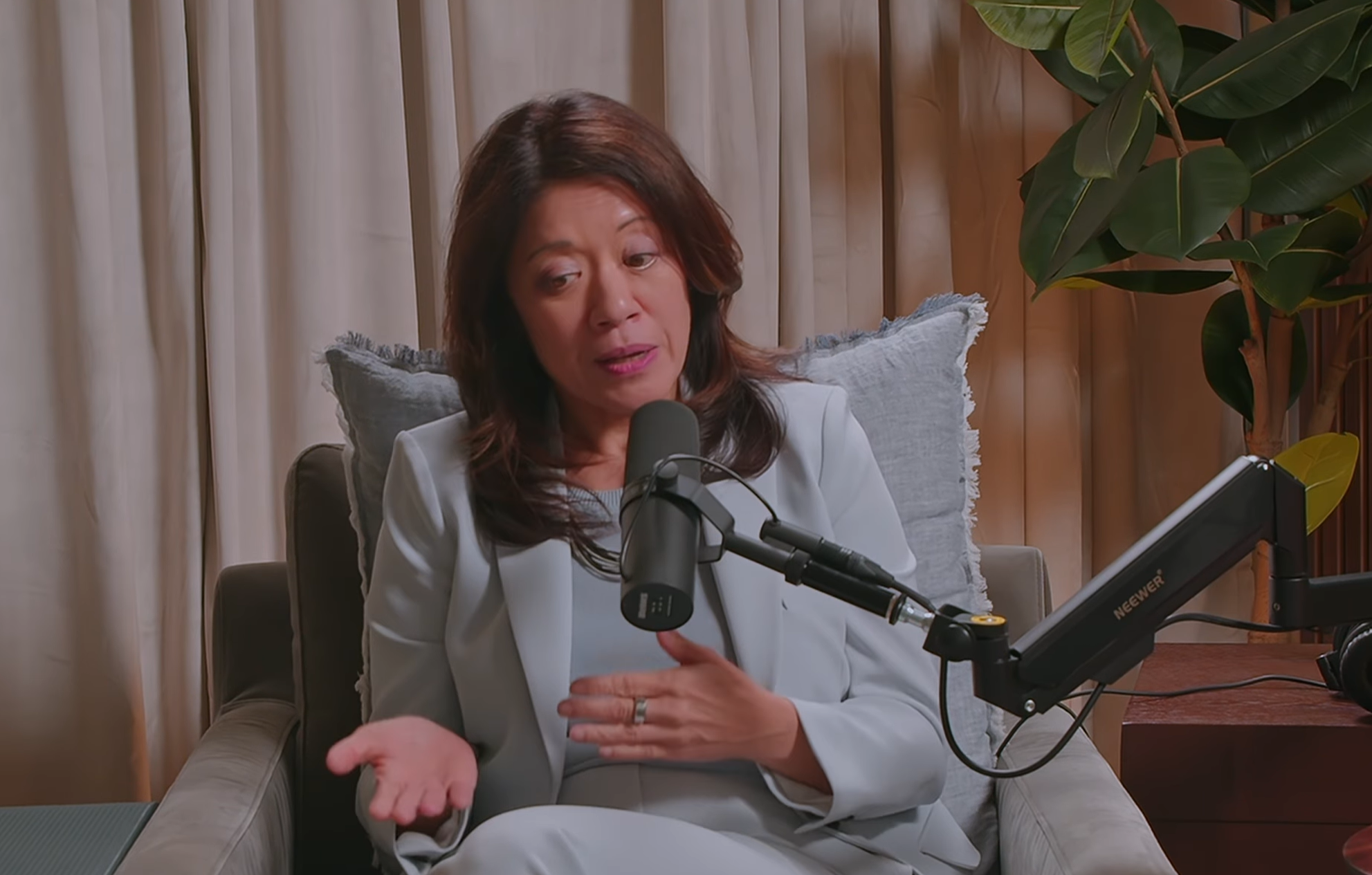
Closing thoughts: Think of disruption with a positive attitude
Be part of Brilliance 2025 in November

Timestamps
Transcript
4:06
be this way. So how could it be different, better, but in particular better? This is not about disrupting and
4:12
disagreeing just to disagree. So there's a difference, right? We all run across disagreeable people. And
4:19
they're annoying because they're annoying as heck because they're just being disruptive for the sake of being
4:26
disruptive to call attention to themselves, right? It is not from a place of trying to make
4:32
things better, to make someone else better, to make themselves better, to make the world better, a situation better, a person better. So
4:38
disagreeableness is focused disagreeableness, right? Focus disruption to an ends. It is a
4:47
means. Is it a positive? Is it a positive process? Uh well I I look at disruption as being
4:53
neutral. Right? It is neither negative or positive. It is how you deal with it.
4:59
How you look at it that makes it a positive uh so I think one of the things
5:05
we'll talk about is optimism. So I if you are looking at disruption as a way
5:11
to build something to say again this isn't this is the way we do things around here why why do we
5:20
do things around here this way right let's question that is this the best way could we be doing it differently that by
5:26
definition is disagreeable it's disruptive and people just like like
5:31
rolling their eyes back going like again you're doing this again and the the
5:36
tolerance for that versus oh well that's a good question. Why do
5:42
we do things this way? How could we be doing things differently? So I think from a young age I I was always
5:48
constantly saying well why does that happen? Why does this why do we do this? And I remember
5:54
I like those kids you know just like why why why and I would sit in their station wagon. It was a, you know, Country
6:00
Squire Ford station wagon with the wood paneling. And I'd be like, I wish I could have I could tell the car a little
6:07
dashboard. This is like ages ago saying, I wish I could just the car could just drive itself. My parents could push a
6:13
button, swivel those seats around, and talk to me. We're at that age now. Wow. But it was imagine like, what if my
6:20
parents didn't have to drive? The car could drive themselves and we could have more families. Right. Right. That's disagreeable, disruptive
6:27
thinking. Yeah. That's amazing. Well, do you take credit for the self-driving
6:35
Whimos? Um, but but it's again, I think it's that ability to think about what could play
6:41
possible and then saying in order for the possible to happen, you have to blow up the present.
6:48
Now, you're you're not just a I kind of joke with a lot of authors. There are
6:54
there I think there's two types of authors in the non-fiction you know business be better space as I
7:00
call it right there's people who are professors and theory and I you know
7:06
studyers and then there's people who have done it um and then study it which
7:12
I think in some ways um gives you a little bit I wouldn't say credence it
7:18
gives you more of an understanding of how things so you're pretty accomplished
7:24
before these theories. Can you tell us about I mean you you you're not you know I was saying you're not just a you're
7:30
not just a participant you're also the president. Yeah. Um well I again I've been writing
7:37
as an analyst since 1999. Wow. So um and even before then I came out of
7:42
business school in 1993. I came out of Harvard Business School and decided to go into the exciting thrilling business
7:48
of newspapers. People like, "What are you doing?" And I went, it was 1993. The world the
7:55
worldwide web had just been invented. I went to Silicon Valley and said, "I'm going to be at the front edge of
8:01
disruption. I'm going to be at a company that is going to be disrupted. Newspapers are going to go online and
8:07
the entire business model is going to change." And I went, there aren't very many places where it was going to happen as
8:14
quickly. And also the mission and the purpose of newspapers of journalism is extremely important to our society.
8:20
Right? So how are we going to preserve that mission and change the business model at
8:26
the same time? So I I went in there got my hands dirty. I did that for 5 years and then became
8:32
an analyst began studying the internet and how it would change our world. And so I've been blogging since 2004.
8:40
You've been doing it for a while. Long time now. and uh wrote literally one of the first books on how companies
8:45
can use social media. So I just kept looking at coverage areas and as soon as
8:50
it got uh you know developed I would hand it over to somebody and go people like you don't want to do this anymore
8:56
like I've been there done that I want to look at the new stuff. You're in that disruptive space where you you like the change moment you don't
9:03
once it's at steady state it not very interesting anymore change agent. So again, we and then I was an
9:11
analyst for at at Forest for almost 10 years and I had just done pretty much everything and and I wanted to do
9:18
something different. I wanted to write in a different way and my vision of how the work should be done was very
9:23
different than Foresters. I'm like with all due respect, I'm going to go off and do my own thing. So again, there are
9:29
behemoths in that space. you have Gartner Forester or IDC and then there
9:34
was me like how am I going to carve a path and so I decided we had to be
9:39
disruptive so looking at a blue ocean strategy where could we go that no one else could
9:45
go like we would give the research away for free wow cuz they could never follow us
9:51
and we would write in a way that was very disruptive instead of doing it by role we would write across the entire
9:57
organization because disruption does not know departmental bound challenges. And so we would find a problem and dig dig
10:04
dig deep into it with design thinking. What is the actual problem here and then we go and address that problem three
10:11
layers down and we use social media to blast the doors off of it. And so we get a 100,000 readers versus typically five
10:18
or 10,000 for a typical forestry report. So we have 10x readers. I need a fraction of them to convert. And when
10:25
they converted, they would literally call us up and go, "Have you been sitting in my boardroom?" Have you been
10:30
looking over my shoulder? How did you know I had this problem? So, we went and solved those problems very specifically
10:38
that we wanted to solve. I think I need to get my pen. I see why nobody's reading my stuff. But,
10:46
can I ask you a a personal question? Yeah. So
10:52
as a woman, I mean, how did that how was that received? I mean, were you did that
11:00
change the way disruption your disruptions were received? Did it um you
11:07
know, was it better? Was it worse? Well, I'll just give the people who are listening to this. I'm an AsianAmerican
11:13
woman and growing up in Detroit. Okay. There weren't very many people who look
11:18
like me. Yeah. So, I walked into a room, I was a disruption from from the beginning of my
11:26
life. I was the only person of color. Wow. So, just just you being there,
11:31
you were already declaring yourself as a disruption. And so I kind of got used to the fact that I was the only in the
11:38
room. And it was a disruption every single time I raised my hand because it
11:43
for me it was finding myself in a room where I was the only only woman, only
11:50
person of color amongst a literally room of white shirts and ties, everybody looking the same.
11:57
and and so it was really hard for me to get that confidence to be able to raise
12:02
my hand. Um but also to realize that this is the only way I was going to advance that the only way for me to get
12:11
my ideas across was to raise my hand when I felt completely unsure, felt like
12:16
I was disruptive, had no right to be there, imposter syndrome, name all those things. And I got used to it.
12:22
Yeah, you there's several things you told me that struck me. One is you you
12:28
aren't talking about you're talking about impacting the world. You talked about as a kid the why
12:33
person like why can't cars drive? I mean thinking about cars driving is um
12:39
thinking about impacting the world. Well, what's your motivation behind you know writing the book and the impact you
12:46
want to have? What what drives you? Well, my purpose is to catalyze transformation to maximize human
12:52
potential. Okay. You've thought about it. I've thought about this. I've thought about it a lot and organizations and
12:59
work. What we're doing here is maximizing human potential. So it is just one of the avenues to be able to do
13:05
that. I mean why else do we come together and form organizations because together we can do things that we could
13:10
never accomplish, never aspire to as individuals. And so we agree to come and spend a
13:17
substantial part of our time in alignment with a purpose and the mission. M
13:23
and so if people are going to put their time and energy and their souls into the
13:28
work that they do, then let's make it meaningful. Let's maximize people. Let's
13:33
maximize the time that we spend together. And the best way I can see to solve the myriad of problems we have in
13:40
this world is to disrupt it. Not to incrementally solve the problems because the problems are way too big for us to
13:47
do it incrementally. We have to disrupt our way to success. Okay. Uh you're giving me goosebumps. So
13:55
one of the things I say is that um you know um especially in healthcare and and
14:02
probably in lots of industries really you want to get better faster than everybody else is getting better so you
14:07
don't get worse. That's that what we call the rat race. That's just incremental improvement. But you can't
14:14
pursue greatness. You can't get to amazing by incremental improvement. And
14:20
I think that that's you're 100% correct just being and I've seen companies do it all the time. Let's get a little bit
14:26
better next quarter. Let's get a little bit better next quarter. And before you know it, they don't exist anymore because they haven't paid attention to
14:32
how they can disrupt to to to pursue greatness to to be different in the industry. Tell me a little bit about an,
14:39
you know, disruption mindset right now, Amazon, everywhere, right? Every
14:45
platform, go out, buy it. I'm not going to give away the book, but I do want to ask you a few things about some things
14:52
that struck me. Um, burn the boats. I mean, that that that
14:59
is scary, right? And I and I you know that the example you gave cuz I love the history, you know, you know, you're
15:05
going to battle, you're going to attack the Persians back in the day and you get
15:11
to shore and you just tr I mean, you know, back in the day it's not like it's 10 minutes. I mean, they're days on the
15:16
sea and they burn the boats and we're going to take the Persian boat home. I
15:22
love that you use that as an example for it was Alexander the Great and they went to go um fight the Persians.
15:28
They he ordered the boats to be burned. And the men were like, "But wait, that's our return. That's our safety route.
15:33
That's our backup plan." He goes, "We will go home in the boats of our enemies or we will die trying."
15:39
And this is a story from the Adobe CFO as they were going through this huge transformation. Yes.
15:45
And they were like, "Okay, like let's try things and then at some point they go, we've burnt the boats. We're not
15:50
going there's no going back. We're only going and and the equivalent of that right now
15:56
in this age, the Spotify CEO just put out a memo last week." Uh, and it was
16:01
something he put out to the company, but it was about to be leaked. So, he goes, "I'm just going to post it up there so we all can see." And he says, "We have
16:07
to practice reflexive AI. We have to use it as if it is second nature to us. It's
16:13
alignment with our purpose and our values. Things like, you know, we thrive with change and we are good learners.
16:21
That's how we do things. And so, one of the things they had in there, the most controversial one was you will not hire,
16:28
we will not add new headcount unless you have tried everything with AI to see if you can do the work with AI. And if you
16:34
tried everything, then we can hire somebody. But you have to at least try. Yeah, you have to have explored the possibility.
16:42
So it was a big shot across the brow because people were like, "Oh, this isn't we're not just incrementally doing
16:48
things here. We are changing everything that we do as a company." Yeah. Uh and he said, "Look, we we typically
16:54
have been growing 20 to 40% a year. We need our people to grow 20 to 40% a year,
17:00
right? Instead of just adding just a little bit." No, I mean, if the company is growing like that, we want
17:05
you to grow like that. And you want to be surrounded by people who want to grow like that. If you were to
17:13
so you you if you were to be in healthcare, if you were in my shoes or you're in well, you need a better
17:18
healthcare CEO than me, but if you're in healthcare, how would you disrupt it? Like what what what would your what what
17:25
was your you know back in the day driving cars your why question for healthcare? Yeah. The the number one thing about
17:31
healthcare is that you want positive patient outcomes. We are measuring
17:37
everything against how are we impacting patient outcomes? Are the results better? Is compliance there? Are
17:43
diagnostics coming faster and more accurately? I mean so many things keep pointing to how again the ultimate
17:50
measure is are people are people being healthier? Are they getting better? That
17:56
is the ultimate measure. So everything we can do to say how do we do that? It
18:01
could be again just making our operations more efficient. It could be
18:07
looking at the customer engagement. How do we engage with people on a one-on-one basis? Even anticipate when they may
18:13
have a question before they even have a question. But more importantly is how do we just rethink everything about the way
18:20
we deliver care from top to bottom. Are you so that I I think that's that's
18:26
brilliant. I mean, I think outcomes I I include in those outcomes how people feel, you know, if they feel like
18:32
they're getting great outcomes, which is a little different than just quality outcomes, but I I totally agree with that. Are you personally disruptive like
18:39
in your own personal life? Do you are you constantly challenging? Because that that's I think that's super hard. I
18:44
mean, I I drink Diet Sprite only and that's all I drink every single day. I
18:50
never disrupt myself, but I consider myself a disruptor. So, I have a little dichotomy there. Well, I like to say
18:57
that we like certain things to be the same and and and this is true that if you want to think about the most
19:02
advanced levels of disruption, you build a really solid foundation of things that do not change.
19:08
So, you can always turn back to them in moments of trying of change. You can grab your diet and feel really good
19:14
about it. Right? We need the same thing. If we are disrupting so many things in our lives,
19:19
we need to know that some things do not change. So, you need an anchor. You need anchors. You need routines and
19:25
habits and mantras and rituals. You need um guidelines and policies. And I'm the
19:33
first person to say, "We need really good governance to do disruption." People look at me like, "Yeah, but
19:38
you're the disruption person." I'm like, "Believe me, the best companies who do disruption are the most well-run
19:45
companies." Yeah. They tell you what you can and can't do. And governance is an enablement tool.
19:50
Yes. They make you go fast when you have good breaks. Yeah, I always say you can't jump if you don't have a platform,
19:55
right? You know, if you just if you're on a bed that's bouncing up and down all the time, it's really hard to get that momentum. So, that good to hear.
20:02
Yeah. So, I try to disrupt myself every single day. I try to have an adventure every day. Nice.
20:07
To do something new and different every day and you know, I'll be like, hm, that
20:13
looks like a stair that goes nowhere. I just was literally walking out of the hotel earlier this morning. I'm like,
20:19
I'm not sure if that stair goes up. I could just take the elevator. I'm going to take the stairs, right? A little bit
20:24
of exercise, intermittent stuff, and then I think it takes me to the ground floor, but I'm not quite sure. Let's
20:30
have a little adventure. That's awesome. So, it may not be the most direct route, but it fills my soul to try new and
20:37
different things. I will drive around. This is my little thing. Drives my my family nuts. I will drive around town without my GPS
20:44
on. So, I'll look at the route, figure it out, try to memorize it, and get
20:49
there. And if I'm really desperate, I'll turn it on. But I'll, you know, navigate around. It's good for my memory. I'll
20:55
write and make up recipes. Like, I'll read a recipe, try to memorize it, and then cook from it. So, just little
21:01
things like this. Um, I will talk to complete and total strangers and imagine
21:08
that this could be the beginning of a conversation for one of my best friends in the future. You never know. Yeah.
21:13
But I began every conversation with that possibility because you just never know. Yes. That that struck me. So, um I I
21:21
think I told you earlier uh that I've I've kind of stalked you on YouTube and social media and one of the things that
21:28
I thought was amazing um is you do these self-recordings of parts of the book and
21:34
and sort of things that are important to you and and I and I showed one of them at one of our huge meetings. So, just I
21:41
didn't I didn't give you any royalties for that, but just to let you know what happened. And um I was struck by how
21:47
calm you were when talking about disruption and that's I think that platform that you know sort of I think
21:55
that what we need to learn in healthcare is that we like calm and we like calm
22:01
results but that calm that that that platform can be an opportunity for us to
22:08
disrupt in certain areas. It doesn't have to be frenetic. You don't to be disruptive you don't always have to be
22:13
in motion. You have to pick places where you need to be in motion. And I thought that was uh that was awesome. Oh, go
22:21
ahead. Yeah. I I I would say that calmness is one of the ways that people would
22:26
characterize me. Yeah. And I like she's just incredibly calm and as my daughter would say, if there's
22:32
a there's a disaster happening or a crisis happening, you want your mom my mom at your side. uh because I'll just I
22:39
just stay for whatever reason I can stay really calm when everything else is going crazy around me. Uh and again it
22:46
who knows meditation who knows why but yeah I I'm able to focus and on what's
22:52
the most important thing at this moment what do we have to get done the pragmatic side of me goes panic isn't
22:57
going to help here right so take a beat calm down make sure everyone's has all their everyone's
23:04
together and then let's go figure out what we have to do and that's the key in disruption if you're confident and calm and you're
23:10
focused as you disrupt it doesn't look the same as if you're just running around the with their hair.
23:15
That's unfocused disruption. You're not going to get anything done. Exactly. So again, I I will be the biggest
23:20
pragmatic in the room saying, "How are we going to create this disruption and do it in the biggest way possible with
23:27
process, with governance, with a plan?" Wow. Wow. Yeah. But otherwise, you're going to be
23:32
spinning off in every single possible direction, right? It's not a good use of energy. So focus
23:38
that energy. Make sure everyone knows what the plan is. I'd like to say there are three questions that every single
23:43
person in your team, in your department, executive team, company should be able to answer. One, what's our future?
23:51
What's the future we believe in? What are we fighting for? What are we trying to create? Have a shared vision? I like
23:56
to say to summarize, who's our future customer? What are their needs? Two, what's our strategy to get to those to
24:03
to that person? How do we get to that future? We're here today. Here's the future we want to create. What's the
24:09
road map? That's our strategy. And three, how am I personally contributing
24:14
to the success of that strategy? So, every single person should be able to answer that. And the more disruptive,
24:21
the more you want to make sure that everyone can answer those questions. I mean, I I could walk into these
24:27
organizations. And uh I I in particular love LinkedIn and the thing that Jeff Weiner did there and he would begin
24:34
every single meeting saying, "I'm Jeff Weiner. the CEO and this is our purpose to connect the world's professionals and
24:40
then he would talk about a strategy point or a value that was relevant to that meeting and someone asked him you
24:45
know Jeff we're really sick of you doing this when are you going to stop and he said I'll stop when people stop looking
24:53
surprised we need to be reminded why we're doing
24:58
things how we're going to do them what are we trying to accomplish and we need to be reminded this every single day.
25:06
So that is the role of leadership. If you're going to lead a disruptive organization, tell people this is a
25:11
disrupt this is the place we want to go. This is how we're going to get there and be clear that you know how you're going
25:17
to help that. If you're not, then ask, right? Be clear. Who's the best I would say I I want to
25:23
ask disruptive leader, but I think who's the best leader um that you've ever had a chance to work with or interview or
25:31
talk to? Well, I again I have not talked to him directly about this, but I have
25:36
such respect for Satan Nadala at Microsoft. I again just talk about a human person u
25:44
where humility and empathy are at the center of his leadership and then just a pure sense of guts that he came in to
25:51
mic he was not the obvious choice to be he was a less than 1% leader
25:56
completely and kudos to the board to see that he was a person that Microsoft needed
26:02
uh again not like C balmer or Bill Gates uh but incredibly visionary
26:08
gave mo gave gave Microsoft back its mojo. I mean, people were like kind of embarrassed to be at Microsoft and
26:15
you know and and and Microsoft just turned itself around, invested in AI is
26:21
at the center of all of that and again as a very large company disrupting itself left and right. It grew like
26:28
crazy in 2024 without adding any headcount. So, it's again I think a company that's
26:34
very understated. people don't naturally see what they're doing incredibly disruptive in the way they think and
26:41
lead, but it's just everyday business the way they do things. Yeah. Yeah. Yeah. That's that's that's amazing. I
26:46
know we we worked with Micros Microsoft um you know, right when they were going into all this cloud. Um and that was
26:54
sort of that was sort of the beginning of something different. I mean, they went all in on sort of cloud data. So
27:00
you personally um you've mentioned several different qualities that you have that have lent sort of lent
27:06
themselves to being a disruptor. What what would you say your superpower is? I
27:11
ask everybody you know what's your superpower? And it can't be eight things and it can't be well I'm on time.
27:17
There's something unique to you. There's an aura that I feel from you. What is that one superpower that you'd say you
27:24
have? I'm able to take very complex ideas and simplify them so that people can understand them and then uh use them
27:32
to solve the problems that they have. I can I can explain things. I can understand really complex spaces and
27:39
worlds and make it so that it's not so scary any people. Right. Right. Would you say every would
27:46
you say your family uh knows about that superpower or do you think that they would see?
27:51
We'll see. We'll see. I don't know. Jordan, let's What do you think? Yeah, let's go. You got you want to call?
27:58
Yeah, let's call the lifeline. Let's Okay. So, just while we're doing this, everybody, you know, we try to call um a
28:05
family member or a friend and so Charlene was gracious enough to
28:11
Who you going to call? Uh my friend, my partner Dave. Okay. So, I'm going to call him now. Oh,
28:17
let's see. So, we get to get the uh Oh, yeah. Get this on here. Are you hearing it? Yeah, we can hear. Yep.
28:24
I don't hear the ringing. I hear Oh, you good? Okay. Hey. Hi, Dave.
28:31
You can hear me? Okay, great. We got you got Moo here too on the guys. How are you?
28:38
Good, thank you. Good. Well, we we appreciate um your time. I know this is uh we have a spot
28:45
that we do on our podcast. We're here with Charlene and she's she's just amazing. Um, but one of the things we
28:51
asked is we asked her what her superpower was and uh we also we like to verify, you know, we don't trust people
28:57
and so we want to ask you what you believe her superpower is. Uhhuh.
29:04
Sure. She's got a lot. I understand I'm only allowed to say one.
29:10
So I'll mention the first thing that came to my mind and that is her ability
29:17
to explain complex things in a really simple way. And I'll give an example of
29:27
the introduction to the book that she's writing right now. In fact, about AI, I
29:33
know nothing about AI. I I know uh very little about uh corporate management and
29:40
integrating uh procedures into uh corporate processes. And after reading
29:47
the introduction, I understood it so well
29:53
from from the uh just the clumpier language and and simple explanation of
29:59
complexness. It's it's it's uh something I like to think I'm not bad at myself.
30:05
Uh and so I I really notice it and appreciate it in others. And she's that's a superpower of hers without a
30:11
doubt. That is so awesome. You were 100% right
30:17
on. That is exactly what she said was her superpower. No kisses. 100%.
30:22
Almost word for word. I'm I'm convinced you were texting them while you guys were talking. You can verify. There were a lot of fist
30:29
pumps going on in here, Dave. Yeah. Thank you. This is actually one of the most uh
30:34
right spoton um we've ever had, which is which just speaks to the fact that um
30:39
that it is a superpower in other people seeing you. So, we we appreciate it. Thank you so much. Sorry to take your
30:45
time, but uh it was wonderful getting to talk with you. Yeah, thank you. You have completed the
30:51
verification process. Awesome. Awesome. Awesome. Thanks. Talk to you later.
30:56
Okay. Talk to you later. Bye. Wow. Okay. What What is What does my daughter
31:02
do? You do the the the And you sure you sure you weren't texting him?
31:08
I did not text him. Right on the nose. Did not text him. That was that was right on the nose. And I love the
31:14
example uh that he gave about you writing your book and how to simplify. That is awesome. That that's the closest
31:20
one. We got we had one other Marty Bennett um right Jordan. Marty Bennett was imagination and he called his mom
31:27
and his dad called his mom first. She didn't answer. So he called his dad. Yeah.
31:33
Then his mom called back. So we were like just take it take the call. And we asked her the same question. She
31:39
had the same answer. Oh, that was so cool. Yeah, it's it's a it's been a cool um experience to, you know, bring bring
31:45
other people into the podcast. A great experience. Thank you. So, uh Big Gulp.
31:51
Yeah. Tell tell me tell me about that. Tell me. Well, I think um big gulps are those
31:58
moments when suddenly you realize you're about to make a really big decision,
32:03
right? and you know that there's going to be life before and life after. That's
32:09
when you take a big gulp and you're like, how do I make this decision? Really big one, tough one. And
32:16
disruption is filled with those moments. Uh and and the way I like to think about
32:21
it is that you have to prepare yourself for a big goal moment. Mhm. You never know when it's going to come.
32:26
It's going to come and you may have minutes, seconds to make that decision.
32:32
And we have big gulp moments all the time every day. Like people ask you a question and they're deciding whether to
32:38
work with you or not to stay with you or to make an investment. But you never know, right?
32:44
And the way I like to think about it is when you face those big gulp moments, how do you prepare? You make mini gulp
32:50
decisions. Yeah. Constantly. And people will ask me, how
32:55
do you prepare for the big gulp? And you take lots and lots of little ones. You
33:02
don't get to do a big gulp overnight. Sorry. Yeah. You gotta You gota set up for it.
33:09
Yeah. Yeah. Yeah. You know, one of the things that I I think I wouldn't say it's a frustration
33:15
of mine, Jordan knows this about me. Um it's more of a
33:22
people like to say that they're agile, especially when you're running a company or you're part of a big company that
33:28
hey, we're agile. you know, we change with the with the tide. And and then changing with the tide to me is very
33:33
different than disruption. It means you're kind of just going along, but one of the questions that's always asked to
33:39
me is, Moo, how do we know we're prepared for the things that we don't
33:44
know are coming? And I always find that that's an interesting question because if I don't know they're coming, then how
33:50
can you prepare for that thing? Well, I I'm interested to hear your answer, but I always say to them, I
33:57
believe that we have the right framework, the right teams, the right infrastructure, and the right mindset to
34:03
be able to pivot very quickly to those big gulp moments. And that's what we're building. We don't build for, you know,
34:10
762 eventualities on the in the multiverse. What we do is we create an
34:15
engine and a framework that can navigate those. But what what say you know what does it say you when you're you're
34:21
you're talking with somebody and they say well what if this happens and what if that happens and how do you g how do
34:28
you teach people to game plan um for that disruption people love to have certainty
34:35
right we we we crave that like okay what are my chances I want to know that it's going to be 100% successful like well if
34:42
you know it's going to be 100% successful then you're just not taking any chances you're not again pushing
34:48
yourself to the limits of what's possible. Again, I'm talking about maximizing potential, not just
34:54
optimizing for the least common denominator, right? So again, I like to do premortens,
35:01
premortems. So what are the things that are going to go wrong? And we anticipate them as much as possible. Uh what is the
35:08
scope of things? But instead of trying to figure out all the different permutations, what are the signals that we can figure
35:15
out are going to tell us that the world is changing in one direction versus the other
35:20
and then I am going to if I map out using scenario analys I love scenario analysis of strategic planning. So if I
35:27
can map out all the scenarios, then what's the common denominator across all of the choices that are just must dos
35:33
and then what are the things that going to tell us the signal flares that we have to watch to tell us the future is
35:38
working in one direction versus the other and then be ready to act on those. So it's not just leaving things to
35:44
chance, but it's not also saying I'm going to plan out for every single eventuality.
35:50
I was speaking with the CEO uh and chairman of sorry chairman of Nokia when they were going through all these
35:55
changes. This is about 10 years ago. And I'm like, how did you do this huge
36:00
amount of change? I mean, they sold their handset business to Microsoft. Yeah. One it went through and it didn't go
36:06
through. I mean, it was just crazy what they did. And I went, "What was it like?" They had, I think, like 64 board
36:12
meetings in one year. I'm like, "What was that like? Was that insane?" He goes, "No, actually everything was
36:17
really calm because we knew what the possibilities were. we knew what alliances and and
36:24
acquisitions we needed to make for the strategy to succeed and my board meetings was just to call and give
36:29
everyone an update and depending on what happened we would just pull out the other strategy plan that we had. So it
36:36
again this is again really good planning right really good anticipation of what the future could look like and you have a
36:43
plan but you also have a culture that can adapt to that plan and you're not
36:49
going to implement a strategy that you don't think your culture is going to be able to take right so I talk about culture being such an
36:56
important part of your disruption plan absolutely because if you have a great culture you
37:01
can make the strategy work if you don't have a great culture it'll will completely decimate your strategy.
37:07
Wow. Wow. You dropped so many um whatever proverbial microphone that you
37:13
have that you can drop. I know I can't drop this one, but that that was amazing. I I I probably looked at 78
37:21
videos on YouTube of yours. Um so I you know, whatever certificate you can send
37:28
me. I don't know if I've graduated, but I've definitely uh I've definitely
37:33
participated in the classes. But the video that stood out to me most I thought was a video actually of
37:39
disruption. I'm not sure why you posted it. Um but I I feel like it's a description of disruption. So, uh
37:45
Jordan, can you can you play that video? I want you to look up at that area.
37:55
Feel so scared.
38:17
smaller. That's it. Mhm. Wow. Let's take a look.
38:24
See, that's what Dr. Bear said. It's really shallow. Mhm. Mhm.
38:32
That is that is my favorite vid. I mean, of all the ones. I mean, you're talking about some amazing things, but the one
38:39
this this is like a a short I mean, it's a real cuz, you know, we have to talk to
38:45
to my daughter's generation and my son's generation. It's a real about disruption. I mean, he starts, he's
38:51
scared, he's nervous, he's taking big gulps that he's prepared for because obviously you talk to him about it and
38:58
then they pull the tooth and he's like, you seriously he's like he's rinsing. Yeah. Yeah. Yeah. And
39:05
he's a thumbs up. Yeah. So, tell us about I mean this is your son. This is my son. This is a long time ago.
39:10
Um, and the the reason I posted that is because kids are I was hoping that
39:17
somebody would like show that video to their kid. It's like it's not that big a deal. I'll pull your tooth for you cuz it's causing you misery here. You'll be
39:24
so much happier when it's done. See, this kid did it because I couldn't find one to show it. Uh, so that's why I did
39:30
that. And and it's again when you don't know and you see something like that and
39:36
you can see, oh, it's not that bad. If other people have been through it, when
39:41
you hear stories of disruption, when you can walk in somebody else's shoes and
39:46
that tro that that path has been trodden ahead of you, it's so much easier.
39:52
Yes. And it also gives you the confidence, I think, again, that you can set out on that road yourself. I I believe in
40:00
practice. Again, this is why I believe disruption is a learned skill. You can
40:05
always be more disruptive. And I like to say, you know, you're doing it right when your palms are a little sweaty and
40:11
your stomach's a little churning. So I I I think I shared a little bit with you before. I I do cliff jumping
40:17
as a way to test myself, to push myself. I get my palms are sweating a little
40:22
better cliff because it is it is I I love it. I love that. I My favorite amusement park ride
40:29
was called the drop zone when they haul you up 30 feet and then they you don't know when it's going to happen. They
40:34
just drop you. I love that. Right. Like the acceleration into my stomach and and you know 100% safe,
40:41
right? So just describe. So cliff jumping. Do you have a parachute or what? No, no, it's not that bad. But I um I
40:47
started just jumping off of cliffs into water like 5 feet off a rock into a river, you know, and I'm like, "Oh, this
40:53
is really fun." I mean, the first time that you're looking over that edge like right like but you know that thousands
40:59
of people have gone before you and they all survived. Yeah. You know you're not going to get hurt. There's no rocks on there. And so I
41:05
would go around and find places where I can when I go hiking or you know the places I'm like, "Oh, is that a cliff
41:12
you can jump off of?" Yeah, okay. I'll go jump off of it. So 5t like 10 ft and
41:17
15 ft jumping off of house boats at 20 ft. And this summer in Hawaii, I got to jump off of 30 and 40 foot cliffs. So
41:25
that was super fun. And you realize it's really high up there when you're like,
41:30
"Where's the water? It's not here yet. It's not here yet." And there it is. Uh so when you have time to actually say,
41:37
"Wow, I'm still falling. That's a big cliff." Yeah. So it's it's one of those things that
41:43
again, you don't get to jump off a 30 40ft cliff on the first try. Although we
41:50
did have a teenager traveling with us. She had never done anything. She jumped off the 30-ft cliff.
41:55
That's that's amazing. First time jumping off any cliff. Wow. And she wanted to do it because all her
42:01
friends were doing it. And she was like, "I don't know." She was super nervous.
42:07
Super nervous. And she saw all of us doing it. And there was someone in the water goes, "Okay, I'm going to count to three and jump on three. One, two,
42:14
three." And she just jumped. Wow. So it was amazing for her. There's so much I've learned from you
42:20
and there's so much I agree with. This is not one of them. I ain't jumping off
42:25
an old cliff. I I went to Rick's Cafe and if you ever go to Jamaica in Montego Bay, there's Rick's Cafe. It's a cafe
42:31
where they have a cliff and there's multiple small ones, five and 10. Then there's one up top. I think it's
42:37
probably like 25 30 and these guys are jumping and doing flips and I would not
42:42
even get in the water off the five foot. It's such a You're right. I So I need to
42:48
I need to promise myself to do that. Not for everyone. Not. But it's it's one of those things where
42:54
I I just feel that um it's a way that again just to tell a story how we all
43:01
find our edges. Yeah. And you don't know how far you can go until you push your edge.
43:07
Yeah. So I think I'm at my limit at 40 ft. Yeah. I really have no desire to go any more than that. I think there's also things that you
43:13
have to consider too. I mean how you enter the water because I think beyond that you could hurt yourself.
43:20
Yeah. I have learned that the way to go in is ran wild straight, have no splash like the divers off the Olympic boards
43:26
and stuff, but you want to go in straight, not flailing and everything, but I go, see the video of me jumping
43:31
off that cliff. I'm going in straight right from the from the edge. So, there are things to learn along the
43:36
way uh from lots of not so successful jumps, more painful jumps. But I I feel that when you're disrupting
43:45
to tell your team this is the edge of what is possible. Yeah. Take your team out to the very
43:51
edge. Take them, show them this is what we want to be. This is where we want to go. Take a walk with me on the edge. And
43:58
instead of retreating back to safety, we're going to stay here at this edge.
44:03
Yeah. And we're going to stay here together. And if you should falter, if you should
44:08
stumble, we will be right here with you. We've got you. And I I sincerely believe
44:16
that the difference between anxiety and excitement, right? You could be really anxious jumping off that cliff or you
44:22
could be excited about it, is confidence. Knowing that thousands of people have done this before me gives me confidence.
44:28
Knowing that I've jumped off previous cliffs with the right right form and everything gives me confidence. And I
44:35
also know that and frankly my definition of confidence is that you know that no matter what happens, you're going to be
44:41
okay. Right. Right. that if you jump into this disruptor space, you're going to be okay. So, how do you develop that
44:48
confidence? It's from me, Pete. It's from knowing that people around you are aligned with you. They will keep you
44:54
safe. And that allows you to do so many amazing things you never thought possible. It's not about being
44:59
successful, right? It's about knowing that you'll be okay no matter what the outcome is. That's that's great. That's that's a a
45:06
great thing. So, going back to the book for a minute, if so, for people who haven't read it, um, and I know a lot of
45:13
people have read it, uh, but for people who haven't read it, what would you give as a trailer, you know, what would you
45:20
say is the number one, you know, sort of message or feeling or, you know, it's
45:26
like it's like Marvel, you know, when you watch Marvel and you see, you know, the Hulk and you're like, "Oh my gosh, I got to see this." They give away some
45:32
parts of it, but you don't know the whole story. Okay. So, what what's that for for um disruption mindset?
45:38
Uh if you ever wanted a methodology to be disruptive, it's your handbook.
45:45
Because people would ask me, the reason I wrote the book is people was like, "Okay, you you talk about being disruptive, so how do you do it?" And I
45:51
went, "Oh, that's a really good question. I don't actually have a methodology." And so, I really set out to understand
46:00
what was it that disruptive companies do? And they would never say it, but it was
46:06
this focus on the future customer. They are obsessed with the future.
46:12
They're obsessed with their customers. They're incredibly customer centric. And they do everything possible to convey to
46:19
their teams, this is the future we are building. And they won't actually ever say, you know, this is the center of
46:26
what allows us to be disruptive, but it absolutely is the common thread. So all the stories, everything it's it's
46:33
about this future that you paint. Yeah. And then having the leadership that creates a movement and then a culture
46:39
that can deal with all the flux. Awesome. But it is literally a handbook to say this is the road map of how to create a
46:45
disruption on and also a medium. So you can find me in those two channels too.
46:50
All right. Awesome. Awesome. All right. Good. We're done. Anything else? You got
46:56
anything else? That was that was that was great. That was great. I mean that was great. I got that was a big goal.
47:05
Yeah. Okay. So, um one of the things that um
47:11
you know as a disruptor, you know, sort of and my team knows this, my my organization knows this, the partnership
47:17
knows this, like I'm a constant disruptor and it's to the point where sometimes it can be disruptive
47:24
Um, but you know, the one thing I know about it is that being in that constant disruptive mindset, uh, it's lonely.
47:32
It's it's it's almost like sad and lonely in a way. Like you always feel alone, like you're on an island
47:38
somewhere and you always feel like I got to convince everybody to come. I got to convince everybody to come. And then
47:44
some sometimes you just, you know, you're just wallowing in your in your disruptive lonely world. So what is
47:51
that, you know, is is this what going to help me not be sad anymore?
47:58
I look at it this way again. I I talked about one aspect of knowing disruption
48:04
is you're doing it right because your poems are sweating. The other side is this word that you just said that so
48:10
resonated with me. It's lonely. Cuz no one else sees the world like the
48:16
way you do. and you feel like either I really have something here or I am
48:21
crazy. It is exhausting. It is exhausting to hold that up
48:28
and to push it out there into the world constantly pushing for that change. Now, it's great if you're in a place of power
48:35
to be able to make that change happen. Uh but even then, you're like, "Wait,
48:40
does no one else see the world this way?" Yeah. Yeah. Like, how could you miss it? and you
48:46
just want to like lift the blinders off of people. It almost feels like the matrix, you know, when you're seeing all these
48:51
numbers coming down and you're wondering why aren't you seeing those numbers? So, I again this is this is where I talk
48:58
about that leadership aspect of it. I wanted to explore this a little bit because and the reason why I focus so
49:04
much on leadership, you will often times feel like you're the only person speaking blowing into the wind just like
49:10
it doesn't it doesn't it's not catching anywhere. And this idea of the first follower is so important to have that
49:17
first person who can follow right behind you and validate that you are not crazy.
49:22
Yes. Yes. And to have that network of people who can support you. Uh it could be your
49:28
board, it could be your family, it could be friends, it could be other disruptors who say, "Yeah, I've been there too.
49:34
Stay the course. Stay the course." Yeah. You're doing the right thing. And again,
49:40
who are the people you're going to bring to the edge with you? Who are the people going to hold you up
49:45
when you're holding everyone else up? And you have to feed that. You have to find the time and the space. Uh Bill
49:52
Gates would go off for a week to a remote island and just think,
49:58
gather his thoughts. We all need time to be able to be our best disruptive selves
50:05
by slowing down, getting that center. And it could be in between meetings, right? It could be a retreat.
50:12
But one of the things I practice is just taking a deep breath in between my meetings. It takes
50:17
10 seconds. And I ground myself, prepare myself for the next thing because we have to be
50:25
charged cuz people are counting on us to be that our best disruptive self. So I I wish that for you.
50:30
No, thank you. I need I needed I needed that therapy. And so I will um you know,
50:36
go ahead and send me the bill for that cuz uh yeah, it's such a it's such a it's an interesting
50:43
um I think the the last thing I'd say about it is that um and you mentioned this with several of the companies. I I
50:49
I forget which company it was. I think it was Adobe um where they went to the subscription model and uh the stock
50:56
price is going through the roof but the revenue is terrible um because it's they're make people are making the
51:01
transition right and so I think it's um you're to your point about dashboards um
51:09
the disruptive dashboard um for an individual is very different
51:15
than the than the dashboard for an organization. And so you have to really look through those things that okay what
51:21
is an indication that my disruptive efforts are going to get us you know down to the bottom of the water off that
51:27
cliff versus you know what is the revenue and what are those things that are immediately at the top of the cliff
51:33
that may actually your disruption will detr could detrimentally affect them in the short
51:38
term and I think that that's the part where any anything else that you any last
51:45
thoughts for the audience any things you want to leave them with uh I think one of the things that
51:52
permeates a lot of the work that I have is optimism. So again we we sort of talked about that
51:58
disruption you can think of it as a positive outcome or a pessimistic outcome. If you look at the pandemic
52:05
that was the biggest disruption we all had to go through. It was a universal experience. We all have that experience.
52:11
Nobody could have ever dreamed up something like that. You could never have forecasted and know done scenario
52:17
analysis to figure that we'd close the entire world down in the span of hours
52:23
just like it was again five years ago. Exactly. We were sitting in this liinal space
52:28
and look at where we are. No, we dealt with that disruption and we dealt with resilience. We dealt with
52:34
with again the people who did really well and I could actually say thrived during the pandemic were the optimists.
52:42
M so you can look at this disruption and look at it from a pessimistic world and
52:47
say oh my this is terrible how are we going to do we can duck and cover right
52:53
or you could say there's an opportunity here how are we going to learn how we going to grow how we going to make
52:59
things better and I look at all the restaurants who were were shut down some just went I'm just going to go out of
53:04
business the other ones go I'm going to pivot I'm going to be persisting I'm going to be real relentless I'm going to put chairs outside
53:10
I'm going to do whatever it takes to survive and and so those are the people who
53:15
thrive. So optimism, resilience, um that
53:20
relentlessness that you so eloquently talk about, but again, I think in the end it's this
53:26
optimism that looks at disruption as an opportunity for change. Well, you you you have made me
53:32
optimistic. um you've literally given me goosebumps on three or four different things, maybe more than that, just
53:38
because um you know, my exploratory journey into disruption and um and the
53:45
framework that you give. I would say that you've also done an amazing job. Your superpower is true because we've
53:51
talked about some complicated things, Jordan, and I understand them simply. So
53:57
this is you're even someone as dense as me can can learn. And so, um, really
54:03
appreciate you. I mean, again, I don't think words can convey how happy we are that you're here, that you're spending
54:09
time with us. I'm also going to give a little bit of a plug. Um, Charlene is going to be speaking at our women in
54:16
leadership event, our culture brilliance event in the fall in November. Um, that's going to be open. We're going to
54:22
have a lot of amazing women there. We're going to have women disruptors, women they're building companies, women
54:28
leaders leaders in healthcare, women who want to be leaders but aren't leaders currently. And so I think that it's all
54:34
these messages are going to be so profound. So thank you again for coming. Um great time with you.
54:40
No, thank you for having me. Really appreciate it. Awesome. Awesome. You're right.
Key Takeaways
- Disruption is a skill you can learn and sharpen through courage and practice.
- Confidence transforms fear into excitement and empowers you to lead boldly in uncertain times.
- Simplifying complexity and staying focused allows you to turn chaos into lasting impact.
Share with a friend
Episode Guests
Charlene Li
For the past three decades, Charlene has been helping people see the future and thrive through disruption. She has advised executives and boards to recognize the vital truth that companies can’t simply innovate in order to stay competitive. They must transform.
As a sought-after expert on disruptive transformation, leadership, customer experience, and the future of work, Charlene has worked with hundreds of organizations—ranging from Adobe to Southwest Airlines and 14 of the Dow Jones Industrial 30 companies—to provide her insights to support a winning strategy for disruptive growth and a plan to identify and seize an opportunity no one else has the audacity or confidence to reach for.
Throughout her career, Charlene has been at the edge of disruption. She worked in newspapers in the early 1990s and helped them navigate the shift from print to online. As a Principal Analyst at Forrester Research, she covered interactive advertising, search marketing, and the rise of social media. In 2008, she founded Altimeter Group, a disruptive competitor that challenged analyst firm incumbents such as Gartner, Forrester, and IDC, which was acquired by Prophet. Charlene went on to serve as the Chief Research Officer at PA Consulting, where she led the company’s thought leadership program. She currently leads her own firm, Quantum Networks Group.
Charlene is the New York Times bestselling author of six books, including The Disruption Mindset, Open Leadership, and the critically acclaimed Groundswell. Her latest book, Winning with AI: The 90-Day Blueprint for Success, lays out a master plan for AI strategy.
She is an experienced speaker who has inspired leaders in intimate forums and expansive conference halls. She has delivered keynote addresses at such venues as the World Economic Forum, TED, and South by Southwest.
Charlene is frequently quoted in The Wall Street Journal, The New York Times, USAToday, Reuters, and The Associated Press, and she’s shared her expertise on 60 Minutes, The McNeil NewsHour, ABC News, CNN, and CNBC.
Charlene earned an M.B.A. from Harvard Business School and an A.B. degree magna cum laude from Harvard College. In her spare time, she teaches her beloved cat new tricks.
For more on Charlene Li and her work, check out: https://charleneli.com/
