How Dr. Judith Joseph is Changing the Way We Talk About Mental Health
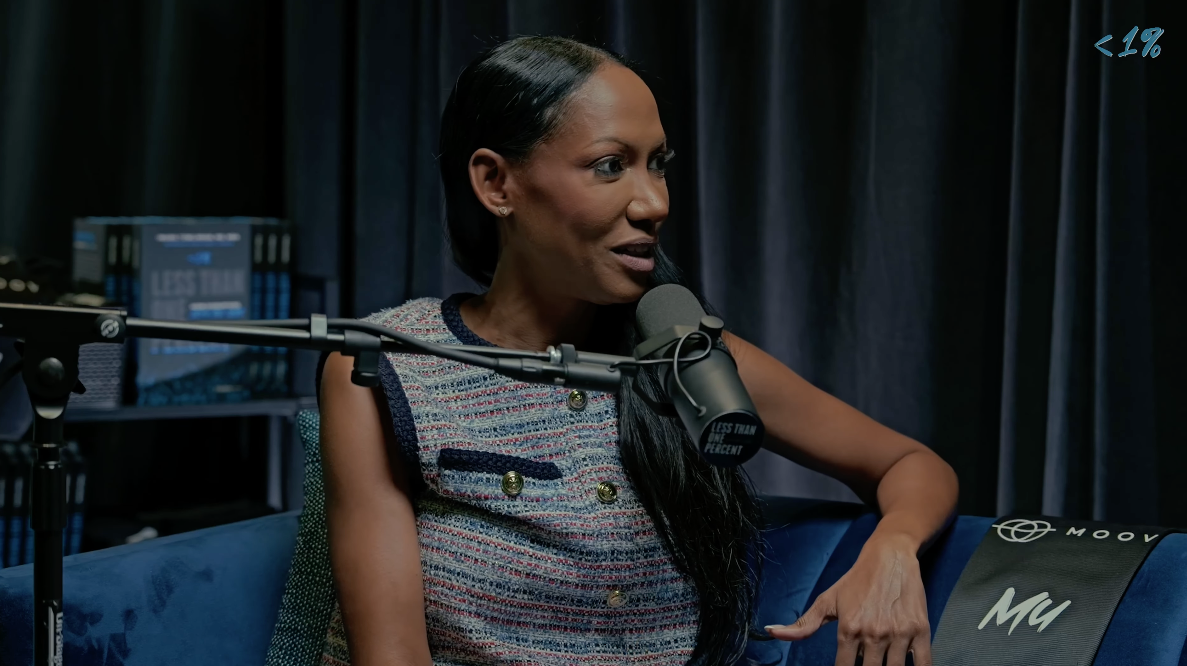
Dr. Judith Joseph is a psychiatrist, mental health expert, and one of the most influential physician creators online. As the only physician on the TIME100 Creator list and a TikTok Top 50 creator, she has built a platform around making complex mental health topics understandable, relatable, and grounded in evidence.
In this episode of Less Than One Percent, Dr. Judith Joseph talks about high-functioning depression, the pressure high achievers put on themselves, her Caribbean upbringing, and why evidence-based mental health information matters in an age of social media misinformation. This is how Dr. Judith Joseph disrupted psychiatry by bringing credible mental health education to millions of people.
Also listen on:



Timestamps
Transcript

1:19
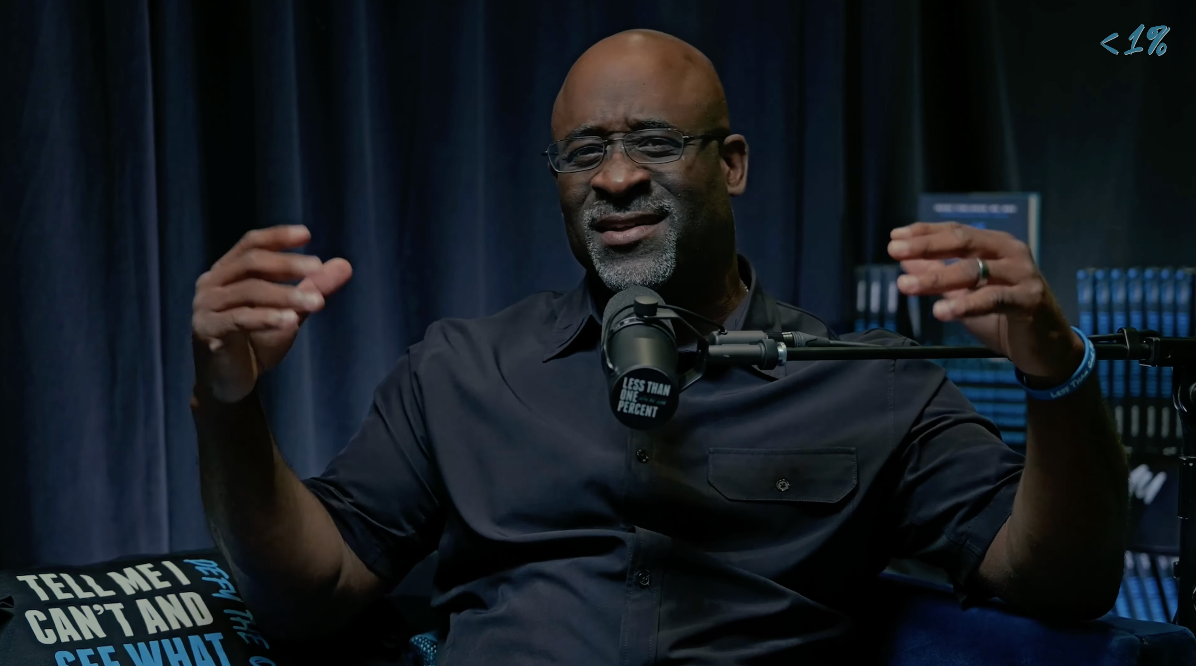
All right, everybody. Welcome to less than 1%. You can tell the background's a little bit different. Still got the branding, but a little bit different. We
1:26
are here at Essence Fence, specifically with the Global Economic Forum, Black Economic Forum. And I have an amazing guest who is, you know, did me a favor
1:35
and stopped by before she was going on stage. Dr. Judith Joseph, thank you for coming. I appreciate you so much for being here.
1:42
Thanks for having me. You know, it wasn't a favor. I I would do that for you. Yeah. Oh, she she's so amazing. I'm honored to be here.
1:48
Yes. Yeah. And I I want to give you, we don't have much time because both of us have to get on stage together, but I really want us to jump into, you know,
1:56
sort of what you do, you know, what you're doing to inspire people, what you're doing to help people. Cuz you're a psychiatrist.
2:03
I'm an ER doc and I know my job is eh, but being a psychiatrist is tough, right? I mean, you're you're working with people. You're trying to help them
2:12
live better lives. Now, how does that when you do that, how do when you interact with people, what are you trying to do? What's your what's your
2:20
motivation or your inspiration to be able to connect with people?
2:23
So, as a mental health professional, I think that what I've learned over the years is that people just want to be seen.
2:30
Everybody wants to feel as if they matter, you know, that they have worth.
2:36
And I think that training as a psychiatrist taught me that. It's it's really a skill. You know, when I was in
2:44
medical school at Colombia, PE around my medical school student friends, nobody respected psychiatrists. Even myself,
2:53
you know, I initially started off as an anesthesiology resident. I did that for two years. And for those in the medical field, they know that anesthesiology is
3:01
super competitive, right? At the time, I matched at Columbia, which was the best program in the country. And um 2 years in I realized that this is not for me.
3:12
You know, I'm from the Caribbean. I'm from Trinidad. Yeah.
3:14
I don't like the cold. The operating room is freezing. Yes. Yes.
3:19
I was always like with a warm blanket on. I'm also a very social person. You know, I'm I'm kind of like an introvert, but I love to be around people.
3:28
Yes.
3:28
Um and the O is the operating room is very sterile. It's serious. Surgeons don't like to talk. Yeah.
3:35
Um, and you're on your own as an anesthesiologist. You're literally by yourself. So, it was a lonely and cold field. Not to mention, you have to wake
3:43
up super early, like ridiculously early, right?
3:47
And um I I learned early on it wasn't for me. Yeah.
3:50
And psychiatry is in many ways the opposite, right? You're talking with people, you're listening to them, they're not asleep.
3:59
Uh don't get me wrong, anesthesia is very needed. It's crucial. You keep people alive.
4:04
you're not just putting them under. Um, but you know, I learned early on that when in my role as a psychiatrist, a
4:11
mental health therapist, that listening and making people feel heard and validated and seen is a superpower. And if only more people knew how to do that.
4:23
Yes. I mean, that's it's just so powerful.
4:26
You could not only achieve your goals, but you can help others to achieve their goals.
4:30
And you do it you do it intuitively. I don't know if you did it with me when we met for the first time. You're like, I'm just listening to you and I'm like already I feel better. I don't need any drugs at all. Just talk to Dr. Yeah.
4:41
But and you did mention the idea that um and we we kind of joked about it. We both Caribbean now. I apolog I'm Jamaican, Trinidad. You know, there's
4:49
some issues there. But but no, honestly, right, I think that Caribbean upbringing, it just makes us I'm sorry. It just makes us different.
4:58
you know, the work ethic, all that you do, right? It's just constant grinding, that immigrant mentality. So, I love that. But you mentioned superpower and
5:06
something I ask everybody on the show is what is your superpower? What would you say that thing that you do that is unique to you? You mentioned part of it,
5:15
but what do you say your superpower is?
5:17
Well, you know, going back to being Caribbean, I think all black people work hard anywhere in the It's a It is an unfortunate and I think a deliberate
5:26
misconception that we're lazy. We are the hardest workers on the planet. Yes. Because we worked for [laughter] free. Yes. We worked during bondage, right?
5:34
I think the difference is that in the Caribbean, we we were free earlier on. Yeah.
5:41
And we are I think we're at we'privileged because our government looks like us.
5:46
Yeah. You know, when you go to the doctor, the doctor looks like us. Yeah.
5:50
The governor looks like you. The judge looks like you. So, there's an inherent pride that even though we were enslaved and our our slavery was more physically more
5:59
harsh because we died at ear at higher rates, there was more turnaround. We were in many ways privileged because we our leaders look like us, you know.
6:08
Yeah. African-American slavery, it was more, I think, more mentally distressing because people were broken
6:16
apart, couldn't speak your language, couldn't practice your religion. So, it was, I think, more mentally, it was also physically and they lost their uniqueness.
6:25
Yes. So, that that mental distress I think again we need to I recognize as a mental health professional, it's just it's it
6:34
was many times so debilitating. Look at what African-Americans have done, right?
6:39
Um, so going back to the superpower of being a Caribbean working, you know, working hard immigrant. I think for many of us,
6:47
we were told come to this country, work hard, delay happiness, you know, make sure you're a doctor, a lawyer, attorney or
6:54
accountant. There are four children in my family and my parents got each one of each one of them.
6:59
A doctor, an attorney, an engineer, an accountant, right? But I do think that we're taught to delay our happiness and like once you finally become a doctor,
7:08
once you pay off your debt, once you have a home, once you have a family, you will be happy. And unfortunately, I think many of us are very unhappy. I think we have learned
7:16
to push down our past trauma because it is traumatizing to move to a new country where you speak differently, where you don't have resources like we did.
7:21
we did not have resources, scarcity trauma, and told not to not to really think about that and just push through. True. And I think in many ways that has inspired my
7:32
work in high functioning depression in high achievers.
7:36
Yeah. Yeah. But you but but we got to tell me what is your superpower though you Oh make others feel seen. Okay.
7:42
I think that that is it. I just think and I didn't always know that, you know, and when I look back in my own therapy,
7:50
I look back at my own work with my therapist and when I was a child, I just remember being on the playground and then all the, you know, people would
7:58
come to me, some of my friends unfortunately would come to me as children telling me their trauma and I just listen. Yeah.
8:03
And I'd give advice. Even in medical school when I was on my path to becoming an anesthesiologist, you know, my peers would come and talk
8:11
to me about what they saw and their trauma. And even before becoming a doctor, when I was growing up in the church, my dad's a pastor, a lot of
8:20
people, my peers in the church would come to me and tell me about what was what they were going through. So, I I had an inherent ability to make people
8:27
feel seen, to be empathic. I think I get it from my dad and my mom because they're, you know, they're they're clergymen or clergy people in the church. They they tend to listen to the
8:36
community's problems and help them heal spiritually.
8:39
Yeah. You can hear and I know she I'm not going to out her on this, but you can hear the code switching when you
8:46
said Caribbean. Yeah. And we could go we could we could get real into it. We won't, but we could. Isn't it funny
8:54
though like cuz I I did the podcast with Shelley Fraser Price and all of a sudden, you know, something had switched in my head and all of a
9:01
sudden I I have my accent. Canadians when I'm around Canadians cuz I grew up there.
9:06
So it's so it's so cool. Has anybody doubted you though along this way? I mean because you have this massive brand, right? You're you are
9:14
really changing the way people perceive psychiatry, changing the way people perceive healthcare. You're interacting in a way that's not typical to your, you
9:22
know, your typical psychiatrist or at least a historical typical psychiatrist.
9:26
But along the way, have people doubted you? Have they they sort of said, "Oh, Dr. Joseph, if you're not, you know, what are you doing online? Why are you
9:33
on Instagram or Yeah. Well, as as a black woman, uh, I got used to people doubting me very early on. Yeah.
9:41
Going to Duke for undergrad. Uh, you know, people were like, "How did you get here?" Although, um, you know, I was getting A's and the
9:50
people who were down me were getting C's. But I didn't say, you know, you don't you don't do that. You But you do flex now, though, because you did drop Columbia and Duke. She dropped Columbia and Duke. You notice I didn't
9:58
say where I went to medical school cuz I'm over here like, "Oh, I went to, you know, [laughter] I went to Cincinnati." No, but no, no, you're doing better as
10:05
far as, you know, identifying your greatness. But sorry I cut you off.
10:09
Listen, I'm just stating facts. So, you know, you can't argue with the facts, but even in undergrad, um, you know, people doubted me. But, you know,
10:18
there's no point in arguing. You just win. Yeah. Just keep winning, right?
10:22
I hold grudges. Do you hold grudges, though? Do you remember those people? No. You let them go.
10:26
Yeah. I need to I need to This couch is appropriate because I probably need some therapy from my grudge. [laughter] I don't have time for that. Right.
10:34
You're just changing the world.
10:35
Just doing me. And honestly, I think a part of me because I'm so focused. I don't even notice sometimes when people are hating on me.
10:40
You know, some of my friends, my colleagues would be like, "Oh, so and so." And I was like, "Really? I didn't even see that." Right?
10:48
cuz I'm so focused on what's important, which is for me helping people, doing things that no one else has done. I've
10:56
always been that way, like thinking about what's the next thing. And not because I need to be ahead, but because I'm so curious about learning. I love to learn.
11:04
Yeah.
11:05
I talked about that in my book. Um that at one point I just loved learning for the sake of learning. And then when it became all about grades and success and
11:13
goals, that curiosity was no longer there. It was just about checking a box.
11:18
But now I'm back to being so curious about new things and things that are fun for me.
11:22
So I think you know um along the years people have always doubted me but I don't care. Yeah.
11:29
You know that's not does that does not interest me.
11:31
That's awesome. So um we have a couple minutes left. So I'll ask you one question to close but before we get that where do people find you is I'm right
11:39
here with you at Essencefest but you talked about the book. Um we know your social platform is amazing. Where can people find you if they want to learn
11:46
more? if they want to learn about uh things about healthcare that are mis where they're getting misinformation or whe they want to find out about psychiatry where where can they find you?
11:55
So on all the socials I'm at Dr. Judith Joseph and then drudithjoseph.com.
12:00
Awesome. Awesome. So go out there and digest everything. Dr. Judith Jo Joseph.
12:06
But my final question for you um is well maybe I'll have two more. But my final question for you is if people are out
12:15
there, they're looking to do what you did and whether it's on that platform, whether it's psychiatry or maybe another
12:22
uh discipline, what would you advise them? How would you encourage them or inspire them to really trying to change the world through whatever platform
12:30
they're using? Well, I think that if you're a healthcare professional or not, you know, and your mission is to really
12:34
help others, right, I think that you will you'll achieve it because that's like that is a pure mission, you know,
12:47
for me when I started this work, I was writing the first study in the world on high functioning depression
12:54
and all of my peers were saying that is not a thing. That is not a thing. what's clinical depression is more important and I was like right
13:02
but the majority of people who are struggling are not breaking down they're taking care of their kids they're taking care of their employees they're taking care of their themselves their families
13:10
you know so like we're just ignoring all of these people and eventually they're going to break down so why are we waiting for them to break down right
13:18
again I was always forward thinking like why in psychiatry do we wait for them to check the box of you're in distress or you're broken down right let's prevent
13:27
the breakdown So when I conducted that study, I didn't at the time know that it was going to be the first study in the world on high functioning depression. I just didn't
13:34
know. And then when it went through peer review and they were looking for other articles, they were like, "This is the first one." And I was like, "You got to be kidding me." Right? But had I
13:41
listened to my peers who said, "Oh, like why don't you focus on clinical depression?" Well, I've been doing that for like 10 years, right?
13:48
If I listened to them and I was so concerned about what they were thinking, I wouldn't have been the first. And look at what's happened. People are getting help.
13:55
Yeah. I have I have you know like people in government coming up to me saying this is me and I just didn't know there was a turn you know I have mothers
14:02
coming to me saying this is me so had I listened to those people who were you know doubting me all these others wouldn't have been
14:10
helped right so don't listen to others listen to that voice inside where you have that mission to help others and and you will succeed
14:19
yeah just amazing we're going to close here but I would just say listen it's not just about the likes and the
14:25
follows. It's not just about um you know how many views you have. You have substance. You are taking information
14:33
that is meaningful studies, right? We talked about your book a little bit pre-show like hey I you know this is peer-reviewed data. This is not just
14:41
some random musings from somebody who wants to be popular.
14:44
And I appreciate you because you're changing the world in a way and we're going to talk about that on stage but you're changing the world in a way that I think is missing. Um, it's combining
14:53
both popularity and content with true knowledge and the underlying thing that you're in you're inspiring.
14:57
You are inspiring me. You're inspiring others, the next generation. So, um, any final thoughts as two Caribbeans that are about to get on stage. Any final thoughts?
15:09
Well, you're inspiring in yourself and thank you for what you do. And I just think that we need to work together. We need to support each other.
15:17
Yes. You know, I think medicine teaches us to compete, but eventually we're going to be replaced.
15:24
Yes, we're going to be replaced by AI. We're going to be replaced by influencers who have no health knowledge. So, we need to work together so that we're not replaced, so that we're still here. So,
15:32
we're providing evidence-based information. Awesome. Awesome. Well, go check out Dr.
15:36
Joseph. We're getting ready to get on stage. I got to put my makeup on. So, thank you for being a part of this.
15:42
Remember, always go and check out all of our episodes, but especially the one with Dr. Joe Joseph. Thank you so much for being here.
Key Takeaways
- You don't have to completely break down to deserve help.
- Being doubted doesn't mean you're wrong.
- Your ability to make people feel seen can be a superpower.
Share with a friend
Episode Guests
D. Judith Joseph
Judith Joseph, M.D., M.B.A, is a Board Certified Psychiatrist. Dr. Judith is Chair of The Women in Medicine Initiative for Columbia University Vagelos College of Physicians & Surgeons. Dr. Judith is a former clinical assistant professor of Child and Adolescent Psychiatry at NYU Langone Medical Center. Advisory board member and Instructor at Harvard T.H. Chan School of Public Health Creator Program. She has conducted over 130 clinical research studies in pediatric, adult, geriatric and women’s mental health as the Principal Investigator of her research lab, Manhattan Behavioral Medicine.
Dr. Judith received a 2023 Congressional Proclamation from the US house of representatives for her social media advocacy and research in mental health. Dr. Judith is an internationally renowned speaker. She has been a lecturer and professional speaker at prestigious intuitions such as The Executive Office of The President of The United States at The White House, The United Nations, Ivy League Universities and Fortune 500 companies across the United States and Europe. She is an official Masterclass Instructor and taught the first Masterclass on Menopause alongside Halle Berry and other experts.
Dr. Judith was named as a 2024 Black Health Hero by PopSugar Inc. She was also named a 2024 VeryWell Mind Top 25 Mental Health Thought Leader and a 2024 NAACP Top 6 Mental Health Champion. In 2025 Dr. Judith was featured as a Mental Health Thought Leader on CNN’s Game Changers series with Sara Sidner. In 2026 she was named a top 50 Global Creator on the TikTok Discover list.
Dr. Judith conducted the first peer-reviewed clinical research study on High Functioning Depression in the world in her laboratories and published her instant national bestselling book, “High Functioning, ” based on her findings from this study. Her book is published in over 20 countries and over 17 languages and counting. “High Functioning” is 2025 Audible Top 10 Well-Being book, a 2026 NAACP Image Award Nominee in the Outstanding Literary Work Debut Author Category, an Instant USA Today, Publisher’s Weekly and Indie Book Bestseller list book. Dr. Judith’s was a top 8% Shared Author on Spotify in 2025.
Dr. Judith has lectured on her groundbreaking tools for reclaiming joy for major platforms such as Google where in 2025 she had a Talks at Google based on the science of happiness. She has given similar talks for TikTok, Meta and YouTube. In 2025 she became a LinkedIn Top Voice and a LinkedIn Learning Course instructor. She has taken her Happiness Lab on the road with her to major conferences including Essence Fest, The NAACP annual conference, Worth Magazine’s annual conference and D Magazine’s D CEO annual conference. In 2025 she joined the Harvard T.H. Chan School of Public health’s initiative with YouTube as a Creator I.Q. health influencer. She is a WHO Fides Health influencer and a NAMI Ambassador.
Dr. Judith developed the T.I.E.S. method to address mental health symptoms in menopause. She is on the board of Let’s Talk Menopause, a national non-profit organization which recently advocated in December 2023 for the Menopause Research and Equity Act in the US Congress alongside Congresswoman Yvette Clarke. She gave the first congressional recording special on Caribbean American mental health in 2024 alongside Congresswoman Sheila Cherfilus-McCormick.
Dr. Judith is an expert on various media platforms. In 2025 she became a contributing writer for Forbes. She has made national television appearances on Oprah Daily’s The Life You Want Series, Good Morning America, CNN, Sherri Show, The Wendy Williams Show, Investigation Discovery, Today Show and CBS news. She was a medical consultant for Apple TV where she was in the writer’s room for The Crowded Room series. Her 2025 episode on High Functioning Depression and Reclaiming Joy ranked Top 3 on The Mel Robbins Podcast receiving record ratings. She received a 2020 and 2023 Share Care Award for her MedCircle series on PTSD and a Good Morning America investigative special on ADHD.
Dr. Judith teaches medical media courses to physicians and medical students at Columbia University and New York University as well as healthcare students at Harvard T. H. Chan School of Public Health. Dr. Judith received her bachelor’s degree in biology and chemistry, cum laude, from Duke University, her medical degree from Columbia University College of Physicians and Surgeons, and her business degree from Columbia Business School. She completed her adult psychiatry residency at Columbia University, and her Child and Adolescent Psychiatry Fellowship at NYU Langone Medical Center. She lives in New York City.
