How Dr. Uché Blackstock Is Creating a Future for Black Women in Medicine
On this episode of the Less Than One Percent podcast, Imamu Tomlinson, MD, sits down with Dr. Uché Blackstock, a trailblazing voice in health equity in healthcare. As one of the many Black women physicians navigating medicine today, Dr. Blackstock shares how her lived experiences shaped her approach to physician leadership, public advocacy, and redefining healthcare leadership beyond traditional institutions.
As a national leader in diversity, equity, and inclusion in medicine, Dr. Blackstock reflects on clinician fulfillment, physician wellbeing, and the fragile state of patient trust in healthcare.
This is how Dr. Uché Blackstock disrupted healthcare leadership, by centering equity, humanity, and truth in a system overdue for transformation.
Also listen on:

All Clips
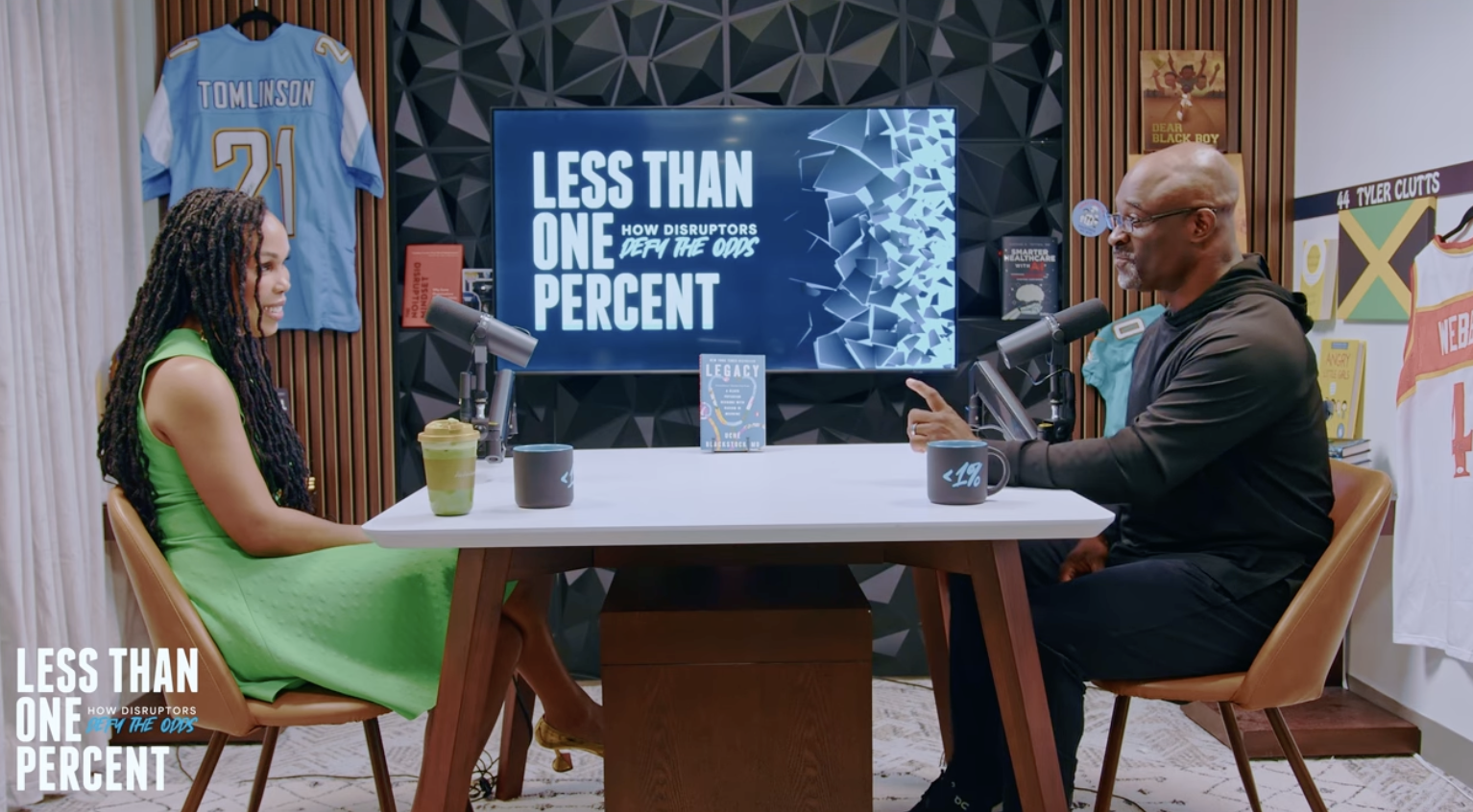

Meet Dr. Uché Blackstock
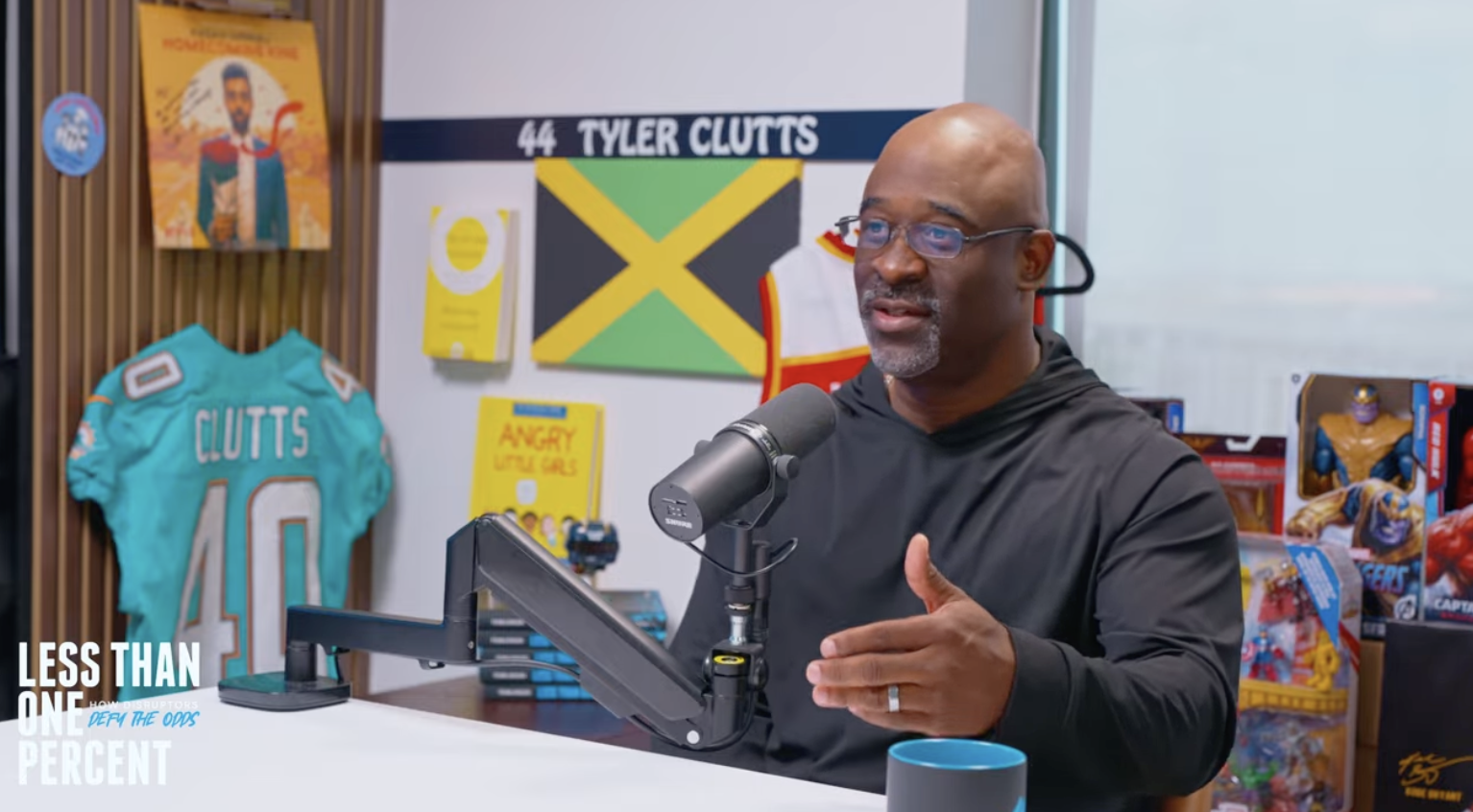
How to discover your purpose in medicine
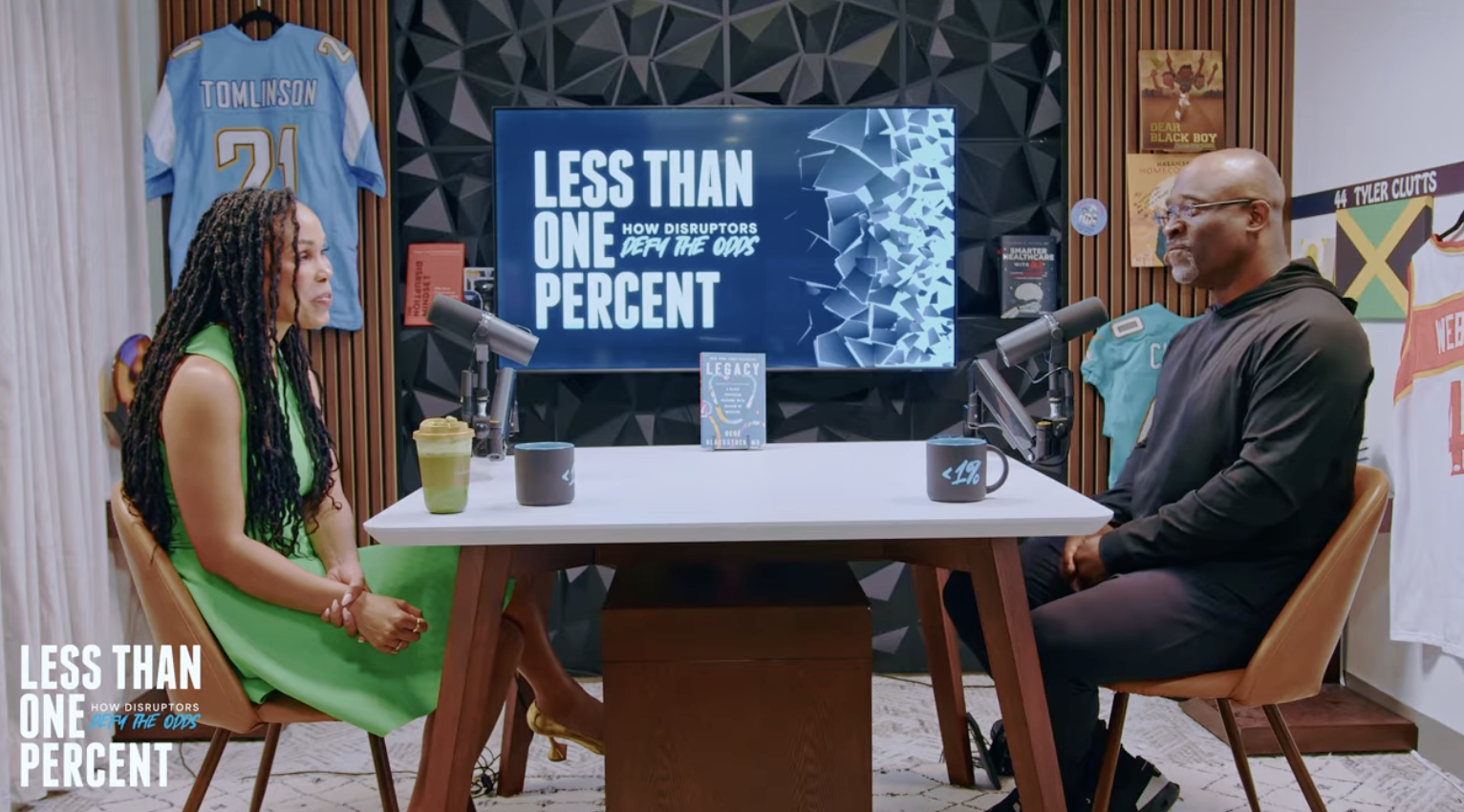
Dr. Uché blackstock on grief, loss, and a life-defining moment
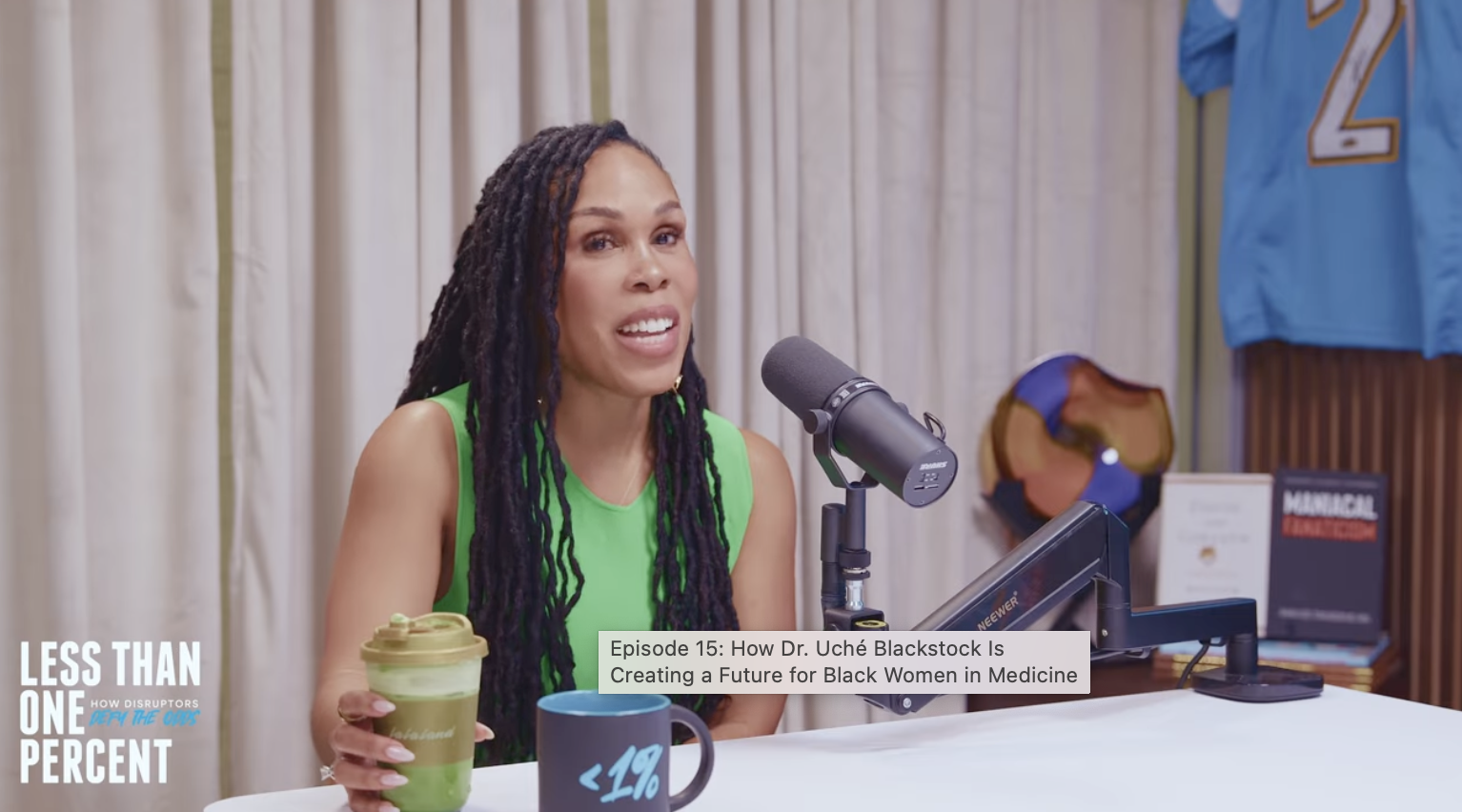
How to identify and embrace your leadership superpower

How others see your superpower
Storytelling, publishing, and overcoming doubt in your career
Surviving residency: anger and emotional truth in medicine
Is healthcare broken? Using AI to improve patient experience and trust
Manifesting the future: healthcare leadership in 2026 and beyond
Writing, identity, and the power of shared stories
Closing thoughts: Alignment, purpose, and building a meaningful life

Timestamps
Transcript
00:45
Welcome everybody. Uh I like to do very amazing introductions, but
0:50
I'm not good at them, so I just kind of get to it. Today we have Dr. Blackstock. And I went with doctor uh first because
0:58
I respect her so much. She's so amazing. Um and before we start, I mean, oops, I
1:05
have a little confession because uh I got to explain how we met. So Jordan,
1:11
the way we met is I kind of stalked her on LinkedIn cuz she's going crazy. She's
1:17
this pandemic, this post pandemic, she's everywhere. And I'm like, u,
1:23
you know, hey, hey, hey, can we, you know, because, you know, I just respect what you do and the fact that you got up
1:29
in spaces and really spoke from the heart. So, welcome. Thank you, Buchar. Thank you so much. Thank you for coming.
1:34
Thanks for having me. Move. Yeah. Yeah. So, uh, I don't want to go all the way back
1:39
to the beginning, but uh, the first time I saw you speak in person was at I think
1:45
it was at anime. Um, and it was a fireside chat. Was it? Yeah, it was anime. Was it me or was it or was it
1:51
Nazi? It was Nazi. Yeah. Yeah. Yeah. Yeah. And it was a fireside chat. And you said something that I think um really struck me that I
1:59
think a lot of times when you talk about being a physician, being a black physician, being a black woman physician that we're going to go, we're going to
2:04
go there. I want to talk about all of that. But you really come at it from a place
2:10
of strength, not a place of weakness, right? It's a place of, you know, I belong. Now, people treated you
2:16
differently, right? But I love the strength and confidence and that you that you brought to that conversation.
2:23
But I want you to tell me when you weren't strong like cuz now
2:30
you're strong now. Was it were you always this strong amazing woman bringing energy and bringing, you know,
2:37
inspiration to the rest of us or, you know, did this come out of some tough times?
2:43
Right. Yeah. No, I I would say it came at it came at a tough times. I feel like I always had it in me. Um,
2:50
and I think I was in environments that boxed me in and limited me. And you
2:56
know, I had this kind of come to Jesus moment when I was in academic medicine. You I was doing DI work and I was like,
3:03
listen, you are a brilliant woman and you're not able to do the work that you
3:09
want to do authentically. like you're under a microscope um and you should take this show on the
3:14
road. And so I, you know, made this decision to leave my academic job. I had like three or four titles. I had a great
3:21
salary. People looked at me like I probably had the perfect life, but I actually was quite um miserable.
3:28
I wasn't fulfilled. And so I made this decision to leave my my academic job as
3:34
an associate professor. And I said, I'm going to, you know, work on my consulting firm, Advancing Health Equity. I worked part-time in urgent
3:40
care to pay the bills and that was December of 2019. Wow. Wow. That's right. That's right. Co
3:48
is already hitting at that point. But certain places I didn't I didn't I didn't know. I was I was like, "Oh, I'm
3:53
just going to like um you know, streamline my life." Like you know, a few days I'll work on the business, a
3:58
few days I'll go I'll work in urgent care. And um I was working in urgent care near where I lived in my old
4:04
neighborhood in Brooklyn. And things were going great. January, February, I was like, "This is great. I'm walking to
4:10
work. Urgent care is so much easier than the ED, right? Like, this is great." And then March
4:16
hits and we're the epicenter of the pandemic and I literally see at my urgent care
4:23
like the browning of my patients. Like I see essential workers coming in like you
4:29
know, black and brown people. It was really diverse like I saw because it's it's gentrified Brooklyn. So I would see
4:35
people people who could work from home. I didn't see them instead. I was like, I got to write about this. So I started I wrote my
4:41
first op-ed about what I thought was going to be racial inequities in the pandemic by the end of March and it was
4:48
published. Well, yeah. I mean, you hit it right and even before any of the data came out cuz
4:53
I was like, I need to use my voice in this moment. Yeah. Do you So I was I was driving to
5:00
work today. Well, I I don't really drive to work because I have a Tesla and I
5:05
like to use auto my nose. No, you can. Yeah, you're good.
5:12
Um, and I thought to myself, so so I know that you, you know, very successful
5:18
author and and I think, you know, again, at the end of the day, for me, from from a fans perspective, you're telling your
5:24
story, right? I mean, at the end of the day, I think how well you write is not as important as the story you're trying
5:30
to tell. And I'm thinking to myself as as Mr. Tesla is driving me to work that
5:37
I I think in my world that experience is I would love to write. I'd love to just
5:43
I always tell people I'm not a CEO who writes like if you read what I write it
5:48
has nothing to do with healthcare. It's all over the place. I want to be a writer who happens to be a CEO. And I think that it's very
5:55
empowering to do what you did, which I think everybody out there is probably thinking like, I'm in this job. It pays
6:01
the bills. I even not even pays the bills. It exceeds my bills. It's amazing. It does. I got a title,
6:08
but there's something that I want to do. That is why I was put here on this earth. Yes. Yes.
6:13
And to be h to have the guts and the emotional fortitude to say, you know what, I'm going to jump in. But can I
6:20
say that that decision was well actually it was like a lot of little decisions that then came into a big decision. A
6:25
lot of small moments that added up but I was scared. I always say that like
6:30
just because you're brave or doesn't mean that you're not scared.
6:35
That's You got to say that again. Just because you're brave doesn't mean that you're not scared. Like I was like
6:42
girl what are you doing? But part of me was like, but you you are that you're
6:48
that chick. Like you you you'll be able to do this. You I mean I I had done so much even in academic medicine on my own
6:55
without much mentoring. Like just what I'd done for myself. And I was just like
7:01
just like take take this um like bet on yourself. Yeah.
7:06
Bet on yourself. And I and I realized that if you bet on yourself, you can
7:11
never go wrong. Yeah, I think that's that's I think that's a true statement.
7:17
But you don't know that. You don't know that. So you have to take that leap of faith. That leap of faith is scary.
7:24
Yeah. Yeah. Now so you you one of the things that I So there's two major
7:30
things that I talk I like to talk about. One is all those people who mentored you
7:35
or is is there somebody that you can look at one or two people where you could say without this person I'm never
7:42
going this direction. Is there do you have that? Yeah. No, I have a few people. Okay. Um it's interesting. I have a few people
7:51
but Okay. I have a few people. One is a woman that I wrote about very briefly in the book. um actually a white woman um
7:59
she was slightly she was more senior than me in a different department internal medicine and I kind of saw like
8:04
what she was going through. Yeah. like she was, you know, a little bit ahead of me and saw like this really
8:11
brilliant woman that was being very like restricted by the powers that be, like wasn't taking on certain roles, wasn't
8:17
getting advancement, right? But which she and I would meet, right? And kind of like she would share like lessons learned with me. Um, and I don't
8:25
know why like she just had this she just wanted to support me. Yeah. Yeah. No, there's I think there's
8:30
there's people like that. I mean, I can think throughout my life that are just like why did you do that? Why did you support
8:35
me through that when you really didn't need to? Right? And I feel like maybe she saw something in me like or I don't know,
8:41
maybe she was just being like a nice person, but like I think I feel like she saw something in me that I probably
8:46
didn't notice yet. Yes. Yes. Or or recognize yet. Um and like I I ran
8:52
into her last year at AAMC and I just I said, you know, you you're you're one of the reasons why I'm I'm where I am right
8:59
now. And she's like, I I cannot even believe that. I'm like you are one of the reasons because I think when you
9:04
have people who like believe in you when you are having self-doubts that means so much and
9:11
since I left academic medicine I've had so the people who are on my team like my talent agent my book agent um like my PR
9:18
person like these are people who like they really they believe in me they believed yeah and like my talent agent saw me on air
9:25
the first time I was on air. Wow. And I were I was like I was when I look at that video I'm like I was a
9:31
bumbling fool. What was I wearing? I had no makeup on. And she messaged me like right after
9:36
that first appearance and said, "Dr. Blackstock, can we talk? I would love to represent you." That's awesome. And she said, "Cuz I saw your passion."
9:43
That's awesome. Yeah. I mean, I talk about in the in in less than 1% I talk about Bob McKillop who's Steph Curry's
9:49
coach. And Steph Curry's untouchable now, right? I mean, we we kind of knew him. My sister went to
9:55
my sister, my daughter went to camps and uh she was Athena was MVP in his camp
10:00
way before he blew up. Um but you look at at at Coach McKillhop who was his
10:06
coach Pat Davidson allowed him to take shots that nobody else got to take. Now he perfected it.
10:13
No, no doubt he's performing. But if he has a coach that says, "No, you're not taking those shots." We have a whole different story. And so I think
10:19
that there there are these people, you know, in our lives that, you know, support us in ways where we don't, you
10:25
know, we get to take shots that we shouldn't take and then we have outcomes that we, you know, in our minds maybe we shouldn't
10:30
have. Yeah. And I have to also like give big ups to my therapist who I've been seeing for the last like six years through like
10:37
through my divorce, through my career transitions, who like literally this
10:42
woman has like helped me process everything. And it's just like I you
10:48
know when my book when my book came out, she sent me flowers and this card that said, "I knew you were always a star.
10:55
I I've never seen you in and I know some of it is staged. I
11:01
mean, so to speak, right? You're on stage. You're on TV. You're not going to go on TV and, you know, you're
11:08
transparent, but you're not going to say a bunch of the stuff that is really hurting you. Yeah. But I've never seen I', you know, I've
11:14
seen you in different situations. You're not an unhappy person. you're
11:19
always like big smile re you know radiating bringing people to you.
11:25
Are
11:26
there dark times? Oh yeah. I mean I think um you know one thing and we were talking about you know
11:31
before this but you know I think my mother's death when I was 19 um that is like
11:37
um I may tear up a little bit but losing her has been like is a life-defining
11:43
moment for me. Felt like the rug was pulled from underneath me like to have the person who
11:48
just was my biggest cheerleader. Like literally my biggest cheerleader,
11:54
you know, and my mom my mom, you know, just what she went through in her life, you know, born born into poverty, raised
12:00
on public assistance, first person in her family to go to college. Then then she had a a a professor at Brooklyn
12:06
College, black man, who saw her potential and said, "You should apply to medical school." Wow. And she did. Got into Harvard Med. then
12:14
after Harvard med could have gone anywhere but came back to New York City and I'm trained at Harlem Hospital and
12:19
then practiced in the same neighborhood in Brooklyn that she grew up in. So like I'm like I just like you know this woman is just and just
12:25
that's the thing I feel like when people meet me like they meet her like people who knew my mom they she just radiated
12:32
love. She radiated love. She radiated community. So I feel like part of my job and that's why the book is called Legacy
12:38
like is continuing her legacy. That's awesome. That's awesome. And I think that what I love about the story,
12:45
what you write about and and what you've lived, your experience is that you I always tell my kids, my kids, so I have
12:51
to go back. So my kids like they're like three and five, maybe four and six.
12:57
Whenever you start school, um, and they both go to this, you know, this charter
13:03
school in the little lake neighborhood that we're at. And so it's Black History Month and they're
13:08
like, um, so they come home with these assignments and they're like, you know, this slavery this, slavery that. And I'm
13:15
like, no. I said this. So they're like, where where are we from? I said, you're from kings and queens.
13:20
Yes. You're from kings and queens. So I think that your story truth truthfully I mean if you look at our histories and you
13:28
look at what our heritage our families our grandparents they actually been
13:33
through that this is not a story of downtrodden you know like what is that what is that
13:38
movie the one where the the kid is the football guy the big football kid and he goes to this family and they take care
13:45
with Sandra Bulockind side blind side do the blind side I'm sorry I hate that
13:50
movie I just it I know. And then something came out recently that that I think
13:55
something Yeah. There's some kind of like just Yeah. No, I know. But those kind of Yeah. Know that Yeah. sort of like No, my you know like
14:02
uh imposter syndrome, all these things. I don't I don't I know it's And so your
14:07
story is amazing because it's coming from this is my superpower. This is my power. This is my family, my legacy.
14:13
It's not a legacy of downtroddeness. It's a legacy of power. And I want to tell you about it. So that that's that's
14:19
brilliant. And I think one thing one thing that I had to get comfortable with and which I have over the last few years
14:24
obviously is like stepping into my power.
14:20
Yeah. Yeah. Okay. You know like just like being really
14:30
comfortable with that and knowing that I have a way of connecting with people
14:36
like when I would be on air on MSNBC and then after after a virtual hit from
14:42
home like I'd be on Skype and I go like run errands. People in my neighborhood would see me even if I had a mask on, right? Cuz I was like 2020 2021 and
14:48
they'd be like, "Oh, Dr. blocks like I just saw you on air and I'm thinking about getting that vaccine or people
14:54
tell me today they're like I sent my children back to school when you sent your children back to school.
14:59
Yeah. Yeah. Because I trusted you. Yeah. And I realized for the first time for many people especially for many
15:05
black folks that was the first time they saw a black physician one and a black physician on air.
15:11
Yeah. And and you're not and not bringing it from a place of you should do this because or you will die. It's
15:16
more like, hey, this is I'm talking to you real about your health. I'm talking to you about your health. I want you to have the information that
15:22
you need to be informed so you can make decisions for yourself. Like, I'm not being paternalistic, but but I love you.
15:27
I love our community, and I want us to be safe. That's awesome. So, you know, you said the magic word,
15:33
which is superpower. Well, you didn't say it. You said power. Yeah. So, Jordan, you know what time it is.
15:39
It's time for you to tell us. So, on every show, I ask people, "What's your superpower?" Yeah.
15:44
But it's not like I'm on time or, you know, it's not like it's something. It's something that's unique to you.
15:50
Yeah. That you do the best. And when you do it, you don't lose any energy. Like you can do it all day and night.
15:56
So what's your superpower? Okay. I don't know if this is what you mean, but I think my superpower is the ability to be vulnerable
16:02
because I think that allows people me to connect with people and people to connect with me.
16:08
Um and they see that. Um because sometimes when you have that facade up that like, yeah, I'm great. I can do I
16:13
could do anything. But when you share with people, yeah, I've had really hard times. Sometimes I don't always get it right or, you know, this was a struggle
16:19
for me. I think people, they see you as human. They can relate to you and then they want to listen to you more.
16:24
I think so. I think I think um I'm trying to think about whether vulnerability
16:31
is your superpower. Okay. So, so some of my friends say Okay. should some of my friends say that
16:36
my my superpower is that I make everyone feel like they're seen and heard like
16:42
like I think that's to me like again I'm just you know this is our longest
16:48
conversation but in seeing you out there it's not just I mean I think vulnerability is a part of it but I
16:55
think that's to me your ability to connect your ability to make people feel seen and heard at ease with you um and
17:02
and at some level you know you You are I mean you have a story of stairs stepping
17:09
up but you're you're an icon in the industry relatively right like I mean as far as I mean thank you
17:14
I mean none of us are Steph Curry right but I mean within the industry um you
17:19
know if you think okay who's in this space it's your your name comes up 865 times right so how I mean I think that
17:26
you you have the right when people get to that level of not connecting which a
17:33
many people abuse and we've had a lot of people here um at less than 1% who do
17:40
not abuse that power. They like Leenian Tomlinson like Yeah. Like there's like I mean we're we have
17:46
to do the 23 and me cuz Tomlinson and Tomlinson like about the same height the same build.
17:51
His family is Jamaican too. Family. No, his family's not Jamaican. His family's not Jamaican but I mean he's another one like you know um super
17:59
super super connector, right? And you know how many things probably are going on in his life. Um,
18:04
I want to ask other people because I think I think we landed. I think it's the connection. I think your ability to
18:10
connect. Okay. And meaningfully. Yeah. Meaningful. Not not in a superficial way. Yeah. We're not talking about Oh, how's
18:15
the weather? Yeah. Can I say one? I want one thing. Yeah. So, you know, when I was able to, you
18:21
know, just use start using my platform. It was a time when we were basically from home or doing a lot virtually and
18:28
so people would see me on air like people had not like a lot of people had not met me in person. So I had this like
18:34
fear like in 2022 when things started opening up that when people met me in person they would be disappointed.
18:41
Like I I felt this pressure like to live up to what people thought they knew of
18:46
me from my media appearances right or you know virtual talks I was giving.
18:52
Yeah. I remember posting something on Instagram, a video, just being like, I now that things are opening up, I'm
18:58
feeling really anxious about having to live up to what people think I am, who they think I am. And guess what
19:04
happened? People are like, oh my god, you're even better in person. Yeah. Yeah. Yeah. Yeah. I was going to
19:09
say I know. I know. It was just like I it was just this this fear this this this
19:14
anxiety I had about living up to what people had expected of me because people
19:19
just from they had even met me but just from what they had seen they had I think though I mean that's probably I
19:26
can't tell you how you felt but I think that's probably most cases where people
19:32
I mean I we got an opportunity to interview Malcolm Gladwell and uh you know of course I like he's
19:39
Jamaican descent. Yes. Yes, he's a writer. We both are well, I guess I'm similar to him and we look at what's
19:45
wrong with the world and we want to we want to talk about that. And I met him. I was like, "Dude, you're you're you're even better than I thought
19:51
you'd be." Um because I think I and I think that only happens when you connect, right?
19:57
And I think that when you connect, it's like, "Oh, wow. She's real." I mean, even just us, like in our conversation, we found out we have a Jamaican
20:03
connection, which is I think I have a Jamaican Yeah. I think I have a Jamaican bias cuz
20:09
Jessica Shepard. Mhm. Yes. Jamaican. Yes. Yes. Jamaican. Toronto. Toronto. Toronto. Toronto. Scar bro. Forget your
20:16
people. She's from my She's from my street. Like literally. So we're sitting there. I'm like I think I have a total 100% bias to
20:23
Jamaicans. Yes. I I see, you know, I can sniff a Jamaican out. Yes. Um but yeah. So okay.
20:30
I I want to ask Oh, should we call Should we call? Okay. Yeah. I want to ask somebody else. Um, so the we got to set up here.
20:44
Hey, dear. Hi. How are you?
20:51
Okay. I have a little surprise for you. Yeah. Okay. So, I'm actually I'm on a podcast
20:58
right now. Oh, and yes. With Dr. from Tomlinson of auity and part of it he wants me to call
21:06
a friend a good friend okay and to ask them he's actually on the
21:11
call we can hear you want to say hello hi how are you this is Dr. Adiri Arie. She's my friend
21:17
from when I was 19 years old. Oh my goodness. Yes. My dear friend. We're actually going to Savannah this weekend
21:23
on a girl. Oh, that's awesome. That's awesome. Well, we we won't take uh too much of
21:29
your time. Thank you for answering. She actually I'll just share some private information. We called a lot of people
21:34
and you were the only one who answered. So, we know that uh you definitely love her.
21:39
Of course. Of course. I'm sitting at my desk like my you know I work from home
21:44
so I'm staring at a computer screen and I was like okay yeah I'm gonna pop.
21:50
So thank you for answering. We we have um we on this program we ask people what
21:55
their superpower is and she gave us a superpower but then we don't 100% trust
22:01
people. So we want to call you know her dearest friends and ask what do you
22:06
think her superpower is? Okay. I think her superpower is
22:13
discernment. Like she can look at a situation and she can see clearly right
22:19
to the core of what's going on. And she does that like, you know, with me as her
22:25
friend. She can see right through to who I am, to what's going on for me. and she makes that like her her sort of her her
22:36
goal to really see people where they're at and who they are. You know, it takes a lot of empathy and
22:43
Henry J has that. Wow. What do you think? Thank you. Yes. And she's known me
22:48
forever. That's amazing. Yes. But do you want to tell her what you said yours was?
22:54
Okay. I think I said I said vulnerability, right? I said vulnerability. my ability to be, you
23:00
know, to be vulnerable with people and I think that helps me connect with people.
23:06
Absolutely. No, that that I I can definitely see that too. But I think if
23:11
I look at like it takes a lot like in order to see somebody else, you have to be able to,
23:17
you know, you have to be willing to be vulnerable. So it's like the precursor. I'm seeing that, but I'm also seeing
23:22
another step in it. That's awesome. Yeah. That's amazing. Well, thank you so much.
23:28
Thank you, deary. Can't wait to see you on Friday. I love you. Okay. Love you.
23:33
Bye. Bye. That's awesome. I should have called her first.
23:40
So, you knew her from So, so actually Oh, actually, I know her. I knew her from So, the summer that
23:47
the summer of 97, the summer that my mom passed away, I was actually in a summer research program at NYU School of
23:53
Medicine. So where I ended up later on faculty, but I was in a research program for underrepresented groups and Adiri
24:01
was in that cohort with me. And so I had only like I had known her for
24:06
several weeks before my mom died and the way that she and another friend of mine who I'm still good friends with,
24:11
the way they just like surrounded me with love like they didn't even know me but but but just supported me so much
24:18
that summer. Like I was in her I've been in her wedding. I was in both their weddings. like we've been friends
24:23
forever. So, and I think it was because I met them during that really critical moment in my life. Yeah.
24:29
So, NYU 97. Let's see. So, I'm I'm at Cincinnati
24:34
in 97. Do you know Seavoy? Of course. Okay. Seavoy actually. Seavoy. That Yeah. Um that summer I met
24:41
Seavoy. Yes. Yes. I met it was also he's a twin. Yeah. Yeah. Yeah. Um Yeah. And he was and he was at NYU,
24:49
you know, over the summer. So, so we we actually hung out. Yeah, of course. Yeah. I haven't uh No, I know he's with I know he's on the board. He's on the
24:54
board. He's he's on the board, right? No, he's he's a VP. He's actually VP. Oh, he's VP. Yeah, he used to be on the board.
25:00
Okay. Okay. Yeah. Yeah. Yeah. I know you're out there. I've got you on the podcast. Remember
25:06
that, my friend. Um and and I know Seavoy does a lot of other like he does producing. Yeah. He's and all, you know,
25:13
he's bringing worlds together that don't go together. He and I have to connect. We have to connect. That's awesome.
25:18
Yeah. Okay. So, um I had another question that I had for you about that superpower that
25:25
I that I just lost. But let let's let's make sure this No, I make sure that's on.
25:34
change gears for a little bit and go a little a little dark. I'm trying to take you places you don't want to go. So
25:37
this I'm willing to go anywhere. You are willing to go anywhere. This is not I mean I'm normal. Like I try to
25:42
make people a little uncomfortable, but you're you're you are you're an open book. Um,
25:48
literally. No, no, no, no. But even this, but even the book, like obviously like there wasn't I mean it's a memoir, so I'm not going
25:54
to put like everything in it, but then also I have to have like some boundaries too, you know what I mean? I can't like
25:59
reveal all my all my business. Like I have children like I just you know I have to like protect them too.
26:05
And what's interesting like when I was writing so I mean again Malcolm Gladwell is my hero. I like to look at, you know,
26:12
less than 1% starts with my story of, you know, being a uncharacteristic CEO,
26:17
but then I don't, it's funny because you kind of start and then you kind of lean
26:22
into who you are and your experiences. I literally write one one chapter
26:28
and that chapter is done and then I'm talking about Steph Curry, I'm talking about Nanny, I'm talking about Shel Price, you know, Siri, like I'm going in
26:35
everybody else. And so, you know, we're I'm I'm I finished the book. It's stream of consciousness. I
26:40
write the book in a month and a half like no just, you know, it's just because I had that's
26:46
a long story. I had that book over there, maniacal fanaticism 10 years ago. It's not the best book, but it was my
26:52
first attempt. I kept editing that book like over and over and over again. And I was shopping it, right? I'm shopping it at the time
26:58
and I'm re-editing and re-editing and then I realized like I'm just writing a new book. It's not re-editing
27:05
like I had grown so much as a writer in the story. So, I had to actually kill I
27:10
had to cut it off. And so, I cut it off. And even though I was I have a pride
27:15
problem. I self-published it. I didn't want to cuz I felt like that was just kiss of death.
27:21
But when I did that, the new one just flowed. Like it was just like all been pent up. But anyway.
27:26
Yeah. Cuz you have to get that energy out. Yeah. Yeah. So, um, you know, I think that's, uh, went off on a tangent here,
27:34
but I think that the idea, um, to be revealing and vulnerable. So, I tell the story about a coach I had
27:41
that says he has less than 1% chance. And I stop there and I go to all these things in the world where people
27:47
underestimate people. They put them in boxes. They make them, you know, into things before they, you know, they pick
27:53
their winners and losers for the race run. It's kind of something I always say, but it's so I take it to the publisher.
27:59
They're like, "Hey, we love it." They're like, "Who ghost wrote it for you?" Like, "No, I'm a writer. Stop. I'm not a CEO." You know, whatever.
28:05
Right. And they're like, "You need to write more stories about yourself." And I'm like, "Oh my gosh."
28:10
Yeah. Cuz right cuz right that's that's the that's the connecting. So then I I have to So I write a couple
28:15
other chapters. One I write the the seizure chapter which my you know my son that was terrible. like I can I read it
28:22
now and I'm just like literally balling my eyes out and then I write the chapter at the end which is sort of bringing it all
28:27
together. But I say all that to say you know the ability to write all about
28:33
yourself in a way that's not arrogant in this way that's not I'm amazing. Uh you
28:40
did you did it brilliantly. Thank you. Thank you. But I want to go dark. Yeah. I want to go dark. Yeah. Let's see cuz that's where we started
28:45
vulnerability. Dark. You can go. I'm I'm going dark. So, is there anybody
28:51
we talked about people like, "Hey, you you helped me get to where I am. Thank you so much. You know, your friends, oh,
28:58
but we love you. We're going to hang out. You know, we believe in you. Your agent, your publicist,
29:04
but what about people who doubted you? What about people that were like, "Dr.
29:11
Blackstock, you are not going to make it." Or even before you're Dr. Blackstock or somebody who's like, "And
29:16
I I know you're a wonderful I know. I know. Loving amazing positive person. I know. Okay. So, okay. So, I will say
29:21
overall I've been super lucky that like I've just been and I think this is just a lot of luck luck and Yeah. Go
29:29
ahead. Okay. Go ahead. Yeah. So, so yeah, we were talking about going dark. So, is and you were and and
29:34
I saw because I'm like you're an attending like if you're going to give me feedback, you know, like say it with
29:40
your chest and put your name on it. Yes. I totally agree. They said Uch isn't as great as she thinks she as she
29:47
thinks she is. That is but see that that's the kind of classic. Yeah. And I'm like wait a minute. What
29:52
do I do with that? Yeah. Yeah. How do I how do I show you that I'm don't think positively about myself?
29:57
Yeah. But also like Yeah. And how was that constructive? Like I could not believe I could not believe that someone
30:04
who was supervising me or training me that that's what that that's the only thing they wrote. They didn't say anything
30:09
else. Wow. And so I remember even though the rest were glowing, I remember that one has always stuck with me because I was
30:16
just I was an intern. I actually was very anxious about coming to going to work. I couldn't sleep before my shifts,
30:23
you know, in the ER. Like, you know, I I took it really seriously. I would have like this little little bag with me with
30:28
all my little books in your in your pilot. In your palm pile. Yeah, exactly. like you know like I
30:35
wasn't you know the fact that someone saw that and then thought but I think it's prepped maybe with what they knew of me which I was coming from you know
30:41
Harvard undergrad Harvard medical school but also I was at Kings County Hospital which is my the public hospital in my
30:46
neighborhood that my mom used to work at like so it wasn't I I wanted to go there like that was my that was the first my first rank choice for m to match there
30:54
like I wanted to be there I wanted to to take care of my community so the fact that this attending was like she's not
30:59
as good as she thinks she is. Yeah. So that so that has stayed that has that that always has stayed
31:04
Yes. with me. Yeah. Um because I'm like first of all, who said that? I still don't know who said that. And
31:11
then I'm like, where were they coming from? Like what what was their mindset where they felt like they could put that
31:16
in my evaluation? Well, I mean, you know, the mindset, they had you in a box, right? So the you didn't match the box.
31:22
They they built this they built this Dr. Blackstock that was not who you really were.
31:27
And it's funny you said that. So, in residency, I I haven't this this is a story that I uh you know, I haven't told
31:34
anywhere really. Oh, really? Oh, first time. First time. First time. I'm honored. I don't know if I should
31:41
maybe we edit this out. So, um don't edit it out. So, I'm I'm in residency and you know,
31:47
and I and I we talked, you know, sort of pre-show like I've struggled with anger
31:52
my whole life. like my my base energy, the energy where I get the most the the
31:58
the mood that I get the most energy from is anger. So when I want to do something amazing,
32:03
Yeah. is usually because I got angry about something else, right?
32:08
so I'm dealing with that, but I'm I I'm getting a residency and I've I've learned I'm learning I'm getting
32:14
I've got pretty good EQ, but I'm learning how to edit how I respond to what I witness.
32:20
So, I go in for, you know, the evaluation, the magic evaluation, and he's like, he's like, "Well, we don't we
32:26
don't know. We don't know about you. We don't I'm like, "You don't know about me." And I said, "Well," I said, "You
32:31
need to get better at whatever." And I was like, "Okay, fine." He says, "Well, you your attitude is just not good." And
32:38
I'm like, "Wait a second. my attitude like and I and I don't know how your
32:43
residency life was but every time I would go to a rotation like like they
32:48
you know different departments would give out awards like they'd give them to me like everybody is like you know cuz I'm Yeah
32:54
I'm up early I'm there late I'm I'm I'm grinding right it's Jamaican you know I'm ready to go
33:01
so he says um he says you act like you're from the streets and I'm like
33:06
wait like the streets of Toronto bro I'm I'm like, "Come on, man." Like, really?
33:11
Like, from the streets. Like, which streets are you talking about? Like, I'm from a different country,
33:16
you know? Um, and at the time, you know, I mean, not that it matters, but at the time, I mean, we I mean, my parents, we
33:21
were never rich, but we I mean, I never I was never hungry, like, you know what I mean?
33:26
Um, and so I remember going I did an away rotation with with with a friend
33:32
who graduated from the program a year before. I went away to North Carolina and and this is kind of deep. So, this
33:39
is the part that I'm embarrassed about a little bit. So, I'm in North Carolina and I'm just like I'm not shaving. I'm
33:48
like total and he's a great friend cuz I was supposed to do a whole lot of shifts
33:53
and I didn't do them. Like I was just like I'm struggling cuz I'm like I'm about to get kicked out of residency. Like what's
33:58
going on? And the advice that I got was, you need
34:04
to go to this rotation and think about your future and think about what you
34:10
need to do. And what he told me I needed to do was go to a psychiatrist. Wait, go to a psychiatrist.
34:15
Psychiatrist. My my assistant residency program director said that. So I'm like to deal with me being from
34:21
the streets. So I'm like, "Okay, what do I do? What do I do?" So, I go to my my boy and he's
34:26
like he's like he's like, "Okay, just come out here two weeks, do this rotation, think about it, and go back."
34:32
And I'm and at one point I'm like, "I'm just going to go see a psychiatrist. I'm just going to do it cuz I want to finish like my whole life. I want to go to
34:38
medical school." So, he said, "So, all of a sudden, this is the embarrassing part. All of a
34:44
sudden, this uh it's it's like 3:00 in the morning. 4 in the morning and
34:50
someone starts talking to me and I swear like you know where were you? You were
34:56
I'm in I'm in North Carolina in bed. In bed. Oh. And someone starts talking to me and I'm
35:01
looking around. I'm like, you know, we're scientists. I mean, I'm I believe Yeah. Yeah.
35:06
I'm a scientist like, you know. Yeah. And uh
35:11
he's like it's a male voice and he says everything's going to be okay.
35:17
And I'm like okay, you know, you know, am I am I sleeping? Well, all of a sudden I just like
35:24
this calm came over me. I drive back to like straight like
35:29
straight to the office. We had scheduled a meeting and I go in the office. I'm like he's go so what are you going to do? I
35:36
said I'm not going to do anything. I said, 'I'm going to graduate. I'm going to go be an amazing doctor and y'all
35:42
going to stop this foolishness. And he looked at me. He said, 'What make what makes you think that you can do
35:49
that? And I said, well, I think God told me that that Yeah. that this is the right thing to do. And
35:55
sure enough, he didn't mess with me. I graduated. I did not go to the final picture, you know, the Yeah.
36:01
But anyway, uh yeah, that's the first time giving me goosebumps. Yeah. It's tough. It's tough, right? stuff cuz we've all had
36:07
some kind of but I'll never forget I'll never forget and I'll say his name Dr. Ferris, I'll
36:12
never forget his name. Um, and I'll, you know, and that that actually that
36:18
feeling, which is probably not healthy, but that feeling, that moment, I'll
36:23
never ever forget it. And like when I'm when I'm ready to do something amazing. Yeah. I always go back to that feeling.
36:30
Yeah. No, I know. I know. Yeah. That's Yeah. Yeah.
36:35
I know. I just like, wait a second, whose podcast is this? No, no, no. I'm just like, that's that's
36:41
really heavy. That's so heavy. And and I want to say like I know for me like
36:47
I felt like I I couldn't show my anger. Yeah. Like because I was in these spaces where
36:55
like I didn't want to be like the angry black woman. So people never saw that. So but that's but that was inside.
37:03
That's heavy though, like right to to carry the weight to carry that to carry that to carry that. Um, so I think for me a lot of
37:10
times like in my writing like I I get out what I want through my social media
37:16
like that's why like on on Twitter like early 2020s like I had like I had like almost 140k followers cuz I literally
37:22
just just put like I'm thinking about this like I was just like kind of vent like that was my venting. But I think it's just so important for us to like
37:29
be able to like I you know I mean yeah if we feel angry feel angry and I know you're saying sometimes your anger is
37:35
like another level but we have a lot to be angry about. Yeah. Yeah. We we have a lot to be angry about. Then
37:40
you have people who are trying to like sabotage you, undermine you and they don't believe in you. Like I mean when I
37:48
was in academic medicine and I felt like I was under a microscope but they were looking at my social media. They were
37:53
like oh she started her own consulting firm. How do we know if this this firm's values align with our institutions? I
38:00
was like, you you asking that question, I should ask you. Right. Right. Right. Because because the way that you all are
38:06
operating in here, the way that you're treating black faculty and students and trainees. Yeah.
38:11
Like that is in line with my values. Yes. Yes. And and one thing I had to
38:16
learn and this is what I always say and I always try to remind um our our
38:22
students that like you are the gift for all of these institutions and
38:27
organizations that we are part of and that we move into they are so lucky to have us. Yeah.
38:32
Like Matui is so lucky to have you. Yeah. Well, because No, no, no. Because of the No, because of like
38:39
not just our professional experience, but our lived experience. Just the perspective that we come in with. The fact that we can see things from all
38:45
different angles, like that is that is a gift. Yeah. I I mean, I I had to lean into
38:53
I I think, you know, we talked a little bit. I I spent the first four years of I've been in the job nine years now. The
39:00
first four years I was struggling to be what others thought
39:06
not just the the the CEO of of a physician group but also CEO within
39:11
healthcare and I struggled with that and in the last four or five years like to yourself point I was like at some level it's not you know it's
39:18
like my daughter and I talk about this all the time it's not what you bring to the table sometimes you're the table sometimes you're the table
39:24
and so but it took me a while I think and to your point um you you I think here just in in taking
39:31
it full circle healthcare you know leadership really leadership development
39:37
um the job that we're doing or not doing to advance not just I mean all
39:42
physicians I think at this point in time our leadership development for physicians is at an all-time low right because
39:48
we we're not the generation is different and the people who are teaching that generation
39:54
right struggle with.
39:54
do you think healthcare is broken you think just I just taken it all the way
40:00
to do you think healthcare right now in America is yes I mean and what but what aspect what
40:06
aspect no I think well I mean obvious obviously I think about like the patient experience right the patient experience like folks
40:13
just having to navigate the system um you know access um just followup just
40:20
just being able to understand what's happening and and and just their interactions with the healthare system
40:25
one but then I also think the clinician well-being part is huge Yeah, I think it's another huge part because
40:30
it's like they're like true true and unrelated, right? Like the experiences that patients have are based on how the
40:36
clinicians are supported, right? And how the systems are working to support them, right? Like I like I feel like
40:41
you know this idea of burnout, it's not a personal thing. It's a systemic thing. And I feel like you know so many of my
40:48
friends that are still like practicing, they are like, "Help me get out."
40:53
Yeah. Yeah. They're like, "Help me get out." And I feel like the pandemic definitely was
41:00
that like huge insult on a system that was already struggling, you know, and now we have patients who
41:06
are sicker coming in, right? We have we have clinicians that are burning out. And I think the whole leadership part is
41:12
that we also are not cultivating physician leaders. Yeah. Right. Like I think
41:18
um we could do so much better in in that way for physicians to have voices about policy. like I want to see more
41:25
physicians on the hill just talking about not what physician necessarily even just physician groups need but what our communities need because that's like
41:32
that's related and most of the times they're really focused when you do get on the hill or you do go to talk to people it's really
41:38
about reimbursement most of the time it's like 90% of the time oh you know reimbursement and they at some
41:44
level that that gets old. Yeah. So you have magic wand and you get to fix one thing in healthcare. Magic
41:52
wand what what would that be to unbreak it? Okay. So I think one thing is like the
41:59
administrative inefficiency of our healthare system bureaucracy. Yeah. It is ridiculous and
42:05
it's costly. Yeah. Yeah. Like I mean it's the re it's one of the main reasons why we are an
42:11
outlier compared to other high income countries. like it is ridiculous. There are too many middle middlemen. Um we we
42:18
really need to streamline things and it's not actually it's in in the patients best interest. Yeah. And I think this I mean I I I get
42:27
nauseated talking about AI all the time because every conference you go to like it's they double down on AI and from
42:33
people that don't even use it, right? They're just experts at it. But I do think that this AI has an opportunity
42:40
now to let physicians be more human and more connecting because a lot of these transactional things will hopefully go
42:46
away. No, I I agree and but it was interesting I've been seeing a few articles about how patients are
42:54
using AI more and appreciating the interaction between them and AI versus them and the
43:01
clinician because you know AI is so you know a lot of these like chatbt is so agreeable. So it's like it like affirms
43:06
you, right? Makes you feel good, you know, and I'm just like we are in the Twilight Zone. No, but but I do think um
43:14
you know AI obviously is here, it's inevitable, but we have to use it with intentionality. Yeah. And I do think
43:20
that the piece about like the um the administrative efficiency about like you know the charting and all that like if
43:26
we can just direct you know clinicians to be able to spend more time focused on the patient and and utilize AI in that way then we could
43:33
actually really It actually could be a good thing. Yeah.
43:45
So, um, so 10 years from now.
43:41
Yes. So, you you're you're you're killing you're everywhere, right? You're going to keep being everywhere, right?
43:48
Which is really interesting because I thought I was everywhere and every year I'm everywhere's a new every year. Every
43:56
so I'm like, "Ouch." So, I saw myself this year, u anything is possible from for from here on. Like, um, so I was out
44:02
last night. My so my general counsel for advancing health equity and my personal lawyer, she lives here in in Dallas. So
44:09
this worked out. I guess we went out to dinner last night cuz I hadn't seen her in actually several years. We we talked virtually. We text all the time.
44:15
Um wait, hold on. It was my train of thought. Hold on. What was I going to say? What was I going to say? What were we talking about?
44:20
We were talking about um we were talking about healthcare and you were talking about um
44:26
Oh, she What did she say? Darn. Okay. And
44:31
any Oh, she asked me. Uch um what's been like your favorite the your favorite
44:36
talk that you've given and I was like literally I've given so many I've given so many talks over the last few years but being invited to United Nations to
44:43
speak on the international day against um you know racial discrimination last March of last year was just amazing
44:50
because it's like to be able to in front of the general assembly to be able to talk about the work that I'm doing around health
44:56
equity and how it's applicable go globally um in such a forum Um, I was
45:03
just that's amazing blown away and and and the Office for Human Rights, they invited me and they were like, "Dr. Black Sec,
45:09
we've been fans of yours and we would love for you to come back." And I'm like, um, yeah, this I thought this was a one
45:15
time. Yeah. Whenever you need me, you know? So, it's just like like thinking thinking really about like what what is
45:21
limit like being limitless in terms of what is possible. And so, that's why like I wrote my manifestations for 2026
45:27
the other day. And the manifestations are is just to embrace whatever comes to me and not to put limits on what can
45:34
happen because literally every year, every year something crazy.
45:39
Yes. Yes. Yes. Every year something crazy or every time I check my inbox something else. Um
45:46
and so I don't know why people have chosen me as like someone said you're
45:52
the Beyonce of Health Equity. Yeah. And I'm like okay thank you. But I don't know why. So, I've been
45:58
Yeah. And I think that I think the thing though is that that's part of the if there is if there
46:04
is some kind of syndrome thing, it's that question. It's not that you don't
46:11
feel like you belong, right? Cuz you belong. Clearly, you go there and you're like, I'm going to kill it. Yes. Yes. But I think it's asking the question
46:18
why. I mean, and I, you know, you'll ask that I'll ask that a lot. You know, if I'm in a particular situation, why me?
46:25
or you know, but I think there's a reason and there's a reason. People see it in you. I mean, you know, uh the the
46:31
board that selected me for this job, I didn't want it. I know. You told me that. I refused it like three times. I was
46:37
like, "No, no, no. Like, please, like, I'm good. I was a regional director. I just want to coach. I just want to coach basketball, coach my kids."
46:43
Yes. You know, just do the do do that. And they obviously or maybe they just got
46:49
lucky, but they obviously saw where I'm at now, which is very different than where I was then.
46:55
Yes. And um and so that's, you know, I think that's that's sobering though. It's a sobering thing.
47:00
Yeah. And I think also sometimes you're so just like you're deep in the day-to-day just kind of like living your life and people are able to actually
47:07
look at you and see what is possible. That's and and see what is possible in
47:12
areas that you don't necessarily look at yourself. Yes. You know, you know what I mean? Like a
47:17
lot of times like, you know, I want to go through all of it, but even just in just where we are
47:23
for physician, you know, we talked a little bit about it for physician groups and and
47:29
right in America like Yeah. You know, I mean, we grew so much last year and I never sell like everybody's
47:35
like like how are you growing? I'm like, I don't know. I just go and talk to people and tell them what I feel about the
47:41
world and how I want to impact it. Like what we do in the foundation. um and stuff like that. I I do want to ask
47:47
you so so but you didn't answer my question which was we manifested 2026 but I'm I want to go out to like 2035
47:54
like 10 years where where would you be? I know you're open to everything, which is cool, but
48:01
where where would you look back in 2035 and say, "Yes,
48:07
yes, I'm here." Cuz at that point, you'll be 38.
48:12
Right. 58. 58. Yeah. Actually, can I just tell you every year
48:17
I'm like, "This is like best year ever. Best year ever. Best year ever. Best year ever." I'm like welcoming it.
48:24
I'm like 50, let's go. 50 like let's let's do this. thing I don't like about that is I do not like people knowing my
48:30
birthday because I don't like I don't like the fake love. I don't like the fake love. Like I don't
48:35
want you call like like I mean my my boy if you're my boy all my friends my boys
48:41
out there do not call me on my birthday and say happy birthday because it's like like the day before my birthday might be
48:48
the day you needed to call me and tell me man you're the best ever or the day after. Okay. So, you're just taking that
48:53
day and you're giving me like I want that every day if you want to call me. Right. Okay. I get that. But but I'm
48:59
like that day is so special. I feel cuz my mom made always made a big deal about our birthdays. Like it was a huge So, I
49:04
feel like it's like it's a celebration like this is and the hand the hand say
49:10
like this is the day that you like we we gifted you to the world like this lucky world. Uh okay. Gosh 10 years.
49:17
Yeah. 10 years. 10 years like let I mean you you're you are whether and I think that you understand it now we're what
49:24
we're 5 years out from the pandemic right so this is not a this is not a blip right we've seen lots of people
49:29
come and go lots of companies come and go like you're on a trajectory and you're
49:35
doing more amazing things so 10 years from now where would you look back and say I'm here now and I'm satisfied with what
49:43
I've done over the last 10 such a hard question um you Okay, take time. I'm going to tell
49:49
you mine. Yeah, tell me. I'll tell you mine and then you can you can kind of process. So, for me, 10 years from now,
49:54
I want to look back and I want to be uh I want to be as profound a writer
50:02
as Malcolm Gladwell is. Not necessarily from book sales. Yeah. But as far as like I want people to
50:08
thought leadership like I Yeah. I want people to take this less than 1% story and say, "Hey, you know what? We're not going to build boxes for people anymore. We're gonna, you know,
50:15
my next um actually I want to jump to that as another thing, but I want to talk to you about my next project.
50:20
Okay. Because I think you it'd be interesting. I want to get because you and your sister uh it's a it's a twin thing.
50:26
Okay. But um so yeah, so I want to be I want to be at that point whether I'm doing this or not in healthcare. I'm be at the
50:33
point where people are like, "Okay, moo like you you're you're a legit writer. You're not just a CEO who
50:39
writes, you're a writer who happened to be CEO or maybe I'm not a CEO at that particular time." Yeah, I think. Okay.
50:44
So, okay. So, this is going to be a little bit about 2026 because I just want to tell you like this year
50:50
Yeah. What I realized is that Okay, I did say like the possibilities are endless, but
50:57
I want my hand in a lot of different buckets. Okay. So, like even so even legacy like I am
51:04
I'm done with legacy. I told my editor like I'm not pushing this book out anymore. Yeah.
51:09
But if there is I'm going to let the message of the book just get out naturally.
51:14
Yeah. But I would love like to see like a film on it.
51:20
I would love to see a documentary, some piece of it. You know, I met I met Avery Duivere a few weeks ago
51:26
and at the Ford Foundation and I I gave her a copy of my book and she's like, "Girl, I already follow you."
51:31
Nice. So, so I'm just saying like, you know, I'm just putting that out there. So, I would love just to have
51:37
these conversations that I had in the book show up in other spaces. And I think also for me, what I would love is
51:43
just to to have these conversations with folks outside of the healthcare space because so much we know what happens
51:49
regarding health is not just within healthcare. So, I want to be that um leazison kind of or that communicator
51:55
between connector. The connector back to the Yes. Exactly. Exactly. between what
52:00
we're doing like I got invited like that Ford foundation event I was telling you about it was it was actually a arts and
52:06
justice forum but they wanted to bring in health justice so I was like the only black
52:12
health professional health professional there that's awesome but like um Yara Shahiti was there a
52:17
diver was there you know Cherylyn Eiffel was there right but I was able to like be the physician voice or the health the
52:24
healthcare voice to talk about how it's connected to all of these other spaces that's amazing so that's so That's what I want to
52:30
continue. So, you want to take that and accelerate. Yes. Yeah. And and hopefully I will and also so I've finished my second book
52:38
proposal. Yeah. I'm hoping by the top of next year I have my second book deal, but I also I
52:43
also already know I want to do a third book. Nice. And the third book I want it to be about stepping into your power.
52:49
That's awesome. Yeah. So, so I see like I I want to continue like getting my my voice out there. Um because I feel like so many
52:56
people like they're craving for these kind of these stories because they want they feel seen,
53:02
you know, in in these story they feel validated and then also for a broader audience to hear other perspectives. So
53:07
that's amazing. Yeah. So I just actually for 2026 I have like all of these buckets I want to be in and I want all
53:13
those buckets to just continue to expand over the next 10 years. Okay. Well, I mean that could be 10
53:19
years but apparently 10 years Jordan is going to happen in one year.
53:20
So, um, thinking
53:28
about writing, it's funny. We're we're wired similarly that way. I have like eight books written in my mind.
53:34
Yes. In your head. Yeah. Um, and then sort of backtrack to the one I have to write, you know, and then the article I have to write so I can get
53:40
this. So, I I finished the first chapter. I actually went on a rant, which is my
53:45
longest first chapter ever. It's like it's like 2500 words, which for a first chapter for me. I like short chapters,
53:50
like digestible. Yeah. Yeah. Yeah. Um but it's called almost and it's the other side of rip
53:56
other side of winning. So how small differences change the course of lives, change
54:01
directions and and it's like amazing. So how many different situations where
54:08
somebody makes a right turn and they're, you know, like Wes Moore talks about that you're in this you're you're a
54:14
loser quote unquote and somebody makes a little bit of a right turn and you're the most amazing thing ever. But one of
54:19
the things I'm one of the chapters I'm going to use twin twin studies and so I'm interested
54:25
to find out like you know how are you similar how are you
54:31
different and what do you attribute that to? Yeah. So it's interesting. I I think like you know this nature versus nurture
54:37
even with twins right and I think that for a very long time like our mother was
54:45
I told you she was a such a loving affectionate woman but also was like said to us starting from when we were
54:51
little you two just have each other like you better depend on each other go everywhere together do everything
54:57
together right and so we kind of like were always together up until end of medical school And and so in a way it
55:03
was good because we were able to support each other but also I think it sometimes didn't allow us to like develop our own personalities and now I see it more I
55:10
see more now as like in our 40s that we actually are really different like she like you know we have different sense of
55:16
like world view I mean with the same values but but just like our perspective on how we handle things is is really
55:23
very different. So I feel like part of that is just how we're wired genetically
55:28
you know so it's it's interesting. Yeah, it's interesting like I'm I mean I'm doing all this research for the first time and it's sort of you have IQ
55:36
differences which Yeah. Right. So, yes. Yeah. Yeah. So, actually both my sister and I I want to say that when
55:42
my mother um had us assessed at four at four years old, we both were genius level although my
55:48
sister was several points ahead of me. Wow. And then my mother said, "I didn't want to get you retested because I was
55:53
worried that the score would go down." Like, okay, thanks, Mom. Yeah.
55:59
Yeah. I mean that it's fascinating. It's fascinating. Well, I think it's just fascinating and in that in that chapter
56:05
what I want to point out I think is that um you know when you genetically when you
56:10
genetically you know you have your uh double blind randomized genetically the same
56:16
that small little incences you know whether you know one person may I don't know
56:22
um have a cold you know that day when you learn biochemistry and the other person didn't
56:28
and that small difference could be the different that could it butterfly effect into something different. So,
56:33
yeah, it's interesting. Also, my sister and I like we've gone through a lot of life changes together like at the same time. Like we we divorced around the
56:40
same time. We we we we got out of our like traditional jobs and started our consulting firms at the same time.
56:46
Wow. I know. I know. That's Well, I guess there's two more twins in the study.
56:52
That is amazing. I mean, not amazing, but it's just that parallel Yeah. Oh, yeah. is is uncanny.
56:58
Yeah. I mean, we had our kids around the same time.
57:00
one thing that I've learned over the last few years like you
57:09
know alignment is really huge for me. Um it was something that like I think because I had been on that trajectory of
57:15
like you know being a physician like you kind of just start doing like you know what you're supposed to be doing like you go to medical school you do
57:20
residency fellowship I kind of like wasn't like checking in with myself being like uch like is what you're doing aligned with like
57:27
what's important to you? Yeah. Um, like I was just kind of doing I was like kind of like just kind of
57:32
auto like doing what I thought I was supposed to do on this on this track. And I think what the thing that I
57:37
learned from this and hopefully others do learn too is that at no point in time am I hearing you make decisions based on
57:44
the new title or the new or how much something is like you're actually maybe even going against that. you're actually
57:51
you're actually and your life now is so much more, you know, sort of fruitful
57:56
because you weren't focused on just the money and the title, which I think so many people are like, I want to get that promotion and they just don't live where
58:03
they're at. Yeah. The question I ask myself now is what is good for Uch? Yeah. Yeah. What is good for Uch? Um and that alignment piece, um
58:10
people ask me, they're like, "Okay, how did you get the book deal?" And how I got the book deal was that, you know,
58:16
um, summer of 2020, I was on um, a local NPR station and I was talking about
58:23
racial disparities and COVID and my literary agent heard me and she sent me
58:30
a cold email and said, you know, I've been following you on social media. I'm at my mom's visiting her. I just heard you on the Brian Lar show and I think
58:38
you have a story to tell and you're the only person to tell that story. Do you want to talk? That is amazing.
58:44
Like and so and what I say from that is just that it's really important that you're doing what fulfills you. The
58:50
people who see will need will see, right? Yes. Like Yes. You know, you just keep do keep doing
58:56
what fulfills you, what gives you purpose. Yeah. And and and all that other goodness, all that other abundance will just fall in
59:03
line. Wow. I was going to ask you for something you wanted to leave people with, but I think you just did.
59:09
I think you just did. That was amazing. Um, you've you've you've helped me today. So, I got to make sure that I'm
59:15
doing what I'm supposed to do and not what I have to do. Yeah. Um, where do people find you? Where do people like
59:21
they want to they're like, "Okay, I heard this. I want to go find her." What's the best place? Okay. So, you can go to my website, ujblackstock.com.
59:27
You can go to l I'm on LinkedIn. I'm on Instagram. I'm still on Twitter x. I'm
59:33
on blue sky. I'm on threads. I am everywhere. And don't do what I did. Do not DM U 78
59:43
times. No, I feel so bad. No, cuz I can I tell you when DM I get so overwhelmed to DM. Oh, no. I know what you did.
59:49
That that that I like I I lose track of them. But listen, so I'm going tell everybody.
59:56
So what happened? This is what had happened was this is what happened. So I'm DMing and Jordan, I think you heard this. So, I'm
1:00:02
D. My book's coming out and we I DM you have responded a few times and I'm
1:00:07
trying to send you a signed copy of the book, right? And you're just busy. You're just busy. I know. Yeah. So, I keep I keep DM I keep DMing
1:00:14
and then I I NH NHS cuz like I'm just like I'm very very
1:00:22
um informal like you know what I mean? Like that's what I love about you. Yeah. like I'm I'm rolling up on you.
1:00:28
Like I don't know you. I'm just rolling up on you like hey. And you and I remember you were like okay who the heck is this dude?
1:00:33
No. And then and then I was like oh it took a while for
1:00:39
I remember somebody at the thing was like did you tell her who you were? I was like of course I didn't. I'm just
1:00:45
rolled up like you know that's like my girl like I'm rolling up on her you know. Um but anyway uh yeah but don't
1:00:52
don't don't don't don't just go crazy and DM her like I did. But I I appreciate you coming. I know you're busy. I know you're, you know, at the UN
1:00:59
and you're at everything. You didn't have to come here today and that that's that means a lot to me. Uh just cuz, you
1:01:05
know, I want to be able to I mean to me in my mind, you're less than 1enter. You're someone who, you know, obviously
1:01:12
from your stories, no one thought you would be where you are now. And if there's somebody out there who's at the
1:01:17
beginning of their journey, hopefully when they listen to this, they're like, "Hey, I can do it, too." And so that's, you know, absolutely I've
1:01:23
been, we've been blessed to have a lot of amazing people on here, but the consistent theme is like
1:01:28
you're somebody who's that somebody who's bringing something to the world that nobody else could and and we
1:01:34
appreciate you. Yeah. Thank you so much for having me. This is a lot of fun. I think it's one of my most fun podcasts.
Key Takeaways
- Personal critiques say more about the evaluator than you.
- Burnout is a system failure, not a personal one.
- Lived and shared experiences matter in building a better healthcare system.
Share with a friend
Episode Guests
Dr. Uché Blackstock
Dr. Uché Blackstock’s story begins in her mother’s Brooklyn clinic, where medicine meant listening, accountability, and a fierce belief that every neighbor deserved the very best care. Guided by her mother, Dr. Dale Gloria Blackstock, Uché learned that healing is both scientific and deeply human. Years later, she and her twin sister, Dr. Oni Blackstock, walked the halls of Harvard Medical School—becoming the first Black mother-daughter legacy graduates in the school’s history.
After more than 17 years as a Harvard-educated emergency physician, Dr. Blackstock founded Advancing Health Equity, a strategic consulting firm that helps leaders and organizations redesign health systems so everyone can thrive. Through strategic advisory, audits and assessments, and culture transformation, she guides partners from good intentions to measurable outcomes.
Dr. Blackstock is the New York Times bestselling author of LEGACY: A Black Physician Reckons with Racism in Medicine, a memoir that connects her family’s story to the history of American medicine and offers a vision for a more just and humane future of care. Her insights have appeared on MSNBC, NPR, PBS NewsHour, and in The Washington Post, Scientific American, Essence, and STAT News. She was named to the 2024 inaugural TIME100 in Health list and recognized by Fortune among “13 Innovators Shaping the Future of Health.”
A sought-after keynote speaker, Dr. Blackstock has addressed audiences at the United Nations, Aspen Ideas: Health, and leading institutions across the country. Her talks blend data with lived experience—stories from emergency rooms and community clinics, moments of courage and connection, and lessons on how trust, dignity, and accountability can transform care.
