How Jessica Shepherd, MD Is Rebuilding Healthcare From the Inside
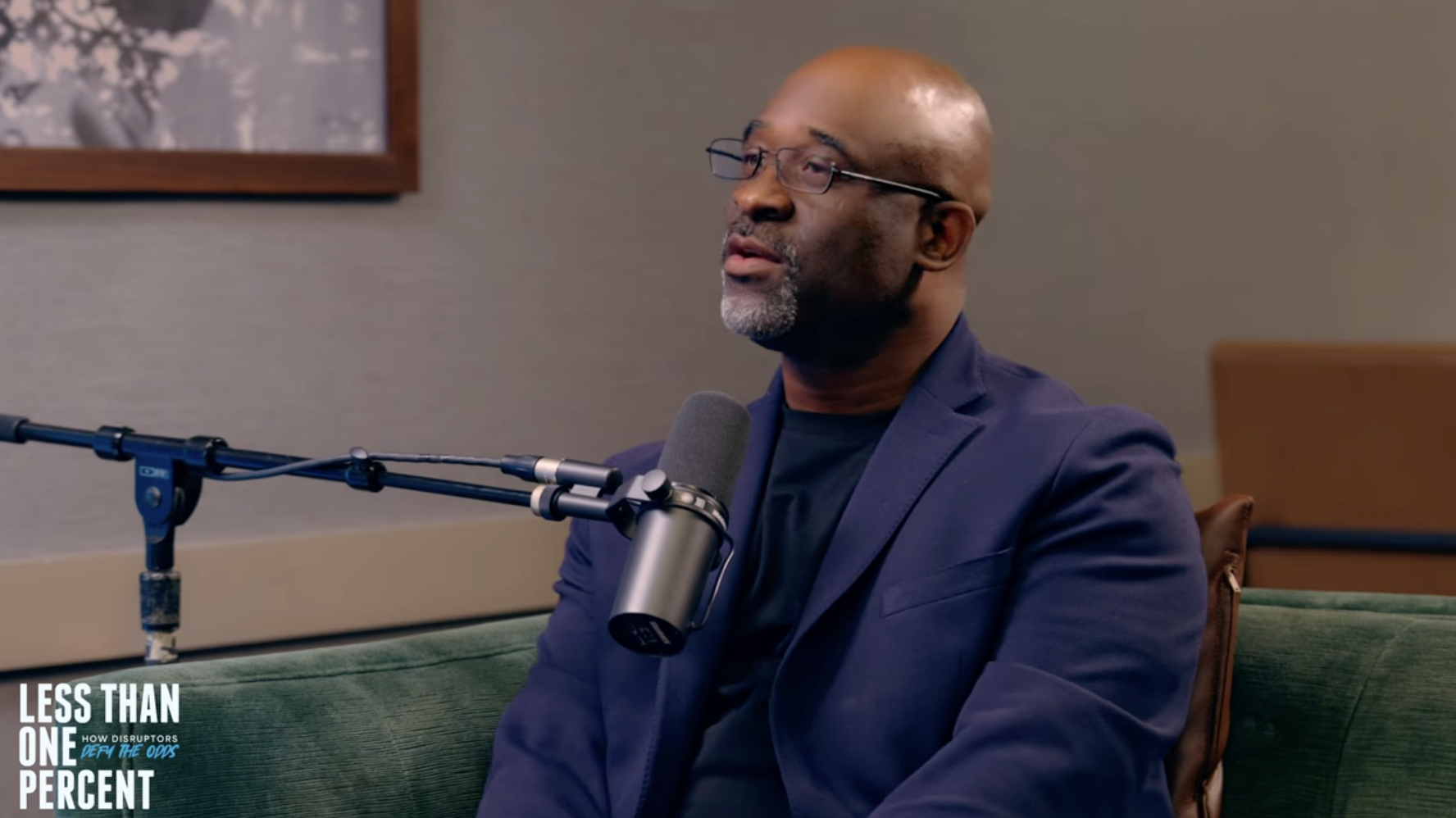
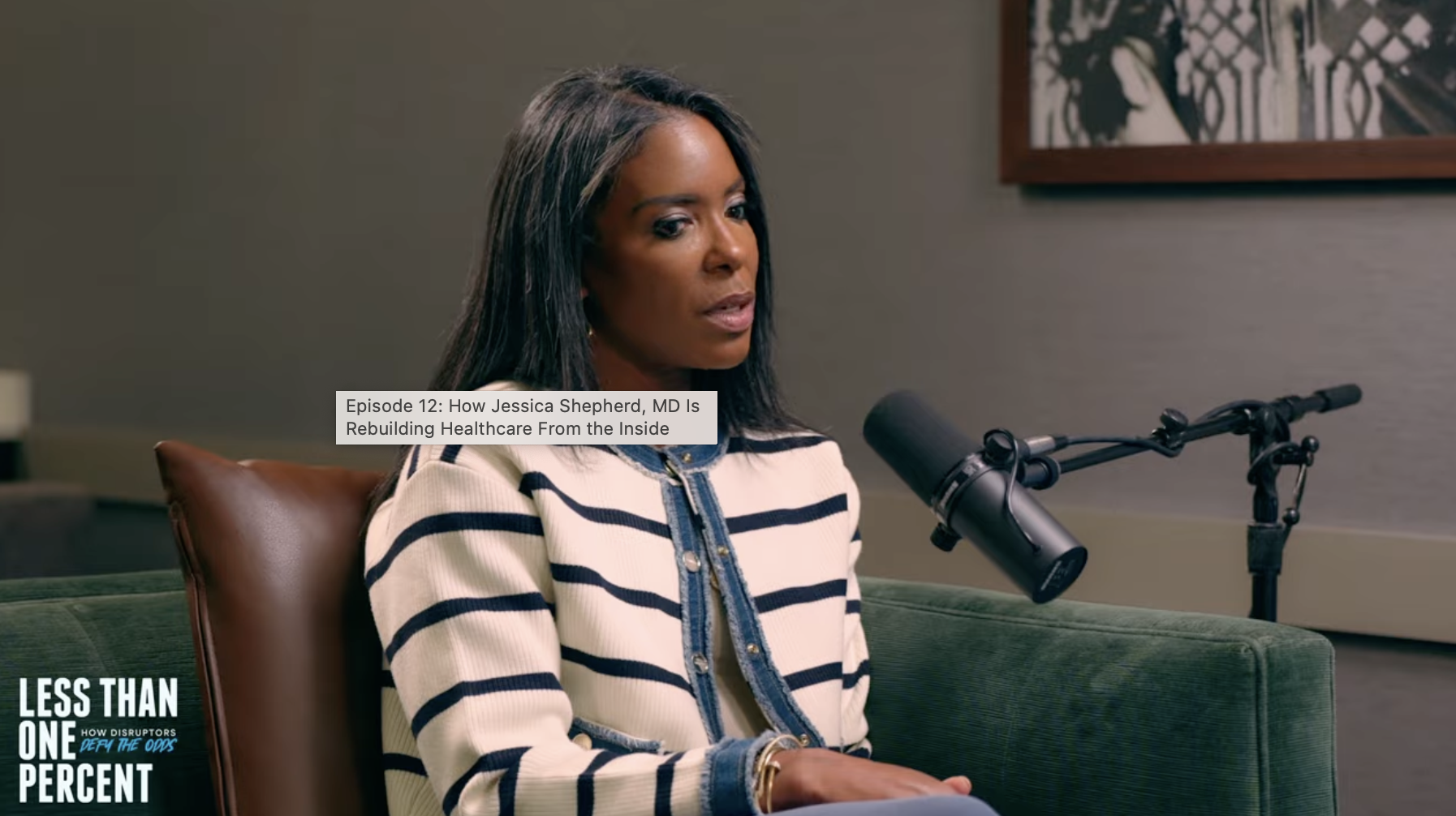
What happens when a doctor refuses to accept the limits of a broken system? In this episode of Less Than One Percent, Jessica Shepherd, MD, OBGYN, author of Generation M, and a nationally recognized female leader shaping the future of women’s health, sits down with host Imamu Tomlinson, MD for a raw conversation about representation in medicine.
As Chief Medical Officer at Hers, she’s redefining how telehealth platforms and telehealth services can close the gaps in access, dignity, and trust, especially for women.
Together, Dr. Shepherd and Mu dive into why breaking norms isn’t optional. It’s necessary.
This is how Jessica Shepherd, MD disrupted women’s health care with humility.
Also listen on:


Timestamps
Transcript

1:00
All right, welcome to Less than 1%. Um,
1:07
I know I I apologize. I'm wearing a
1:10
jacket. Don't judge me. I'm at an
1:12
amazing event. I'm here at Brilliance uh
1:14
2025. It's a, you know, conference
1:17
that's really empowering women. And I'm
1:20
cheating because I shouldn't be doing a
1:22
podcast because I'm not doing in my
1:24
studio and we have a different setup.
1:27
But I have the amazing Jessica Sheepard.
1:30
Good.
1:30
I mean, I I am just I'm just like beside
1:34
myself that you're here.
1:36
I'm here present
1:37
because you are all over the place.
1:40
Yeah.
1:40
I So explain to me when did you start at
1:43
Hims and Hers? Because you were Is that
1:45
a recent?
1:46
It is very recent. I'm just actually
1:48
just passing a year
1:50
at hers and you know it it really came
1:53
at a time where things were already like
1:55
chaotic and hectic. I was in the middle
1:56
of my book launch last year in October
2:00
and you know I have a my own practice.
2:02
It's it's a smaller practice because I
2:05
have been doing so much as far as
2:06
consulting and previous to hers I was a
2:09
chief medical officer at very well. So,
2:11
I've always had like, you know, a
2:13
million things going on. And so, when
2:15
the book came out, you know, that tour
2:17
took a lot out of me. And,
2:19
you know, I had to obviously not see
2:21
patients during that time. I was doing I
2:24
think we did 16 cities during that tour,
2:26
all the while on boarding to hers.
2:29
So, here we are a year later and um I'm
2:32
proud of the work that we've done as a
2:34
team. But, like you saying, like looking
2:36
back, you're like,
2:37
what is going on? People often ask me
2:39
that. I'm like, I'm not sure, but I'm
2:40
just here.
2:41
It's funny like, you know, wherever I
2:43
was I love Charlene Lee that get gave an
2:46
answer on balance.
2:47
Yeah.
2:48
Because I don't believe I mean I I agree
2:50
with there's no balance. You just kind
2:51
of do everything and when you're
2:52
present,
2:53
you're present.
2:53
You're the most amazing. It's the most
2:55
amazing time ever.
2:56
Yeah.
2:56
Um but you know, I have to go there and
2:59
I normally I wait
3:00
and I want to talk about what you do at
3:02
Hers. I want to talk about that, but I
3:04
have to go back
3:05
cuz we because we are not from Toronto.
3:09
We're both from Toronto. We're from Toronto. That's how you know
3:12
if someone's from Toronto
3:14
now. And actually, people from Toronto
3:16
don't say Toronto when you ask them
3:19
where they're from,
3:19
right?
3:20
So, officially, where are you from?
3:22
I'm from Scar Bro.
3:24
This is This is
3:26
right from Scar Bro. Malvin.
3:28
No, no, no. You're not from Malvin. I
3:29
am. There's no way.
3:31
Absolutely. So now we're going to go
3:33
even to what elementary or high school
3:35
did you go to?
3:35
Okay, so this is this is crazy. So I
3:38
actually went to Raybuff.
3:40
I went to St. Columba and then Sacred
3:42
Heart
3:43
because my parents didn't want me to go
3:45
to Pope John Paul which had just opened
3:47
because I really wanted to go to Mother
3:48
Teresa.
3:49
That's where my sister went.
3:51
We were walking distance from Mother
3:52
Teresa and I ended up going to Pearson.
3:55
Wow.
3:56
Insane. Literally the same neighborhood.
3:57
Yeah. So I was at I was at Morningside.
4:00
Morningside and Elmer, but I was at it
4:01
was in it was in that neighborhood right
4:03
next to Pope John Paul.
4:04
I was at Morningside and in between
4:06
Finch and Shepard.
4:08
So, you know, because I I used to go to
4:10
uh Mr. Jerk right there.
4:12
Yes.
4:13
This is This is
4:14
We're from literally the same
4:15
neighborhood.
4:16
Same place. So,
4:18
my parents will not I know you I know
4:21
you're watching, Mom.
4:22
My parents will not let me say that I'm
4:25
from Malvin. And I'm like, yo,
4:27
Melvin represents
4:28
it is Malvin. Like it's this pocket, but
4:32
it's still Malvin.
4:33
Yeah,
4:34
that's amazing. How are we from the same
4:35
place?
4:36
Isn't that insane? I really think, you
4:38
know,
4:39
looking back at the neighborhood we grew
4:41
up in and and also the country,
4:43
there's so much richness in
4:46
that kind of soil that we grew up in.
4:49
And I find this anytime I, you know, in
4:51
my travels meet someone who's from not
4:54
only Canada, but from Toronto and then
4:55
narrowing it down to Scar Bro, Melvin,
4:57
it's it's amazing. I'm so grateful and
5:00
proud to have grown up there.
5:02
Absolutely. So So you um
5:06
I have all these questions that that
5:08
we we shouldn't record.
5:09
We're we're we're gonna this podcast is
5:11
going to turn into a twohour
5:13
Yeah. You're miss your flight. You miss
5:14
flight. Um, so no, I I totally agree
5:17
with you because I think that I always
5:19
tell people the upbringing that I had
5:22
was very different. I I mean I Jamaican
5:24
family.
5:24
Yeah.
5:25
Jamaican parents. Yeah. So it's like
5:28
I didn't really like even people talked
5:30
about
5:32
uh you know just in America you identify
5:34
with your race.
5:36
In Canada you identify with your
5:38
culture.
5:39
I said this just last week. I said when
5:42
you ask someone
5:44
um from Toronto or Scarbor or Malvin,
5:47
we don't say we say where are you from.
5:50
Yeah.
5:50
And you identify with your culture.
5:53
Yes.
5:54
And you're very proud of like whatever
5:57
little island you're from or whatever
5:58
country you're from. you know, I don't
6:00
it was very hard for me, you know,
6:02
moving to the US in asking those same
6:04
questions and people be like offended as
6:06
if
6:07
I was trying to uh maybe ostracize, but
6:11
it's we were so proud of where you are
6:13
and I think that kind of transpired into
6:16
the the fabric and the DNA of who I am
6:18
and and I love that.
6:20
So again, Drake,
6:22
it's not just it's actually T dot. We
6:24
know that we grew up saying T dot and I
6:28
will share something uh vulnerable.
6:31
Uhhuh.
6:31
So
6:32
we're doing vulnerability now.
6:33
I was uh I was I was rapping.
6:37
Really?
6:38
I was rapping. So I got uh I almost I we
6:42
had a contract with Arista. I was
6:43
talking with my guy last night who was
6:44
my manager.
6:46
Are you kidding me?
6:47
Yeah. I was I was running around all
6:50
over Toronto rapping and um Yeah. That's
6:54
uh so then
6:56
so we're going to have at the end of
6:57
this particular session we're going to
6:59
have you do a
7:00
you know what's funny? Yeah.
7:01
No. So I stopped I kind of stopped but
7:02
today I I found a just a random song in
7:06
the airport. You know they play stuff
7:08
overhead. I'm like that's that's
7:10
amazing. I listen and then I started
7:12
because I was wired at 3:00 in the
7:14
morning to come here.
7:15
Yeah.
7:15
And I started writing lyrics. I'm like
7:18
okay.
7:18
See it's a comeback. We're making a
7:20
comeback here. What are you doing? What
7:21
are you doing? Okay. So I want to jump
7:24
to so Jamaican heritage too.
7:26
Jamaican heritage both parents.
7:28
Both parents.
7:28
Yes.
7:30
Yeah. I mean so um everybody safe uh
7:34
extended family from
7:35
so a little displaced you know but still
7:38
safe.
7:38
Where where in Jamaica?
7:39
So my mom's from Mapen. Okay. And my dad
7:41
is basically from Kingston. Okay. And
7:43
then my mom went to high school in
7:45
Kingston and that's where they met.
7:46
So we're Graange Hill.
7:48
Yeah.
7:48
Um and well my dad's from Graange Hill
7:50
Country Guy.
7:51
Uhhuh. And then my mom is from she
7:54
really is from kind of from Kingston.
7:56
Yeah.
7:56
You know, went to went to boarding
7:58
school.
8:00
Um but yeah, the house in Green Hill,
8:02
the family house is probably gone. We
8:03
haven't heard yet, but right
8:06
Western Jamaica.
8:08
So that's that's amazing. And do you
8:10
think that that Jamaican heritage,
8:12
you know, filtered through Canada
8:15
and then filtered again through America?
8:18
Yeah.
8:19
It's it it seems to be different. Do you
8:21
feel different? I mean, is there
8:22
something
8:23
I would definitely say that you don't
8:26
sometimes realize um the things that
8:28
have kind of shaped you until you're put
8:30
in positions
8:32
that maybe either make it very magnified
8:35
or try to lessen it.
8:37
And I feel, you know, for how I grew up
8:40
and where I grew up, uh moving when I
8:42
was 14, you know, I had just finished
8:44
grade nine,
8:45
so I'd already started the high school
8:47
kind of transition.
8:48
Yeah. Moving to the US was very
8:51
difficult especially not only did we
8:54
move to the US, we moved to Oklahoma.
8:56
Oh man.
8:57
So imagine already now moving countries
9:00
but also to nothing.
9:01
Yeah.
9:02
And so the identity factor of who I was
9:05
and where I belonged especially during
9:07
the teenage years was very hard. And I'm
9:11
glad that I had the strength, I guess
9:13
you can say, or the vitality of, you
9:16
know, when you're representing Jamaica
9:19
in, you know, in your basement party or
9:21
at your high school, that that really
9:25
shone through because I was like, I am
9:27
Jamaican.
9:28
Yeah.
9:28
And you have pride with it. And so,
9:31
you know, it's almost like you're like
9:32
in the midst of like what is going on?
9:34
and you're like in a business,
9:36
you know? So, all those things come to
9:38
come to play when you're like, I know
9:40
who I am. I'm in a business.
9:42
Everything happens for a reason. This is
9:45
this is one of the best days of my life
9:46
right here.
9:47
It's so funny.
9:49
I um so I I did the opport
9:56
and uh yeah, culture shock, a lot of
9:59
culture shock because
10:01
um I didn't understand things. I I I
10:04
tell this to a bunch of different
10:05
people. I went I was on campus
10:07
and upstate New York is not very
10:09
diverse.
10:10
Not at all.
10:10
And so three three black students start
10:13
running towards me and I'm like, "Okay,
10:16
you know, I'm from Malvin, you know, I'm
10:18
ready. I'm ready."
10:19
Exactly. Yeah.
10:20
And they run up to me and they're then I
10:21
seem closer and they're all laughing and
10:23
smiling. They're cheering and they're
10:25
like, "Hey, you need to join the Black
10:26
Student Union."
10:28
And I was like, "Why?"
10:30
You know what I mean? Because
10:31
I mean, you know, we dealt with racism
10:34
and stereotypes,
10:36
but I think having that, to your point,
10:38
having that Jamaicanness or frankly that
10:41
Italian or, you know, Toronto's really
10:44
cosmopolitan. So,
10:45
everyone had a very strong understanding
10:47
of who they were.
10:48
So, there was no there was no
10:49
inferiority no uh associated with it,
10:52
you know. But anyway,
10:54
let's let's talk about um
10:57
I want to talk about what you do now
10:59
because you
11:01
you are representing.
11:00
I mean you're amazing because you're not
11:06
only representing um hers I mean you're
11:10
representing me you're representing my
11:11
daughter you're representing there are a
11:13
lot of different
11:14
you know sort of for lack of better word
11:16
boxes that you check that let people
11:19
know wow this is
11:21
you know hers obviously is committed to
11:23
diversity yeah
11:24
um and put you in position but then you
11:26
also taken that and elevated it
11:29
yeah I believe we have to and I when I
11:32
say we exactly who you were saying is
11:35
for all those boxes that are checked
11:38
that means in every box that's checked
11:40
there's a community of people behind
11:42
that and so I feel it's like my utmost
11:45
responsibility is right right what
11:47
you're given means that you have
11:49
responsibility to show up
11:52
that duty
11:53
it's it's you show up and and it's a big
11:55
you know ticket to fill but I believe in
11:59
the path that you were given prior to
12:01
that. You can either own it and lean
12:03
into it or shy away from it. And I think
12:07
very early I realized, you know, always
12:10
wanted to be a doctor. It's a very like
12:12
boring story. Yeah.
12:13
Like in grade four, what do you want to
12:15
be? I literally said an OBGYn.
12:17
So there's no like there's no creativity
12:19
to my journey. I was just like, oh, I
12:21
ended up being a doctor. So people are
12:22
like that's great. I'm like it's a
12:23
boring story. So now I've actually come
12:25
up with another story that I was in a
12:26
rock band and then I was like a air
12:29
pilot and then finally went to medicine.
12:30
Sounds better.
12:31
Yeah.
12:31
But even in getting to that was
12:35
difficulty, right?
12:36
So you know being black, being female, I
12:40
really didn't have a great support
12:43
system in understanding how to achieve
12:45
to become a doctor. I was just like,
12:47
"All right, here we go." And it's like
12:49
being consistently fed by like a fire
12:52
hose.
12:52
Yeah. And so you get through that and
12:55
then you're like I made it and for 15
12:58
years I was in academics. I did a
13:00
fellowship in surgery. So I did another
13:02
two years after residency and then I was
13:04
like
13:04
because you like punishment because I
13:05
was just about to say fellowship
13:08
fellowship and then while I was doing my
13:09
surgical fellowship at the University of
13:11
Louisville that's when I got my MBA and
13:14
so I was like surgeon by day MBA student
13:17
by night for two years straight.
13:19
Wow. But I knew I was like, I'm
13:21
presented with this opportunity and I
13:23
can do my MBA so do it. Going into
13:26
academics for 15 years and then being
13:29
presented with the opportunity to now go
13:31
corporate and consult. It was it really
13:34
was something that I in my head I knew I
13:37
wanted to do, but putting it into the
13:39
universe and then actually getting the
13:41
opportunity
13:42
has like I I sometimes I do look back
13:45
and I'm like, "Wow, how how did I get
13:47
here and and what happened?"
13:49
It's almost like it's so amazing. You're
13:51
like, "No, it's it's not real."
13:52
Yeah. Sometimes I do feel it's not real.
13:54
You um so you talked a little bit about
13:58
on stage you mentioned,
14:00
have you so you seem you seem outwardly
14:03
like you're on top of the world like you
14:06
I mean I mean I I got two hours sleep
14:11
last night
14:12
right and you don't know I mean I don't
14:14
know how many hours like everywhere I
14:16
see you you are absolutely on point
14:19
is there t are there times where inside
14:22
you're not on point and you're like I'm
14:23
just
14:25
I'm struggling
14:25
yes I think that for a lot of what
14:28
people see right I always say that how
14:30
people see me as the highlight reel and
14:31
it has a very big part of my everyday
14:33
life. But there are moments and even you
14:37
know like in my professional and
14:39
personal life over the last few years
14:41
I've had to sit and deal with some hard
14:44
14:44
Yeah.
14:45
And in that I would say again is another
14:47
part of the process. And that's why I
14:49
was saying today that our journeys are
14:51
not linear.
14:52
And I think in the last few years has
14:54
proven to me that it's not linear and
14:57
there are going to be some hard moments.
14:59
And that's why I've had to really do an
15:01
internal look at
15:03
what does this all mean and how are you
15:05
subscribing to what's happening
15:07
and not numbing to it and kind of just
15:09
like I'm just going to kind of distract
15:12
myself and move on and keep doing this
15:14
is actually going back to those things
15:17
that present
15:18
and being like I have to deal with these
15:20
and that takes again self-awareness one
15:23
of my biggest words for 2025
15:25
and also how do I navigate the things
15:29
that in my past have happened to me that
15:31
I'm are now revealing itself that are
15:33
not working for me. How do I how do I do
15:36
that? That's not easy work, but it's so
15:39
worth it.
15:40
And that's what I think has kind of um
15:42
created a different chapter of how I
15:44
deal with the hard moments.
15:45
Well, you're doing amazing. I mean,
15:46
you're doing you're doing amazing
15:48
things. By the way, I did have a try out
15:50
for the Canadian national team at
15:52
Pearson.
15:52
Stop.
15:53
Yeah. Yeah. Because you know Yeah. at
15:55
Pearson
15:56
and uh I know I know a bunch of those
15:59
guys.
16:00
There were a there were a few years
16:02
where Pearson basketball team
16:04
Yeah. Yeah. No, they're solid.
16:05
It was solid. I mean, the only thing
16:07
that's that helped us was that some of
16:10
the guys would always get in trouble.
16:12
Yes. Pearson was
16:14
I used to get my haircut right across
16:15
the road at that barber shop um next to
16:19
next to Max. I know exactly where you're
16:21
talking about because the next shop was
16:23
it was two crews. Two crew something.
16:25
There was a fish and chips stop right
16:27
there in a patty shop. What is going on
16:30
right now?
16:30
And I used to live uh for a while
16:33
before we moved to Morningside. I used
16:35
to live on Cro Crot Trail.
16:36
Stop.
16:37
That's right. You know
16:38
cuz Crow Trail is right by St. Columba.
16:40
So I know I know exactly where you're
16:41
speaking.
16:42
Okay. Something I ask everybody.
16:43
Yes.
16:44
Is okay. So I I I have this thing where
16:47
I talk about people's superpowers. I
16:49
didn't mention it today
16:50
because I didn't want to detract from
16:52
all of you, right? I mean, people didn't
16:53
come near me.
16:54
They did.
16:55
Um, but I I always say that when you are
16:58
doing amazing things in the world,
17:00
you're using your superpower.
17:01
So for a long time in this role, I kind of got
17:04
the job, maybe I'll thought I was right,
17:07
but I didn't necessarily think I was
17:09
right.
17:09
And I was trying to fit a box. I was
17:11
trying to fit a mold in first two or
17:13
three years. wasn't like I didn't even
17:15
wear a jacket that fit right cuz I was
17:17
like, you know, I didn't even know who I
17:18
was.
17:19
Yeah.
17:19
And then once I identified what I
17:21
thought my superpower was, it's like the
17:24
organization did better. I felt better.
17:27
I was just at ease. I was just being
17:29
myself.
17:30
So, what would you say your superpower
17:31
is? And it can't be I'm on time. It
17:34
can't be, you know, something just
17:37
rudimentary. It has to be something at
17:38
your core. And when you do, when you
17:41
have when you're exhibiting that
17:42
superpower,
17:43
there's no loss of energy.
17:46
I would definitely say is the superpower
17:48
of connection.
17:50
Um, and connection doesn't necessarily
17:52
mean someone gets along with you. It
17:55
means that you get someone, right? And
17:57
you're allowing for a space for people
18:00
to showcase who they are and not always
18:04
trying to overrun that or tell someone
18:06
what they should or should not be is the
18:08
connection. So, it's that space and time
18:12
where you have maybe a moment and
18:15
connection can be I made a connection
18:16
with you in 10 seconds versus I've known
18:19
you for 2 years, 10 years. And I think
18:22
versus we both grew up in Melvin and
18:23
just didn't know each other,
18:24
right? And we didn't know each other.
18:26
But I I really feel that that's, you
18:29
know, as we progress in technology and
18:30
innovation,
18:32
sometimes we lose connection, the human
18:34
side of connection. And I think that
18:36
that there the superpower to that
18:39
is allow us to show the diversity of
18:41
showing up as different people,
18:43
different backgrounds. And I think that
18:45
goes again to where we grew up.
18:48
Yeah.
18:48
That's what I learned and that's what I
18:50
learned really to do well is to connect
18:52
with different people, different
18:54
ethnicities, etc.
18:55
Um, hers.
18:57
Yeah. What what's your I you're you're
19:01
you have you seem to have a vision for
19:03
her.
19:03
So when I see you speak about it,
19:05
you're not you're not just talking, you
19:08
know, this this isn't strategic plan
19:11
regurgitation.
19:12
There's something in your core that
19:14
you are trying to bring this company to
19:17
another level. Yeah. What what is Am I
19:20
sensing that correctly?
19:21
So yeah, you were sensing that exactly
19:23
as how I one was brought into the team.
19:25
And I think the CEO is very visionary in
19:28
how he has brought this teleaalth
19:31
platform
19:32
that started off with him and then hers
19:34
came a year later. So that's eight years
19:36
ago is that there is something there's a
19:39
big gap in healthcare and we spoke about
19:41
it today as there it's broken. So it's
19:44
broken from the aspect of access and
19:47
resources, right? And that's what we
19:49
know categorically has impacted the
19:53
breakdown of healthcare are mainly those
19:55
two things among others. So now bringing
19:58
me into hers is I have seen and been a
20:02
part of that traditional health care
20:04
setting where I do know what is lacking.
20:07
Yeah.
20:07
So now we you can say like on the other
20:09
side of the pendulum is technology at
20:11
its finest, right? But still with that
20:14
you can have some kind of obscurities
20:17
that you're not visualizing. So how do
20:20
we bridge that? How do we allow
20:23
teleaalth to have compassion? How do we
20:26
allow teleaalth to allow women to feel
20:29
heard and seen? Yeah. which sounds weird
20:32
because it's tellalth but in traditional
20:35
health care setting we've had that for
20:37
centuries but still there's something
20:38
missing when it comes to do I feel seen
20:41
and heard and so I I do feel that now
20:44
that I've experienced both
20:46
I have that ability to create an overlay
20:50
of the brilliance of technology and
20:52
innovation to something that
20:54
fundamentally when you think about
20:55
medicine where it started was you know
20:57
the community doctor who would go see
20:59
everyone but what do they have on the
21:01
wall.
21:02
They have connection. They allow people
21:03
to feel seen and heard. And they deliver
21:06
a system or a service that is ultimately
21:10
going to help impact and shape people's
21:12
lives.
21:14
Wow. That's that's that's impressive.
21:15
And I think, you know, if you look at it
21:17
and we watched we watched, you know,
21:19
we've watched him and now hers grow.
21:23
Yeah.
21:23
And you know, we have a whole
21:25
we have a whole uh
21:26
you know, sort of innovation wing. We
21:28
spin up small companies and we're trying
21:30
to do all this stuff and I think you
21:31
guys really cornered the market cornered
21:35
is the right word on
21:38
just really what is going to be a
21:40
generational change.
21:41
It is and I think that that's where
21:43
traditional medicine is not uh catching
21:45
up.
21:45
Yes.
21:46
Is again it's it's when it's a glaring
21:48
um something that's obvious and glaring
21:51
that is missing instead of I said this
21:53
earlier instead of shying away from it
21:54
leaning into it.
21:55
Right. But there's a there is this kind
21:58
of like ego. Everyone has ego, right?
22:00
But when you let ego overtake the actual
22:02
thing that is now hindering you and not
22:05
leaning into it, that's what we're
22:06
seeing right now. And I I really just
22:09
have a strong insight for
22:13
we are we are ever evolving in society
22:16
and innovation technology is not going
22:18
anywhere.
22:19
It's only bettering by the day.
22:21
Yeah. And so if we don't find a way to
22:24
connect to humans through technology and
22:27
innovation and allow access and resource
22:29
to be some prime stakeholders in
22:32
healthcare, we are only going to
22:33
continue the same thing that we've been
22:35
doing for the last
22:35
Yeah. It's going to be Yeah. My line.
22:37
Get better faster than everybody else is
22:38
getting better so you don't get worse.
22:39
That's not transformational.
22:40
No.
22:41
So you um so we have two two more
22:44
questions. One I want to I want to talk
22:45
about the book. Yeah. uh because I think
22:48
it's important to get that information
22:49
out there. But you speak all the time.
22:53
You've been on lots of podcasts. You've
22:55
been on Good Morning America. And I'm
22:57
mad y'all didn't invite me. But if y'all
23:00
out there, I know I know I don't have
23:02
the you know, but I'm.
23:00
Anyway, but uh
23:06
what's something that you would want to
23:08
tell people? Because you know the whole
23:10
my whole thing with less than 1%. You're
23:12
less than 1enter by definition. And the
23:14
definition is basically that you've
23:17
achieved maybe what you didn't even
23:19
think you could achieve, right? Because
23:21
of whatever people are telling you, the
23:22
boxes that they put us in and you know
23:24
through medical school, even before
23:26
medical all that stuff. And so you're
23:28
100% a less than 1enter. But what about
23:30
you?
23:32
And I want less than 1% to have the only
23:36
the only uh you know u you know caption
23:41
of you telling us what is that what is
23:43
something that you don't want to tell
23:45
anybody else
23:47
and I mean
23:48
a good one
23:49
what what is something that
23:51
you know maybe you try to keep at bay
23:55
not talk about
23:56
I would definitely say in the space and
23:59
I'm glad you framed it that way because
24:00
I always I don't look at it like that
24:02
that I'm a less than 1enter. So
24:04
sometimes even when I hear that
24:06
is the humility behind it.
24:08
Because what I can tell you is as you
24:10
start to climb, as you're offered more
24:12
opportunities,
24:13
our mind is something that can take us
24:17
very far from where we should be
24:19
or keep it close. And sometimes in these
24:22
circles or on these platforms, you have
24:25
a very good high probability and chance
24:29
of becoming someone who maybe later you
24:31
may not want to be.
24:32
So I would say humility is one of those
24:34
things that I keep close to myself and
24:37
maybe don't want to tell everyone but
24:39
humility is something that will keep
24:41
safeguard
24:42
any you hold grudges. So I will tell
24:45
you. So as you said that I literally
24:48
I had to my internal self. I am a
24:51
Sagittarius and I I man I could hold
24:54
grudges from people in elementary school
24:56
today if I could.
24:57
But I have learned in the new version of
25:00
myself in these last two years that in
25:03
my personal journey that grudges were
25:05
not uh doing me any benefit to my
25:08
internal self. Right? And so letting go
25:11
of that is very hard. And what comes
25:13
with it, and if my sister is watching
25:15
this, she's going to gasp, is empathy,
25:17
but also compassion. I have a hard one
25:20
with that. But compassion is something
25:22
that allows me to look at grudges
25:24
differently.
25:25
Yeah. My my problem is is that that it
25:27
fuels me. So I remember everybody's
25:29
But wait, we're Jamaican. Grudgeolding
25:31
is like a sport.
25:32
Yeah.
25:33
It is a sport. So yeah, that's what
25:35
that's the br I come from is you hold a
25:38
grudge. I can hold a grudge. For sure.
25:40
For sure. Um, okay. So, let's let's talk
25:43
about the book Generation M.
25:45
Great title.
25:46
Yeah.
25:47
Much better cover than mine.
25:50
Uh, I'll just say mine is more austere
25:52
and trying to shock you, but yours is a
25:54
good shock factor.
25:55
But you you there's there's emotion I
25:58
think that comes just from the cover and
26:00
the title. So, tell me tell me
26:02
tell me more about that. How did you
26:05
decide to write it?
26:06
Yeah. Yeah. And and what what what what
26:08
difference are you trying to make in the
26:09
world?
26:10
Yeah. Difference in the world is the
26:12
complete composite of our lives as
26:14
women, right? So, generation M, which I
26:16
fought both for the title and the cover
26:18
from the from the book company is
26:21
because I wanted Generation M to feel
26:22
like some everyone could be a part of
26:24
it, inclusivity. And I also wanted to
26:26
not feel stigmatized because menopause
26:28
holds a lot of stigma. So, I was like,
26:30
generation M, I want to be part of it.
26:31
Create some FOMO. I wanted it to look as
26:34
if it could live anywhere and it not be
26:37
like plagued with the word menopause.
26:39
Yes.
26:39
And the last thing that I would say
26:41
about the book is it says living well in
26:42
pmenopause and menopause. I am a firm
26:44
believer. I am a big longevity doctor. I
26:48
believe in what we do for our lives now
26:50
shows up later. And I think in midlife
26:53
women are not steered in the right
26:54
direction with their health. And that's
26:56
why we do live longer years but in
26:57
poorer health. So I wanted to put in
26:59
there I talk about diet, exercise, sex,
27:02
sleeping because that's all of our
27:04
lives. And so if we don't approach it
27:06
that way, we will just be kind of tunnel
27:08
visioned into menopause and then be like
27:10
scared of it. It is something beautiful.
27:12
It is something that can create that
27:14
next 40 years of our life to be
27:17
not even transactional but
27:19
transformational. And I don't want women
27:21
to just strive to be better. I want them
27:23
to to really thrive.
27:25
Yeah. I um that I'm gonna go I'm gonna
27:28
I'm gonna get you to sign a book for me
27:29
today. I will. But then I'm still gonna
27:31
buy a book because I know how I know the
27:33
whole book selling thing is well also um
27:35
sign a book for you. Um you know,
27:38
appreciate it. I think Do we have a Do
27:40
you have a pen here? Let's see if we can
27:42
uh get Marker.
27:44
Yeah, marker's perfect.
27:45
Um but you know, I just really
27:47
appreciate you coming. Yeah.
27:49
Oh, that's great.
27:50
I really appreciate you coming. Um I
27:52
know how valuable your time is. I'm I
27:54
mean what I will say is I am glad that I
27:57
I believe that things in the universe
27:58
happen the way they are supposed to.
28:00
I'm so glad I am here and that we've had
28:02
time together and this is just the
28:04
beginning. That's what I would say. This
28:05
is just the beginning
28:05
because I think we have I you know and I
28:08
think
28:09
longevity is something that we're going
28:11
into hard and we can we can have another
28:13
conversation. But thank you so much. I I
28:15
want you to record this because I want
28:17
Yes.
28:17
I want to I want to sign
28:19
I want to sign.
28:20
You sign?
28:21
No. No, no, no. I What you need? I got
28:23
my mark
28:24
I got my own white pen because of my
28:27
black
28:27
Oh.
28:29
Yes.
28:30
So,
28:32
we got to get you uh we got to get you
28:34
um
28:40
get you on your plane.
28:41
We're going to make sure we do this on
28:43
camera.
28:43
Okay.
28:44
Got the exchange.
28:46
Perfect.
28:47
Awesome. Awesome. That's amazing.
28:50
That's amazing.
28:50
Thank you so much. I like this is this
28:54
is near and dear to my heart. You know,
28:55
as much as I travel and talk,
28:57
there are few moments that were again
28:58
the connection
29:00
like where the connection is a big part
29:02
of the event.
29:02
And what's crazy about it is that I I do
29:05
believe everything else.
29:06
Yeah.
Key Takeaways
- Real change happens when people feel seen, heard, and valued.
- Success is about facing hard moments with self-awareness and choosing growth anyway.
- True leadership is rooted in connection and humility, not ego.
Share with a friend
Episode Guests
Jessica Shepherd, MD
Dr. Jessica Shepherd, MD, MBA, FACOG, is a board-certified OB/GYN and a leading voice in women’s health and longevity. As a wife, mother, author, CEO, and media personality on her own perimenopause journey, she brings personal insight and professional expertise to her mission of empowering women through every stage of life.
As the founder of Sanctum Med + Wellness, Dr. Shepherd combines traditional and alternative medicine to provide comprehensive, holistic care. Her approach addresses the physical, emotional, and lifestyle needs of women, helping them thrive during menopause and beyond.
Dr. Shepherd’s influence reaches far beyond her practice. A sought-after voice in the media, she shares her insights as a regular on-air contributor on Good Morning America and has been featured on The Today Show, LIVE with Kelly and Mark, CNN, and Dr. Oz. Her expertise appears in Vogue, Cosmopolitan, ESSENCE, and Forbes, establishing her as a trusted voice in women’s health.
With a commitment to addressing health disparities, Dr. Shepherd now serves as Chief Medical Officer of Hers, leading efforts to expand accessible, personalized care for women. Through her work and advocacy, Dr. Shepherd continues to build a community where women are informed, supported, and empowered to live long and live well.
For more on Jessica Shepherd, MD and her work, check out: https://www.jessicashepherdmd.com/modern-meno-community
