How Kevin Bethune Went from Engineer to Nike Designer
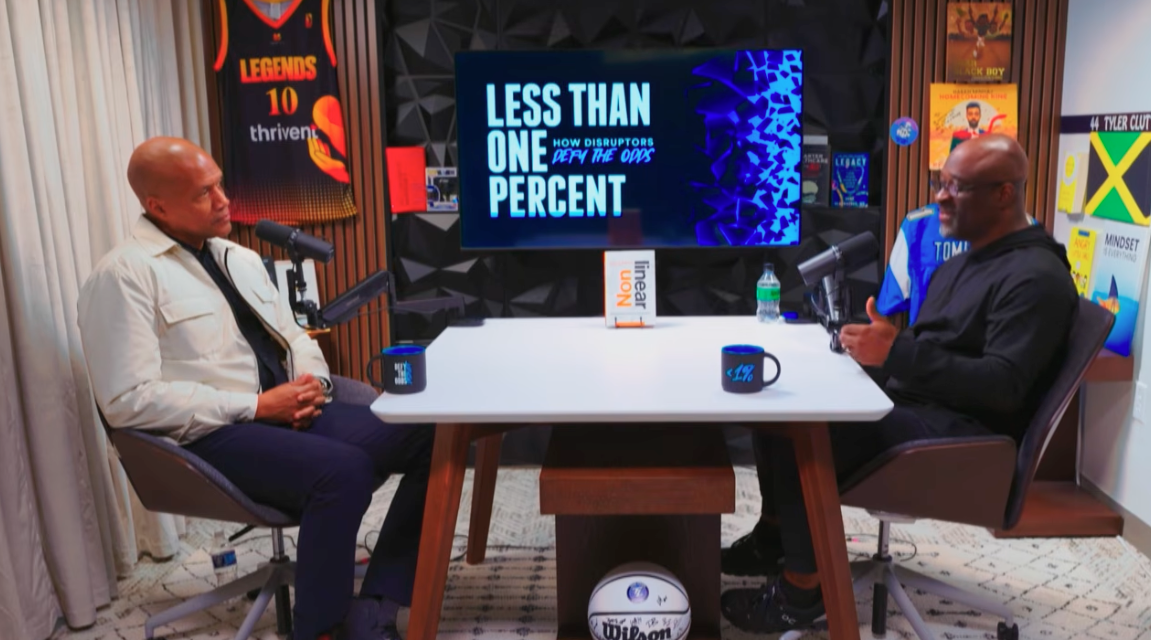
In this episode of Less Than One Percent, author and innovation leader, Kevin Bethune shares how curiosity, creativity, and embracing the unexpected helped him bridge engineering, business, and design to become one of today's leading voices on innovation. From engineering and nuclear power to designing for Jordan Brand at Nike, Kevin has built a career by refusing to fit into a single box.
Along the way, he discusses why design is far more than aesthetics, how diverse experiences create better leaders, why failure is an essential part of growth, and how nonlinear thinking can unlock breakthroughs in business, healthcare, and life.
This is how Kevin Bethune disrupted conventional thinking.
Also listen on:

All Clips

Meet Kevin Bethune
From engineer to Nike and the Jordan Brand
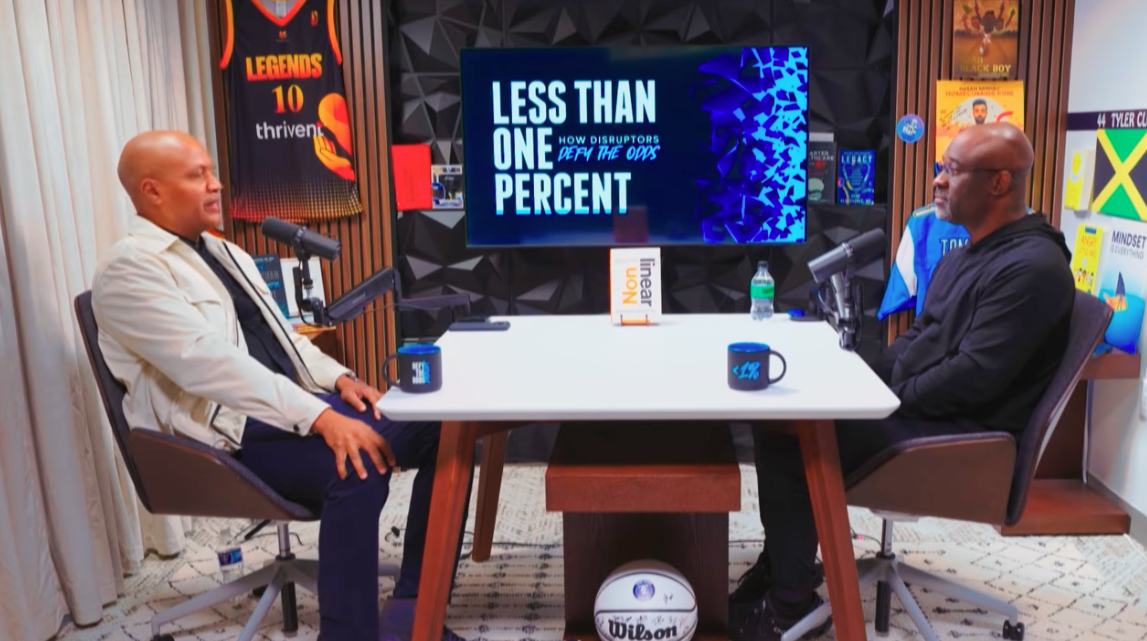
Why choosing an unconventional career accelerated growth
What design really means
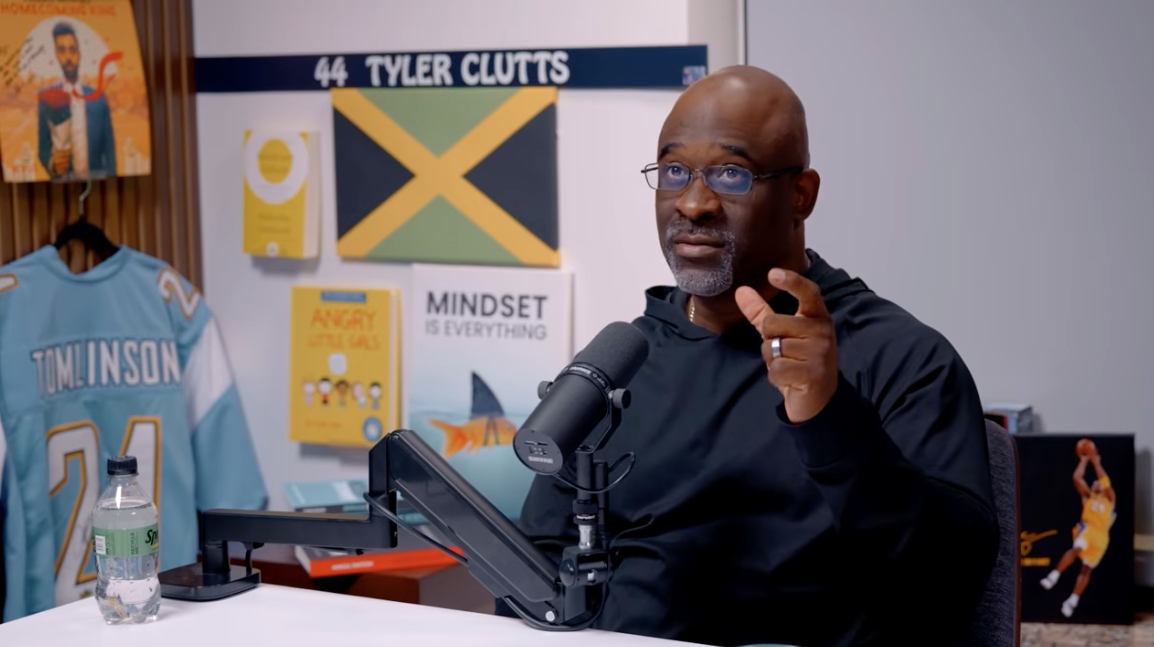
Writing Nonlinear and embracing a different path
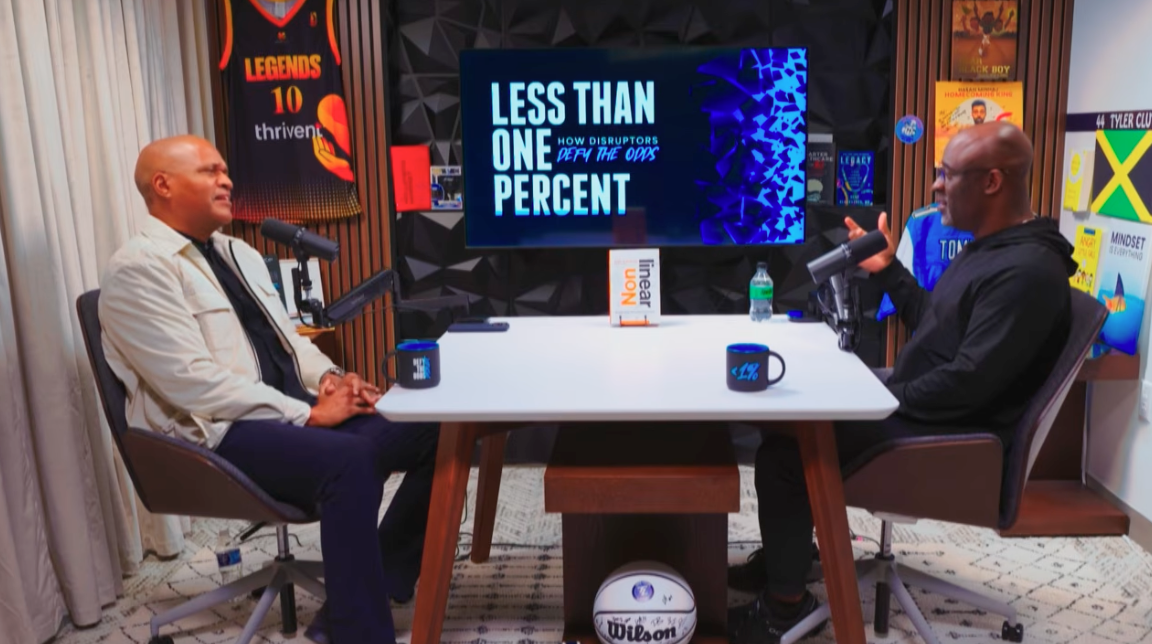
Race, representation, and belonging in design
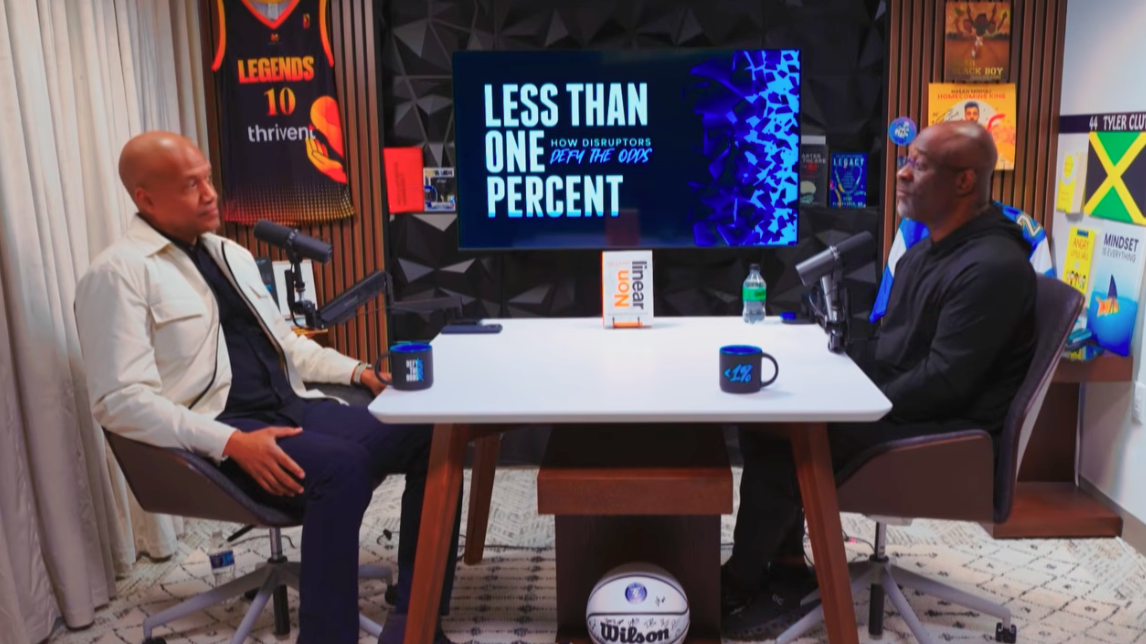
Creativity, curiosity, and lifelong learning
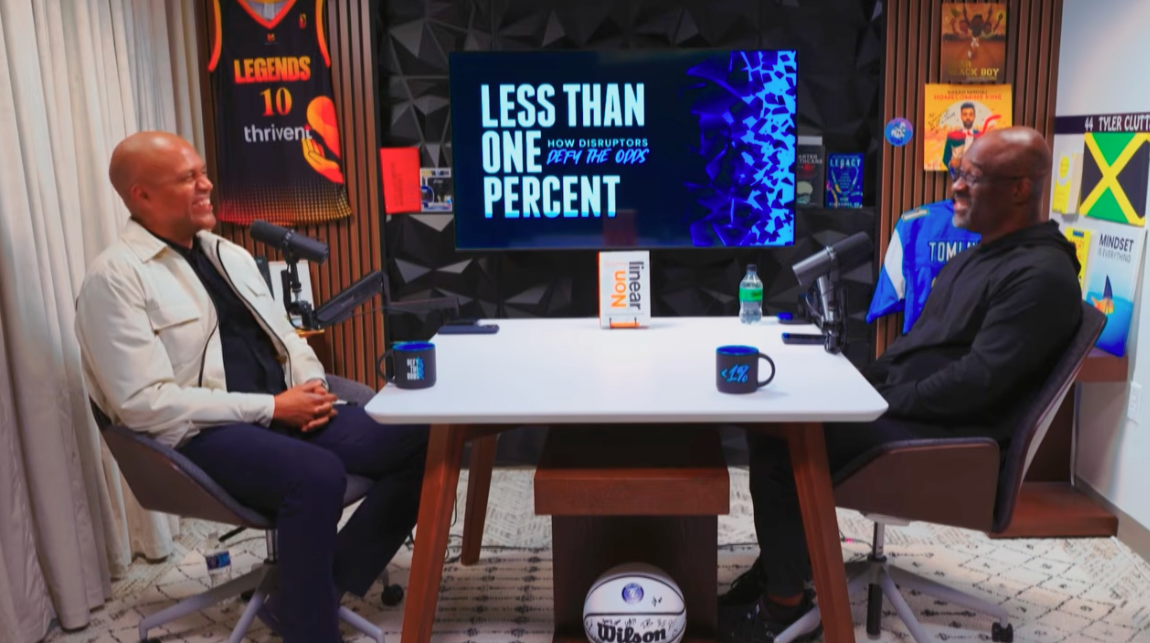
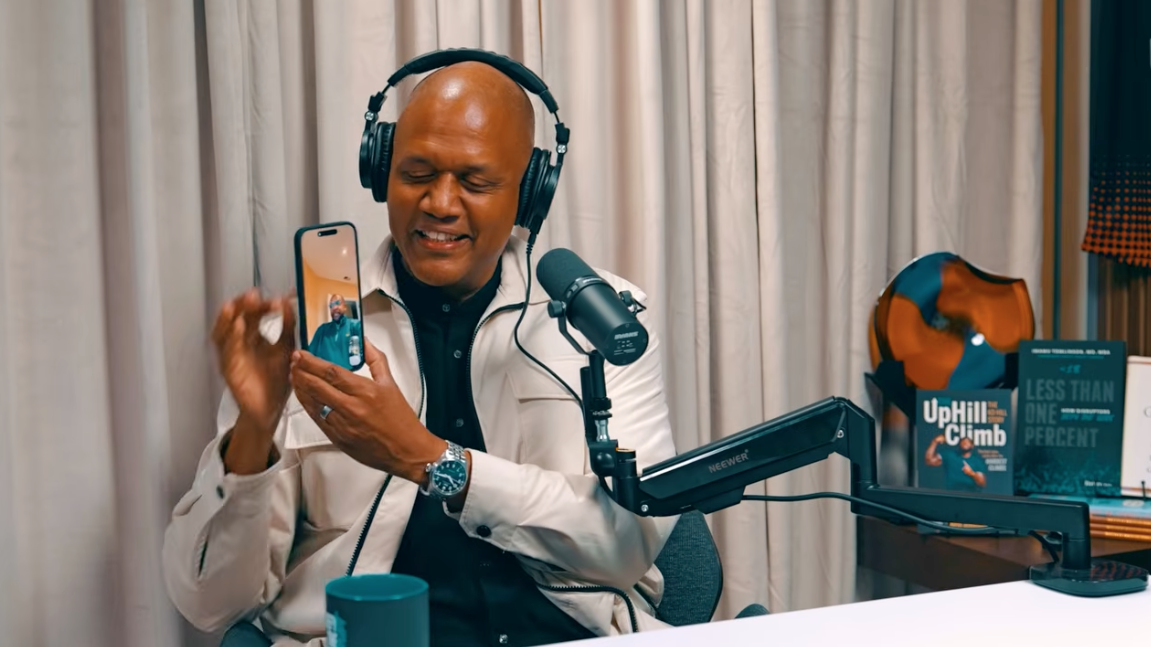
Calling Kevin's college friend
What's next after Nonlinear?
Closing thoughts: How to build a meaningful life

Timestamps
Transcript
00:00
through the continuity of life. I I started with drawing just the natural to want to draw things to visualize my world. And then when I found myself into
00:09
the professional lane of design and learn what visual visualization could do in terms of the stories it can project
00:15
of what that future possibility is. I I became just enthralled and enamored. I fell in love with the ability to just
00:22
visualize. Uh, and I've seen some magical moments when it can happen. Like I could be in the most executive of
00:30
arenas and if there's a whiteboard over at the seauite or whatever in the boardroom when the when the alpha dogs are in
00:38
conversation around the table, you know, I'm I'm the introvert, right? But still, I've learned to master my voice in those
00:46
settings. And there's [music] been plenty of magical moments like that where the the power of visualization has moved rooms, has moved attention, has moved mindsets to a better place.
00:55
Doubleat.
01:02
I got goosebumps. [laughter]
01:05
[music]
01:12
[music]
01:13
Your path is your path. Stay committed.
01:15
Stay focused. must be disagreeable, optimistic, and relentless.
01:23
[music]
01:26
All of my podcast just start. [laughter] So, but uh welcome to Lesson 1%. Uh in
01:33
the studio today, we have we have I'm excited that we have somebody from a totally different area, genre,
01:41
discipline. Um, and I'm not going to steal any thunder. Um, and I'll let you know that I convinced him to come to the
01:50
studio only because, you know, I have a family personal relationship. Otherwise, he's too big uh [laughter] to even be here. Um, but I'd
01:59
like to welcome Kevin Bthun. He is the author of my favorite book, Nonline Nonlinear. And I want you to go check it
02:06
out. We'll talk about it more um as we go on today, but get if you get a chance, go check it out. But before we start, he has lot you have lots of accolades.
02:16
Bless you.
02:16
And I, you know, I'm I'm excited because it's in it's in an area that I wouldn't say it's foreign to me necessarily, but
02:24
it it is it is something that you don't think about until it's amazing or not present. Do you understand what I'm saying? or
02:30
broken or broken or not the right way or not looking the way it's supposed to look.
02:36
But before that, I feel like your number one accomplishment is Michael Jordan's.
02:42
[laughter]
02:43
Like, so tell us about that. I didn't want to wait till the end cuz Jordan's like, "Is he going to bring Jordans with [laughter] him?" I was like, "Should we
02:50
get some? Can we get him to sign him?" But tell us tell me about that. You That was kind of a It doesn't fit in a way.
02:57
No, it it didn't fit my story the way it was playing out. But first of all, thank you for having me move. [laughter] Appreciate it. It's an honor and a blessing to be here.
03:05
Um, yeah. So, to that story, um, I got to Nike mid-career and that's the first time that I encountered professional design.
03:14
Yeah.
03:14
And I just started asking questions of like, what what is that? What's going on over there? Who are these people? What are they doing? How do they approach this work? And mind you, I I've been
03:23
drawing for hobby my whole life. And it wasn't until I got into that environment and I started just showing mely at first my sketches outside of work to some
03:32
newfound creative friends and a gentleman by the name of Dwayne Edwards who's now the president of Pens Lewis College in Detroit. But at the time he
03:40
was the footware design director of the Jordan brand and he saw some of my sketches and he was like you have some raw skill.
03:47
He's like I got too many briefs, not enough designers. Why don't you meet me in the morning and we'll commiserate on a project and see how you do with it.
03:56
Um, you have to be mindful to your day job, but come see me in the morning, work on my stuff at night. And we had a relationship like that for well over a
04:03
year and got a couple models out. So, my first design credits were with the Brand Jordan team thanks to Dwayne giving me that opportunity.
04:12
That's amazing. Yeah. And so, wait a second. So, let [laughter] me get this right.
04:17
So at the time you're working where? So I came in uh came into Nike postNBA. I had an engineering background prior.
04:26
Yeah.
04:26
So I come into Nike as a business planner. Yeah.
04:29
And you know I was mindful to that just to lock in the learnings of the business school environment and the publicly traded reality that was Nike, right?
04:37
But at the same time Nike's campus, if you've ever been there in Beaverton, Oregon is very collegial. So, it's nothing to ask someone to have coffee
04:45
just to learn about what they do. And I started seeing some of those creatives and it was just very curious because my heartstrings were to like the drawing
04:53
and stuff that I was doing outside of work, but I didn't I couldn't process that it could become part of my formal path and meeting folks like Dwayne was like, "Oh, he actually showed me an open
05:02
door and it was worth, you know, going through." You okay, so [laughter] this is a lot the right brain, left
05:09
brain stuff is going crazy in my head, right? So you're an engineer. Mhm.
05:14
I I worked in the nuclear power generation industry first and then and then you're in your in your side time just drawing.
05:21
You're just drawing. Right. And this is an interesting combination. So I mean I don't draw but I write you know and so
05:28
it writing for me is not necessarily mathematical but obviously going into medicine that's scientific mathematical
05:37
but it's interesting. I think that there's something to be said for, you know, Jordan, like there's like these dualbrain people that are not just so
05:44
linear. Um, but they're also creatives and I think the idea of creative, I mean, I write about it in less than 1%.
05:52
The idea of a creative is very it's a it's a certain unique set of people. Um, and the way you see and I
05:59
see and others see the when you're a creative is the world is just weird.
06:02
It's just weird indeed. [laughter] But I heard I heard Well, I heard that you're Are you actually You said this
06:09
you said this on I I I biopsied you on uh YouTube and all that stuff. You you're an introvert. Yeah, very much. And and I'm an introvert.
06:18
Okay.
06:19
But we're both on a podcast, so this is going to be a very [laughter] if I'm sorry I want you to watch this, but you got two introverts. But so you're an
06:27
introvert but you go on this campus and you're willing and ready to go and talk to whoever even though you're an introvert. Tell tell us about that.
06:36
That's yeah you know um I'm thankful that along my journey even as far back as engineering where maybe it was safer to
06:45
be that introvert because I was like immersed in the heart science of things.
06:49
Um, but you figure out like your career, you have to sort of take some ownership and if you're curious about something, you have to, you know, conjure up the
06:57
gumption to go ask that question of someone that that has something maybe to offer you in terms of wisdom or um learnings that you could sort of follow
07:05
through on. And so by the time I got to the Nike environment and being as collegial and informal as the the vibe of the campus was,
07:13
it was a low barrier to at least have a coffee with someone. And then the one copy would turn into recommendations to go talk to two more people and so the chain would continue.
07:22
But then Dwayne was like the the cataclysmic moment where he was just like, "Hey, I have an opportunity for you." So this is beyond coffee. Like can
07:30
you actually roll up your sleeves and do something?
07:33
Was that scary for you? I mean, yeah. [laughter] Cuz you're you know what I mean? Like it from a career move that
07:40
Yeah. It was like it was like on one hand it's like you know how is the organization going to perceive me as a as a business planner at the time
07:48
leaning into you know a creative team and spending time in a place that was different from my formal day job. Yeah.
07:54
How would that look? And you know and so just and Jordan brand nonetheless.
07:59
Yeah. Yeah. And when Dwayne started working with me, I started sketching against some of his assignments that he was giving me daily to go into the team
08:07
and and arrive at the Jordan team meeting and slide my sketches on the table.
08:11
Wow. That's I was sweating bullets.
08:13
Yeah. [laughter] Yeah. I mean, just reading your story and listening to you and um you have an uncharacteristic
08:22
and nonlinear progression to success. And you talk about that. You talk about that in your first book where you you sort of say, "Hey,
08:30
if I can do it, if I can do it, you know, you know, sort of anybody can do it, but here's how you got to,
08:37
you know, this how you have to do it if you want to do it this way." Do you think So, how did that transition to writing?
08:45
Like, so, you know, you sort of I'm I'm jumping around here a little bit, but how do you how do you transition to like, okay,
08:52
I have this cool opportunity. I'm a little introverted.
08:55
[clears throat]
08:56
I get you know that this show so Jordan I'm thinking this is his Bob McKillop you know like you know I
09:02
read in the book about Steph Curry's you know college coach yes who lets him take wild and crazy shots and you know if he'll work on him and so
09:11
this [clears throat] is somebody who's like believes in you even before you believe in yourself but how do you then say okay I have an opportunity but now how do I now I'm
09:19
going to bring this to the world because that's that's a pretty humbling and scary prospect, too.
09:20
Yeah. I I never viewed myself a writer, but it's funny. Um, when I when you go through engineering and I I imagine science as well, medicine as well,
09:35
there's the nitty-gritty of problem solving your way through that, but you still have to document it to explain it to someone else. And so, it, weirdly enough, engineering actually built up
09:44
some muscles for writing because I had to constantly articulate the the rhyme and reason around any analysis I was presenting as an engineer. But fast
09:52
forward after I found my way into design eventually uh first at Nike then going back to grad school for design. Fast
09:59
forward I found myself involved in some multi-disiplinary runways with the charter of unlocking innovation in innovation for a number of industry
10:08
sectors from healthcare to wellness to athletics to consumer tech. Um and after
10:16
many cycles, many years of standing up creative teams in spaces that hadn't initially understood the power of creative problem solving and then
10:23
realizing that we could actually hire designers into these multi-disiplinary teams as long as they had the courage to function at alongside the best of the
10:30
business person, alongside the best of the scientist or engineer. Um there was something to codify from those cycles of
10:39
practice of failing forward of of the trials and tribulations of trying to get multi-disiplinary chemistry to actually work and then seeing the fruits of that
10:48
over time was like there's something to codify here. There's something to write down. Yeah.
10:53
And I and I had tinkered with um the idea of a book for a couple years prior to the pandemic. Yeah.
10:59
And it wasn't until the actual week of isolation that I inked my first book contract.
11:03
Yeah. Yeah. And soing that's how it kind of started.
11:06
Yeah. No, it's uh writing is revealing um in ways that Yes.
11:12
are nerve, you know, cuz once that
11:15
[clears throat]
11:15
pen, you know, it's not active. It's not an active thing. You can't delete it.
11:19
You can't take it down. You can't take it off your your page.
11:22
Mhm. [clears throat] You know, once you ink it, it's there.
11:25
And um if you change your mind, um you might be too late. That's [laughter] right.
11:32
Jumping back to this nuclear plant, what
11:35
[laughter]
11:36
I mean, how does
11:40
[laughter]
11:41
[gasps]
11:42
Yeah. Life comes at you fast.
11:44
Yeah. So, how how did that So, you're you end up designing, is that right?
11:49
So, no. Uh, when I went through undergrad, I I studied mechanical engineering because at the time, while I didn't understand what design was, even
11:58
innovation, Yeah. I could at least connect drawing to my love for math and science. So engineering made more pragmatic sense
12:06
when it came time to imagine going to college and all that. And I and I do have to say that uh you know our history goes back
12:13
when I met you when you and my brother my older brother Travis were roommates.
12:17
It it did plant a seed in me. you to see like two black males rooming together in a college environment like that image is still
12:25
cemented in my mind because then I could then imagine myself going to undergrad. Yeah. Yeah. So just a fun anecdote to bring back.
12:34
But well I'm I'm glad that I'm glad cuz my my college days weren't the best. So I'm glad that I inspired you to do better than I did. [laughter]
12:43
No, it's all good. All good. So I I went to undergrad studied mechanical engineering and of all the industries that were coming to campus to recruit there was
12:50
one industry in particular that had a different you know message or pitch and it was the nuclear power industry. They hadn't hired young talent for the 10 to
12:59
15 years prior to me coming out of school. M so compared to some other sectors that would say like hey you know come in as a
13:06
new talent we'll put you on a factory floor somewhere you'll learn our business for you know 8 to 10 years before we let you touch new product
13:13
development that wasn't necessarily the most exciting um you know message to hear from a company recruiting you right
13:21
and while I respected the need to understand someone's business in in a given sector that's fine but the time to when you could actually practice your
13:29
engineering craft that you just learned in classroom to wait that long was a little daunting. Yeah.
13:34
But the nuclear industry was like, "Hey, we're here. We haven't hired young talent. We have an imperative. We have a knowledge crisis because the folks that
13:42
design these nuclear plants all around the world. These folks that design them in the first place are on the verge of retirement. And if we don't fill the pipeline of talent, we're going to have
13:50
this huge massive brain drain." Yeah.
13:52
And so it was a wide open door like we need you to come in. We need you to get mentored by our senior engineers early and fast and often. And so I came into
14:01
that industry wide open door and I got cycles that were such an acceleration compared to what my peers were experiencing in other industries.
14:09
It's so it's sort of interesting going going into spaces where there's a gap huge gap gives you an opportunity to accelerate in ways that you wouldn't normally and
14:18
just where everybody's going. It's almost like like I talk about less than 1% right like you kind of go to where people aren't going is is probably where you need to go you know.
14:27
Yeah. What is so for the for the not so smart and maybe and maybe the few people that don't know that are watching this
14:36
design what is what would you what's your definition of design because that
14:39
[clears throat]
14:40
I I hear a lot of different things in there people think okay am I architect you know you're an engineer like what is the term design what does that mean to
14:47
you for me design creates the future design is creative problem solving to imagine a
14:55
future state and ideally one that improves our than what we're sort of experiencing today. It's a vehicle to kind of get to
15:02
a future that's better hopefully that that's not in Webster. [laughter] That's a unique that's a very unique way to look at design. Are you a disruptor
15:12
in you know I always talk about disruptors. Are you a disruptor in in design? Do people typically think the way you think about design? Uh
15:20
unfortunately the field of design or how the design field is perceived I should say is riddled with unfortunate precedent. Unfortunately when you
15:29
mention design in most circles people think of oh it's the aesthetic layer. Um after all the big thinking is done it's the final step to make it look good.
15:38
Yeah.
15:39
Even the old adage of put lipstick on a pig.
15:42
Yeah. Yeah. Yeah. And I I guess in terms of like I I would never call I would never call myself maybe a disruptor when
15:49
when asked, but the work that I've been a part of, the teams that I've had a privilege of serving, we've had the
15:58
ability to sort of disrupt that precedent and showcase design as a meaningful problem solving vehicle at
16:05
the the most high flutin strategy tables and then actually go execute and actually build the thing that we conceived of at that
16:13
and make sure it had an impact in the market.
16:15
So, listen, I don't want to be mean, but you can't come on here and say you're not a disruptor and then write a book called Nonlinear. Like, [laughter]
16:23
you know what I mean? Like, you okay? You're a disruptor. That's I mean, that's why you're here. Accept it. Thank you.
16:29
That's why you're here. Like, cuz I mean, [gasps and laughter] the idea of boxes, the idea of way the things always are.
16:36
Mhm. [clears throat] It's at disruptors just eats at you. Like, I see things all the time.
16:41
Yeah. You know, we talked earlier before we started.
16:45
Why is the healthcare CEO have a podcast on disruption and finding solutions in different areas that don't necessarily
16:53
re relate to healthcare and and and we as I said earlier because all problems can be solved and sometimes you have to look outside
17:02
your own area to be able to solve those problems.
17:04
True. you know, like you should as a healthcare CEO, I need to read nonlinear to find out how to solve, you know, overcrowding in the ED.
17:12
[clears throat]
17:13
I don't think we always make those.
17:15
I think the the very the most amazing leaders put those things together.
17:22
Um, but the ones that struggle, you can tell they're just trying to get better faster than everybody else is getting better so they don't get worse, right?
17:27
They're just instead of really saying, "Okay, stop.
17:31
What solution can I find here? How can I make the world a better place? Um, my life would be easier if I didn't I feel
17:39
like if I just could accept the world [clears throat] the way it was.
17:43
No, you're you're so right. It's, you know, it takes courage to move with an open aperture to see like what's happening in the adjacencies
17:50
and peer around corners and anticipating where needs are uncovering.
17:55
So, so I have I mean, if you're like me as far as writing, you've you've written a lot of things that none of us have seen. M
18:03
right. But what we have seen are these two books. Mhm. From you. What's the difference?
18:09
I'm I'm going to I'm going to let you off the hook [laughter] and I will share from me. Please. Please. And then while you think. Okay.
18:16
So, I have maniacal fanaticism and I have less than 1%. Congratulations, by the way. Oh, [clears throat] appreciate you.
18:22
Appreciate you. And and it's funny cuz maybe I'm a narcissist cuz I I listen
18:27
[gasps and laughter]
18:28
to my book a lot cuz I I I I do it because I want to see the mindset I was in.
18:33
So I have it on Audible. Like I listen to it and you know everybody's like, "What do you listen to? I'm listening to my book." They're like, "Oh my god, you're so you're so arrogant." I'm like,
18:41
"No, no, no, no, no. I really I want to see the mindset. I know where I was when I wrote that." And maniacal fanaticism is almost like a
18:50
It's almost like a thesis. It's like a thesis. It's like a paper. It's like it's my first delve into disruption. I
18:58
feel like you can succeed in in atypical ways and I try to put that into like a formula. Mhm.
19:06
Um and then I realized that there's probably no real formula.
19:10
And then less than 1% is really expanding on that idea of um how we misplace,
19:18
you know, greatness. or we try to pick the winners and losers of the race before it's even run. Yeah.
19:24
We try to put people in boxes. You should be this. You should be that.
19:27
When, you know, you might have skills in lots of different areas and you can graduate with an engineering degree and and you know, and go work at Nike or you
19:36
can, you know, Mhm.
19:38
Um, so there's I mean, obviously in my second book, I'm more mature, so my style is different. I'm more of a storyteller than I am in my first book.
19:48
So, so I let you off the hook by describing my difference. What about you? How does how does that progression go?
19:56
Yeah. Um, I think prior to my first book, I probably was navigating large
20:03
company dynamics and writing not just with my own sort of lens, but many lenses representing the company
20:11
interests, the clients that we were serving, all the different stakeholder things and trying to write coherently about those experiences again with the
20:19
early valition to codify like how design worked in a multi-disiplinary context.
20:24
Wow. And and there was value there like there there were cycles of learning like what is my writing style? How do I satiate every stakeholder lens? Yeah.
20:33
And make sure people were happy with these products. And so those articles ended up in publications and things. So those are my early cycles of writing and I I feel grateful for those moments.
20:42
But when my first book contract was inked the week literally the week we were going into isolation all of us all around the world.
20:49
Yeah. and also 2020, you know, we're seeing a lot of the unfortunate realities. Um, you know, the the
20:57
heightened awareness even though black folks knew what was happening around some of the systemic issues and injustices.
21:03
And I couldn't help in those quiet moments in silence and isolation reflect on perhaps some of the resistance that I felt.
21:13
Yeah.
21:13
Okay. There's the overt stuff that were jarring us in the news every day, but we couldn't help but connect it to the covert resistance that I remember
21:21
feeling. And to your point, when we're in company settings, we can sort of spot cognitive disconnects like what maybe the company's saying and and addressing
21:30
versus like what's happening outside and that a lot of people aren't addressing those problems that are still out there. Yeah.
21:36
Um and it became a question of like why not me? Why not people like me having a hand in this space? And I'm looking at my industry of design and innovation at
21:45
the time and realizing the infantismally small representation that black folks have in that. So I just started
21:52
unpacking like remembering my career progression and that it wasn't easy to navigate some of these extreme multi-disiplinary leaps that I've made
22:01
and the learnings have been so impactful not just for me but for the teams I've been a part of and the importance of codifying these
22:08
perspectives could unlock tons of innovation tons of ways to improve the human condition if we allow ourselves to
22:15
go there. But weirdly enough, to get to the short answer to your question, the writing process ended up becoming more of a a therapy.
22:25
Yeah.
22:25
And then and then for both books, it they they they represent half memoir and that I'm telling stories from a lived experience
22:34
and any perspective I can offer around creative problem solving, innovation, and the like is rooted in a lived experience. Yeah.
22:41
And that that was sort of the surprising pivot for my writing as of late.
22:45
Yeah. you you got you got a better team than me. I they had to force me to put stuff about myself in the book. Like I I'm writing about Steph Curry. I'm
22:53
writing about Syria Bonnelly who's kind of, you know, right now with all the Winter Olympic stuff, but they had to force me to write a few chapters uh that took took
23:03
it took everything to write. Um and I can't even there there's some chapters in the book that I can't read back because it just it's just devastating. But it but I
23:11
think yeah, I I I do think 2020 was an interesting time. I sort of went through 2020 like what like okay
23:20
yeah this what do you mean like some other people kind of know this now but this you know we talked a little bit um
23:27
you know pre-show about you know your brother and I and you know St. Lawrence and uh and uh we had a we had a really
23:37
rough time. I don't I can'remember if he was a senior or if he had already graduated, but uh we were attacked on campus.
23:47
Um you know that I was a DJ. I keep you know I tell everybody my my training for being a CEO came from being a rapper
23:54
till I was 16 being a DJ and then being a short basketball player. [laughter] um which you know but anyway so we did a
24:03
we did a show um walking back to the to the dorm with the with the crates of CDs and crates of
24:11
you know records and stuff like that and a group of of hockey players at the time they had lost a championship or whatever I didn't even know
24:20
and they were it it was almost like I mean it was it was 90 what was it 95 so it was I mean it It was a while back.
24:30
Mhm.
24:31
But I mean the way they were rolling around campus, it was like they're from the 60s and chains and hockey sticks and and they were I was like, "What guys?
24:39
This is like a thriller video or what?" No, beat it. There's a beat it video, you know, with all the stuff
24:45
Yeah. So they they uh there was there was three of us that were there and they kind of surrounded us and um so of course I'm a little
24:56
angry. So, you know, I know I get to campus. I go to the campus security and I tell them, "Hey, there's
25:04
we're getting attacked out here." And um and they're like, "You need to stay here." I'm like, "There's two other people there. I can't stay."
25:10
Rent sprinted back. Now, my roommate at the time, Ed Woods, uh who was who was in the same room that Travis was my
25:19
roommate in that same tri what is it like a duplex or whatever. So then I go upstairs and I get a golf club
25:27
cuz these guys are still coming. I'm like, I got to get I got to get some weapons. I get a golf club. I come downstairs and finally the police are there.
25:36
Now I'm Canadian, right? So and I've had lots of instances with the police in [clears throat] Canada, but it's a very different culture by definition.
25:47
There there is racism. There is lots of stuff going on, but I think Canada just has a different history.
25:55
Man, I was talking to this officer. I'm like, "Oh my gosh, thank God you are here." And before I know it, I'm tackled from behind by another officer.
26:05
Oh no. I'm in a chokeold.
26:09
I And I'm I'm at the point where I'm like, you know, this this is it. Like, you know, cuz he's choking me out. I'm I've never been choked out before and I literally can't breathe.
26:19
Terrified. It's right now the the the hockey players are then yelling at the cops.
26:26
It's not him. It's not him. You know, they I guess they had sobered up enough now to say, "Listen, we we [clears throat] were upset. We wanted to rampage the campus, but we
26:35
didn't want this to happen, right?" Um and yeah, so I remember I got to the point where I I was I felt like I was blacking out.
26:44
Oh my gosh. And then finally um he lets go because everybody then meanwhile the you know the hockey players are yelling at him. Everybody's
26:52
yelling at him. There's a crowd around and I'll never forget um so then they're trying to sift through what really happened
27:00
and they gave me a they gave me this yellow piece of paper after they talked to me and said you need to show up to the to the uh police station tomorrow.
27:08
And I'm like okay this you know maybe there you take my report or whatever.
27:13
Huh. So I go to [clears throat] the police station the next day and they're like well we're just trying to figure out you know what charges to and I'm
27:20
like charges bro like I oh one of the officers got hit and I'm like I listen
27:28
I'm not in I'm not in it. Um and then I went to St. Lawrence University and they went met with the dean and he's
27:36
like what happened? I'm like okay here's what happened you know. So you know I'm thinking I'm telling on folks right? you know, and he's like, "Yeah,
27:43
we're only going to suspend you for two weeks." And I was like, "Yeah." So, I I I'll never forget I actually, you know, his desk was in and I I'm an angry dude.
27:54
And I take all the stuff from his desk and I just throw it off and I You did a desk clearing moment. It was like It was like a movie.
28:02
Oh, man. But we ended up having, of course, they sift through and they get different people and and they sift through and they, you know, things are
28:09
kind of good, but we had this big, do you remember higher learning? Yeah.
28:13
So, we had this big like campus event in the the theater
28:20
where me, Ed, you know, were on stage telling this story. It was almost like a mia for the the the the, you know, for
28:29
the the university. Wow. like, hey, you know, we we got to do something. I It's a really long story and this is about him, [laughter]
28:37
but the point is is that 2020 everybody's going crazy about their
28:42
story. I posted a a twe a tweet on like a tenth of the story. Mhm.
28:50
St. [clears throat] Lawrence University reached out to me. Oh, they did?
28:53
Yeah. But I didn't see until four months later. They're like, "Hey, we just checking." I'm like, "Man, how do you check on me now?" Um but it's it is
29:00
interesting that that time to my point here was that time was just revealing of things that a lot of people were already dealing with. So it wasn't it wasn't as
29:08
profound for me. 2020 was not like oh my gosh this is an amazing thing and I it's like okay we're dealing with that like it is what it is you know.
29:17
Yep.
29:17
Um it's like I'm glad you guys woke up.
29:20
Yeah. I'm glad I'm glad y'all are seeing seeing it now and and at some level I'm glad you acknowledged it. I do think
29:28
some people tried to over acknowledge it because they didn't really know what to do. Yeah.
29:32
And and then and as a result then you saw a backlash after that. So it's like you know just treat people humanely and love them and
29:39
you know you you don't you don't have to swing. You just if you do that all the time you'll be fine. Has anybody doubted you?
29:45
Oh yeah. With every every leap that I've t sorry with every leap that I've taken across multi-disiplinary boundaries.
29:53
[snorts]
29:53
Yeah. Um, you know, there were for every one yes that I got one open door to go through and I'm super grateful, right?
30:00
That's not afforded to everyone, right?
30:03
There were 99 people saying that [clears throat] they didn't see it. They didn't see me doing that.
30:09
Right? Now granted, there's a difference in terms of like some of those nos are actually productive because it was like, oh no, because you don't necessarily
30:18
meet the bar of what's considered successful or the you don't meet the success criteria to be able to walk through that door and here's what you
30:27
still need to maybe master that I'll take all day. That's constructive critique. This is where I need to get better.
30:32
Yep. And I've had a few voices where Yeah. the no was maybe it felt harsh or it felt abrupt or abrasive, but if as
30:40
long as they gave me the evidence, oh, I could work with that. I could understand what and I start to get my reps in. But there were a lot of those nos that I was
30:48
just like it was coming from a subjective place. We we don't see you. Right. Right. Right.
30:52
Doing that. And I'm I'm kind of tired of you asking.
30:55
So, do you do you remember their names? uh just to just just you know not not um
31:05
direct uh negative smoke their way because I I get nothing from that and uh I'll I'll I'll reserve names to protect the innocent but
31:13
but there were some less than innocent people in the in the path where it was just like I hope you never um are in a position to
31:21
counsel more young people cuz you're just you're just full of venom you're full of displaced anger. I remember all their names. I I remember every single one.
31:29
Yeah. Um and you're right, like I need help.
31:33
[laughter]
31:34
No, because I remember their names. I I I even go visit them. I I try I want them Listen, [laughter] I want them to
31:42
know, right, that they were wrong. I want them to know. I want them to see there. There have been there have been people in
31:49
undergrad, medical school that I and I don't, you know, I'm not I'm not I'm not going to get arrested, [laughter] but but I want I just want them to know.
31:58
I want I want I want them to know how they made me feel.
32:02
I want them to know that maybe in situations, See, I don't worry about me.
32:07
Like even with my kids or whatever, I don't I'm done. like we're I mean we you know we're at ages where aspirations are
32:17
tempered a little bit right it's not like we're 20 right um but what about the people who weren't as resilient as us what about the people
32:25
who didn't have the family structure or the big brother or the you know or the or the little sister or whoever just
32:32
that you know what about the person that is a little bit quirky that may have been left out may not had that opportunity Mhm.
32:41
That's who I worry about because, you know, I think that I think the resilient and the the top people are always going to be the top people, right?
32:49
But I worry about those people who we don't identify as the top. Mhm.
32:53
Um again, Steph Curry y was not supposed to be. He's going to end he may end up being You could make an argument of greatest,
33:01
you know, greatest of all time at some point if there's another championship. Yeah. Yeah. He'll be right there. You you you got to make that that claim.
33:09
Totally.
33:15
you know, and uh but that's that's not the kind of person that you would ever expect if you look at his, you know, draft description or his high school, you know, description. So, um I
33:25
want to ask you another question about how how how introverted are you? This is a test. [sighs] How introverted am I?
33:35
Okay, let me let's ask this. Okay, if you It's a It's a Friday night.
33:40
Just got paid. Party's jumping. No, that's the All the All the young people don't know what I'm talking about. Um,
33:47
but Friday night and uh you got a weekend. You got a weekend where you It's It's just your time.
33:55
Mhm.
33:56
What What are you doing? Are you Are you home? Are you out? Are you interacting?
34:02
But left to my own devices, I'd probably be home like putting on a movie or something, playing music, but it it was my friends that would always like, "Hey,
34:10
okay, come on. Come on." Yeah. So, you you got a you got a little introvert, extrovert in you. Yeah. Yeah. Yeah.
34:16
Yeah. Cuz I mean, I think there's like orgoraphobia, right? Which is like I'm not going to leave the house, which sometimes I am agorophobic, but then there's also I think which is most
34:25
people is like I I prefer to spend time with who I want to spend time with.
34:29
Yeah. And I don't necessarily want to spend time in crowds or with new people um because it's sort of my time. Yeah. Yeah. Yeah.
34:37
Okay. So, now I got to I got to I got to
34:41
[clears throat]
34:42
I don't usually use notes, but um I'm going to use notes here. Okay. Are you ready? [laughter] Okay.
34:51
Yeah, I'm ready.
34:52
You ready? Okay. Tell me about the race at Slooh St. Lawrence University.
35:01
The race. Okay.
35:02
In the snow. Tell me about that. Do you remember that? I'm sorry.
35:07
You [laughter] don't remember the race in the snow? The the three mile. Uh-uh. What?
35:15
No. No. You don't remember? This is Okay. Was Travis in a race?
35:20
Yes. [laughter] You raced in the snow? Oh, and you he was beating you. He was he was so he I think he was home on break.
35:29
Okay. Yeah. Sorry. The the context threw me. Um so yeah, he had I think he had come home from break. Might have been winter break and I believe it was Michigan.
35:39
And we decided to go for a three-mile run. Might have been even a little bit longer than that. And uh we we try to
35:48
like be like, "Oh yeah, we're we're capable. We're cold weather pe cold weather people. So, I don't think we dressed well enough. [laughter]
35:57
And we we both were, you know, handling the run in the early early miles of it. But then I was cold. I was really cold.
36:04
My hands were like hurting. And so I kind of turned it up on him. [laughter] Yeah. Yeah. He that's how he remembers
36:12
it. And he actually knows he said two 2.75 miles in. You were like, [cough] "Okay." Okay. So, you and I It's funny.
36:24
[laughter]
36:25
Sorry. I also heard you have a temper. Yeah. Yeah.
36:28
It's interesting cuz I'm introvert temper. I have a really I actually have a really bad temper. Really?
36:32
Oh, yeah. Like I was impulse control for a long time. Like Yeah. Oh, yeah. Um it's kind of cured.
36:38
Travis had to save my life a few times when I was younger.
36:41
Okay. Well, I heard about a time where he made you upset. You were really young.
36:46
You were like maybe eight or nine. Do you remember this one? There's probably there's probably several moments, but yeah. Yeah, something about a dumbbell. And
36:54
so he he's a I I will say Travis was an amazing big brother, [laughter] but you know, I had a I had a a long fuse when whenever he hit that fuse, you
37:02
know, as brothers do is they entice each other. I I went for the dumbbell and I think I went when he was sleeping to like I had it over his head. [laughter]
37:11
So I think my my mom or dad stopped that.
37:15
Wait, wait, wait, wait, wait, [laughter] wait.
37:17
Please buy nonlinear. Please. [laughter] And I'm not a psychopath.
37:25
That's the next book. That's the next book. You have the weight above his head above and he's sleep. He's knocked out. Yeah. He's He's out.
37:32
And And so mom catches you.
37:35
Someone It might have been my mom or my dad or might might have even been my uncle stopped calamity from happening when they saw me going for it.
37:43
Were you going to let it go? I I don't I don't know what I would have done, but apparently that's the story that was told when I was young. Yeah.
37:51
Wow. [laughter] Wow. Okay. I'm not going to make you upset. I'm not going to make you upset.
37:58
All right. So, we have a part of this show where we uh I'm going to ask you a question. Okay.
38:02
We'll go through the question first, but then we'll we'll try to call a family member. Hopefully, you can call Travis.
38:07
Cool. um to uh verify or corroborate
38:11
[laughter]
38:12
uh this the answer to this question. So what would you say that your superpower is?
38:20
[sighs]
38:23
I think and maybe this is speaking more to the professional journey. I would say my superpower is I'm a visualizer.
38:33
Whoa. That's that's that's you got to explain that. So you know I think through the continuity of life I I
38:40
started with drawing just the natural to want to draw things to visualize my world and then when I found myself into the professional lane of design and
38:49
learn what visualiz visualization could do in terms of the stories it can project of what that future possibility is. I I became just enthralled and
38:58
enamored. I fell in love with the ability to just visualize uh and I've seen some magical moments when it can happen like I could be in the most
39:06
executive of arenas and if there's a whiteboard over at the seauite or whatever in the boardroom
39:14
when the when the alpha dogs are in conversation around the table you know I'm I'm the introvert right but still
39:21
I've learned to master my voice in those settings so sometimes I've had to I felt the gumption to get out of my chair and
39:28
walk over to the whiteboard even when the group is talking. Yeah.
39:31
And I start visualizing the conversation. It could be an infograph.
39:35
It could be a storyboard, whatever. And then I get their attention rooted in the visual I just presented. And then it allows me an open doorway to lend my
39:43
voice to where I see the opportunity going. And there's been plenty of magical moments like that where the the power of visualization has moved rooms,
39:51
has moved attention, has moved mindsets to a better place.
39:55
And I'm forever forever grateful for that superpower. Yeah, that's amazing.
39:58
That's not It's not typical, you know, right Jordan? I mean, of all the superpowers we've hear we've heard, never heard, you [clears throat] know, we've never heard I mean, it's almost like um I'm
40:08
trying to think of not I mean, kind of the matrix is, you know, kind of the thing where you see the numbers, but this is more about, you know, it's
40:16
almost like you see a path to, you know, an area, a poss possible solution, which is very interesting to be visual, right?
40:24
Mhm.
40:25
Because you got to get up and go to the board. You got to go to the board. Like you didn't say, "Hey, I just got to sit there and I can take it all in and but I got to get to the board because I got to
40:33
represent it." Yeah.
40:34
Um so that others can see what I'm saying without me saying it.
40:39
That's special. Okay. So now [laughter] we get to call Travis and see see if he's uh if he agrees.
40:45
Okay. Should I do it from my phone?
40:49
Yeah. Yeah. Yeah. Yeah. So if you you can do FaceTime. Yeah. Right. Do FaceTime? Yeah. Cuz it has the audio. Okay.
40:58
[laughter]
40:59
Can you see me? I can see you.
41:02
What's up? Yo yo. [laughter] Hey. What's up, brother? What's up, brother? There he is.
41:10
[laughter]
41:10
What's up? You can put it right there. Yeah. He's got the He's got the M. Look.
41:14
See, this is what this is what this is what St. A St. Lawrence education will get you. You [laughter] got a master's jacket. I'm just in a black hoodie. We
41:23
We both decided that the better brother came to the podcast. We [laughter] just, you know,
41:30
we just said we like, you know, he he well because, you know, he's a quiet, you know, he's he's he's, you know,
41:37
we talked about you being on campus and you being, you know, very [laughter] and uh we both agreed. We're like this is
41:45
the genes, you know, come together differently and it's okay. It's, you know, it's okay. [laughter] You know what? You were 300% right on
41:54
all of that and uh you know it's all good. You have the better man in your chair [laughter] right now. No, no, bro.
42:01
All right. So, so we uh but we we called you for a reason, though. We called you for a reason. So, on the show, what I do is I ask people a question. I ask people
42:09
when they come on a question and then um they give me an answer, which could be right or you know, sometimes they're
42:17
just kind of making it up. And then we call somebody who knows him, hopefully a family member, and we ask them the question, and then we see Okay.
42:25
We see how they line up. Okay. [laughter] I like this. I like where this is going.
42:31
Yeah. Yeah. Okay. So, by the way, I did I did uh it is on public record. Um the
42:38
two incidents uh two incences that uh that y'all that you that you that you sent to me. So, [laughter]
42:46
Oh, you you got both of them. Good. And I'm this I'm glad on the second one that the statute of limitations is uh you know [laughter] is is passed because
42:54
that that was disturbing. Um I'm trying to sell help him sell books but that may be a reason that people don't buy the book.
43:03
Um but yeah so so the question for him is is what do you believe his superpower is? Kevin. Yeah.
43:11
Yeah. I um am I limited to one choice or do I have multiple choices here?
43:17
You just answer the Yeah, just answer the question. Yeah, you you do it. Answer it the way you fe see fit.
43:25
Yeah, I think he has u several superpowers, but the few that I'll focus on are I think first and foremost he has
43:34
uh an incredible and resounding uh level of faith. Um in terms of his just spiritual belief in his heavenly father
43:41
and his provider and um how that has guided his path. I think that's probably the number one thing. And I would say
43:49
the number two thing and this is the close number two. It's really more like a 1A or a 1B. He is um incredibly
43:57
focused and determined. And I've seen this guy um kind of walk through brick walls in terms of uh
44:04
uh proving kind of the naysayers wrong quietly but confidently. Um and that came through I think his incredible level of focus and determination. I mean
44:13
I very few people that I know that are as focused as him.
44:17
Wow. Wow. So tell them tell them what you uh what you told us.
44:22
Appreciate those answers, bro. I I said um maybe through the professional lens of like just being a visualizer of not
44:30
being afraid to walk to the whiteboard in the most executive of arenas and creating a picture that galvanizes the
44:37
conversation in a different way and gives me an open door as an introvert to come in and lend my voice to whatever that opportunity is that we're talking about.
44:47
But I appreciate your answers as well, bro. [laughter] I I like I like Oh, go ahead, Travis. No, no, no. It's all good. Go ahead.
44:55
No, no. I was saying I I like I like your answers better because I feel I feel like his answers are within the guise of maybe sort of where he is in
45:04
his life now. Um, which which when you were nine, this wouldn't be be applicable. And and a superpower
45:13
is something that you know it's it's your special thing. Like I mean I could ask Travis what mine is based on what he knows, [laughter] but I'm nervous about what what he's
45:22
going to say and bring up stuff and Oh, no. You brought it up so I get to answer.
45:25
Oh my [laughter] goodness. It's supposed to be about it. No. All right. So, what what do you think mine is knowing you you knew you knew me? Well, you know me a long time.
45:35
I remember you told me what your first name meant, which I believe means wise leader. Am I right on that? Wise leader.
45:42
Yep. Oh, 100%.
45:44
So, um I uh I think that is definitely one of your superpowers because you um
45:52
as I remember you and I remember us on campus.
45:56
Um, you know, we were interested personalities on campus, but the core of it was, um,
46:03
you know, I think you had a very strong conviction for doing the right thing and, you know, encouraging others around
46:12
you to do the right thing and calling things out that weren't right. Um, and we had those experiences on campus. Um, and I think you more so than many of us
46:21
if as I remember the the security altercation. Um, but I do think just that uh that that
46:28
presence of having wisdom and leadership um amongst your peers and amongst folks was definitely one of the things that stood out. Um, [clears throat]
46:37
and I think the other one is I think you just have you've always had tremendous energy for a guy that's 56 5'7 that can
46:43
[laughter]
46:43
Hey, how do they get to 56? Bro, what did I say? Are 56 or 5'7? Did I get
46:50
it right? [laughter] Keep going. Just keep going. Just keep going.
46:57
I'll never forget the day, Kevin. We were in the gym and this guy um I don't know, he just took off and like took off and dunk the ball and we were like,
47:04
"Wow, this dude is he's got his own superpowers of of his own." But um I
47:11
think that just innate strength of uh you know it's funny. It's not the what what do they say? It's not the size of the dog in the fight. It's the size of the fight in the dog.
47:20
Yeah. Yeah.
47:21
And I think mama you've always been that guy where you've you've been you know always the guy that's kind of
47:28
shattered people's misperceptions or perceived limit. I mean this is what your book is about right. So yeah.
47:35
Um I would highlight those two things.
47:38
Oh man. Okay, you're going to you're over here giving me goosebumps and [laughter] you're making me you know and then I was also nervous. We were nervous
47:44
to call you because um I think we are all much you know listen look listen to us. I mean this is a this is a cadgery
47:53
of knowledge and you know uh you know chiseled professionalism but we we I
48:03
wouldn't I wasn't always like [laughter] so you know I mean Yeah. I mean, we're going to leave that part of the tape behind. I'm Those tapes
48:12
are in the archives. My tapes are in the archives. [laughter] Oh, man. I one more thing, Travis, before you go. I was telling I was
48:20
telling Kevin about you and um we were talking about you know DJing and you know you were you were kind of I mean
48:28
he's your big brother but you were you were my big brother and me and Willie and I don't know if you remember like you know Travis sort of was the the head
48:37
of the radio. Oh man, look at that. You are still doing it. Oh yeah. You're still doing it.
48:44
Oh yeah. Oh yeah. [laughter] That's amazing.
48:48
So, so Travis had, you know, these two little these two little younglings, which is me, me me and Willie. And um you know, I mean
48:58
that was it was actually uh a great I I I think back to rapping and DJing and
49:06
also playing basketball that I mean we talked about that earlier that that forged me more than any
49:13
degree or training you know you know I mean a you know just and and to your point Travis like even
49:20
dealing with basketball at St. Lawrence University and you know that that stuff and you know that that associates you in
49:28
ways that uh that now you know uh professionally help you. So yeah man you were you you were all of our big brothers man for real though.
49:39
Um you know it's funny. I appreciate that. Moo. I don't um I don't look at it that way. I um I think I was privileged
49:47
to have those relationships with you and Willie back in the day. I think we had kind of a unique common um ground and
49:55
Kevin you know and mom was kind of underelling himself a little bit. I mean if I remember it your father owned like
50:02
a really high-end audio visual like stereo store.
50:07
He came to campus knowing what
50:09
[laughter]
50:10
good big sounded like and you know he and I I think we all kind of conjured up the idea of submitting a budget to the
50:19
campus student union to get funding to get a much bigger sound system.
50:22
Then we took that thing mobile and then we figured out how how to get ourselves paid for doing what we like to do. Right.
50:28
Yes sir. [laughter] I remember we set it up. I I remember going at Beta the the fraternity. Yes.
50:34
And and I had to I had to mix free falling with with Snoop like, you know, [laughter] like
50:42
everybody talks about different genres of music, but like we we would put things together that didn't even didn't even go together, which is now everybody's doing that, you know.
50:51
Yep.
50:53
The last thing I'll tell you on that one, uh, Amamu, is, um, you know, we did DJ these fraternities
50:55
The last thing I'll tell you on that one, uh, Amamu, is, um, you know, we did DJ these fraternities and sorority parties, u, Kevin, and I'll never forget, every time I cross the Canadian border [laughter]
51:08
to this day, they ask me like, "Have you ever had any trouble in Canada?" And I was in Toronto on business October of
51:16
2025, and I didn't remember anything. I was like, "No, I no trouble whatsoever." [laughter] And the border patrol guy looked at me with a smirk. He said, "Do
51:25
you remember trying to cross the border in Ogdensburg to try to DJ an illegal party party in Ottawa?" [laughter] And I was like, "What?" And and I it clicked.
51:35
I was like, "Okay, yes, I apologize. I was 19 years old. I did not know that you had to be a licensed DJ to DJ in
51:43
Canada." To this day, every single time I cross the border, [laughter] they yanked me from Border Patrol to tell that story because I still have that on
51:51
32 years later, man. Okay, 2026. I'm committing right now on the on the podcast. We got to spend some time in 2026.
52:00
We'll definitely spend time in 2026. Um, you know, we'll figure out a way. I'm I've got a national job. I can get to you. We'll find a way to see each other for sure.
52:10
Yeah, man. It was great seeing you. It was great seeing you. Good to see you, brother. Stay well. Stay blessed. All right. All right.
52:17
Kevin, good to see you, brother. All right. Much love. Love. Love you. Peace. Peace. So, no. Just a note for the next show.
52:26
Let's not call people that know me.
52:28
[laughter]
52:31
I'm a little disappointed.
52:32
Yeah. I want the focus to be on
52:35
[laughter]
52:35
that side of the table. That was great, man. That was great. That [clears throat] was so great.
52:40
Feel like a workout. Yeah. [laughter] you going to write another book?
52:44
Um, another book. Uh, I want to take a long break because I feel like I need I need to go learn a new set of things.
52:52
But if there was a third book, what's been on my mind is a children's book or maybe for adolescence, a young people's book just to
52:59
inform them about creativity and what that could mean for their life.
53:03
Yeah. I mean, I've I've How about you? You know, I'm I'm writing right now.
53:08
Okay. Um um the working title is called almost almost the other side of winning. Yeah. Yeah. Okay. Okay.
53:16
It's you know my listen mania fanaticism less than 1%. I always like I feel like titles kind of pull you in. I I and it's
53:25
it's along the same lines of everything in the world is wrong and here's why. M but I really want to
53:33
um look at greatness that is not identified by winning. Like think about the Buffalo Bills.
53:41
Like four straight Super Bowls for I mean four straight like not four four there are franchises who have never been to the Super Bowl.
53:50
You go four straight you lose four in a row for lots of different reasons. No one talks about them. M
53:58
if you won four, Buffalo Bills would be like, "Oh, the greatest franchise ever." Yeah.
54:02
But you lost four straight and nobody talks about him.
54:05
I mean, how [clears throat] much how many second place people are there out there that are truly great?
54:13
But because you happen to be at the time where there was someone better than you, you're never remembered. I mean, just think of, you know, in the NBA, like how many
54:20
Charles Barkley or Patrick Ewing or Reggie Miller? Like, are you telling me that that's not greatness? but because they haven't won. Mhm.
54:28
Right. They we don't study them and we don't look at them. So that's that's kind of where I'm going. Um you know, all those those uh second
54:38
place companies, second place athletes, second place in life. Mhm.
54:42
Um cuz I think at some level we all feel like there's a championship we didn't get.
54:47
Um and you know, but so so much wisdom in those experiences.
54:51
So much. and maybe they were the ones that propped up the number one that got the attention.
54:55
And [clears throat] you you mentioned you mentioned failed failing forward.
54:59
Um, one of one of my one of my I don't know if it's a pet peeve of mine, but I think the world is moving
55:08
further and further away from meritocracy.
55:11
I just feel I don't know if it's true or not. Um, I know that you can not do anything and be famous,
55:20
which us growing up that wasn't the case. Usually you had to win or you had to build a great company or you had to
55:28
be an awesome whatever and then be famous. Mhm.
55:31
And so I don't know if it's bad. I I'm not dis I'm not I don't think it's bad necessarily, but I do think the idea of
55:40
our tagline in our family is hard work is undefeated. M it's undefeated. I love that. May not come when you want it to come.
55:48
Mhm.
55:49
But in a lack of meritocracy, hard work may be defeated. And so, and unfortunately, we live in a time
55:57
where, you know, unfortunately with social media, we see so much imagery of people that we think have have made it based on hard work and excellence.
56:06
But there's there are other forces that play forces presenting these stories that are just weird and warped and
56:13
And I and I don't hesitate to say it, although [snorts] I don't I don't want to get cancelled, but there are a lot of really weird interactions that we're
56:21
seeing with different people in the industry and especially in the entertainment and the music industry.
56:26
We're seeing weird interactions where now we're finding out
56:32
[clears throat]
56:32
pools of people who had, you know, different kinds of relationships that may or may not have contributed to their success.
56:41
Right. And that that that should be that should be like I obviously there's a lot of really bad things that are being talked about, said, you know, all that
56:49
stuff. But that's the part that I think is really disturbing. So I I think in the next book I want to I want to tackle the idea of meritocracy. [clears throat]
56:58
Obviously I like sports and yeah, I kind of use a lot of sports, but you know Mhm.
57:02
Do you do you raise your kids to play tennis, golf, or basketball and soccer? M
57:10
basketball and soccer require teammates, coaches, there's lots of different things. In tennis, you just win. Mhm.
57:17
You get like you can be mad all you want. Like the greatest of all time in tennis is the best biggest winner.
57:25
Mhm. Mhm. Cuz it's only you. Yep. Yep. It's a It's a complete meritocracy.
57:30
But [clears throat] you can have you can be Serena and Venus Williams who I got a chance to interview Venus and you know look at her history, right?
57:37
Look at where they came from. Look at the where they grew up and they were locked out of a lot of rooms and a lot of courts and they fought their way in, but once they got in, they just won.
57:47
Yep. Yep. [clears throat] They didn't have to ask to be put on the floor. They didn't have to ask to be, you know, they basically just beat people down. And um
57:56
so it's that's a a sports version of meritocracy that, you know, and there's probably others in business, but that's
58:04
that's what I want to Cool. So that's yeah so so if you give me uh give me an overview
58:11
of nonlinear like for for somebody who you know hasn't read it and they're looking like hey I want to read this
58:20
book I'm in design or I'm not in design I you know I want to you know I want to see what this book is
58:26
about. Yeah, I think um my books are for anyone that's creatively curious that wants to have a hand in shaping what's next. And to your point, that's everyone. It's every discipline.
58:37
Um and I do think that the world, the complexity of the world and how much smaller the world is thanks to digital and connectivity, we will find ourselves in more multi-disiplinary situations.
58:48
Yeah.
58:48
And if there's any discipline around that multi-disiplinary table that we can imagine that's the least understood, it's probably design, hate to say. or we
58:56
have these unfortunate precedents about design. And I want to I want to just shine a light on like pro providing people some color and context of how
59:05
design can actually work well for you and with you alongside you um to be that problem solving partner at the very
59:13
beginning of any opportunity. And nonlinear is about really shining a light on the journey one needs to take to arrive at that new and novel
59:20
innovation that will hopefully have impact with the people that you care about. And realizing that a lot of the unfortunately the design rhetoric over
59:29
the last 10 20 years you could you could point to design thinking as a popular you know philosophy that has
59:36
proliferated across the business world and design thinking yeah I think we all want to be sort of human- centered. We all want to care about meeting unmet
59:44
needs where they are and and deriving solutions that answer those needs. We can all nod our head at that. But unfortunately, when you look a lot when
59:52
you look into a lot of the playbooks, they tend to be like if you follow this five or sixstep process, oh my god, you get innovation and it's like we know
1:00:00
the world doesn't work that way. It's a lot more nuanced. So instead, I talk about this forest of ambiguity. That's
1:00:07
more often the case anytime a organization's thinking about the next thing. Yeah.
1:00:12
And we're navigating that ambiguity. And I just wanted to shine a light on the choices that we actually have to to find like what what that learning could be.
1:00:21
And when we surface one learning, it leads to another and it leads to another. Sometimes we're moving sideways, sometimes we're moving backwards and forward. But all that's
1:00:29
okay because ultimately we have to kind of navigate that way in a nonlinear sense to arrive at a relevant outcome and not just any outcome and we're just
1:00:37
putting mud on the wall. Like we can just interrogate our choices a bit better. And so this book is less about process. It's more about really the intuition we need to have.
1:00:48
I love that. I love that. I mean, yeah, this seven I make fun of the seven habits of highly effective people all the time and I'm like, you know, the
1:00:57
idea that [clears throat] there are only seven habits and the and then only these people who have these seven habits can be highly effective. It's just ridiculous. It's a
1:01:06
box and I love how you, you know, are pointing people to say, "Hey, let's get out of that box." I'm going to put you on the spot here. Mhm.
1:01:13
Okay. because I got asked this question because it was like moo you're doing less than 1% [laughter] in your healthcare CEO.
1:01:20
So of of your interpretation of where healthcare is now you're at a table with you know
1:01:29
8 to 10 healthcare CEOs and they're debating [clears throat] all of the challenges within healthcare not just at this moment but you know historically.
1:01:38
Mhm.
1:01:39
What what are you what are you writing on the board?
1:01:42
What kind of ideas come to your mind as far as trying to design think them to a to a new place for healthcare?
1:01:53
Yeah. Um yeah, I would feel compelled to go to the whiteboard again and and think of edge cases to visualize to shine a light
1:02:02
on maybe the cognitive disconnect that's happening out there. You know, and I remember as a as a head of house father
1:02:10
of u remembering my 16-year-old when he was younger and he had to go through a couple health episodes and how jarring
1:02:17
the the medical emergencies we had to navigate during that time were. I would I would visualize that and show where the friction points were, where the
1:02:25
moments of truth were. What do you think those are though just on just as your ex you know as a an external view design
1:02:34
think what do you think those points are you know there were there was um a major theme around how the lack or the the
1:02:44
degree of miscommunications were happening that bred into a larger feeling of uncertainty anxiety and lack of
1:02:52
confidence in the care that was being provided in those moments Wow.
1:02:57
I remember those moments vividly where it's like I I probably felt at my worst as a as a human being in terms of being so angry at what was happening around my
1:03:05
son in those in those critical moments, right?
1:03:10
And and like my son didn't have to go through as much of the suffering that he had to go through if those issues didn't exist.
1:03:16
Wow. That's that's I mean that's every day. I mean we talk about that every
1:03:23
day. the miscommunication or lack of communication, the lack of integration, which we call it integration, but it's really cord, [clears throat] you know,
1:03:31
sort of multi-disiplinary coordination that does not happen. Mhm.
1:03:35
Um, and it and it's not just the government's fault or the physician's fault or the hospital's fault. It's kind of everybody.
1:03:43
Um, [clears throat] and I think we we got to figure out a way to do that.
1:03:45
That's great. It's not great that you went through that. Mhm. [clears throat] It's great that you have identified the very problem that we you know at Vitui
1:03:54
that we're trying to solve with with not I mean obviously you you haven't been doing my job for 10 years so you you know [clears throat]
1:04:03
how would you even know that it's just it's just knowing that through what you're experiencing which I I think is 100% true. M [clears throat]
1:04:09
so if you had to leave um you know if you had to leave the audience and I you know I want you to speak to them okay when you do this but if you
1:04:18
had to leave the audience with you know you know Kevin was on the show we talked
1:04:25
about his book we talked about him nearly murdering his brother. [laughter] Um you know what would what would you what would you want to leave with them?
1:04:38
I I think for anyone watching as you navigate life personally and professionally, you are so much more
1:04:47
than any label that you carry. Even any business title, any professional title.
1:04:53
Your lived experience matters. The the pivots, the nonlinear twists and turns of life matter. They inform your story.
1:05:00
And your story can serve as a mirror to help shape the world to be a better version of itself. And so I would just
1:05:07
implore everyone to be proud of what you've done, even the failures. It's all valuable learning and that's your story.
1:05:14
Um, but to always be curious, move through life with an open aperture, and embrace the nonlinearities, embrace the
1:05:22
nuances that make life great, and really lean into those things because that's where the beauty of of substance comes from that can inform what's possible for our future.
1:05:33
Wow. I gotta rewrite I gotta rewrite less than 1%. That was [laughter] that was amazing. No, Kevin, thank you so much for being on. Thank you. Thank you.
1:05:42
Thank you for being a less than 1enter. And um thank you.
1:05:45
You know, I also I also I'm going to sign a book and I want and if you could sign my book, that would be Oh, you got it, man. Amazing. You got it. You got it. All right. Appreciate you. Thank you.
Key Takeaways
- Your career doesn't have to be linear.
- Design is about solving meaningful problems, not making things look better.
- Your lived experiences are part of your greatest asset.
Share with a friend
Episode Guests
Kevin Bethune
Kevin Bethune is the Founder and Chief Creative Officer of dreams • design + life, a think tank that delivers design and innovation services using a human-centered approach. Kevin's background spans engineering, business and design in equal proportion over his 20+ year career, positioning him to help brands deliver meaningful innovations to enrich people's lives.
Kevin began his career as a mechanical engineer in the nuclear power industry. This chapter gave him deep product experience working with high performing teams across 14 nuclear reactor upgrade campaigns. After his MBA, Kevin joined Nike, Inc. in a business capacity, but quickly navigated to the Global Footwear product engine to drive advanced digital product creation capabilities, discovering the world of design in the process. After solidifying his creative foundation through further studies at ArtCenter College of Design, Kevin co-founded distinct design & innovation capabilities at two Tier 1 management consulting firms in Booz & Co. and the Boston Consulting Group (BCG). As vice president of Strategic Design at BCG Digital Ventures, he led a large cohort of designers that would influence and shape every corporate venture spun out from the incubator. Kevin left BCG Digital Ventures to carve his own path under the banner of dreams • design + life, focusing on unlocking human potential through strategic design, industrial design and the building of new ecologies.
Kevin has given keynote talks at TED@BCG, Google Design, AIGA, DMI (serving as Board Chair), DRDS, ArtCenter College of Design, California College of the Arts, Massachusetts Institute of Technology (MIT), Parsons School of Design, Yale School of Management, Woodbury University and Carnegie Mellon University. Kevin’s perspectives have also been featured in the dmi:Review, Bloomberg and DesignObserver. Kevin is working on his first book, Reimagining Design: Unlocking Strategic Innovation for The MIT Press, launching February 2022.
