How Lela Lee Turned Anger into Art
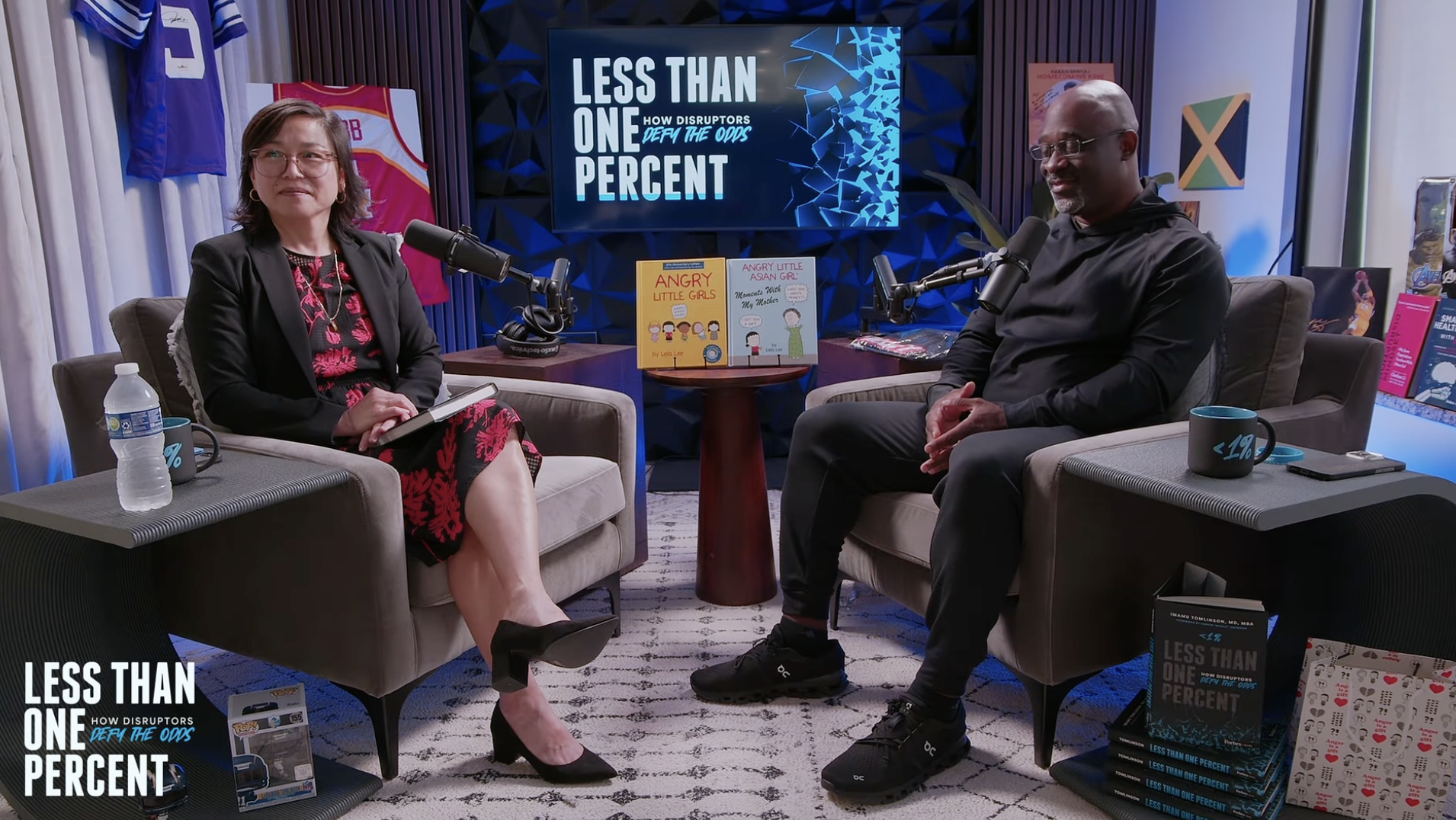
What happens when you turn anger into art and healing into a mission? Meet Lela Lee, a Korean American artist and female cartoonist best known for creating Angry Little Asian Girl, a character born from raw honesty and frustration with society’s double standards. Through authentic storytelling, she breaks barriers, challenges stereotypes, and inspires others to find strength in vulnerability.
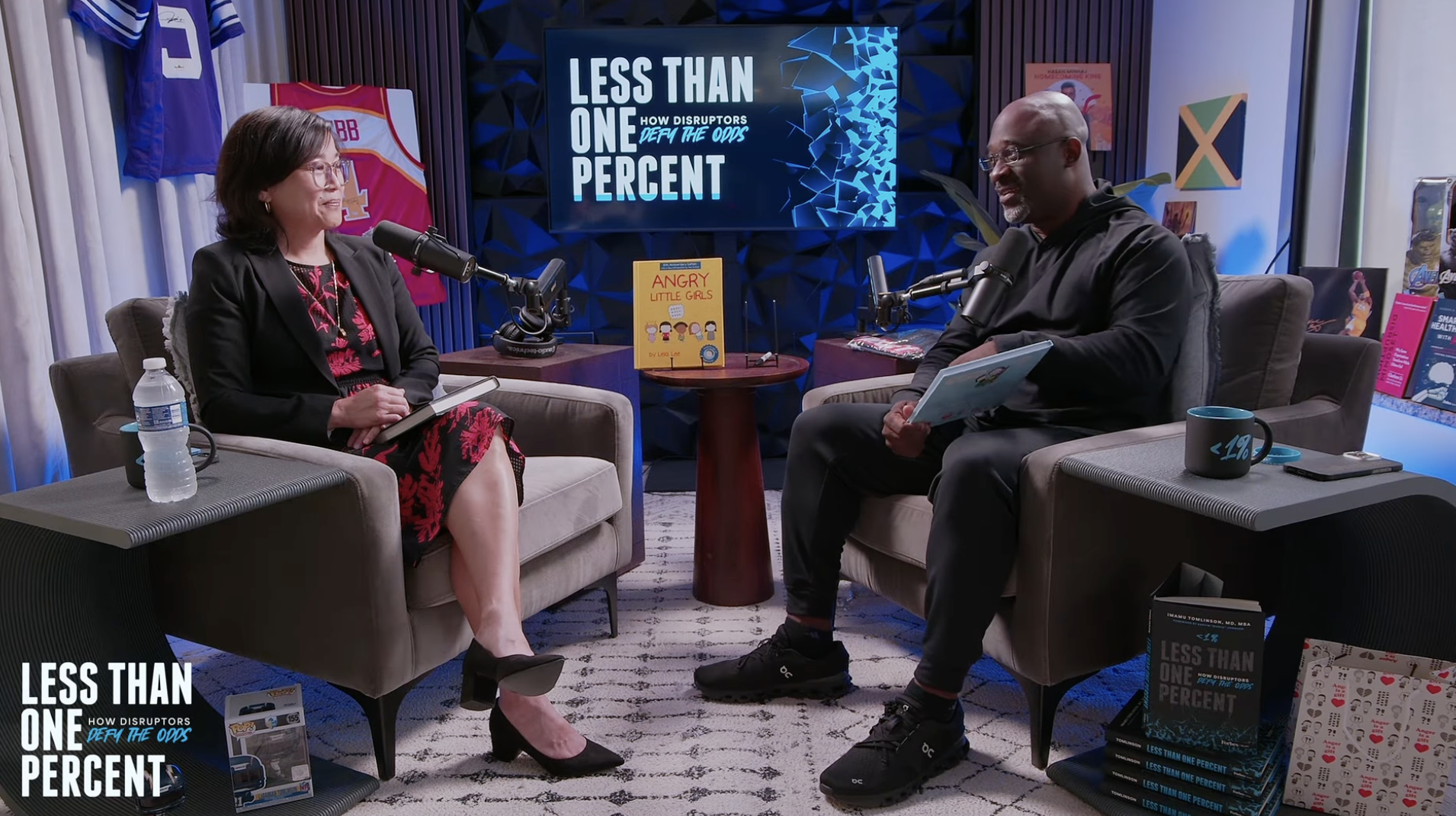
In this episode of Less Than One Percent, Lela joins Mu to talk about finding your purpose, overcoming self-doubt, and learning to balance the expectations of family, culture, and creativity.
This is how Lela Lee disrupted societal expectations, one unapologetic cartoon and t-shirt at a time.
Also listen on:



Timestamps
Transcript

2:00
For Leela Lee that thing was a voice raw honest and
2:01
unafraid to call out injustice. It started as a comic strip. It became a
2:07
movement and it's a pro and it's proof that when you tell the truth, even if it's messy, you give other people
2:13
permission to do the same. Very nice. Yes. Wow. Goosebumps. Goosebumps.
2:19
Thank you. And proof of that is how we met. So Jordan is also going
2:25
to because we got to tell the world because this you know what? This is my sister from what do they say? Sister
2:31
from another mister. This is my sister. And I knew I like
2:37
like I knew that we were kindred spirits because Jordan Oh man, what happened?
2:42
I'm really embarrassed. It's your fault, by the way. This is my fault. This is my fault. So, we met at the LA Times book
2:50
festival. Mhm. And it was um Yeah, it's very unconventional to say the least.
2:56
Well, it was pouring rain. It was pouring rain, first of all. Yeah. We opened our tent and we literally had
3:02
a waterfall and I was like, "Oh no, we can't we can't do this." Literally, we're walking in puddles. And I'm
3:08
thinking our tents have two separate curtains. Like there's two tents. You're thinking
3:13
there's two tents. So I I tuck it over to the other side, not knowing there's only one layer in
3:20
between us and literally soaked everything you had in your tent. Yeah.
3:26
And you were not happy. I No, you were not happy. No, I uh
3:31
And every scene in the books that I've read came out in that moment. Oh man, I felt I
3:38
No, it was really bad. He felt really bad. Well, you know, I think uh after I we
3:44
fixed it and uh at the end I went over and I apologized. It stopped raining and
3:50
I and then it all went well. No, it was awesome. And the sun
3:55
came out. What's crazy was crazy is is that obviously more people you've sold
4:01
more books than I have. So you were you had this line. Oh my goodness. Uh that was the when the sun did come
4:07
out and what was beautiful about it is that because they were in the line and they were waiting. They got to talk to
4:12
me. So indirectly you probably sold a bunch of books uh of my books. Uh no no way.
4:18
But but I I think that that honestly I I love uh the spirit. I love and then when
4:25
I actually came over and started reading and because I didn't really even pay
4:30
attention and I'm hearing people talk in the background like oh that's angry that's and they're and they're running
4:36
in they got the Instagram open they're I'm like wait a second what is going on I'm trying to sell this book but you you
4:42
really did start a movement and I I I just think it's amazing. Yeah. You know it was it was really by
4:48
accident. Um, the story of it going way back to the very beginning was that I
4:54
was in college and I had gone to an all girls Catholic school. I had very strict
5:00
Korean parents. I'm the youngest of four daughters and um I I went to Berkeley
5:07
and it's so progressive. I actually um when I was a senior
5:13
um one of my my classmates parents asked me what it was that I would end up
5:19
majoring in or would choose as a major. And I said, "Oh, it'll probably be law because uh I can't be a doctor because
5:25
I'm I'm not good at science." And he suggested that I just take whatever class sparked my interest. Anything I
5:32
was interested in, just take that class. So what was amazing about that was he
5:38
was an adult who was giving me permission to do that. Whereas my the
5:45
other adults in my life who are my parents were saying I had to be a doctor or a lawyer. And it's just the the
5:50
typical Asian parenting tiger parent dream is to have their children be a
5:56
doctor or a lawyer or an engineer, right? Um, so that father of my friends
6:02
really really gave me permission from another authority source or um, so I
6:08
that freshman year while I was scared of using the bathroom in my dorm, I took whatever class I wanted and actually
6:16
what happened was I became really depressed because I felt that I was inheriting a world that was um, very
6:25
unfair for females. Um, I started learning terms of what it was I I
6:31
encountered that didn't sit right with me. Um, misogyny, racism, um, sexism. I
6:39
took a sociology class. Uh, I took an Asian-American studies class. I took a women's studies class. Um, and and I
6:46
started learning that that the media, even when I was walking down this the sidewalk and the billboards were doing
6:55
the things that I was learning in my women's studies classes about, you know, objectifying a woman's body, it would be
7:00
a headless torso selling toothpaste or something. And so I kind of went through this
7:07
really melancholic, disaffected,
7:13
unhappy. I was just not h I was like I was just really upset and I I couldn't I
7:20
couldn't articulate or put into words all the things that I had lived through
7:26
and was learning that I had to accept. And I had a friend who noticed I was
7:32
really unhappy and said you he said you need to go laugh. Let's go to the Palace of Fine Arts. Uh there's going to be an
7:39
animation festival. It'll be funny. You'll laugh. It'll be great. So, we went and I ended up being so
7:48
apoplelectic at what I watched because they were all offensive. They were all
7:53
cartoons made by guys, but the one that stuck out was of two girls, one fat, one
7:58
skinny, and they went around uh chasing boys. And then the fat girl was so I
8:04
guess the word is thirsty, that she ended up getting essayed. And she liked it. And so I was I came out of
8:11
the theater. I was like I can't even like also too I I didn't
8:18
have any uh sex education. You know I go to a
8:23
Catholic all girls school. Catholic all boys school. The reason why I was afraid of using the
8:30
bathroom was because um when I was a sophomore, one of the teachers at the
8:36
school, her daughter came back from college pregnant. And the story that the
8:42
teacher told the school was that she sat in a toilet seat. No, no, no. That's a that's legit. That
8:48
I've heard that on Okay. No, no, no. I've heard it a 100 times. Yes. 100 times. Yeah. Yes, it's
8:54
and I think I don't I don't know if that's cuz I went to all boys Catholic school also and so I mean next to the
9:01
all girls school but there were all these different things that you just didn't talk about. Yeah.
9:06
One of the most important things of your life they don't talk about talk about it. So that is why I was so afraid of using
9:12
the bathroom. I would I would like line the toilet paper and if I was in a rush
9:17
I would just like aim. But um you know it's just it's so I
9:24
I mean somehow I feel guilty for laughing on that one but I wish I was a guy right but
9:31
but um but it was it was so I went to co and my parents never I mean we they did
9:36
not talk about that. It was so shameful. So when I went to college to this co-ed progressive
9:42
uber uber progressive. Yes. I felt like I felt like I felt like fresh me. It felt and I did it really
9:49
and also growing up in Asian cultures tend to be an obedience culture. So it's
9:54
it's very hierarchal. It's very rigid and daughters are told to obey and
9:59
you're you're just told what to do. Basically children and I'm generalizing it. Not all Asian families are like
10:05
this, but the ones that are more old-fashioned uh with oldw world values, they see
10:13
their children as extensions of their bodies, their arms. It's like, you know, you should be doing what I tell you.
10:18
Yeah. So, I had a bit of that. So, saying no
10:23
to me felt like I was shortcircuiting, like my programming was I was not
10:29
allowed to say that. So, it was kind of I just was I was just the swirl of
10:34
anguish, anger, confusion, um you know, a self self-sabotage, all
10:41
that stuff. Um, and so my friend said, "You should make a cartoon about yourself. Call it Angry Little Asian
10:46
Girl." I was like, "You know what? I will." Wow. So, I went home that night and I had markers and typing paper and I just drew
10:53
it and because that father had said to take whatever class interested me. I was
10:59
in a video class on Tuesday nights and no one got credit for it because it was just a it was just a kind of like a
11:05
weird art class in the department and I took it and nobody took nobody took it
11:11
seriously. So when I called the to reserve the room for the equipment I had
11:18
it for the whole day. I could have had it for the whole weekend because nobody nobody's nobody's even using it. So, I made I made this little video called The
11:25
Angry Little Asian Girl the first day of school. And I had to put the papers that I drew on the animation table. And back
11:33
then it was, you know, the camera was flipped uh overhead, pointed down. Yeah. Pointed down. Um, and then I was
11:41
recording it and then I put it together. I was watching it. I'm like, "Oh, wow. That's a big big time lapse. Let me Oh,
11:49
I'll just hum to fill up." cuz I didn't want to edit it cuz I was it was just the learning curve was
11:54
really it was a big gap. So I didn't really know what I was doing. So I I just knew that cutting it would
12:00
take so much time. So I just started humming to sort of kind of like a improv. So sometimes mistakes or gifts
12:07
is what I'm trying to get to that to that sort of story. And then after I put it together I watched it completely
12:16
and I was like I got to hide that. that is so I I'm no one's gonna like me. So,
12:22
I put it away. I had a VHS tape. I put it in a drawer and I just continued on
12:27
with college. graduated um on time and then I had to work at my mom's dry
12:34
cleaners and I worked there and it was during um so the mornings are really
12:39
busy and the evenings are busy cuz it's like drop off and pick up and the rest of the day in the in between is really
12:46
slow.
12:40
So I sat there and I just started um like doodling, writing and then uh I
12:54
was also a volunteer photographer at uh the American Cinema Tech, which is this
12:59
art house, film house theater that did weird obscure art
13:05
house, independent um sometimes classic movie screenings. And because I wanted
13:11
to be around storytelling, I volunteered as a photographer. So whenever there was a director that programmer called me was
13:17
like Leela so and so is going to be at this uh Friday night screening come take pictures. So I was there every weekend.
13:25
And after a year she's like why are you always here? What is your story? I said well Julie I I am an actress and
13:33
a cartoonist. And she's like cartoonist? What? Show me what what are you doing? So I sent Oh let me backtrack. Um, so,
13:42
uh, when I was out of college, I had a group of friends and when you're young,
13:47
you're all, you know, aspiring writers, artists, whatever. And I had a a friend who was um an aspiring screenwriter and
13:55
he got a hold of the South Park spirit to Christmas and he he showed it to us and I was like, that kind of reminds me
14:02
of mine. Like it's a a small young kid that's got body mouth. Yeah. And so I
14:08
got I finally took it out of the drawer and I showed it to my friends and they watched it and they said, "You know,
14:15
that's really funny. You should do more with that." So, um, so during the the
14:21
long stretches of hours in between the rush hours at the dry cleaners, I started working on it again and I added
14:27
four more episodes. So when the programmer at American Cineipitech had asked me what else I did, that's when I
14:34
added Cartoonist to my my aspiring actress label.
14:40
Yeah. Um so I sent it to her and she called me and she's like, I I love it. I'm going to program it. We're going to put it
14:46
before a feature length. And because she had connections to the LA Times and the
14:52
LA Weekly, the critics got a copy of it beforehand. And the night of the
14:57
screening, my sister called me. She's like, "Oh my god, Ila, you got reviewed. Go get the papers." I was like so
15:03
nervous. Wow. So, I got my quarters because it was back then we Yeah.
15:08
And I I got them and they were stunningly positive. Wow. I was really surprised cuz I was like,
15:14
did the critics not watch? I mean, cuz it doesn't move, right? Right. It's not truly animation. Um, so, uh, I
15:22
went to the screening and it was the first time it was for a general
15:28
audience. I stood outside with the other filmmaker of the a feature length and um,
15:36
yeah, like all these people came up to me. They're like, I am an angry little Asian girl. She's saying everything I
15:41
wanted to say. Oh my god, I'm her. Oh my god, I want a t-shirt. And I was like, yeah, I I'll make a t-shirt.
15:48
T-shirt, too. Wow. So, I I looked up how to make t-shirts and I the next day I found and
15:55
this was before screen printing fashion shirts was a thing. It didn't exist back then. So, I found a
16:01
sporting goods store with and I asked them to make a baseball uniform with the rag red raglin sleeve
16:07
with the white. That was the first shirt because it was basically like a baseball uniform shirt. And I said, "Can you put
16:13
this art on it?" He say, "Uh, yeah. Uh, but you're going to have to make more than 12 because for us to do the
16:20
printing, it's the same cost. So, you might as well make 300. So, I was kind of doing the math and I was thinking, I
16:27
can't afford that, but how much are you sure this like 12 and 300 the prices are the same.
16:33
So, he was explaining the screen the setup. I was like, oh, okay.
16:38
So, I plunked down my credit card and then 3 weeks later or two weeks later, he calls me. He's like, "Your order's
16:44
ready." I go down there and I'm like, "What did I just do? Oh my god, I have
16:50
300 shirts." Because you like it's just a number, but when you pick up the boxes and you're putting it in your car,
16:55
you're like, "This is a lot of shirts. What am I going to do?" So, I called up
17:01
my 10 friends. And I was like, "Can you I did something really crazy and stupid. I made these shirts. Will you just buy
17:07
one off of me for 20 bucks?" And uh they did. And And then they started wearing
17:13
it out. And then uh I started getting calls from people I didn't know who came over to buy these shirts. And I'm like,
17:20
"This is really cool. Want to keep selling shirts, but not the safest thing for a young woman to have random people
17:26
coming over, right?" Um I bumped into my cousin and my cousin said, "What are you doing?" And I said,
17:32
"I'm selling these Angry L t-shirts." And he said, "I'll make you a website."
17:38
And I was like, "What? What's I Okay, the internet. I've heard of that." Yeah. Yeah. Yeah. Um, and he said, "Come
17:44
over. I'll make we'll build the website." So, we made the website and it
17:50
just became this it it was I was I guess I didn't know viral. You went viral.
17:55
I went viral. Yeah. And I didn't really know this till much much later. It wasn't until I did a a a
18:01
ComicCon in Vancouver and um I was staying with a friend who's who she
18:07
actually became a friend. She it was my friend in Canada. it was his aunt and then uh she's she's very young and she
18:15
was saying she's very academic too but she was saying that you know Lea you were one of the first artists to take to
18:21
the internet and I didn't really realize your place in history.
18:27
Yeah cuz you know when you're young you're just doing stuff. Yeah. Um and then I later learned that uh that
18:34
I I was taught in college courses. So, one I mean this is the most recent guy
18:42
uh came up to me at I think it was San Diego Comic- Con
18:43
He was a student at
18:48
Arizona State said he actually did a paper on me and it it just blew my mind.
18:54
It it really was really kind of amazing that this little
18:59
this little drawing this little doodle that I did cuz I was mad. But I think it's more
19:06
tell me. I mean ask I'm saying it but it's really a question. It seems like it's more than just I mean it's clearly
19:12
just more than a little doodle, right? Would you say like your So my base
19:17
energy is anger. So my base like like when I want to get something done, you know, I write about it. You know, if you
19:24
tell me I can do something, I'm like your best friend. Oh, okay. You know, but you tell me I can't, it's over. like
19:31
I will not stop until I can. So my So I had to learn how to channel that. Obviously that's not always the best
19:37
way. But is your is your base energy is this a representation of of your base energy? Yeah.
19:42
Yeah. I actually had a uh
19:47
forget this book. This book really was profound and I should know the title of it, but it
19:54
talked about how there's a sentence that runs each of us.
20:00
And that was what the book was about was about this sentence that ran this protagonist in the story. And at the
20:07
end, they uncover the sentence. And it was it was so enlightening enlightening
20:12
that I actually had to stop and and think what was my sentence? What's my sentence? and I got to it and it's I'll
20:20
show them. Yes. Well, you could have probably wrote my book for me.
20:25
Well, that that I show them that is I think that's one of the most powerful energies
20:31
ever. Um it can actually though um it can if it drives you too much it can make you
20:37
sick. If it drives you timid your body will break down. I think I am sick. Um so I think you're
20:44
healthy. I do. I look it. But no, I I actually I think yeah, I think just like you said, um you talked about mistakes,
20:51
but I think everything is a gift and a curse, right? Anger is a gift and a curse. Um happiness, positivity, everything has
20:58
its upside and its downside. And I think how I think how successful you are is
21:04
how well you use it. But how you feel about yourself is the how well you balance those two because you can be
21:10
angry. I mean, I was Yeah, this uh Wonder if the statute of limitations
21:17
applies, but there's there's cut it if Yeah. Yeah. Cut it. Please edit this out
21:22
if I um incriminate myself. But I've been so angry growing up. I mean, of
21:27
fights and doing all kinds of stuff. And when I got older, I realized, okay, you
21:33
can you can channel this. It doesn't have to be, you know, you get anger and you yell or you get angle and you hit
21:38
something, you know. So, so, um, I have lots of questions. I realized
21:46
one real quick. Um, well, you know, fresh off that story, you said you you
21:52
had some good reviews, um, from critics. Um, how did your family react to
21:58
That's a great question. The way you were writing. My family hated it. Oh. Um,
22:04
yeah. So, my mom would call me after college and Okay. So they sold the dry
22:10
cleaners and I was so relieved because it as long as they had it, I had to work
22:16
there. So um when they finally did sell it, I
22:22
was so relieved because it meant then I could go back to what I wanted to do. And um because I had had that initial
22:30
success to for the reviews and the t-shirts um I knew I knew that there was
22:39
potential there and it wasn't that it was a calculated data driven thing. I just kind of had a fire that I knew I
22:46
had to follow this. Um, I also got because I had a lot of buzz, I had a lot
22:52
of meetings with studio heads and um, one of the guys
22:57
uh, at a cable network, one of the studio people said there's no market for Asians. And I just thought, you know, I
23:03
don't think he knows what he's talking about. Like I just think he's wrong. And while
23:10
the media that was reflected at the time that I was young and starting out was
23:17
blonde. Yeah. You know, brunette basically. That's, you know, that was it.
23:23
Uh I just felt like there's got to be more people like me. I
23:28
So I most most people, right? It's almost like you're you were kind of the
23:35
majority obviously. Yes. This representation was a representation of something that wasn't even real,
23:41
right? Yeah. Yeah. You were the real one, I think. So, I mean, I I I just had to
23:49
follow my hunch with that cuz I thought he was terribly mistaken and I then said in my head, I'll show him.
23:57
Yeah. I'm telling you, own market kind of. That was your Barry O'Shea. Yeah. Um,
24:02
do you do you remember people who doubted you? Do you remember their names?
24:08
Mhm. Yeah, I remember every everyone's name. Like I I got a bunch that I haven't even
24:13
talked about. I'm saving them for other books. Um,
24:18
so, so I I want to talk a little bit about from a heritage standpoint. You talked about
24:25
because I I have, you know, this, of course, this is this is my favorite line
24:31
right here.
24:30
That hits home. I mean, you put the right one. I mean, there are other good ones in there, but
24:36
this this one that got me, right? So, for for those I don't know if you can see it and it says uh it says moments
24:43
with my mother. I got you a gift. Why are you wasting money? So, we we're I'm Jamaican and so you
24:52
know that's you know the idea that your kids or as
24:57
as kids that you're an extension of the family and whatever you do i.e. you have
25:03
to go to medical school of law school or whatever is a measure of the family success or failure. I mean, and this
25:09
this is there's so much in here that isn't just about saving money. This is about
25:14
this is not what you should be doing with your time. Are you proud of that heritage or do you believe that that
25:21
heritage you your anger was generated from the fact that maybe you didn't fully agree
25:27
with all of it? Um, that's a deep question.
25:33
Oh man, I cut I cut too deep too early. That's that's got so many layers of of
25:40
answers and reflections. And even I don't know if I can completely answer it cuz I don't know if that's the answer.
25:46
But um I
25:51
am born to who I'm born to and uh the culture that I am in.
25:59
And I'm also so I'm Korean. Yeah. And but I grew up in California,
26:06
so I'm Korean-American. And I I was sort of working this out with my
26:12
therapist. uh I graduated from therapy but not not to say that I won't go back but I felt like I overcame that issue of
26:20
my life and but one of the things that I was parsing out was what part of the
26:27
culture can I embrace that doesn't harm me because some
26:34
cultures are and some families hang on to old parts of culture that are harmful
26:41
to their daughters. Yeah. And so for me, I had to figure out
26:47
what part of a culture am I proud of and what part is is just unfair. And uh so I
26:56
was thinking about the motherland and then also, you know,
27:03
the the diaspora. So I'm part of the diaspora uh and being in two cultures. And
27:11
my therapist said, "Does a fish know it's wet?" [Music] So, meaning that he meant for me, I
27:19
can't know what's abusive of my culture if I'm in it. Mhm.
27:25
Until you see something else to compare it to. So
27:30
sometimes certain cultures that are very cloistered or
27:36
like you know they used to call Korea the hermit kingdom. Mhm. And when I heard that I was like that
27:41
really tracks. I feel that they're very rigid to outside ideas. Um,
27:48
even though my family lived in Southern California,
27:54
it was almost like they cherrypicked which parts of American culture they'd let in. The dichotomy
28:00
dichotomy where you exist. They only they only accepted like
28:05
economic progress. Yeah. But none of the social Yeah. So um
28:12
so yeah I feel that my upbringing and my heritage my my heritage is Korean but my
28:20
upbringing is in America and because of that
28:27
I guess not positioning is not the right word but because of that sort of
28:32
placement of where I am culturally I I can point now. Oh, wait. I am wet.
28:40
Yeah, right. This is this is this ain't cool. I'm dry.
28:45
Yeah. Or, you know, like this. So, I I guess the uncomfortable part of that is then
28:51
you have to figure out what what kind of water do I want to be in?
28:57
So, yeah. I I mean, I I think I had similar experience. I I feel like I don't
29:02
Everybody asks me if I'm a Dallas Cowboy fan cuz I moved to Dallas and I'm like I don't know because I've never I in some
29:11
ways feel like I don't have a home, you know? So I'm from Toronto of Jamaican descent. So I'm an immigrant of
29:16
immigrant state. My parents immigrated from Jamaica to Toronto and then I immigrated from to Toronto to New York
29:22
at 18. So when people ask me what's my team, I'm like I don't know cuz I don't
29:28
really feel I belong anywhere but then I feel I belong everywhere. And so that
29:34
and I think what you pointed out was you know especially at this time uh you know
29:40
not going to get political but you know with just changes that we've that we have politically whether you know on
29:46
either side of the spectrum a lot of times I look at these things and I'm like well that doesn't make sense and
29:52
that doesn't make sense and people are like what do you mean who's your team like I don't have a team I'm from Canada
29:58
Jamaican like I have all these different ways to evaluate whether the water is wet or
30:03
Um, and so I think that it I feel like it might be somewhat dichomous and make
30:09
people crazy, but then it's also something beautiful because you can actually see things that other people
30:15
can't in either community, right? Well, I mean, just to
30:21
argue to your point and also your book is that you're not accepting the group think.
30:26
Not accepting it. Absolutely. So, you're a little bit more discerning about who it is you're going
30:31
to give your allegiance to. Yeah. Which I think is great. Yeah. Yeah. Yeah. I mean, I think it's a it's but I I I empathize with what you
30:39
said. Maybe I should get a therapist. Um because it's a lonely place.
30:45
It's a lonely place to constantly, you know, you're in the matrix and you took the the pill and you're watching the the
30:52
lines go down and you realize that everything I grew up with or everything you taught me or whatever you taught me
30:57
on how to be, that's not the way I want to be. Um, and I think that your book is
31:04
a great testament to authenticity, which 100% you have to be your authentic self.
31:05
Like you know how much more greatness would there be in the world if we all were our authentic selves.
31:15
So that's awesome. I I I mean I feel like it is I feel like it
31:21
is so deep that your fans actually didn't they didn't let me get the real
31:29
deepness of it because it's viral now. I mean like and they love it, but there's
31:34
so many layers to how deep um your story in the book goes.
31:41
Thank you. Yeah. And it wasn't just Asian girls. And it was the one guy, it was a it was
31:47
a boy that he was in the line. You actually gave him one of my one of my books. He threw it in the trash. But um
31:54
you uh it was a boy and he was coming to get, you know, to get a book. So it's really it's really amazing. All right.
32:00
Well, I'm going to go deeper. Okay. You ready? Mhm. What do you think your superpower is?
32:08
Now, I'll c I'll give you a break and explain. It can't be I'm on time. It
32:15
can't be uh something simple. It has to be something intrinsically to
32:21
intrinsically intrinsic to you. Um and also something that you can do um
32:27
and not lose energy. It doesn't take anything. You can do it all day and all night and you don't even know the time
32:33
has passed. So, what do you think your superpower is?
32:38
Overthinking. Overthinking as a superpower. Okay. So, the reason why I say that is
32:45
because when I was little, I would ruminate over situations where I didn't
32:50
get to say what I really wanted to say. So, I would I would think about, oh, you're kind of editing. Yeah. or I would
32:57
have said this and this. Do you swear? You can only read one.
33:03
Okay. I was going to say, but if you think about it, I made that into my job. Yes.
33:09
I go back and I give my characters like
33:14
parts of you, parts of me. I give them really snappy comebacks. M so so
33:21
I I enjoy thinking and if something rubs me the wrong way I always think about
33:27
why did what is going on there? So I will I will
33:33
get to I will work at something and analyze it till I get to like oh that's
33:38
it. Okay. Okay. You're we're going to have to narrow that down. We're going have to
33:43
narrow that down. So you you because you started with overthinking and then you
33:49
ended up with insight which tell me is that or is that the same thing?
33:54
Well, I think when you overthink you're you're you're taking all insightful you're bringing in a bunch of
33:59
different things. Yeah, because what it is is you're just taking all the data. Okay. And you're you're analyzing all the
34:07
Well, is it their age? Yeah. Is it their background? Did you do that with with with us when he when he put
34:13
all the water into your booth or did Were you just You had to bring it up. You had to bring
34:18
it up. I um I just Well, I was actually overthinking. I was
34:24
thinking, "Oh my god, they think I'm such a pain in the ass." No, we No, I I
34:30
No, we were we were we were devastated. We were devastated. We're actually And this that weekend kind of was weird, right? Like it was
34:36
raining in southern California. Tony Tony Tony, what do you Rafael Sadi, come on, man. It never rains in Southern
34:42
California. No, it does rain. It rains. I I lived in Southern California, so I know it rains, but it had to rain on the
34:48
day. Okay, so insight. Mhm. Insight processing. Insight. Okay. So,
34:55
you think if we asked, by the way, I met I met that was that your husband at
35:00
Okay. Now, I don't know what I don't know how he is. I I just met him that day, but he
35:06
seems like a really nice amazing guy. He was just out there cool and calm. I'm
35:11
like, and we started talk. I talked to him all day.
35:17
All day. Okay. So, what we try, what we do on the show is we ask other people could be, you know, your husband or
35:23
whoever you want to call um what your superpower is. And so, we we're saying
35:29
overthinking. Overthinking. Yeah. Overthinking. Okay. Now, we're going to call.
35:34
Do I do speaker? No. No. Just regular. It's already coming through. Okay. Yeah, you'll be able to hear it.
35:39
You can turn it up if you want the volume. Oh, I can hear fine. Okay.
35:49
Hello. Hi, Ken. Hey. Hey. How are you?
35:55
Good. I remember Hey, this is your friend from the LA book fair. We were We were next
36:00
to you. Yeah. How are you? Good. Good. How are you doing? Good. Just eating some lunch here.
36:05
Oh, awesome. Awesome. Well, we're sorry to bother you. We um we're doing the podcast and what we do on these podcasts
36:12
is we ask uh our guests what their superpower is. And so now we're going to
36:17
ask you um you know what is your wife's superpower?
36:24
He's very driven. Driven. Yes. Give it give us give us give us an
36:30
example. um that she says that uh she's going to
36:37
write a book. She's going to go write a book. Um very focused.
36:44
Um I don't know if she told you this, but when she first taught herself to draw, she was so focused that she would
36:52
actually unplug back then, you know, we had landlines. She would actually unplug the phone in
36:58
the house so she has no no disruptions, no
37:04
Wow. Yeah. Yeah. That's That's different. That is different. Yeah.
37:09
That's different. Okay. Okay. So, she she said that Tell
37:14
I said my superpower was that I overthink. That That's more of a um That's more as
37:22
as you got older. Oh, okay. Yeah, me too. But we got Yeah.
37:29
Maybe I stress more. Yeah. Yeah. But but I think I think the driven I think the driven fits.
37:36
The driven fits. Yeah. Yeah. Whether it's uh writing or licensing or drawing or you know events,
37:45
it's just very focused and driven. Awesome. Awesome. Well, we appreciate
37:51
you and sorry to disrupt your lunch. Oh, no, no, no problem. And good talking to you again. I told her that at the book fair that you and I
37:58
just talked the whole time. Yeah. I didn't get to I didn't get to talk her till the end.
38:03
Yeah. Yeah. All right. Appreciate you. Uh Okay. All right. Thank you. Thank you, Chen.
38:11
Driven. I think what if you had to What do you think? I am um goes back to the I I'll show
38:19
them. So, also I just I I know that I'm out there and so when I put stuff out
38:26
there, I want it to be the best it could be. So, I stress a lot about details. Um,
38:34
I think that's dri I think that's driven. I mean, I think maybe overthinking or reworking or
38:40
overprocessing might be the how, but the core of what you're It sounds
38:45
like the core is like you're just driven driven to make an impact or driven. What do you think is the what do you think is
38:51
the thing that makes you decide? I mean, once you saw that this is going to be a thing, why not just do it? What makes
38:59
you go that extra mile? Well, I feel also I've I've not fully
39:05
told the story, the point of view from which I come from. Um
39:13
I I just feel like I have I have these amazing conversations with
39:20
uh fans at my booths, and events. Uh, and I just feel that the kind of the
39:27
worthlessness I felt as an Asian daughter is very common. And so I have a I I feel I have a
39:34
greater mission to heal that. See, that's your that's your why.
39:40
Yeah, that's your why. And I think because you're a healer, you're a doctor, you're also thinking
39:46
about how to better people's lives. But it's not just
39:51
it's not just a superficial thing. It's holistic. Yeah. And
39:58
so while you're a doctor, I'm an artist. You know that but we're doing things in different methods. But
40:04
um yeah, the method the me the method is just the how. So I did a um an interrogative like why you know
40:12
Simon Synynic and his why statement. So he and I are friends and we I went to his place and he did this why
40:18
interrogation. That's what I called it cuz I didn't like it. And um No, I hated it, man. Like I you know cuz cuz he cuz
40:26
he cut me he cut me deep. He asked like deep questions and I went from almost crying to laughing my my tail off. But
40:33
we came up with or he he came up with and I agreed with it. He says, "My why is that I inspire people to do the work
40:40
to be greater than they ever thought they could be." And when he said that, I was like, you know, wow.
40:46
Like I was like, okay, that's it. Like I didn't didn't understand. And it's not I think that's why a lot of people ask
40:51
like, "Moo, why are you doing a podcast? Why are you writing a book? Like I'm a healthcare CEO. What are you what are you doing?" And I was like, "No, I feel
40:57
like I can impact the world." And you know, and I and I didn't know what it was. And so we went through that and I
41:03
was like, "Oh, I get it now." And so once he not once he said that but when I realized then it was like whatever do
41:11
and he knows because uh Jordan's helping me in my madness everybody asks what are
41:18
you doing like why are you doing so much what are you doing this for this makes no sense and I'm telling you I'm like
41:24
listen no I think we can we can we can change the world I can change the world
41:29
even though I can't so well you never So
41:38
the message that that we have as healers, artists,
41:43
hopefully good politicians Yeah. is um
41:48
it needs to be amplified. So you need to have platforms like a podcast to reach people because you it's
41:55
where will it be heard if you just keep it in your journal. Right. Right. So and create and I think creatives to your
42:01
point about creatives are different. I think that authenticity is unique to creatives. You can't I mean I think
42:08
there are people that are super successful in the creative genres. I
42:13
think they can be but I think the ones that are really the sants are are
42:20
you know that they they they're being their 100% authentic self. Like I was watching Denzel Equalizer and I was
42:27
thinking to myself, you are like your you're you're the the your approach to this I mean
42:34
from all the different roles he's had over time. I mean it's just just amazing
42:40
you what he can portray. Um but that's a segue to what you call me. you call me
42:49
cuz we're scheduling the time and um you know we're trying to figure out schedules and then you're like hey I
42:56
might get this part and I'm like part what are you talking about like what are you talking about like part and then you text me yeah I was watching uh
43:04
I was I guess I was I was binge watching Shameless actually and I you know I had no idea you were even on there and I was
43:11
watching and I was like that lady looks that lady looks familiar
43:00
So, how I
43:19
mean you left that was a whole other part. How did how did that
43:24
not just that particular but in general the acting and how did acting happen? Because you were on Tremors too the
43:30
series. Yeah, I was on Tremors. I I pop up every now and then on different shows. Um I
43:37
was a really shy kid. I was so shy people could not hear what I said. So in
43:44
middle school, this is when I got that note. So also it was just a very awkward
43:51
time because puberty is just so painful for everybody. Um my uh one of the
43:58
electives I could take was public speaking. So I I signed up for it so I
44:04
could overcome my problematic
44:09
uh voice level. Um, and then when I was in high school, I I I got involved in
44:19
student government and I started giving speeches to get elected and then um I I
44:27
auditioned for a play. I kind of didn't really pursue that, but it was I was at
44:34
at Berkeley and the Korean Student Association was putting on a play and they could not find any actors.
44:41
Yeah. But because I was friends with some of the KSA um members, they knew that I had
44:50
uh been in student government and was in a play. So, they they encouraged me to
44:56
audition and I ended up getting the the lead part. And then after I did it was a
45:01
one night performance. So after I did that, a lot of people were saying you should really look into acting. So I
45:10
took I took drama as well. So um I was a double major with rhetoric and drama.
45:16
And then my junior year I pursued acting. I I decided to leave Berkeley and go to LA, become an actress. Um but
45:24
I didn't like the stereotyping that I got. So, I got fed up and I was like, "No, I'm going to go back to Berkeley,
45:31
get my degree." And I still was very um
45:37
compelled, my compass, my internal compass was saying to go to towards storytelling. So, all of that is related
45:45
to telling a story. Um and then so I made Angry Little Asian Girl in
45:52
college, but I was also a drama major. But when I graduated college and I was working at my mom's dry cleaners, I was
45:58
also taking auditions and then um I just became a working
46:04
actress. I be it kind of happened really quickly and faster, but I was also doing the comics. Um, so they kind of went in
46:12
hand in hand and when I didn't have any acting jobs, I focused on this and then
46:17
when I was busy with acting, I I would put that on pause or I kept it so that I
46:23
I did this comic the output is every week. So I chose that output schedule
46:31
because it was something that I could keep up with if I was busy acting. Um, so I did both. And then um
46:41
I felt like it was uh a way for me to I don't know if acting's like the right
46:47
word, but like body work like it just you you
46:53
you're using physicality, your voice. Yeah. Storytelling. Um
46:59
and I don't know therapy modalities very well, but my my therapist had said that storytelling and narrative and acting
47:06
can also help in healing. Yeah. Uh traumas. So I think that's why I
47:12
wanted to do it and I I still do it. Yeah. So I um there's a theme in for the
47:20
first time. How long you've been married? 23 years. 23 years. So the for the first time in
47:26
23 years, your husband is right. Driven is the right superpower. So you are in
47:35
school, right? I'm in school. I don't like to talk. So, what am I going to do? I'm gonna go take a class about talking.
47:43
You're driven. Like, there's no other I mean, yeah. Why normal people when people don't like
47:49
talking, they don't take classes where they have to learn how to talk. That is special. That's not
47:56
most people. Well, I feel like whenever I don't know something or I feel like something's in
48:01
my weak spot, oh my gosh, you're going to love this story. You're gonna love this story.
48:08
It's a So, I got dropped by my accountant because I went from a royalty-based business to selling
48:16
product because after my kids got older, I I sort of went back to work, but the
48:21
shopping landscape was different. It I the model of it had to change. So, I
48:27
decided I would manufacture my own products. So, I would at the end of the year when it was time, I'd just throw
48:32
all this stuff at my accountant and he was like, "What are your cogs?" And I was like, "What are cogs?"
48:39
And he was like, "Oh my god." So, he put up with me for like maybe three tax seasons and then he was like, "I can't
48:45
do this." So, he dropped me right before the tax returns were due. I'm I'm
48:51
frantically searching for a replacement accountant. By the way, if any young kids need a job, uh there are not a lot
48:59
of accountants, young accountants replacing old accountants. So, it's kind of a it's kind of a gap. There's
49:05
there's a big big gap there. Um so, I was asking I did find a young accountant
49:12
cuz the one that we had before, like before her was this 80-year-old man, my
49:18
husband and I went to a meeting. He's like, "La," he goes, "La, are you sure about this?" I'm like, "He's all I can
49:25
find." So, um, he called me several times and on the
49:32
fourth conversation, I was like, "Oh my god, he's repeating himself." And I'm,
49:38
so I had to scramble to find a new one. She's young, she's great. So, I was asking her questions uh just about how
49:46
to strategize and I realized I was like, "You know what? instead of asking her, I'm just going to go learn tax law. So I
49:54
this Of course she did. Yeah, of course. Yeah. H I don't you know I need an accountant. H let me go
49:59
learn tax law. Yeah. So okay. So just so everybody knows your your son is here.
50:05
Yeah. In the studio. And is there a superpower in being driven?
50:10
I would. I would say so. I see. We got two. Yeah. Okay. So yeah. So you're accounting. You
50:16
did tax law. Okay. That's where we're at. But I actually also got a job at H&R Block.
50:23
I didn't work there. So, actually, they hired me cuz I passed the test cuz
50:28
Okay, you know what? I'm going to just kind of do a plug. I think it's a great program. It's 149 for a three-month
50:34
class. It's very rigorous. You have to sit there for three hours twice a week. There's a lot of reading, but every time
50:41
I would finish reading a chapter, I'd come out of the bedroom and I'd say, "Ken, did you know that you could write
50:47
off this and this tax law is this?" Oh my gosh. And so, uh, I ended up passing. I barely
50:54
passed. You have to get a 70%. I got 71. Hey, it's passing. Hey. And then, uh, they they ended up
51:00
recruiting me and I was like, "Okay, this would be a really neat experience. I'll just do this for one season." And
51:07
then I got cold feet and I tried to quit, but then they called me like 2 minutes later after I sent an email
51:12
saying, "Thank you so much. I offered you more money." No, no, I didn't want it. I just was
51:17
like, "This is I'm a creative. I just was learning for myself." Anyways, my goal was to not get fired and to not
51:23
quit and I did that. Nice. Okay. I have a I have a Okay. So, first of all, I have to So, to show
51:30
everybody that You can open it. I can open it. I don't want to. I was like, you know, Christmas. Yeah,
51:36
I'm like I just tear things. But then I get around people and I'm a little nervous like let me open it properly.
51:44
But I want to show everybody this because back there because um you know
51:49
my whole thing is is is you know disrupt and uh and I think that when I wake up
51:56
in the morning I try to disrupt and then yours is like disobey. Love is not obedience. And I I I I love that actually. So, I do
52:05
I want to I want to ask you one thing, but I'm going to give you this.
52:00
So the whole
52:11
all boys Catholic school um I was in a different situation. I was in a Jesuit
52:17
school and the Jesuits have well at least I don't know if this is true of all Jesuits, but at least the ones that um I
52:24
was at, I was a disruptor and I didn't know it. I didn't know what that was before I actually started kind of
52:30
researching to do this book. I didn't characterize what a disruptor was. Usually a disruptor was a bad thing,
52:36
you know, before. So they said that um you shouldn't believe in anything.
52:43
I'm like, what kind of priest are you? You know, like you're supposed to I mean
52:49
that's what you do. You go, you have faith and you believe. They said no, no, no, that's not what we teach. We teach
52:54
that anything that you are going to believe in that you need to question
53:00
violently. And I was like, yo, I'm this is you you guys I was it was amazing. So there
53:06
would be things that instead of just learning and reading the Bible or reading whatever, you know, I would read
53:12
that like I don't agree with that. You know, my big thing was like there's no black people in the Bible, you know,
53:18
like I would do all these different things because I really just wanted to disrupt. And then I would go and I'd
53:24
read a bunch of stuff and I'd look at history texts and look at other books and I was like wait a second that's you
53:30
know that's kind of the not killing people that's kind of but I mean you
53:35
know going through that mindset and I think that's for me what disruptive mindset is it means that everything you
53:41
hear everything you learn you automatically disagree. I automatically you'll tell me stuff even when we were
53:47
talking you know I don't know if that's true but then as you communicate more you're like oh yeah that's true. So that
53:52
mindset is interrogative. It's thoughtful. It's constantly challenging.
53:58
And I I think it's kind of a lost art to your point. Like we, you know, we get to the point where we just accept what
54:04
we're told. But I have a question for you. M this was that was
54:10
um have you ever thought about sharing the stories of those people that
54:17
you interact with that I mean tell you their life story and and
54:22
you know I mean again Asian as a group is probably not fully parsed out right
54:29
because there's differences obviously but it seems to me that there's a book somewhere where it's the interactions
54:35
that you've had with people that have almost the same way of viewing where they're having that fight through that
54:41
dichotomy and they're living through it and they're learning through it and they're crying through it and they're happy through it.
54:47
Is that am I is this something on your Yeah, actually um I have been writing.
54:53
So when COVID hit I got very scared of my mortality and I
55:00
I told God I was not done. Yeah. You could not take me because I had some things to do. And uh I immediately
55:07
started writing cuz I I have I have a lot to say. Uh so I I've been sitting on
55:14
a book for over 20 years. I I did finish it. Okay. And then I just started writing a whole
55:20
bunch more because uh while I don't have a book agent right now,
55:25
whoever it is will come and uh then I have a lot more. But um one of the
55:31
things that I did when I had to wake up my business after my kids went to school and were older. I started doing popups.
55:39
So you know the the book festival is one of the events that I do. Um but there
55:44
was a year that I just did anything and everything I could get into. And it it was so much work. It was it
55:51
was grueling work. I think I put threw out my shoulder. I'm like, you know, it's like, you know, I'm I'm hoisting
55:58
these grid panels up and I'm driving the van to these locations and
56:03
it was it was such a really interesting experience because um
56:09
I met so many interesting people. I had great conversations and then I just
56:15
decided I've got to write these things down. Mhm. There was um there was one woman who she
56:23
walked by my booth. She saw I survived the Asian mom t-shirt. She goes, "H oh my god."
56:29
And and then she left. And I kind of knew I know my people. We're very frugal.
56:36
Yeah. So, uh, at another event, the biggest compliment was this guy was like, "Ah,
56:42
you make me want to spend my money." Yeah. Yeah. Yeah. Yeah. The ultimate compliment. He he sacrificed his entire
56:51
existence to keep you. So he was very carefully picking stuff out and I price things very like at all ranges and also
56:58
like little things. So you know it's the whole like every economic pallet is served
57:04
cuz I kind of am that way. I know I know that feeling. So I uh I was very honored
57:10
when he selected three items. Uh but anyways this back to the woman.
57:15
She came back and she said, "Oh, my husband said I should get that shirt." I said, "Okay, tell me why you want that
57:23
shirt." She said, "Well, yeah, I don't I don't talk to my mom."
57:28
And um I mean, I get the country wrong, but it's like Kazakhstan. She said, "I'm
57:33
from Kazakhstan." And how did you get here? She told me the long story of how
57:39
she left and uh and now she's here and she's married and uh I'm sort of
57:47
abbreviate I'm like making it very short but um uh she shared with me a story about how
57:55
she was so mistreated just because she was a daughter and um
58:01
so she was saying that her brother when he went to school wait let me tell That's right. So, when she was starting
58:08
kindergarten, they they just dropped her off at the edge of the city and they're like, "Good luck. Go go go find the
58:14
school." And she had never been there. So, she was just roaming and then she got to school.
58:20
And then she said, "When my brother went to school, they threw a party for the whole village
58:26
and they slaughtered three animals and it was a big to-do." And I was like, "Oh my god, for university?" She said, "No,
58:33
for kindergarten." Oh my goodness. And it was so outlandishly ridiculous
58:39
cuz it sounded like Sasha Baron Cohen's like the his his bit that he does with I
58:44
forget the charact. Oh yeah. Yeah. Yeah. I know that character that he does.
58:50
So, so actually after she left, I had to look up the country that she was from and it's right in between Russia and
58:56
China. Yeah. Because she also had these striking eyes that were light, but she had, you know, black hair.
59:02
And I was thinking, oh, you know, in this modern day and age
59:07
in America, people are still dealing with these really outdated, archaic,
59:13
uh, culturally gendered oppression. Yeah. in their families and she was
59:21
still living with a lot of pain about how her mother kind of hated her.
59:28
Yeah. I mean, I think those stories cuz I think,
59:33
you know, you're the authority. I mean it sounds, you know, sort of walking through your development of your voice
59:42
um to give voice to others that are not nearly as developed would be I think that would be super powerful. So that's
59:49
just one one uh under un under sold uh author's opinion.
59:57
Oh yeah, I think that I think super super powerful. What
1:00:03
what um I'm interested I'm interested in a couple more things. One, what what are you working on that you want everybody
1:00:08
to know about? Is there something that So, where where do they where do I go to consume,
1:00:14
you know, consume you? Okay. So, my website is angry girls.com.
1:00:21
I always have a weekly comic strip, okay, without fail. It's on Monday mornings.
1:00:26
Um, I am hoping I would like to partner up with
1:00:32
an animation company. Okay. Um, I feel that
1:00:38
it's time. I mean, I've tried before and it's it's been uh the traditional studio
1:00:47
system has not really worked for me. So, I feel that um from a creative standpoint, what's been
1:00:52
the hindrance there? The hindrance has been the hindrance has been that I well first
1:01:01
my first encounter was that the executive asked me to take the Asian girl out.
1:01:06
I passed on that and then that's when I switched and called it Angry Little Girls. Kept the Angry Little Asian girl
1:01:12
as the star. Um so that's what's called cultural switching. I didn't know that was a thing until I uh came across it in one
1:01:19
of these books I was reading about Asian-American studies. Um, but you know, a lot of um, marginalized
1:01:26
communities, we do a lot of cultural switching. We act one way at home and then act. Oh, 100%. Yeah.
1:01:32
I had a deal with the studio and they wouldn't let me write, but the one of the notes that the other writer and I
1:01:39
got was, "Where's Leela's voice?" And I was like, he wouldn't even let me write it. Like,
1:01:46
okay. Like so, uh, it's it's again the
1:01:52
the way the system is set up for
1:01:58
cultivating new voices. Yeah. Is counterintuitive to me.
1:02:03
Absolutely. Absolutely. Yeah. I mean, yeah, different genre and think, you know, I could whine about the book, the
1:02:10
book industry and going through, you know, trying to keep that creative
1:02:15
control and really understanding. I mean, I, you know, I said it earlier, I think that the you you get people that
1:02:22
write about businesses that have never built a business. People write about business culture. Um,
1:02:28
one thing with my book, the problem was is where does it fit? And they're like, "Well, you use sports analogies and you
1:02:35
talk about the Jamaican revolutionary and you talk about Apple and you talk about Bob Marley. Like, we don't know
1:02:41
where to put that. Like, get rid of something." And I'm like, "No, but that's the story I want to
1:02:47
tell." Mhm. So, I think that's and there's also a there's a thread. Yes. Yes. Yeah. There's a there's a
1:02:53
there's a connection. There's total connection. So, I I would argue against that. I well I did and
1:03:00
that's why I didn't go with you know with that publisher. Um but yeah I think
1:03:06
um I think you know in writing about disruptors you're you're an absolute
1:03:12
disruptor. Yeah. No you are. I mean it you fit all the disagreeable.
1:03:18
Okay. Right. That's you're disagreeable in a way that's not just you know I'm
1:03:23
upset at you but that I will not accept the status quo. um whether it's in my own culture or whether it's in the new
1:03:29
culture that I'm in. Um but you're optimistic, right? Your your ability to
1:03:35
impact people and change the world. And then the last one is you're relentless and your husband said that about you. So
1:03:42
you fit the criteria for a less than 1enter. That's official. You're part of the family whether you like it or not.
1:03:48
Thank you. Oh, you know, I have to say I I wasn't sure what this book was about.
1:03:54
So, you gave me this copy at the book festival and um
1:04:00
I didn't actually think you were going to have me on your podcast. I know you said that, but I was like, I don't know.
1:04:05
And then when you What he said when we had that whole situation, you know, when we first met,
1:04:11
first thing when we told him the story, he said, "We're going to be friends after this." Yeah. I already No, cuz
1:04:17
Oh, no. No, but I'm telling you, I'm telling you the the just again less than 1%. you
1:04:23
already fit. Like you already fit like you you were trying to sell your sell, you know, you're trying to make an
1:04:29
impact and and we got in the way in, you know, in a weird, you know, you you knew it wasn't us, per se, but no, you were
1:04:36
you just cut my merchandise wet. You're a family. Anyway, we cut you off it. Uh uh what was I saying?
1:04:42
I knew I knew we were going to forget. You were you were saying about the book. Uh oh. So I You didn't know what it was.
1:04:48
Yeah. I wasn't I wasn't sure what it was about, but when you emailed me and I was like, "Oh, I guess I am going to be on
1:04:53
it." So, I started reading this and you know, it's very lonely being a
1:05:00
disruptor. Yes. It's very lonely to be thinking differently from everybody
1:05:06
else. Yes. Um, but this book felt very validating and it's so well researched
1:05:13
and the examples of of these amazing people that did disrupt and followed
1:05:19
their intuition or their compass or their voice or their higher calling was
1:05:26
was encouraging. I mean, I already I'm already too far
1:05:31
gone. I have to keep doing it. But but it's I could see how it's very encouraging to people who are starting out to be
1:05:38
cuz you you define it. Yes. Whereas the whereas maybe there isn't a book that defines
1:05:44
being um someone who thinks differently, who does things differently.
1:05:50
Um and I think we need to encourage more of that because the group think is
1:06:00
it it's While I think it's good to be part of a collective, I think that it just it's
1:06:06
safe. It becomes comfortable and then um you know growth also growth is is not it
1:06:15
doesn't feel good to grow. Growth is really uncomfortable. And I think a lot
1:06:21
of um a lot of young people who are seeing um all these fabulous people
1:06:28
being fabulous, they don't they don't know the hard work that goes into
1:06:35
growing and being fabulous, whether or not that is actually true. So, I don't
1:06:41
know. I just felt like this book was was was a breath of fresh air.
1:06:47
I appreciate it. Appreciate it. No, I I I felt like again from when we met I I just thought, "Oh,
1:06:53
she's she's definitely" and then, you know, looking at the titles and I was peeking around the corner talking to her husband and I just thought, you know,
1:07:00
this is um I mean, this kind of message that really I feel um that I want to get
1:07:05
out there
1:07:00
Because I do feel and you know, for the next generation, the mindset will always be uh to your point,
1:07:12
you have to be popular or rich or there's some kind of thing come success that you got to get too. And I think if
1:07:20
you're just your authentic self, if you're just that, use whatever superpower you have. Like I don't, you
1:07:27
know, we talked about this. We have um you know, I'm a I'm a man. I don't know,
1:07:32
you know, I'm a man. Um but we're I'm doing a woman's meeting in the fall and
1:07:37
everybody's like, "M, why are you so passionate about doing a meeting that you might not even be able to go to?"
1:07:44
And I said, I just feel like there are so many people out there that have superpowers that are being told that
1:07:50
they're less than. I mean, the whole idea of imposter syndrome is absolute foolishness. Like the idea that I feel
1:07:56
uncomfortable because I'm not supposed to be here. That's terrible. That's a terrible thing. And then you teach
1:08:03
people, you say, "Oh, you have imposttor syndrome. Let me show you how to really fit in. How to really be like somebody
1:08:10
else." No, there's to me there's no such thing. you have a superpower and you have kryptonite. You have things that
1:08:15
I'm bad at and um but instead of focusing on what I'm bad at, focus on what you're amazing at and change the
1:08:22
world with that. So that's that's you know hopefully that comes through the book and uh and like yourself I mean you
1:08:30
motivated me also because I think like for me you just keep writing you know like you said just keep putting it out
1:08:35
there. You have to put the content out there and and it'll resonate with some and it may not resonate with other
1:08:41
others and that's okay. Yeah, that's awesome. Well, any last words for
1:08:48
the the audience out there? Um I guess I don't have to tell an actress
1:08:53
to look at the camera, you know. Yeah. Well, there's so many. Yeah, there there are a lot in here.
1:08:59
There's one there, there's one there, there's one there. Uh uh last parting words is is follow your soul.
1:09:07
Follow the calling. Um and and you won't know exactly what what that thing is
1:09:14
you're supposed to do, but your compass will point you in the direction you're need you need to be. And whatever you're
1:09:21
interested in, learn about it and you'll find you'll find it that way. Whatever
1:09:28
whatever it that is. Yeah. So that means
1:09:33
take a a speech class, speech class, then go work at H&R Block and take
1:09:38
Tackle T. No, I'm kidding. I'm kidding. But seriously, yes. Follow your follow your soul. Um, you know, be yourself.
1:09:45
And we appreciate you so much for coming. I know you came a long way. Thank you so much. Thank you for inviting me. I'm very happy to be here.
1:09:51
Awesome. Awesome. All right. Awesome.
Key Takeaways
- Transform anger into art and use your frustration to fuel a meaningful mission.
- Being authentic allows you to break barriers and inspire those around you.
- Embracing vulnerability can become your greatest source of strength.
Share with a friend
Episode Guests
Lela Lee
Lela Lee is a cartoonist, writer, and actress. In her second year of college at UC Berkeley, she made an animated short titled “Angry Little Asian Girl.” She was ashamed of the anger expressed in the episode, so she hid it in a drawer and promptly forgot about it. She went on to receive a bachelor’s degree in Rhetoric.
After graduating college in 1996, she worked at her parents’ dry cleaners. It was there that Lela doodled four more episodes. She submitted her animation to the American Cinematheque, which screened her shorts for the first time in 1998. Critics from the LA Times and LA Weekly gave “The Angry Little Asian Girl” glowing reviews. People began asking to read comics that did not yet exist. Because of this suggestion, Lela taught herself how to draw comics. Soon after, she launched a website as a self-publishing platform. She also took to selling t-shirts out of her car and met many women who also harbored angry sentiments.
The website became a destination for young adults to read comics about gender and race. Studios heard of this buzz and invited Lela to meet with them. But the reaction was disheartening. A TV executive asked Lela to take the Asian girl out. Another told her there was no market for Asians.
Angered by the feedback, Lela created more characters and used "Angry Little Girls" as the umbrella name for the comic strip. She also made a goal to publish a book. She wanted the characters to be well-known by her fans so that no studio would ask her to take out the Asian character again.
The first "Angry Little Girls" book was published in April 2005. Two months later, it had gone into its fourth printing. Six more books were published and translated into Korean, French, and German and the products were sold into malls all over the US and abroad.
During this time, Lela also became a working actress, landing guest spots on shows such as Friends, Will and Grace, Scrubs, Grey’s Anatomy, Shameless and Better Call Saul. She was also series regular “Jodi Chang” on the short-lived television show Tremors.
Lela lives in Los Angeles with her husband, two sons, and a very well-fed cat.
For more on Lela Lee and her work, check out: http://lelalee.com/
