How Super Bowl Champion Bryant McKinnie Survived His Worst Storm
In this episode of Less Than One Percent, Dr. Imamu "Mu" Tomlinson sits down with Super Bowl XLVII Champion Bryant McKinnie to pull back the curtain on the intense psychological pressures of professional sports, the hilarious locker room superstitions that kept him healthy, and the unexpected life lessons he learned on the tennis court from Venus Williams. This raw conversation details how Brian transitioned from protecting elite NFL quarterbacks to protecting the mental health of vulnerable communities through his B Major Foundation.
Also listen on:

All Clips
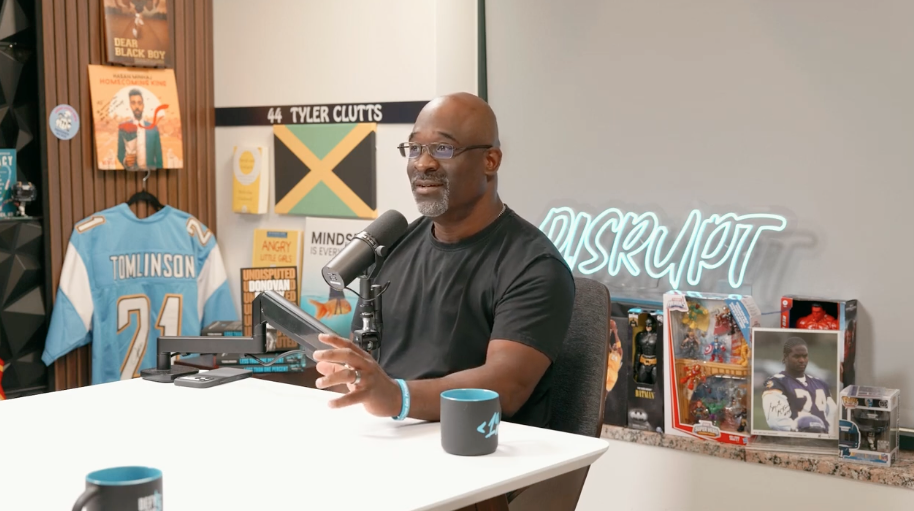

Meet Bryant McKinnie
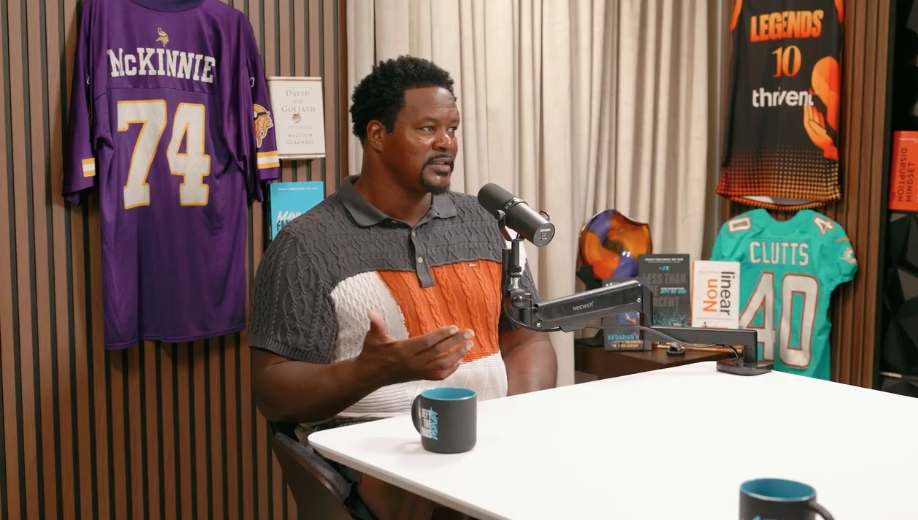
Stepping into the Minnesota Vikings locker room
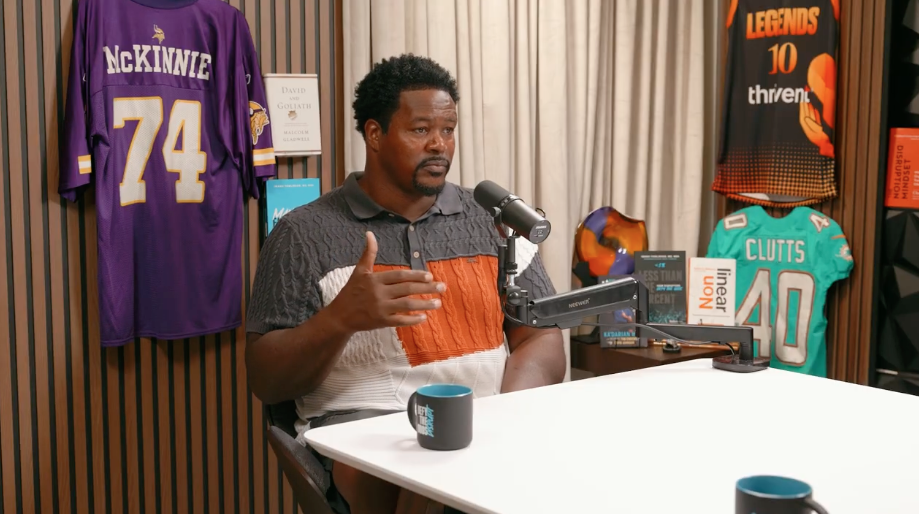
Joining Ray Lewis and the Baltimore Ravens

Bryant McKinnie’s Super Bowl run
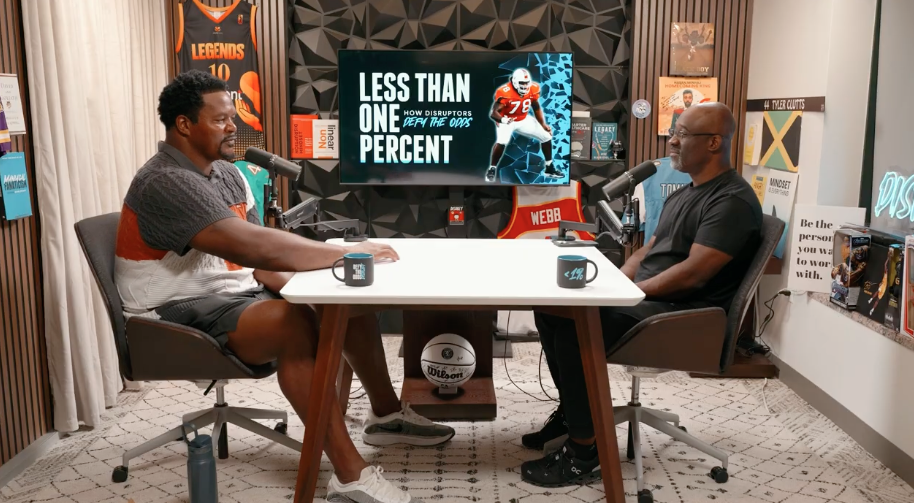
Junior college mentors and the golden rule
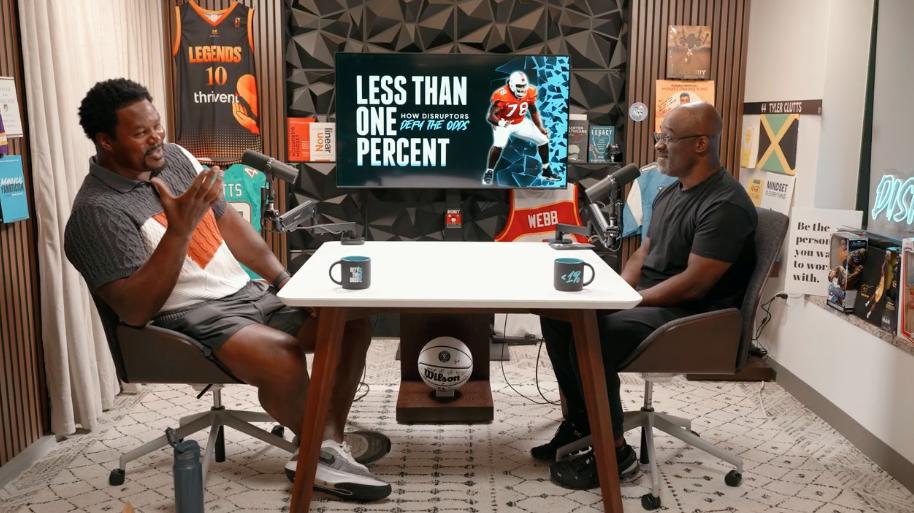
A live call with Bryant's mom

Learnings from Venus Williams
Hidden locker room truths
Closing Thoughts: The B Major Foundation

Timestamps
Transcript
0:00
You can't teach heart. You can't teach like grit.
0:03
And I tell people you can't teach effort.
0:05
You can't teach effort, right? Um, a lot of people are coaching up different things of technique and everything, but you can't coach effort and effort is within you. So that's that's a big thing that I always say. So you can't teach hard, you can't teach effort.
0:13
That's that's a big thing that I always say. So you can't teach hard, you can't teach effort.
0:24
I got goosebumps. Your path is your path. Stay committed.
0:36
Stay focused. Be disagreeable, optimistic, and relentless.
0:45
All right. Hey y'all. Welcome to Less 1%. I am honored today. Um, you know, normally I bring people in here that, um, you know, I feel like we're equal.
0:58
Uh, today I am. I don't know if we're equal today cuz, uh, he's larger than life. My friend, uh, Hall of Famer, you know, Miami, the you, uh, Brian McKenna, thank you for coming, my brother. Thank you very much for having me. Yeah. Yeah.
1:08
We're equal in heart, though.
1:16
Yeah. Yeah. Yeah. I go, we we already figured out that uh that I that I got the heart. That actually that's and we're going to talk about that a little little later, but you can't you can't teach heart. You can't teach like grit. I tell people you can't teach effort.
1:17
You can't teach effort, right? Um a lot of people are coaching up different things, the technique and everything, but you can't coach effort. Yeah.
1:24
And effort is within you. So that's that's a big thing that I always say. So you can't teach hard, you can't teach effort.
1:31
So I'm going to start the conversation backwards.
1:38
Normally I talk to people, hey, you know, where you from, what you did. I want to start backwards because we met
1:43
the first time at a mental health conference. Yeah. And mental health is a passion of yours.
1:47
And so tell tell me more about how did how did that come to be?
1:55
Um, you know, when in the league like a guy Brandon Marshall, he was to me one of the first people I heard in my era
2:01
who was speaking about mental health in the sports realm. and I and I I listened um he had my attention but then it
2:04
really resonated when I retired and like within the first two years of retirement there was two other guys who retired around around the same time as me. They
2:12
were having like I'm going to say mental breakdowns and um my family was close with theirs, I was close with them and
2:19
they would rather talk to me than their family um just because they feel like we could relate more because we both came from the same background which is football. Um,
2:27
so I found myself going to the psych ward for one guy and sitting in there and visiting and talking to him and like,
2:34
she really in here like, you know what I mean? And then another guy called me before he did something that got him locked up and I had to call my mom so
2:42
she can call his mom and give a heads up. So it was like people were reaching out to me in a sense for help, but it was like I I just needed more like uh resources on how I could actually help.
2:50
So, you know, my mom, she was a part of the NFL mom association, still is. Um, she had contacts with the uh NFL PA who
2:58
I needed to talk to as well as the NFL, and she kind of led me to who I need to talk to, and I had those conversations and was able to kind of figure out how
3:09
to get these guys help. I know they were sending them away to like Detroit, Jacksonville, to these like camps for like 30 days. But then I was trying to dig a little deeper like what's actually
3:16
going on in these camps because I know one guy went and then got out and then kind of relapsed again and went back. So, I was like, what?
3:24
Whatever the tool is, is it really effective or is it just like putting guys away for 30 days?
3:32
Yeah. So, it was like it just got to that point where I was like, "Okay, um when it happened, you know, with these guys, I didn't really know what to do, but luckily my mom kind of steered me in the right
3:39
direction with um who to talk to. I just felt like I know a lot of people are probably in these positions."
3:46
So, that's why I said, "Okay, I need to just start having these conversations."
3:54
And I call them uncomfortable making uncomfortable conversations comfortable. You know what I mean? And that's why you have to put
4:02
certain people in those rooms. But I feel like the people I reach out to, I know them well and I know their story and they're able to kind of get on there
4:09
and be vulnerable and open up and share, you know, what they've been through and how they got past it.
4:16
And I feel like that's very important because you want to hear from some people who've been through things.
4:24
Yeah. But then also been able to conquer it and um and move on.
4:33
And the first year I did it, afterwards, like one of my good friends, and she's always got a smile on her face, called me the next day.
4:40
I'm so glad you had this going on because I'm going through this, that, and the other, and somebody on the stage resonated with her.
4:48
And she, you know, just felt like, oh, wow, it's not just me.
4:56
And I feel like a lot of people when they're going through depression or things like that, they always think it's just them or they're the only ones who've been through it or going through it.
5:05
And then when she was able to hear someone else, it made her kind of come to me, thank me for having it and kind of share, open up.
5:13
But I also spoke on my first panel as well and shared things I had been through too.
5:22
So I feel like by me being vulnerable and on stage sharing things, it made her okay to open up, you know,
5:30
and share with me too, I guess, because sometimes people look at you like nothing ever happens to you.
5:37
But when they feel like, oh, it does, it's a different outlook.
5:44
So, um, I just realized how powerful it was and then how much lighter everyone felt leaving the room.
5:52
Everybody felt good being able to open up and express and having that room where people aren't being criticized or judged for anything they have been through.
5:59
And it was just needed. So, I wanted to continue the conversation.
6:09
And each year I have different therapists, doctors, reality stars.
6:16
I always have a former NFL player, actor, actress, just different people who are of influence, but who I know
6:24
I've watched them throughout that year speak on mental health in some aspect.
6:28
And I know that they're into it, so it's like, "Oh, let me reach out."
6:36
And then normally they're somebody who's kind of close to me, so it's easy for me to reach out to them and just have these conversations.
6:43
I just feel like it's important. So I'm going on year four actually this year.
6:51
It's amazing.
6:55
So, I'm putting this together again at the Hard Rock there at the same place.
7:03
Yeah. So, I've had it there for the past two years. This will be year three there.
7:11
But yeah, it's definitely needed. And then, like I said, the Vikings have always been a sponsor for me. So, they have been ever since I started, they have been a big support and helping me. And then to the point where they've now brought myself and my team on to come speak to their players. And then this year, they said, "All right, we're bringing you back again for year three, and we want you to speak to the players and now we want you to speak to the staff as well." Wow.
7:16
And I have such a good Dr. Tasha. She's very good at this and she makes it
7:24
a great conversation where everybody participates and you're willing to talk.
7:37
Because my first year going there, with the young guys, I looked at how my age demographic was at that time with meetings like, "We got this extra meeting, I'm ready to go home."
7:44
But those guys weren't like that at all.
7:52
We ran over time because guys wanted to open up and talk and discuss things.
7:59
And I said, "This is a different generation." I feel like this generation...
07:15
So, it's like they don't really have anybody to kind of share things with because it's like nobody's really listening. But when they have a listening ear, they're going to talk.
7:32
And I learned that from that first year and it's happened ever since. Like, they're very open to discuss and get things off their chest and communicate. So, I like that for them.
7:42
No, it's crazy because, you know, when we honored you at Vituity Cares, I'm listening to a lot of people—not just others, but a bunch of people that are around you that you don't even know I knew. I'm like, yo, this is different.
7:51
And I would say even for me today, at this moment, you know, like Kier Gaines—I don't know if you know Kier—he's a therapist. He does a lot of celebrity therapy.
7:59
We met at a Dear Fathers event, and he's like, "Moo, you should do this too." I'm like, "No, I'm not doing that. I'm not talking about my feelings."
8:07
So, I'm in that generation too, maybe even a little before you, where our job is to work and die, right?
8:14
Like, we don't ever talk about anything. And that's why I feel like I'm so enamored with what you do.
8:22
Because football is not a sport where the expectation—at least historically—is that you're going to talk about how you feel, right?
8:30
Like, I'm trying to hit people.
8:31
I'm trying to win.
8:39
And so I think that's a much-needed service that you provide.
8:48
But let me ask you personally a little bit. Are there times now—we'll talk a little bit about your Hall of Fame career, amazing athlete, and how you went through a metamorphosis before you went to The U to become the best you could be—
8:54
But are there times now, after that amazing career, where you're like, "You know, I'm sad today. I'm not my full self today."
9:02
Mhm. Um, I just went through that last month.
9:09
Yeah. Yeah.
9:17
Um, yeah, you're still going to have your moments. It's always hills and valleys and everything.
9:25
So, yeah, last month I did.
9:32
And the thing about it, I was traveling a lot, just on the road a lot.
9:40
And then toward the end of January, I'm in the NFL Players Choir. They were reaching out and were like, "Yeah, we want you to come to San Fran."
9:47
And I was like, "Okay."
9:55
Then my dad went in the hospital, and I was just like...
10:03
And the thing is, my parents aren't people who go to the hospital. They're never in the hospital.
10:08
Like, never.
10:17
My mom had vertigo a few years ago, maybe three or four years ago, but I wasn't present. She didn't tell me.
10:25
I had to find out from my family. They're those type of people—so independent and strong—that she didn't even want me to know because she didn't want me to worry.
10:32
She felt like she'd be all right because she was in the hospital.
10:41
I called her and said, "What are you doing?" And I could hear it in her voice because my mom is a loud talker, big personality, big energy.
10:50
I said, "What, you sleeping?" But I knew she was tired and weak.
10:57
She said, "No, I'm just relaxing."
11:06
I was like, "Okay. Well, where are you at?" You know what I mean?
11:14
But she still wouldn't come forward and just say it. Then eventually, after me asking a bunch of questions, she said, "Oh yeah, I was in the hospital."
11:23
I basically had to tell her, "Well, I know where you are."
11:31
And she was like, "Oh yeah, I didn't want you to worry."
11:34
It's like, yeah, still let me know these things.
11:42
So, by my dad going into the hospital, that's something I'm just not used to.
11:49
He went in because he scraped his foot or something and it got infected.
11:55
So, he went in for that, and then they had to do surgery.
12:03
I'm the only child on my mom's side, but on my dad's side he has other kids.
12:11
One of my sisters reached out. Actually, two different sisters were reaching out, keeping me updated.
12:19
He had the surgery and was supposed to get out in a couple days.
12:27
But then all of a sudden he had a fever, and they kept him longer.
12:33
They let him go about three or four days later.
12:42
He went home for three days, then went back into the hospital again. Something was wrong.
12:50
He ended up having a blood clot. They had to do another surgery.
12:59
And it was just a lot going on.
13:09
Basically, I felt like he was in the hospital the whole month of February. He was only home for three days.
13:15
He ended up getting out around the 23rd or something like that, and I found out at the beginning of the month.
13:23
So, it was a long time.
13:31
And I kept trying to figure out, am I flying to Jersey? Every time I planned to go, they'd say he was getting out.
13:39
So, it was just a lot going on.
13:42
But then, in the midst of that, I found out one of the players from the Vikings—a team I talked to—committed suicide.
13:50
I'm on the phone with them like, "Okay, this is not in season. This is the offseason. So how do we combat this now?"
13:54
You know what I mean? I'm on the phone trying to help plan with them.
14:03
Like, how do we do check-ins? What's going on with the players?
14:11
Because I've experienced this from the Ravens side. When we had Jacoby Jones pass and Arthur Jones pass away, I knew how the Ravens handled it.
14:20
They did a virtual gathering where we all came together, talked, and expressed how we felt.
14:28
So, I was just giving those clues to the Vikings.
14:32
to me this is all just signs of just protecting and taking care of your health. And then, you know, when I got the opportunity, um, my head trainer from the Vikings, Eric Sugarman, reached out and was like, "Hey, we want you to come and, you know, try the TPE, which is the therapeutic, uh, plasma exchange
14:53
and stem cells." I'm like, "This is even more conf because this is all happening in February." And it's like just different
14:59
things are are coming to me um that I felt like I needed feel like I know how to manifest things cuz I I just was
15:07
there certain things I just feel like I need to get done but I got to figure out how to get it done. But I just feel like this is needed was happening um to me.
15:17
But it was also like little something people people have to really pay attention to things that happen in life and then like where you're at in life and the things that happen around you
15:25
because some of those things are kind of a direct message to you.
15:29
Yes.
15:29
But sometimes people overlook or miss the messages but I was I was in the word. I definitely you know I'm in the word. So it's like
15:36
I just felt like I had more of a clearer vision because I took that time I feel like I was just getting away from the word just being so
15:44
on the road and being tired. So now I was like, build your your fitness back up. I got my book with me. So I I travel
15:52
I read it this morning. I post in the morning when I read it.
15:55
Yeah.
15:55
Um and then even when I'm on the road, it's like get your steps in. When I'm traveling to the airport, like those are my steps cuz I'm walking about a mile ahead. But even if I'm say if I would
16:03
have been here for like three or four days, I'm going to have to bring a workout outfit because I have to get a workout in one or two of those days. You know what I'm saying? Just keep the to keep the blood flowing, the
16:11
mind going and everything. So, so there there's a couple things that you said there that that are a little different and I and you know I'm I'm I'm seeing
16:20
your personality up front because you know a lot of times people only see people through social media or through it's just a glimpse of
16:28
who they really are which is you know why I think things like this are so amazing but you said two things. You said one and I've recently learned, you know,
16:35
this is what you just said to yourself about what happened to you. It's therapeutic for me because I just went through that. It's
16:41
like last year 2025, I was Jordan. I was every I mean, I was like, if you told me there were three people to talk to,
16:50
I'd get on a plane and go talk to those three people. I mean, I was everywhere.
16:54
And I don't think that I was depressed, but some something wasn't right. Like I was just and um recently I was actually
17:02
supposed to go to a big conference and I said no and I was devastated you know cuz again that athlete mentality
17:11
you never say no coach is asking you to do something and I said no and my mood elevated so the thing that you said is that you
17:18
said no travel for a month or you know whatever you're like hey you know what I'm going chill out focus on me and pouring in myself cuz I feel like I was I was pouring into everyone else
17:27
and I was depleting myself, but I wasn't taking time to make sure I'm good. And you know what they say when you get on the plane, put your mask on first before you help
17:35
others. And I feel like I was helping everybody else. And I was depleting myself and not being able to make sure I'm pouring in, you know, pouring back into myself.
17:44
Again, you have to say that, you know, on the plane, they always say make sure you put your mask on first before you help others.
17:49
And I feel like I wasn't doing that to a certain degree. And I was starting to wear myself down. And when you're tired, you're hurt, or
17:57
you're sick, you're no good to anybody else. So, you have to make sure that you're in the best shape to be able to get out here and continue to help. So, I had to take time with care.
18:06
So, the other part that I saw at least watching you tell that story, you also never I mean, I said, "When
18:14
when are you down?" And most people like you ask somebody, right, Jordan, when they're down and you can feel their body language kind of slump because they're
18:21
thinking back to that moment. But when I asked you that, you're like, "Yeah, I was down." But it's almost like it gave you more energy to really focus on the things that matter.
18:30
It did cuz you know, you have your down moments. You're down like cuz people say, "I had a bad day." I was like, "No, you had a bad moment." I had a period of time where I was down and feeling down,
18:38
but I didn't make it home. I never tried to live there. You know what I'm saying?
18:41
So, I always tried to combat when I knew what was going on with my dad. It's like, "Okay, you need to get yourself, you know, together." You know what I'm saying? And then this things was happening. My friends was around my age.
18:50
He's like, "You got to go to the doctor.
18:52
you got to make sure you stay on top of these things. So, I was using those situations as life lessons for myself too. Like, okay, you got to do a better job and stay on top of your health as
19:00
well. Um, because you're not going to be health helpful to anybody else. So, even those those things happened to other
19:07
people, it also made me wake up and look at myself too in the mirror.
19:11
When you how how does how does that manifest for players? Because you have a you have an expertise that none of you
19:18
I'm a I'm a physician. There's no experience that I can get with the type of situations that you've been in with
19:26
professional athletes, specifically football.
19:29
What do what do you see when you look at athletes even today? Right? You're not in the game now, but you're looking back into you're helping, you know, uh
19:38
different teams with, you know, the Ravens with mental health. When you look at the game today, what is causing in
19:46
those athletes that that you know that that that sadness, that depression, that um you know that moment where they're
19:54
not the happy-go-lucky catch-a-touchdown kind of players. So what do I feel like is happening?
20:00
Yeah. Like what's bothering them? What's the athletes of today? What would you say?
20:03
I feel like they're probably feeling like they're not achieving the levels that they want to achieve or they might not feel good enough. Two things in life
20:10
people are always going to desire is to feel wanted or needed. And if they don't feel like they're being an asset to the team, they feel like they're
20:17
disposable and not needed. So that way they're trying to figure out ways or may make them just feel sad because they feel like, okay, I'm not being as helpful to the
20:27
team this year, this time next year, I might not be here, you know? So then that starts to seep in their mind. But I feel like everything starts with your mindset. So instead of that seeping in
20:35
your mind, make that your why of and this is why I'm about to go harder to go out here and train harder, watch film like even more and perfect what I need to perfect so I'm not in that situation.
20:45
But everything starts with your mindset.
20:47
Some people can let that seep in and that can take over their mindset and they start to believe those ill thoughts where somebody else like myself is going
20:55
to take those things and say, "Okay, this is the weakness. We got to strengthen the weakness and make it better." You know what I mean? So everything starts with your mindset. And
21:03
that's why I say how you talk to yourself because you be talking to yourself.
21:10
This is this is not therapy for me, sir.
21:15
You know, so uh I was off that was off pre-show, you know. I always joke—well, maybe it's not a joke—but I always joke that I'm short and you know, like a lot
21:23
of people see me now because I'm old and they're like, "Oh, you're not no athlete." Um especially because I'm small. And uh you know, he said
21:31
this before when we met before. He's like, "Listen, you need to stop saying." So, as of today, I am beautiful and about 60.
21:38
Yes, sir.
21:41
Yeah. So, um do you—so, and the reason I asked that question,
21:48
um you know, my son and daughter both went down that college basketball road, right? They just love basketball. That's their thing. Um and have both been
21:56
successful. I mean, they both got to play, right? You know, just every level you get to, I tell them, you're living someone else's dream, right?
22:03
Cuz some people just want a dream to get there.
22:05
Once you get there, you want more, but just stop for a minute and be grateful.
22:09
But my daughter's team, I think they won five games all season. I think they were five and 26.
22:15
And she had she lost, I think, seven games her whole high school career.
22:21
Oh, wow.
22:21
Um, that's a big extreme, you know. It's a big extreme. She's in the ACC. She's a, you know, she's in your conference. Um,
22:29
but you know, just not not a good situation. Now, she ended up being first in assist-to-turnover ratio. She also ended up being fifth in assists overall. So, she had a good year.
22:39
Okay.
22:40
But about that depression mindset is like, you know, like, hey, you want more, you know, you feel like you could have done better, you know, whatever. It's uh sports is a tough road, man.
22:51
It is. And then also because of social media now, yeah, can also you have hecklers that can be in your comments and stuff like that. So
22:58
I came at the tail end like my tail end of my career was when you know social media was around and you know people you know they can feel free to comment on
23:06
your page about like stuff like that, right? He missed that block, right? So um to have that is probably a different element too. Like if you already feeling
23:14
a certain way about your play and now you have an additional person kind of confirming how you already feel. I'm pretty sure that kind of can drive, you
23:22
know, these individuals crazy because, you know, before, you know, I remember Ray Lewis always say, you know, I don't read the newspapers um because I don't
23:29
want to hear the highs or the lows, like, you know what I'm saying? So, I can just stay like this. But now, if you have people that's coming on your personal social media, you have to ignore them. It's hard to ignore them.
23:38
Um, so that that's a different element, too. And I always try to tell people like imagine somebody coming to your job and tell you they're horrible, horrible...
23:40
I mean I'll comment I write a lot about sports. I love the analytics of sports because I think sports is a gateway to life.
24:02
You know what I mean? That's all I Everybody's like, "Hey, you should use other examples." I'm like, "No, I love sports."
24:11
I think it is. I feel like sports also teaches people how to work together collectively and then stay in your lane. Like know your position and master your position, but know as a collective our goal is to get here.
24:19
You know what I mean? So, I feel like once people understand that, it normally kind of—
24:27
Yeah. But I think like if you back to the comments and you maybe I got to rethink I got to think about this. You have people who
24:34
have made millions of dollars commenting on sports. You know, I'm not going to name them out here because, you know, I might have them on the show later, so I don't know.
24:42
But I have a few that I probably feel like we're thinking about the same person.
24:47
I'm like, yo, like you played high school in that sport. Maybe you sat the
24:54
bench, you know, and you're going to talk about who's the greatest or—
24:59
Yeah.
24:59
Like I mean, I can have my opinion, you know? I mean, I think like if we talk about football greatness, I know cuz I grew up watching Barry Sanders at the running back position, you know, Jerry Rice and Randy. And that's the thing. I feel like greatness may look different to different people.
25:14
Yes. But the thing is I just don't think like if you said to me if I ask you who's your let me ask you who's your besides yourself who's your best like your greatest football goat?
25:25
Mine was as a kid mine was Reggie White.
25:25
Okay. So yours is Reggie White.
25:32
Yeah. In my mindset I can't argue with you. Now, I can give you my opinion, but at the end of the day, you know intimately what it takes to be the greatest.
25:40
This is like you coming to me and saying, "Hey, Moo, I'm going to show you how to—
25:47
how to reduce a shoulder, you know, like I'm going show you how to put that shoulder back in."
25:55
Like, you might have your opinion of what a bad doctor looks like, but you don't know necessarily the nitty-gritty. So, I feel like a lot of these broadcasters like I'm like, "Bro, where did you play?" Like, just, you know?
26:04
Yeah. Um any any So going back to your playing days.
26:12
Well I actually want to ask you something because you know this NIL is nuts now. This NIL is I'm on I'm in the parent end. I'm like you got you got money for what? Like you didn't even deserve that.
26:21
So do you end up calling Miami and telling them that they owe you money?
26:27
I know a lot of us probably wish we could and see where we at least be able to see where we would stand. But there was a lot of exchange of support for athletes back then at different places. It was kind of tough if it was.
26:43
Yeah.
26:45
You don't think some of those places were making sure?
26:45
Yeah. I'm pretty sure people was taking care of some type of way but not two and three million bucks.
26:52
No, not that at all.
26:55
Yeah. No. Probably like somebody's rent or something being paid. I don't know. Something like that. But not like 600,000 and up. Like no.
27:05
Yeah.
27:05
So that's a big deal. And with that I do feel the school should be able to start educating the player and the parents on financial literacy more.
27:15
Yes.
27:15
Because now they're younger. Now you're starting to get kids in high school. So now you're like 17, 18 and you're coming to this.
27:21
The parents aren't educated, the kid isn't educated. It's like you still got to pay tax on stuff. Like you just have to educate everybody at a younger age.
27:29
And I feel like that's very important because you don't want to mess things up for them so early, you know, chasing this NIL money.
27:37
So, I do feel like there should be a little control on NIL a little bit too cuz I feel like to me now it's starting to look like free agency in the NFL.
27:44
Like you're at this one team and this team offers you more money now. I can just go here and it doesn't show loyalty to me.
27:50
Yeah. Well, like either like if you look at my class of guys who I was in school with, you had Sean Taylor, Ed Reed, you had the running back room was Willis McGahee, Clinton Portis, and Frank Gore.
28:00
Like NIL was there then that team would have been dismantled.
28:08
But you look at these transcripts, right? You look at these transcripts, you know, think you're applying for a job or whatever.
28:14
Let's okay how many hundred million dollar players are there out there, right? And then there's sort of everybody else.
28:22
And so at some point you're going to have to convince somebody that you're more than just an athlete and you're giving in a resume with eight different colleges on there.
28:32
It's just I think it was a good moment.
28:40
It was a good swing, but it swung a little too far and it needs to come back. It just needs a little control.
28:45
Yeah. Um like I'm just going back to my team.
28:48
It's like I feel like they just built character with those guys, you know, playing hard to take somebody's job and then the other player is fighting hard to keep his job. It made everybody better.
28:56
Yeah.
28:57
This now it's like, "Oh, I'm not playing like I want to, so I'm just going to transfer and go here and I could probably start there."
29:06
And this is like it kind of gives like a brat mentality a little bit.
29:06
Yeah. And then I'm taking my ball and leaving.
29:08
Yeah. I'm leaving. Like I just I'm not a fan of it and then when you get to the league you can't do that.
29:13
So it's like and then also they don't show the flip side of going in the portal.
29:20
There's a lot of people that go in the portal but everybody don't get picked up.
29:20
They don't get taken out of it.
29:28
Yeah. So they don't show maybe they should do a documentary on showing that.
29:28
Yeah. A lot of people that's actually it is because there's a lot of people that go in there thinking like, "Yeah, I'm going to go to this next school."
29:33
And you don't get picked up.
29:38
All we hear is about the bigger transitions and things like that. But there's a lot of people get lost in that portal.
29:46
So when and a lot of people I think come out of high school or at least go through high school and it used to be this D1 or bust mentality, right?
29:48
Like I'm you know this is the only way. I want my signing day. I want to have all the helmets and the hats.
29:55
And then take the hat up and it's going to be the U.
29:58
But what I tell—that's not the best for every kid. In your situation, I didn't go that way. You didn't go that way and you were in the Hall of Fame, college Hall of Fame.
30:06
So tell me about that.
30:09
Like you mine see I'm very into the word, right?
30:15
So I just feel like a lot of things that happened in my life were not kind of, were ordained by God.
30:22
You know. So I grew up in a small town in South Jersey called Woodbury. It even sounds small—Woodbury.
30:32
But, you know, I feel like the last person who might have been pro in my high school was somebody like—I graduated in '97, somebody like an '83. So it wasn't relatable to us.
30:42
We didn't really know him. It wasn't a thing.
30:46
So I was playing because my friends were playing in high school. We were playing for fun.
30:49
But we had a running back—I always give him credit—we had a running back named Lamar Sturdivant.
30:55
Who played behind me. He was really good and, you know, back then we didn't have the internet. You had word of mouth or somebody had to send a VHS.
31:04
Apparently everybody caught wind of him.
31:10
And till this day someone from our area sent a VHS to the University of Iowa for Lamar. You know what I'm saying?
31:20
Yeah. But I'm on the film.
31:20
So they watched Lamar, but then they said, "But who is that?"
31:28
And I'm standing there about 6'6". You know what I'm saying? Who is this person?
31:28
So it got their attention just being on the film as well. I played defensive end at the time.
31:36
So they came and it was after National Signing Day and they came to visit Lamar.
31:36
But they said, "We also want to meet the young man that's on this film as well."
31:44
And they're like, "Oh, that's Bryant."
31:44
And they're like, "Yeah. What's his plans?"
31:51
It's like, "We don't know. Just probably go to community college or something like that."
31:51
Like I didn't even know. It wasn't like football. I was getting recruited. Small school. Nobody really got recruited like that.
31:58
They were like, "No, we want to offer him a position to come."
32:05
Wow.
32:05
But they said, "We're past our signing day, but we want to offer him a situation where he can go to a JUCO and learn how to play left tackle." So they had brought it...
32:10
to me and I I hated I just said Reggie White was my favorite player. Yeah, left tackle. Like I don't know no offensive lineman at the time.
32:29
Um but I was just like if it's going to give me a free, you know, two years of school, I'm just going to do it. And when I get there, I'm going to try to convince them to make me play defensive line. So I get there and I try to state my case on, but can I just play defensive end?
32:35
Because that's what I was comfortable with.
32:37
But then I learned in order to be successful in life, you have to get comfortable being uncomfortable.
32:45
That's where I learned, okay, if you want to do this and you want to make it far, we're suggesting you do this, and that's play left tackle and learn it.
32:54
I'm not left-handed, so everything I had to learn, I had to learn everything. I had a left-handed stance, do everything from that standpoint. I'm never doing this ever in my life.
33:02
And I go there and what's crazy about this situation, I never even realized it until I went back to my JUCO and I talked about it two years ago to the students that are there.
33:11
I didn't realize this until one of them asked me, but I went there never playing a position, never really lifting, having a weight program or nothing, learning a position against a guy who was a JUCO All-American.
33:19
So the defensive end that I practiced against every day, he was in his sophomore year. He came back as a JUCO All-American.
33:27
It's me never playing this position, still trying to fill out. I'm 17 years old. I turn 18 when September comes around. I'm just learning, trying to figure things out, and he is lighting me up every day.
33:44
Wow.
33:45
While I'm trying to learn from a left-handed stance, learn a position in general that I've never played. Oh, he just for the first month and a half was doing whatever he wanted.
33:54
And then one day it clicked. Because I would go home—or I'm going to tell you another thing too.
34:03
When I first went out for football, my grandma—I played basketball all growing up. So I wrestled. My mom had me wrestle first to learn discipline.
34:11
Then later on she put me in basketball to learn to work with others because I told you I grew up as an only child.
34:15
So I played basketball basically from elementary all the way to high school. I didn't play football until high school, ninth grade.
34:23
And when I first went out for football, my grandma was like, "You should stick with basketball. You're not going to like it."
34:31
She said, "I can just see you coming back to basketball." And that right there, I never wanted to make her be right.
34:38
So even though I had moments of like, "I don't know if I do like this," I would hear her say, "You ain't going to like it. You'll quit and go back to basketball."
34:45
I was like, "No, get up." So that was always in my head.
34:53
So when I got that scholarship to go to the JUCO, I reminded her. I said, "You remember you said I wasn't going to like it?"
35:02
She was like, "Yes, I'm proud of you." So now I'm going through all this stuff and I had days where I was like, "I don't know. I don't know if I want to do this."
35:10
Having headaches and stuff like this, going against this guy every day. I'm trying to learn this position and I just hear her saying, "Yeah, you're not going to like it."
35:17
I was like, "Get up," and just go back out there anyway and figure it out. And I finally figured it out and was able to stop him in his tracks.
35:23
And then from there, that was it. After that season, I became a JUCO All-American.
35:32
But I had no choice. I went against this guy every day in practice. So the games were going to be a little easier because I figured him out.
35:40
So that's what I never realized—in one year I went and learned something that I never did before and became a JUCO All-American.
35:47
So that's what the student said, "You never played that position and became a JUCO All-American?"
35:51
I never even thought about it. But I was so tuned in trying to figure out how to stop this man, you know what I'm saying, to do my job.
35:59
I was so tuned in like, "No, I got to figure out how to stop him." I'd be at home trying to figure out, watching his play, like what am I doing wrong? Just really figuring it out until I figured it out.
36:07
And this just tells you how God works too. How this random person mails in a videotape of me, and then they spot me and come give me a scholarship.
36:14
Now I have a letter of intent signed to Iowa and no one can talk to me.
36:21
I finish the season All-American somehow, and then Hayden Fry, the head coach at Iowa, retires after my first season there.
36:28
After my first season there, he retires.
36:30
So now all the schools can come talk to me, because now they made my name on the JUCO circuit.
36:39
Now I'm going back in as a sophomore, as a JUCO All-American, and now schools can talk to me. So now I'm getting letters from different schools and I'm able to set up visits.
36:47
But just look at the timing. Look how God operated and did that.
36:52
Yeah. Makes no sense. I mean it makes no sense, and that's why it makes sense.
36:57
Right. You know, that has nothing to do with me.
37:00
That's just like, look at the order and the timing, how everything just happened.
37:04
And now I'm in a position where he retires after my first year.
37:12
And I'm in a position now where the new crew comes back and they're trying to honor it, but I don't have to now because my intent was with him. I don't even know this new regime of people at all.
37:24
Frank Verducci, he is the guy who came to my high school and met me and got me to sign a letter of intent for Iowa.
37:32
And later on—I don't even know if we ever officially met again after that.
37:40
We were playing against the Cowboys when I was in the league. He was on the staff for the Cowboys.
37:48
And I was like, "This is Frank." Because I always look at the media guide and everything.
37:56
I wanted to figure out how I could see him, but there was no way I was able to. But I was able to see that he was on the staff for the Cowboys at one point too.
38:03
Have you ever found him or reached out?
38:06
I haven't. I don't even know how to find him. I have no clue.
38:10
I feel like we got to find him now, right?
38:18
But he's a big part of this. He's the one who talked me into playing left tackle. Then when I got to the JUCO, they stayed on that, me playing left tackle.
38:26
But basically that opened up my opportunity. I went to Rutgers, I went to Syracuse, I went to Arkansas, came to Miami on a visit, and ended up at Miami.
38:36
That's why I said God kind of just led me there.
38:38
And God keeps leading me different places in my life still, putting me in situations that I don't foresee for myself.
38:45
But then He just places me here and I'm just kind of...
38:52
And a couple years ago, you got a little bit of what I got.
38:59
Every time you talk about what you did, there's two things that come out for me. One is hard work. I mean hard work.
39:08
You're violent about making sure that you do the best you can, but you also give a lot of other people credit.
39:15
Every story you've ever told me has someone else in there that gave you an opportunity, motivated you without them knowing, or played a role.
39:24
I mean, so you...
39:31
Because I feel like a lot of people played a role. If it wasn't my grandmom saying that, I was like, "Yeah, I'm going to prove you wrong." That just gave me motivation.
39:41
So you hold grudges?
39:49
Yeah. Yeah.
39:51
But that, I didn't like it. And I was like, "Yeah, I'm going to prove it wrong." And I felt like I was able to do it every step of the way.
39:59
So then when I got an offer to Miami, I reminded her. Grandma, remember? Even to the draft. I did listen.
40:07
Even down to the Super Bowl.
40:10
When we won the Super Bowl, my grandma was the first person in the family—out of all my family—to run on the field.
40:18
I said, "Grandma, I remember."
40:26
And she's like, "Yes, I'm so proud of you."
40:34
My grandma's still here too at 90 years old. That's awesome.
40:43
During COVID, she wasn't really a big fan of getting on flights anymore. I wanted her to be there so I could just say, "You remember?"
40:50
So you have amazing players. They have rivals. You got your grandma.
40:57
Yeah. Yeah.
41:01
Bryant McKinnie's greatest rival is his grandma.
41:09
Michael Jordan's Hall of Fame speech is one thing. Bryant's is, "You remember, Grandma? You remember what you did to me?"
41:19
That was my why. Why I kept going. Because I was not going to make her right.
41:24
Who's the best player you ever played with? And I know that's hard because a lot of them are your friends.
41:33
That is hard. You know, NFL?
41:37
It's hard to pick one. I was blessed to play with a lot of great players.
41:43
Ed Reed, Ray Lewis, Randy Moss, Brett Favre, Adrian Peterson.
41:49
Wow. That's tough.
41:51
That's like a Hall of Fame list right there.
41:53
That's a tough one. Who do you pick out of those five right there that I just named? Like, who do you pick? You know what I'm saying?
41:55
players that would be hard.
42:09
Yeah, that's pretty hard. But then you got to even go back to college where you have Frank Gore, you know what I mean? Guys like Frank Gore and Vince Wilfork and all those guys that were my college teammates.
42:22
So yeah, the best player you played against, that battle is a heavyweight battle.
42:30
Yeah.
42:31
Yeah, it can be. I always give this one person credit because he helped me in pass protection. His name is KGB, Kabir Bajabiamila.
42:40
Okay. And I was young, and pass protection was supposed to be my thing.
42:45
But I met up with him and I'm like, "Who is this?" He was very fast, slippery, and he was a veteran.
42:52
So he kind of knew.
42:59
Everybody see that? Tell me about this guy.
43:02
Yeah, that guy right there definitely was thinking and studying something, looking and trying to figure out.
43:07
That's definitely a thinking face. Like, "What is this?" I don't look like I'm too happy to be there either, but I'm definitely thinking.
43:15
I can tell by my facial expression. I'm looking at a teaching moment and I'm trying to take in what's being said. I'm really focused in.
43:22
How different is this guy from this guy?
43:30
This one just has way more life experience. There's more things that I know about myself and how to take care of my body better.
43:38
This is just a young kid that's still trying to figure it out. Just becoming a pro, trying to figure out how you become a successful pro.
43:46
There's a lot more that one has to figure out.
43:49
So, you believe—obviously you've talked about your faith.
43:55
You've talked about different moments in time, and that's the book I'm writing right now. It's about moments, right?
44:01
It's about the moments that go well, but then we have a lot of people that I think missed out on greatness because a moment went a different way.
44:11
But you had an amazing career. Is there anything that you would go back and change?
44:22
Yeah, I would go back and fix some things. Even down to me wearing gloves. I didn't used to wear gloves and I broke my hand twice.
44:32
Things like that I definitely would have done earlier. I would have games where my hands were just so sore and tore up from using them and not having gloves.
44:48
There are definitely some things I would go back and correct.
44:56
Any major decisions that you made?
45:01
Probably wouldn't have done that boat party in Minnesota.
45:09
Because I was actually considered a good guy prior to that. Then when that happened it was like, "Oh yeah..."
45:14
Because I feel like in football, especially during that era, you were characters basically. You were either the good guy or the bad guy.
45:17
And I was definitely the good guy.
45:25
Then the boat party and all that stuff came out and it was like, "Maybe he is the bad guy."
45:32
If you've ever looked at WWF and all that type of stuff, you have your good guy and your bad guy.
45:39
You have people like Warren Sapp, they're looked at as the bad guy. Then you have a Tom Brady who's the good guy.
45:48
That's not always justified. That's just how it's portrayed. It may not actually be accurate, but that's how things are portrayed.
45:55
That's only a small glimpse of the person being aired until you see something later on social media.
46:04
I want to say I held this grudge about the Pro Bowl situation.
46:11
And I ain't going to lie, because he kind of did me wrong in that situation. He ended up getting fired and I was kind of happy.
46:18
I was like, "That's what he gets. That's his karma."
46:26
During the Pro Bowl situation, we played in the NFC Championship against New Orleans and ended up losing that season.
46:34
I had plantar fasciitis where I had a tear in the fascia. It ended up spreading to both feet.
46:43
I never get a cortisone shot, but I got one for that Saints game so I could numb it.
46:46
We played in that game and lost, unfortunately. Then I had to go to Miami for the Pro Bowl immediately.
46:54
We go straight there and I get there maybe on a Monday or Tuesday.
47:01
I go to the first day of practice and totally forgot I took the shot. By Wednesday it wore off.
47:07
So now I'm like, "Oh." And I'm not taking it again. Not for an All-Star game.
47:13
I was just like, "I don't know, y'all. I don't know if I want to do this anymore."
47:21
I forgot I took the shot, and by Wednesday it wore off. My feet are killing me.
47:28
They're like, "Well, you have to do an extra physical. We're going to bring somebody in."
47:37
I go to do the physical and the guy hits me like, "Hey, I'm sorry. I went out to dinner with my family. I'll be back at this time."
47:45
I was supposed to go out to dinner too, but I waited.
47:52
Then he pushes it back again. I was like, "Look, I'm hungry. I'm about to go eat."
48:00
So I go out. Once I'm out, I stay out.
48:07
And I went to bed. I said, "I'll just see him in the morning."
48:14
By the time I come in the morning, I don't go to practice because we've already had a discussion. Y'all need to be preparing to bring somebody else in.
48:23
I get up the next day and go down there. They're like, "You were supposed to meet me last night."
48:32
I said, "I don't even know when you got back. You had me waiting on you while you went out to eat."
48:40
Basically, it ended up making it seem like I just didn't show up to practice.
48:48
There was a whole conversation between me and you.
48:56
I knew he came from Dallas. He was with the Cowboys.
49:03
And you allowed it to go out in the media like I was just out partying and didn't show up, when you knew we had a whole conversation.
49:12
You're not being accountable and saying, "Well, I delayed him two different times."
49:19
I told him a time, he was waiting, and I still wasn't back.
49:28
So now I'm like, "Bro, you gave me two different times to come. We talked about it."
49:37
We clearly know I'm not playing. I'm trying to get out.
49:45
So yeah. I don't know if he got picked up by anybody else afterwards, but when he got fired initially, I was like, "Good. That's what he gets."
49:52
I feel like it was maybe a year later or something.
49:55
I think this list is getting longer the longer we go.
49:59
You shouldn't have did that. Sometimes it's good energy grudges. This is a bad energy grudge.
50:06
The fact I still remember—I remember. I've said this a hundred times on this podcast.
50:14
I remember everybody's name. I remember.
50:22
And when something good happens, I'm like, "Hey, just want to let you know you were wrong about this."
50:31
Because I want them to see the impact they could have had if I didn't fight back.
50:37
Okay. So you keep not answering my questions, so I got to figure out new questions.
50:45
No, no. I'm just talking about the greatest player. You didn't want to answer the greatest player you ever played with.
50:49
I just gave you like five or six players.
50:50
Okay. Who's the greatest leader you played with?
50:57
One for the Vikings, I'm going to say Brett Favre.
51:00
Because he came to that team and in the fans' minds he was on the downturn.
51:07
Yeah.
51:09
But he had one of his best years ever with us. He was able to make everybody around him raise their level of play.
51:17
Wow.
51:24
And I realized that because guys were playing okay, but when he came, nobody wanted to let him down.
51:32
If you have that type of impact, you're a true leader.
51:40
Certain people can do that.
51:43
So for Minnesota, he did that. And then Ray Lewis.
51:49
People don't want to let Ray Lewis down. They're going to raise their level of play.
51:57
But Ray Lewis will come around and pray with you before the game. He'll put oil on your forehead. He'll do a lot of things.
52:07
So yeah, he's really in tune. I used to call him a prophet.
52:14
Because what's funny is when I was leaving the Vikings, he was one of the first people to reach out.
52:07
I was like, "Oh, you're coming here."
52:14
And I'm like, "Hold on."
52:12
But um I got there and I end up becoming like one of the key pieces for them in that in that playoff run for the Super Bowl.
52:27
Bowl. But the year before also we went to the AFC Championship. It's my second time being in the championship game. I'm like ah and I ain't win again.
52:36
Like I ain't get to Super Bowl yet because you remember NFC was where far we lost. Then my first year in the AFC, the Ravens we lost to New England.
52:46
They said uh Lee Evans didn't make the catch and then the the kicker, I don't know, he wasn't really like in tune to the game. He kind of missed the um field
52:55
goal at the end, so we end up losing. Um after that game, Ray was supposed to retire that season. After that game, Ray said, "Don't hold your heads low. We'll
53:03
be back in the same situation next year." I'm like, "What's the odds of us being back in the AFC Championship in New England next year?" That's what I'm
53:11
thinking to myself. And then I But I also thought to myself, that means he retired because he's talking about next year. Yes. Yes.
53:16
And then I look up a year later, we're in the same position after we beat um Denver on the road who we weren't favored to beat.
53:26
Once we got back once we got past Denver and I just all I heard was him saying that in my like in my thoughts was we're
53:34
gonna be back at the same position next year and I realized we're back in the same position. I said there is no way in the world that we are going to lose this game.
53:41
Yeah. at that point like I was like this man is a prophet because we are definitely back in the same situation that I in my mind was like
53:48
yeah right what are the odds like what is the lineup and we're here yeah so from there I was like nah yeah he did a he did a selfie video for
53:56
by Judy cares I don't know if I I didn't play that on I haven't played that video yet I think I did it online but yeah but
54:04
he did this inspirational it was actually co I think he gonna be a pastor later on yeah he I thought he was no no No, I feel like he's going ahead there.
54:12
So So So he he basically sends an email friend of a friend and I I put like three I put like five
54:20
words in there like how to save vitu and that we're a healthcare company and I said just these they need motivation like co is going crazy. is they're going
54:28
they're risking their lives. And the video was like 10 minutes with all kinds of stuff and he was like listen by you
54:36
gota I mean you got all this energy and uh you know you listen to it and you like you kind of want to like you you not I'm not playing for you but
54:45
I feel like I'm playing for you like I got to go do some stuff you know put on my white coat. I'm like uh go to work you know. So yeah he's he's amazing. So
54:53
um Brett Favre and and Ray Lewis I have experience are two different people who
55:01
can make you move. So besides grandma, who who's the the influence in your life
55:08
where you can look back and say I know there are many I know there are many.
55:11
You've already identified a bunch, but is there one person that you could say this is so I'll give you a background, right? So
55:18
I I write about Bob McKillop and Steph Curry. Like Steph I love Steph. You're amazing.
55:24
He Steph may end up if he ever wins another championship, he's going to start being in different conversations.
55:29
But Steph takes a lot of bad shots that go in.
55:34
Like if you know the game of basketball, you're not allowed to take a lot of the shots. Now, he ends up making a lot, but he misses some of them, too.
55:41
But Bob McKillop was his coach that said, "You know what? You can take those shots if you work on them. If you show me that you can make them, I'm going to let you take them." And that freedom
55:50
gave I think I mean you know I I haven't had the opportunity to ask him but I think that that kind of coach gives you permission to be your best
55:59
self right as opposed to a coach that's like hey don't do that you know he's like I'm going say this real quick um Ryan Tanh Hill when I first got to the
56:06
Dolphins I felt like he was trapped and so focused on listening to what the coach says and and doing the proper
56:14
things and not just being an athlete and going out here and just making plays that he could have made. Mhm.
56:19
And then when he got to Tennessee, it was like I I could tell it's a different coaching style and that coach allowed him to be the athlete he is and just go out here and make plays with your feet
56:27
sometimes if you can't with your with your arm. So I can I I can identify what you're talking about is based based on the coaching.
56:33
Yeah. Yeah. But if do you have somebody like that who you can look in back and say, "Wow, this I would have never been
56:41
the player or the man I was if it wasn't for this individual." It would have to start back um at least at junior college
56:49
because that's when I really like started high school. I I just did it for fun. But then the junior college having to learn a whole another position and then it's like now I'm trying to be good
56:57
at it because I'm not trying to keep getting bust in the head by this guy every day.
57:01
I had um my offensive line coach named Al Maroy. He uh remember I told you I didn't come from a school where we had a whole weight program.
57:10
Yeah.
57:11
the team would lift together after practice. I would go home and do my homework. He would come pick me up like
57:18
around 6:00 6:30 and I would go to his house. He had a whole gym downstairs and he would personally train me and teach me the proper technique on lifting
57:27
weights and doing everything. Um, so that helped develop like the physical part for me, right? And then when it
57:36
came to pass protection, he always said this thing to me. He says, you know, in pass protection, you know, somebody might swatch your hands, do things like
57:44
that. He says, but if you keep, you know, you move your feet, you can't get beat. So even though your hands are getting swatted, keep your feet moving and stay in front of them, you can
57:52
eventually be able to replace them. So that was something I always kept in my mind. Move your feet, you can't get beaten. Because a lot of times people hands get swatted, they stop
57:59
immediately. And it's like, why'd you stop your feet though? Just because your hand got swatted. But it's like even my hand got swatted, just keep the feet going and keep your body presence in front of them and just recover.
58:09
So I feel like a lot of things I just feel like being a junior college in general like Yeah.
58:13
It was an injury training ground.
58:17
Yeah. It just gave you a foundation of being tough. I never missed any games in college pros nothing due to injury
58:25
and that all stem from junior college and tool. I never took Tor.
58:32
I took that at one time because I was so just like not again like I was not really with Torov like that because I was like all this small print you got to I mean I'm not really doing this.
58:41
Yeah. Tour doll's not not bad. You know I think I think though that that what I love about you and and your story and we
58:48
know we all know people you know people who don't remember the times where they weren't Brian McKenna, you know weren't
58:55
Moo Tomlinson. They and I think the people that go back not necessarily go back and visit or you know you may not know them but at least in your head
59:03
acknowledge oh remember that they were a part of your story when you were nothing you know when you were nobody cuz I feel like part of development
59:11
if if people want to help you now if people call Brian and say hey man I want to help you you you don't you don't really know if that's real you know what I'm saying
59:19
like a brand new person you don't know if that's real but when they want to help you when you're nothing there's there's you know, because
59:27
they've helped a lot of people in those positions that didn't make it and they still put that same effort into them. So,
59:35
all right, I have uh the magic question that this is this is only we only do this on less than 1% I think. Okay.
59:42
Um what is your superpower?
59:47
Um, my superpower is I'm able to bring together
59:55
different personalities and kind of make everybody kind of mesh and kind of somewhat kind of get along,
1:00:02
get to know each other. Like I'm able to I don't know, one of my super networking
1:00:08
is one of my superpowers, too. Um, but I feel like I'm I'm able to some people who wouldn't normally be around
1:00:16
each other and I can just look at my friends. Yeah.
1:00:20
There's a lot of different friends who wouldn't normally be in a room with certain people, but because they're all friends that they're all
1:00:28
there and then they they actually get an opportunity to get to know each other from there and can some people are former have formed friendship and relationships as well.
1:00:37
Um, so I just feel like my personality to be able to bring people together.
1:00:42
Yeah. Yeah. Okay. So, part of this show is we call somebody, anybody you want to call
1:00:50
and, you know, obviously let them know you're on a podcast and then, you know, I take the mic and ask them the same question and we'll see what they have to say.
1:00:58
So, who you think you I'm call my mom. I'm see what she I really want to see what she wants to say.
1:01:02
Just headphones when you get her on there.
1:01:03
Okay. as you'll be able to hear them um through through the mic and through the headphones. Okay.
1:01:18
She answer Bluetooth. Yeah, we got it.
1:01:24
Yeah. You won't be able to hear her unless you put the earphones on. Oh, yeah.
1:01:43
Are you sleeping?
1:01:45
Oh, so a question. I gave you a heads up. You can use the mic.
1:01:49
Oh, I gave you a heads up that I'm um I'm on a podcast, right? So, um they have a question to ask you.
1:01:55
They just want to see what your response is going to be.
1:01:58
Hi, how you doing? Sorry to bother you at work.
1:02:02
Good. Good. So, um you don't sound that excited. I got serious at work. Oh, okay.
1:02:10
She's happy. She has this part-time job.
1:02:12
She finally got a job like after like 20s something years and she just needed something to do. So, she's so happy that she's at work. I'm at work. It's like Go ahead.
1:02:21
Okay. Okay. So, the question is is what do you think Brian's superpower is?
1:02:37
Yeah. What is what is the thing that he's that you you know that he does the best or that you you know you know
1:02:50
besides that?
1:02:52
Yes. Besides that Um,
1:03:02
okay. So, like me, if he gonna be your friend, like, you know what I'm saying? He's a good friend.
1:03:04
Um, that’s where he takes that from me. Shout out to myself. Yep.
1:03:18
Darn Skippy.
1:03:21
Um, and yeah, he's a good friend. Like, you know what I'm saying? He your allaround guy. Like if he needs something, he there.
1:03:30
But just don't take advantage because people will do that. Yeah. And I gotta come to bat.
1:03:35
He said that he's uh he said he said his superpower is that he he's a connector that he he brings Yeah, he is. He do. He do. Yep. Like his mom. He does. Okay.
1:03:44
Yeah. He making this about her.
1:03:47
Okay. So, mom, I guess we're having you on the podcast next clearly.
1:03:53
Yeah. I'm a connector. No, for real though, he do bring people together because I be using his people. That's awesome. That's awesome.
1:04:02
Well, thank you so much. Sorry. Sorry to bother you at work, but you get back to not doing any work at work.
1:04:07
I'm at my job that I love. I'm at my job that I love, right, Linda? You get back to doing no work at work.
1:04:16
Be quiet.
1:04:20
Thank you so much. All right. Talk to you. No worries. Bye. All right. that. Oh, that's hilarious.
1:04:29
Well, she kind of said something similar, right?
1:04:32
Yeah. Yeah. Yeah. She I mean, she she I mean, she kind of I thought she was talking about her super honest.
1:04:40
Well, we got the same superpowers.
1:04:43
Yeah. Yeah. You know, honestly, there hasn't been too many people that have been off.
1:04:49
Oh, really? Um, most people call their, you know, uh, you know, call their family member and they're they're right there. I mean, LT, everybody. That's good.
1:04:58
It's kind of a cool It's kind of cool.
1:05:00
But if I tell people I'm going to do it before the show, then I feel like people are going to set it up. Oh, yeah.
1:05:06
You know what I mean? So, you kind of have to catch them off guard. Yeah. Yeah.
1:05:10
Well, I'm glad I was happy with the answer she gave like it's close enough. Were you nervous? I didn't know what she was going to say. Like, what does she want to say?
1:05:17
You're like, "What? Left tackle?" I'm like, not bad. Yeah.
1:05:21
Um, so so so back to so I think you're always as an athlete
1:05:29
thinking about health and I think you know as you you uh the thing is I think when you retire because I'm going say this when I
1:05:38
retired I would I don't got to weigh in no more like because you got to weigh in every week. So I was like two things I ain't feel like doing was traveling because you got to travel
1:05:46
every other week and weighing in. So I was like, I'm not working out.
1:05:51
I that went for like a year and I was like, uhuh. Tying my shoe was like Yeah. And I was like, oh no. So I had to start doing things like um I was doing
1:06:00
group activities. So one of my friends had a boxing gym. I would do something called fitness with friends. Yeah.
1:06:05
And I would like basically post his gym and say come work out with me. Basically type of thing. But I was doing it like to help him, but it
1:06:13
was also really helping myself. Yeah. it was holding me accountable to get back in here and get work, you know, get these workouts in and um also encouraging other friends to do it with
1:06:21
me. So, yeah, I was doing that on uh Wednesdays and Saturdays to get myself back going and then I ran into I was in the gym and I
1:06:29
ran into my tennis instructor and I had met him. He had like a Florida shirt on. I had mentioned something about Florida.
1:06:35
He's like, "He play tennis." I said, "I'm trying to take lessons."
1:06:38
Since I met him, every Friday for sure, every Friday, as long as we don't get rained out, I'm tennis lessons. But now I've incorporated that
1:06:45
more and I take the men's clinic on Wednesdays and on Saturday mornings.
1:06:50
But I feel like a lot of people don't uh stay into the health aspect and you
1:06:57
know they gain weight then you start not feeling like yourself. Like I told you, once I started to not feel like myself is when I went immediately to correct it and I started
1:07:05
doing things to hold myself accountable for workouts where some people can not feel like themselves and they stay in that space and that's why I say they live in it and
1:07:12
that they make that home now and it's like no get back up and and get back to feeling like yourself and working out gives you those
1:07:19
endorphins that make you feel good and then it holds you like makes you feel like okay I don't want to eat too crazy cuz I didn't did all this work. You know what I mean?
1:07:26
Yeah. So people have to get into that space. And I feel like even when it comes to like the NFL and how, you know, they're having these concussion
1:07:34
settlements, I feel like it still needs to come with instead of just paying people, yeah, we paid you this now going about your business. is like still hold them accountable like, "Yeah, we paid
1:07:42
you this, but we need you to make sure you have health insurance and we need to make sure that you're have a gym and a trainer to get yourself physically back
1:07:51
into some type of like there needs to be some things with it instead of just giving money and saying, "All right, they're out the way because we paid them for like, you know, cuz those things
1:07:59
help." Yeah. And we talked a little bit uh pre-show about about um you know who got you sort of into tennis or inspired you
1:08:07
in tennis and um I got an opportunity to meet and I'm glad but I'm I'm glad she did.
1:08:12
Um and we're talking about we're talking about Venus.
1:08:14
Venus. Yes. Um I'm glad she did because that that's a very impactful for me because now still to this day it's
1:08:23
something I do post retirement. I'm retired now 11 seasons and this is something I still do for my health. You know what I'm saying?
1:08:31
And but I'm able to still be competitive. I'm able to problem solve and get cardio in at the same time. You know what I'm saying? Yeah. And and compete.
1:08:39
And compete. Yeah. Be competitive.
1:08:47
we were talking one day and I was like, "Yeah, tennis shouldn't be too hard.
1:08:50
Either just run and hit the ball." Like, she's like, "What?" like and she kind of like this is a little harder than that and then when I went out and tried it I was like oh this is harder.
1:08:57
And then um it became a challenge to me because now to get good they they would have something called the Williams Invitational where like a friends and family type of thing a tournament and we would play
1:09:06
and I was a team captain her and her sister was captains. She had another um assistant named Jess. She would be a c the fourth team captain
1:09:13
and we started doing that and I remember the first year we played I was partners with her her sister Isa and I wasn't good.
1:09:21
And um like me and Isa probably lost in the first round or whatever.
1:09:26
And then the next year, Isa got her a new partner.
1:09:29
Oh, and I got a new partner. Guess who had to play in the first round? Issha. And Isa lost. You beat him. Yep.
1:09:37
Cuz you had improved.
1:09:38
I had went got lessons. You tell her I listen. I learned how to play left tackle in one year.
1:09:43
Right. Right.
1:09:51
I had went and got lessons uh after that first year just not being good.
1:09:59
I would play once a week with Eric and just learn. So by the time the whole year came by, I come
1:10:06
out there and I was just a better tennis player. They was looking like, "Whoa, somebody got lessons." I'm like, "Yeah."
1:10:14
I think it's I mean we we mentioned this but I think Venus Venus to me I had an opportunity to talk with her at a big conference I told you we did a fireside and and she is just
1:10:22
like I you know you you use the term elegant I use the term regal I mean there's a there's an aura that she has that
1:10:30
yeah definitely classy definitely has a lot of patience I mean she she's given me lessons before as well and um I can see that being something because I feel like she really loves the sport.
1:10:40
So, I could see that being something she can transition into and being like a coach.
1:10:49
um like I see like some of these coaches who, you know, they travel and
1:10:57
they go different places and and and teach people in different cities. I could see her transitioning and doing that because I I feel like she loves the game and she has a lot of knowledge.
1:11:07
Yes.
1:11:07
And for her to be someone who's played two and a half decades like Yeah. very technical. Very technical in sort of her game would teach you.
1:11:14
Thing with her is she has patience. You know what I'm saying? And she has patience because she loves doing what she does. So I feel like she would make an excellent teacher.
1:11:21
Yeah. So I have two more questions for you.
1:11:24
One is what do people what So two actually two parts. So what about football would
1:11:33
people not know just watching it watching knowing you people are going to watch this pod knowing your um you know know your career. What would they not
1:11:40
know about football that you could tell us here today that that isn't that isn't too uh too crazy that you can sometimes
1:11:49
be in a huddle or you could be um you know on the line going through the cadence with the quarterback and somebody passes gas and all of a sudden you hear everybody yell like oh my god
1:11:58
who did it like in the middle of the play.
1:12:02
Somebody to pass gas either in a huddle or like while you're in your stance in a um you know, the quarterback is going through the cadence. I bet you nobody's
1:12:10
ever thought about that either. But it happens.
1:12:19
Yes. It's happened a few times when I played and I'm like, "Who is this?" Like it' be a slight little distraction cuz you hear like you hear everybody like fussing about it.
1:12:28
Okay. in the middle of maybe for the next spot. We got to give the people the questions ahead of time. Why did you all start? Yes, somebody.
1:12:36
That's hilarious.
1:12:37
Would have never thought that, but it happens. It definitely happens.
1:12:40
What And then the second part of it, what about Brian McKini that that that nobody would know.
1:12:51
you know, uh, far as football would nobody know. No, just not just about you as an individual, as a football player, whatever. That's something that they would know. I basically had a rider. So
1:12:59
basically every night after, you know, we're in a hotel, we have all our meetings, we have a team snack. I always were required to have two boxes of cereal. Two of the mini boxes of cereal each night before um I go to bed. So like you have the team snack. I have a little snack, but then they always had my cereal to And that was in the writer. That was in the That was I was like a fake rider because I never like told this but like they always was like after a while in Minnesota they just knew like every city went and it had to be certain brands too.
1:13:06
Yeah. It was like CrossFit flakes, Froot Loops or something. It was like three different ones. It was always those and they would have two of each with my milk and everything like to the side like this is his. And then what's funny is when I went to the Ravens they were like we have your cereal over here. I'm like, "Who told who told you this?" And then the same thing happened when I went to the Dolphins. I'm like, "Who's passing this down?" Like, "But they're already prepared." Like I have that's why I say like it's like I had a writer or something because it's like somebody would pass the message when I got to the we have your cereal here. I would go in there like thinking like I got to figure this out like no we have your cereal over here. I'm like what?
1:13:15
So now every everything you go to from now on there'll be cereal. There'll be cereal there.
1:13:22
Every cereal there is waiting like Yeah. Yeah. And I would have it the night before cuz I'm going tell you this, right? I would have it the night before
1:13:28
cuz two times, so another thing with me is superstitious, but it just a bad thing. But I could never order room service the night before a game. I order room service the night before a game. I must have didn't make team snack or something. I got injured and tore my meniscus in college.
1:13:37
Oh.
1:13:38
So I was like, uh, I told myself I'm never ordering room service again.
1:13:41
Yeah. I must have missed Team Snag again in 2007. I I don't want to order room service. Maybe that was just a fluke.
1:13:47
Why did I order room service? I tore my meniscus again in that same game. I never order room service again and stuck to my cereal and never again. The two times I ever ordered room service the night before a game. I went out there and tore my meniscus. Oh.
1:13:55
So yeah, I just got away from that and just was like once the second time happened, I said I'm never service the night before a game ever again. So that that was it.
1:14:02
Um B Major Foundation, I know we talked about your commitment to health. We should I wanted to give you an opportunity to tell us about that.
1:14:07
So B Major Foundation, um basically my mission statement is healthy kids, healthy living. So I try to do football camps, anything to keep kids active. Um
1:14:12
I do things kind of help single parent homes, which basically just a lot of families in the community. So
1:14:20
this Saturday coming up, I host um Year 13 for another charity. It's another company. I I I host their event. Um it's called Kick CF for cystic fibrosis.
1:14:27
Uh the young girl, she was like two years old at the time. Um she has cystic fibrosis. Her family came to me and was like, "We want to do an event." I said, "Well, let's do something fun." Like, you know what I mean? I feel like kickball's fun. Everybody can play.
1:14:37
So we did a kickball tournament. Um this will be year 13. That's cool.
1:14:41
Her name is Delaney. So, we've raised a bunch of money um over the years for them. So, what I've done is put together a tournament and it used to be the winner of the tournament will play my all-star team which is made of former players basically, guys that I went to school with or played in the league with and um
1:14:47
but now last year I feel like the past two years it's been like a raffle type of thing and they pick uh people out of the raffle and they play us kind of in the middle because they want people to still be there to see us play.
1:14:55
So we used to play at the end so a lot of teams would be going. Yeah. So, now we play in the middle.
1:15:01
Tournament starts at like 8 or 8:30. So we'll play at 12:30 while teams are still there the um like the exhibition game. Yeah.
1:15:08
And um and people get to see you know the players and see us as well. So and in a game that's not really you know it's different kind of game.
1:15:14
Yeah. Yeah. Yeah. So they get to see us outside of but we're competitive. So out of 13 years I feel like we only lost well this would be 13. So out of the 12 years I want to say we lost maybe two to three times. So we're about like 10 and three and 10 nine and Yeah. Yeah. We're very Yeah. Yeah. You don't hold grudges at all.
1:15:21
I love kicking. Yeah. You don't You don't You don't hold grudges at all. I mean, this dude like I mean, you're talking about Super Bowl, Super Bowl champion, college champion, college hall of fame, saving the world, but I'm going remember the score and kickball.
1:15:28
Yeah. Yeah. So, um, we have that coming up.
1:15:33
And then I also do, um, so basically I do mental health awareness, right? So, um, this will be year four for me. Um,
1:15:39
and it's a it's an event that I do to bring awareness to mental health. That's why I do it in May because it's mental health awareness month.
1:15:46
But then also I use that to be able to like get funding for like the events that I do. So I do a back to school drive for the community.
1:15:52
Yeah. And we're and we're going to work on some of these things together. Okay.
1:15:55
Yeah. Right. We're going to Absolutely. So back to school drive. I normally do like turkey. It was called Operation Turkey. Um, we used to give
1:16:02
back 2,000 meals, but now I just want to kind of focus on like just doing like the turkeys. Yeah. instead of like preparing the meals. Yeah, that's just way easier. So, Operation Turkey and
1:16:10
then I do um a toy drive. I give toys back to the community. So, those are the three things. So, I I try to, you know, raise money to pay for pay for
1:16:18
all this stuff, too. Got a fly to people in for the event and then money left over I use to kind of like, you know, for the other events I do during the year. So, to give back to the community,
1:16:26
just being able to help. And I'm pretty sure, yeah, you know, these parents are happy. So, you know, when we're doing the back to school drive, we have barbers out there, we have food out there. So, it's not
1:16:34
just like the toys, it's like a whole experience. Yeah. Like, yeah. Barbers out there, they cut guys hairs, you know, the food, the bounce houses, all
1:16:41
that type of stuff. Um, same thing when it comes to the toy toy giveaways.
1:16:47
There's always a barbers just to Yeah.
1:16:49
So, kids can get haircuts, things like that. Um, yeah, that's give back to the community. So, I'm always trying to do things to give back. And then, um,
1:16:57
the mental health awareness event, I just feel like, is a really good event.
1:17:00
Um, it just allows people to kind of get in there and share their story. Um, allow people because we have questions
1:17:08
from the audience, too. So, they get to ask questions, things like that, too.
1:17:11
So, and I like that. So, they get to ask, you know, questions and give feedback and things like that. So, it's a good event.
1:17:15
That's awesome. And and it's amazing that, you know, you know, the story.
1:17:19
That's why I kind of started with mental health instead of starting with well, somebody calling me. Um, but I that's why I wanted to start with mental
1:17:28
health. Um, because and sort of end with it because I I really respect what you do because it's a it's a space that is a space that people are kind of scared to touch.
1:17:34
Yeah.
1:17:34
And I think because a lot of people aren't used to talking about things that may be uncomfortable, you know what I'm saying? But I feel
1:17:41
like you have to kind of give people that feeling of it's a safe space like, you know what I and and you're really here to help them and make
1:17:49
them feel like, okay, I can open up, you know, and I just know like a lot of people who I reach out to that they are
1:17:57
in that space where they're willing to share their story to help others. So, right, I appreciate them for coming on board, you know, and sharing like one of my guests this year is Michael Orura. So, he gets Oh, yeah. He's my former teammate. Yeah.
1:18:05
So, he gets to get up here and share his story and, you know, his journey through life. So, I'm looking forward to hearing from him. Um, another person's friend of
1:18:13
mine is Salt from Salt and Pepper. She's gonna come on board and she's gonna, you know, share her journey. I, and I follow people specifically. I just watch things that they post and things that they say.
1:18:21
So, with her, I just seen her getting in the gym and just getting things back together, wanting to get their publishing. I just seen a lot of things in her life. I said, "Okay, I would like
1:18:29
to reach out and see if she wants to um come Yeah.
1:18:31
and share her story." And she was definitely open to it. So, that's amazing.
1:18:35
I have a few just different people that are going to be Oh, Jojo Simmons. He's another so he has a podcast called for good podcast and I and I did it
1:18:43
and um like him and his sister Angela they're all in that space of health and wellness and mental health and stuff like that and he does a podcast where
1:18:50
you only talk about good like it's for good podcasting right right so I like you should come on here and that gives you the opportunity to even
1:18:58
you know promote your podcast even more and things like that so people are more aware so he definitely say yeah it do so I definitely have a few people
1:19:06
and some more therapists and um a surgeon friend of mine Dr. Marvin, he's going to come on just talk about just different things of how people may
1:19:14
grieve with losing a limb and things like that because we talked about that before. So, yeah, it's it's it's a good it's a good lineup of people.
1:19:21
Yeah. So, I mean, we talked earlier, we've been going back and forth for a little while and we we get busy and but you know, we're you know, Vuiti Care is
1:19:29
committed like you know, wherever you need us. You don't I appreciate it.
1:19:33
You know, wherever you need us, I think we can, you know, and vice versa. When you need me, just let me know because I'll be there. And then I also want to commit here on on in
1:19:41
front of everybody KD Hill. I want to link y'all up because Absolutely.
1:19:44
his story. He was on our pod. What was it? I think about a month ago. Yeah.
1:19:48
Um and I think that just with the you know it's it's the other what I call the other side of winning, right? which is, you know, there's the great side where, you know, everything
1:19:55
works out in your favor or maybe but but the the way the things go, it turns out in a way that you end up being a
1:20:03
champion or you end up being a professional. And then there's other people who have a different path. And what I love about what he said, which
1:20:11
you've said here too, is that it's the path like he I mean I I have to mention this because it was so profound to me.
1:20:17
Um but he he is trapped in this car. M trapped in the car like he's in, you know, like he's in a rural town. There's
1:20:26
no ambulance. He's trapped there and his leg is trapped between the car and the tree and he is going to be top five draft pick, right?
1:20:35
And me, I I just know how I would be. I would be devastated because I'm seeing my whole life in front of my eyes and he did not at one not one time think
1:20:44
about football, right? just show you how ground it is and and how his faith is so strong, right?
1:20:50
That he can be focused on he's like, I just want to see my daughter, right?
1:20:54
I just want to get home. I want to make sure everybody is the pass is the other passenger. Okay, that's different. So, but I definitely want to link y'all up.
1:21:02
What is one final thought, final thing that you want to say to the audience?
1:21:06
You you know that you came on less than 1% is something that they'll remember.
1:21:10
um you know as far as you know maybe it's a journey they're struggling with or maybe it's a mental health issue they're struggling with or maybe it's just you know some inspiration
1:21:18
I'm going say this um you know everybody has to go through struggles right so everybody goes through a storm and when you go through
1:21:26
a storm it's raining right but guess what after that rain things grow so you always have to look at it like this I'm going through my growing season
1:21:34
so when that storm is coming down I'm being watered right this storm always my mindset has always been as kid. This
1:21:42
cannot last forever. This hard time, this this tough time, whatever I'm going through, can't last forever. And that's
1:21:50
probably why I'm in the midst of the storm. But when that storm ends, I definitely should be able to take away something from that storm. Um, and
1:21:58
hopefully don't have to repeat that storm because I didn't learn the lesson because I feel like when you don't learn the lesson is when God sends that storm back because you didn't learn and repeat
1:22:06
it until you really understand and get what you need to get from that storm.
1:22:11
That's that's that's amazing. Brian McKenna, me and we're both 6ix9ine, as you can tell. I'm learning. I just got
1:22:17
my therapy, but I really appreciate you being on the show. I know you you came, you know, you've a lot of traveling, and I I I'm honored the fact that you spend time with us. Thank you.
1:22:26
I'm honored for you to bring me out here. I thank you very much. Thank you for honoring me last year, the day after my birthday, which made it even better.
1:22:34
Um, sir, so they acknowledge, you know, some of the work that I'm doing in the community. So, I appreciate that as well. Yeah. All right. Awesome. Awesome.
1:22:43
They thought you'd give up, but you proved them wrong. Proved them all along.
1:22:57
You are the less than one person.
Key Takeaways
- The worst challenges we face are exactly what we need to spark essential personal growth.
- Success doesn't end when the stadium lights go out.
- True longevity means building safe spaces and giving back to your community.
Share with a friend
Episode Guests
Bryant McKinnie
A Super Bowl champion, Pro Bowl offensive tackle, and College Football Hall of Famer, Bryant McKinnie has redefined success by seamlessly transitioning his leadership from the football field to the business world and beyond. After a stellar 12-year NFL career, McKinnie has dedicated himself to creating opportunities, fostering connection, and amplifying voices through innovative ventures, philanthropy, and creative pursuits.
