Part 1: How Leopoldo López Redefined Movements
What do you do when life turns its back on you? Leopoldo’s journey is one of resilience, leadership, and conviction. From a promising career as an economist in Venezuela to running for office against a rising dictatorship, Leopoldo refused to let others define his potential.
Disqualified from elections, forced into hiding, and enduring four years of solitary confinement, Leopoldo never surrendered. He turned himself in, not as a victim, but as a leader, proving the strength of his movement. In his darkest moments, he chose conviction over fear, refusing to let the regime define him.
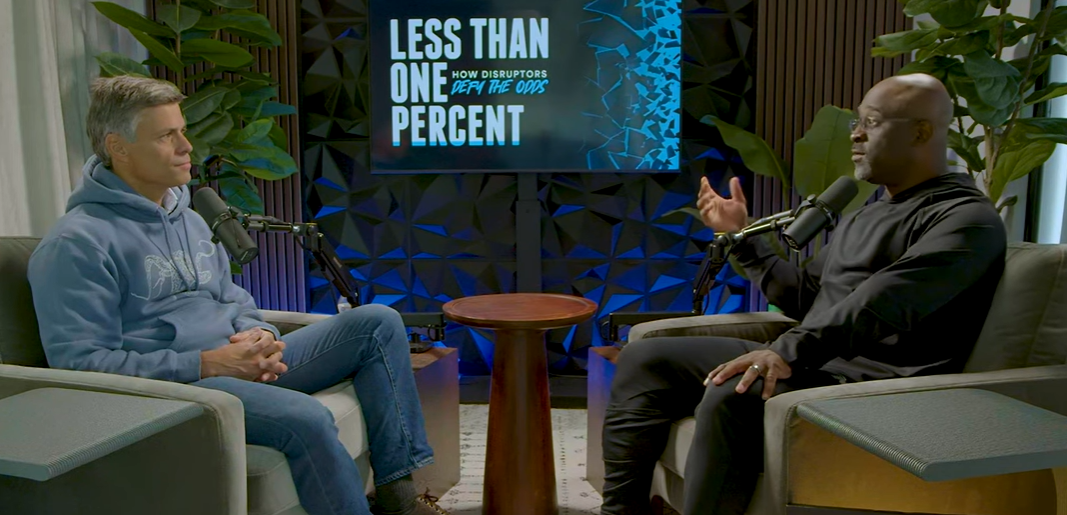
In part 1 of this powerful conversation, Leopoldo López shares with Imamu Tomlinson what it takes to build true leadership. It’s not by chasing ballots, but by empowering others to lead.
Together, they explore what it takes to build movements, empower others, and stay true to your values in the face of adversity.
This is how Leopoldo López disrupted the mold of conventional leadership.
Also listen on:



Timestamps
Transcript

0:44
Welcome to Lesson 1% podcast. Um, I'm here today with Leopold Lopez, my
0:49
friend. Um, I'm not going to give away his story. uh I want to talk to him
0:55
today. But a reminder to everybody uh check us out on all the different platforms. Um this is our second podcast
1:03
and uh we have an opportunity to really talk to somebody who is a what I call a less than 1enter. Um, just want to
1:10
remind everybody the origination of this podcast um is really about going out and
1:15
finding people that live outside the box that disrupt um that maybe um have an
1:22
opportunity to change the world um but they've haven't been given that opportunity or people like them haven't
1:27
been given that opportunity. And so today we're going to talk to Leo Paulo and we are going to go through your
1:33
story and find out you know um you know how you disrupted because I I I think I
1:40
think you disrupted a little bit um and and your story is so amazing. So first
1:45
you know before we start I'd like to thank you for coming cuz I know you came all the way from Spain um through San
1:51
Francisco and I know um you you you did that cuz maybe we're friends. Of course,
1:58
man. No. Yeah, definitely friend. We we met um um at Simon Synynx event and uh
2:04
that was amazing. Uh massive and uh you know really talked about power um at
2:11
that at that meeting and how you know how we share power, distribute power, how do we take power and your story is
2:17
really about about power. It's about really um I don't want to use your your
2:24
words, but about a regime. You were really trying to change the world uh through through just running for office,
2:31
which is which is something here in America we probably take for granted. And then tell me tell me a bit a little
2:36
bit about that. What made you run for office in Venezuela? Well, um first of
2:41
all, thanks thanks and uh I your story is it's incredible too. So, I'm glad
2:47
that you have a podcast and you'll be able to share it. Yeah. With with many people. I like the concept of the less
2:53
than 1%. I'm going to take it home and and and build on it. Yes. So, um my my
3:00
story is um I I was born in Venezuela. Uh I had the opportunity to come to the
3:06
US to study. So, I finished my high school, went through college and grad school and never wanted to stay here. I
3:14
went back to Venezuela immediately. I worked at the oil um industry. I had a
3:21
great job as an economist um which gave me the opportunity to get to know the country, the economy, the core of
3:27
Venezuela. And then Chavis came to power in 1999 and he called for a constituent
3:34
assembly to change everything. That was the beginning of the end. But I decided to run for office and I had a small
3:41
movement at the time and I had to leave my job. So I had a good job uh and I had
3:47
to leave my job to pursue a dream and I ran and I lost. So the beginning of my
3:55
formal political career was with um with a defeat. Uh but I decided to keep
4:01
going. I went out and found other young people who wanted to go into politics.
4:09
So, a couple of months after that, there was an election and I ran again to become the mayor of the city I was born
4:16
in, Karakas, Venezuela, the capital of Venezuela, and I won. I was the
4:21
underdog. Uh, but uh, you were the you were the less than 1enter that no one thought you were going to win.
4:27
Literally, I had 2% in the polls when I started. Wow. And uh everybody said it's
4:33
impossible. It's impossible. Some I mean I even remember talking to some pollsters and they said it's
4:38
mathematically impossible that you will win. You know that sounds familiar. And then uh I remember going to someone
4:46
who was going to help me um in my campaign who was friends of my grandfather. And I I went to talk to him
4:54
and at the end he said you're not going to win but because you know I really like your grandfather I'm going to help
4:59
you. I was like, "No, no, no. If you're not even going to listen to what I'm going to do uh as mayor, I'd rather not
5:06
get your support." And I'm glad I didn't because they were real estate developers and we really put the house in order in
5:12
terms of real estate development in in the municipality. So Paulo, when when you sorry to cut you off, but when you
5:18
So you ran once and lost and and how old were you at this time? I was 26. So you're 26. Like you're I mean you're
5:25
just forming, right? And and so then they you run you you're
5:32
getting ready to run again and all these pollsters are saying you have no you have less well you got 2% you got a
5:38
better chance I had a better chance I doubled you doubled the chance and then
5:44
at that point when people are saying you shouldn't run what's your reaction at that time what I mean what are you
5:50
feeling inside at that particular time I'm like they don't know I know you know I know what I can do you know I I um I
5:58
don't want to take things for granted, but I don't want anybody else imposing to me what my potential is, right? And
6:06
that's uh that's been the story of my life. I mean, I've swam against the
6:11
current all my life. Um and I feel good about it. I mean, it's not it's it's it's kind of the way I approach things.
6:18
I don't like um to see impossibles. So, I like to just chase my dream and um so
6:27
I lost and and then I won as mayor and I was very young and structured a great
6:35
team of people um that were also very young, very committed, well educated in
6:40
their own specific areas. combined a team, some people with experience and we
6:45
completely changed the municipality that that part of the city became uh the safest um municipality in Venezuela at a
6:53
time when Karakas was the most dangerous city in the world. Um we did great things in healthcare. Uh we had an
7:00
incredible uh leader actually that built a system
7:06
of public health with ER uh facilities um ambulances, motorcycles. I mean we
7:15
were um really the vanguard of of public health at the time. Um we changed the
7:22
city physically. We build um uh parks, plazas. I we build um theaters and
7:29
sports facilities. We were able to do all of this because we changed the taxation system. We made it simple. We
7:38
lowered taxes. Uh we were very very transparent and um that gave me a big uh
7:46
presence uh not just for the people in the city but nationwide. uh in parallel
7:52
to my job as a mayor that I loved I I really really loved uh my time as mayor.
7:59
I mean if anyone anyone wants to go into politics I think that you know local politics it's it's just the way to go. I
8:05
mean that's that's it's like the ER for you. It's where you see you know the patients is where you need to to choose
8:11
and have direct and immediate impact. So um things uh um went well uh and the
8:19
municipality very well but in parallel to that the municipality became the
8:25
center of all of the protests. So I had always two hats you know the hat as a
8:31
leader um of protests against the uh the regime uh and also managing the
8:38
municipality. So years went by um I ran for reelection. I won with uh more than
8:45
80% wow of of the vote. And so you went from from 2% polling I won with 51 my first term
8:53
and then with uh 84% uh reelection and then I was running for higher office and
9:00
the what could have been a blessing became a curse because I was disqualified by Chavez. I was simply
9:06
taken out of the ballot box. um they open a bogus case against me and I was
9:12
taken out of my career and that for me was one of the toughest moments of my of
9:18
my career because I had a team I had built a team of hundreds of people people who knew how to run a city and we
9:26
were building a team to run a country. Uh I had experts in in all of the areas
9:31
in public safety, in public health, in infrastructure, in healthcare, in um
9:37
budgeting, in administration, in legal. I had a great great team. And when they
9:42
disqualified me was like caught in the wings of the entire team. So again, I had to reinvent myself. I was
9:49
unemployed. Uh I supported I ran for higher office. I was disqualified. So I
9:55
supported another candidate that had 2% at the time and he won with my support
10:02
and also the candidate that I supported for the municipality also won but I was
10:07
I was unemployed. So uh I decided to
10:12
build a new movement. Um the thing I've done throughout my life is to build
10:17
movements. When when I look back at my career, my career is uh I'm an I'm an
10:23
entrepreneur of uh social movements. That's that's what I would that's what I would define the things that I've done.
10:29
That's what I like to do to build movements. So I built a new movement
10:34
called people's will uh with very young people from the student movement uh
10:40
local community leaders and we were focused in doing our activism in two
10:46
things non-violent action and social work and we had this idea that to become
10:52
a political leader you needed to be a social leader first to be with the people you needed to you just engage in
10:59
the issues of the people and try to organize even without being government you can do a lot. So we grew very fast.
11:06
Uh I was recently married with Lilian who is
11:11
my soulmate, my you know companion in in this journey and I got permission from
11:18
her just to travel around the country every week. So I would leave my house um
11:23
on Tuesdays, Wednesdays and return on Saturday. Um and I crisscross the
11:28
country and I love doing that. I love doing that. And sometimes I would meet with 500 people, a thousand people,
11:35
sometimes with five. And I had the same energy, the same commitment to meet with
11:40
the five or the 500. And that's how you build a movement because you never know when the the leaders uh are going to be
11:47
and and I was in search of leaders, not necessarily in search of crowds. Um, so
11:53
that Wow. Okay. Wait, I got to stop you because that's that's a you can't drop
11:58
that mic. But that's a drop that's a drop the mic moment. So So Jordan, I think we need you write this down. He he
12:05
he you were in search of leaders, not in search of crowds. That that is because
12:11
if you're in search of crowds, you're looking for followers. You're looking for you're looking for people to validate your place in the world. But
12:17
you weren't doing that. You were looking for people who could to help you with your just cause. and I help them, right?
12:25
Because that's that's the name of the game, right? Leaders helping leaders. And and that was my proposal to them. I
12:30
said, you know, let let's build this together. I mean, you want to be mayor of your municipality, I want to help
12:36
you. You want to be the leader of your community, I want to help you. You want to be whatever you want to be, I want to
12:42
help you, but I want you to help me. you know, that's that was uh and I remember
12:47
we'll we'll get to this, but years after that, I ended up in prison uh for seven years and I remember having a
12:54
conversation with one of my partners in this journey and we were joking about it. He said, "Well, I remember when you
13:01
went to my state and you you you asked me to join this movement as a partner.
13:06
Look where the partnership has taken me." Well, he became mayor of his town. Wow. But he but we were both in prison.
13:13
We were laughing about it. Well, you know, the shares of this company took me to prison. I was like, well, man, that's
13:18
the name of the game. You know, you take risks. And um so, so we built this movement called People's Will. And it
13:26
was nationwide. We was very successful. And in the year 2013, 2012, uh there was a presidential
13:36
primary. I was running, I was winning, and I continued to be disqualified. I
13:42
actually took my case to the Interamerican Human Rights Court and I won, but the decision was not taken um
13:49
by by the regime. So again, I couldn't run. So my political career has been one
13:55
not of chasing office has been one of helping other leaders because I've been
14:01
incapable of running myself. So the last time I was able to put my name on the ballot was 20 years ago in 2004. Wow. Uh
14:10
so the last 20 years of my political career has been helping others um to to
14:16
to reach you know the positions I'm not able the thing so I of course you know
14:22
before this I do we do the LinkedIn biopsy and the Instagram biopsy I mean I
14:28
knew you it's funny I knew you as a person before I knew the story and so
14:34
it's very interesting you remember we were sitting uh you know in Colorado and I was amazed by your story. But how how many
14:42
do you know how many Instagram followers you have? I think around a million and
14:48
something and in X like 5.2 million 5.3
14:53
I mean I so I guess why I'm pointing that out is that there are so many people that believe in you and and I
15:01
think it's you know as you said it's not about you but it's what you represent. It's what you represent. It's what it's
15:08
what you represent to the world, the movement um that you represent and the fact that I think you give people a
15:13
voice that that don't have it. So, um it's so so amazing. So, okay. So, you're
15:19
So, you're now out of office. I'm out of office. You get disqualified every time
15:24
that you cuz they're nervous. Somebody I I you're you're a basketball player. I
15:30
My sport is boxing. Okay. um and surfing. But uh so I think that
15:35
the analogy plays out better with boxing. I was not allowed to go up to
15:41
the ring. I wanted to fight. I was trained. I knew I could win, but I was not allowed to step up to the ring. Not
15:48
even allowed to compete. Not even allowed to compete. And and and back to the you know when I talked to you about
15:54
less than 1%. Right. I mean that's the problem, right? the lesson. You were put into a box by whoever and they did not
16:02
even they did not even want to compete against you. Yes. It's terrible. So I had to reinvent myself and I had to say
16:08
how do how do I play this game? Right. So the the name of the game for me was leadership was not not not not office
16:16
was leadership and the name of the game for me was leadership by leading leaders
16:23
by creating a community of leaders. So that's level what is that? Is that a level five leader? Right. The leader who
16:29
creates other leaders. Well, I mean I don't know the Maxwell, right? That's Maxwell's. Yeah. I don't I'm not
16:35
familiar with that, but that's what I naturally was inclined to do. Yeah. And um so in 2012 there was this primary. Um
16:44
again, I was disqualified. I became the the campaign um the head of the campaign
16:50
of the other candidate that I endorsed. And in 2013, Chavis died and there was
16:56
an election and this guy did a very good campaign. We did an incredible campaign
17:02
and against all odds, he won by a very, very um small margin, but he won. And
17:09
that night, I told him, I said, "You already won, but now in order to bring
17:15
home that victory, you need to take people to the streets." And at the beginning, he said
17:21
yes. And then he was surrounded by other adviserss and they said no you know
17:27
you're a statesman and you know don't follow that that that advice that's just
17:32
not going to lead anywhere. So he decided not to do anything and Maduro stole the election. So I went back to
17:38
the streets um and there was a municipal election at the end of that year and we
17:44
became the movement that won the largest number of municipalities with a commitment to
17:50
confront the dictatorship. um we won in with municipal leaders, not saying that
17:55
we were going to get running water to the neighborhoods or or that we were going to improve um any of the municipal
18:03
things. Our main commitment was we want to build a movement to confront and
18:09
overcome the dictatorship and we won. And um in January of
18:15
2014 with Maria Korina Machado who has become the the leader in in in this uh
18:23
year in Venezuela. We actually won the election a month ago. We called for protest and we uh called the people to
18:31
the streets and tens of thousands of people came to the streets. And on
18:37
January the 12th of 2014, there was a big protest and I was leading that
18:43
protest with nonviolent uh tactics, very disciplined about our nonviolence. Uh we
18:50
had been trained in this. I mean we saw the videos of the OPOR movement in
18:56
Serbia, of the training sessions of the civil rights movement, of I mean you
19:01
name it. I mean we were really into understanding how to confront a
19:06
dictatorships that has the the weapons without having the weapons having the
19:01
name it. I mean we were really into understanding how to confront a
19:06
dictatorships that has the the weapons without having the weapons having the
19:12
only thing uh at our disposal which is the people people power. So um we call
19:18
for protest and that day um the dictatorship decided uh to go out and
19:24
kill. So, uh, they killed with two shots in the back of his head a kid named
19:31
Basilda Costa, who's a young carpenter, uh, who was 21 years old, and he was
19:37
shot by the detail of the Minister of Interior. Three other people got killed
19:42
that day. And that night, there was um, a warrant for my arrest. So, I decided
19:50
to go into hiding. I went into hiding. And I had
19:56
three ways I could take that uh that moment. I could stay in hiding, I could
20:03
leave the country, or I could turn myself in. And I decided to turn myself in. At the time, I thought of two
20:09
people. I thought of my great-grandfather who had been a political prisoner for 14 years. And I
20:17
thought of Martin Luther King. I had read uh the letter from the prison of
20:22
Birmingham. Uh if you've not read this or those who are listening, I highly
20:28
recommend to read this document of Martin Luther King who is one of my heroes. And in in that document he says
20:37
that non-violent action is about showing the scars of the potrified system in
20:44
order to change the consciousness of the people to bring about change. So that's that's a core of what uh nonviolent is.
20:53
Okay. So let let me let me let me let me understand this a little bit. So so
21:00
they're killing people. They're they're going out and people who were involved in this movement, the involved in trying
21:06
to make um Venezuela a better place and they're they're killing these
21:14
people and you're and you're like, I'm I'm going to let me get out of the line of sight real quick. Let me go ahead and
21:21
and and stay at home, bunker down, hide out. And then you
21:26
decide that you're going to give yourself up to the people that have just killed
21:33
other people. Yeah. That that so I turned myself in. Uh but that takes a
21:39
level of strength to be able to face cuz you don't know what they're going to do to you. They may have killed you. Yes.
21:45
And you knew that that was a possibility. Yes. And you still turned yourself in. Yes. Wow. And and I did so
21:52
because I was convinced. And I'm still are I don't I don't regret doing that. I
21:57
spent seven years in prison and I don't regret it. Not a single day because that
22:03
was the only way at the time to continue the movement and uh that was the only
22:09
way to show the scars of the system because at the time now we know that Venezuela is a dictatorship. Mhm. Now
22:16
it's, you know, clear that um that it's far from being a democracy, but at the time, talking about 10 years ago, uh it
22:24
was still confusing inside and from the outside. People still thought that it
22:29
was a decaying democracy, but a democracy. Uh there was still legitimate
22:35
recognition of the regime by other governments. So it was very clear to me
22:42
that that was a an important step just to unmask the dictatorship and call it
22:49
for what it was. So we were the first people calling Maduro a dictator. We
22:54
were the first people saying that he was a a corrupt repressive um and that his
23:01
regime was linked to the NRCS and nobody was saying this. And I remember giving
23:07
press conferences and the journalist telling me, "Aren't you afraid that you're going to end up in prison?" And I
23:13
said, "I'm just talking the truth. I mean, I hope you're not afraid of printing the truth. I take
23:20
responsibility." So, um, I knew exactly what I was what I was doing. And and as I said, I was very inspired by the
23:27
approach of Martin Luther King. I mean I I I've read of all of the leaders of nonviolent action you know Gandhi,
23:33
Luther King, Mandela and and with the figure I I identify the most is with
23:38
Luther King and very I mean very similar story and as we get to the to your story
23:44
you end up you actually end up having a very similar um sort of what happened to
23:50
him in Birmingham is about to happen now. So you so you decide to go and
23:56
surrender yourself. Not surrender. Well, I mean Yeah. Yeah. Not surrender. I You
24:01
turn You turn yourself in. I turned myself in. Yes. And um it was a massive
24:06
I like that distinction though. Yes. Yes. You didn't surrender. You turned yourself in. Because the movement was
24:13
still continuing. Oh, no. No. I was winning. I was turning myself in and I was winning. Right. and and because I
24:20
mean they had me as a prisoner but the movement was in the streets and and the protest continued for four months and
24:27
and the movement grew like it never grew before. So I I mean I so this is a a a
24:35
very important distinction because many people in in the in this space that I
24:43
live in um human rights offenders activists and I we can get into what I'm doing now at a global level but many
24:50
people see themselves as victims. M I have never seen myself as a victim.
24:55
Although I have been, but I don't see myself as such. Because if you see yourself as a victim, you give power to
25:03
the oppressor. And and and this is the way it is. Um if if you surrender to a
25:11
higher power, you are giving that power uh to them to control you. Wow. Um, and
25:19
I was always very conscious um, that uh, I was turning myself in, but I was
25:25
playing the game in my own terms. So, I called for a massive protest. I was in
25:31
hiding. They raided my house. They raided my parents' house. They raided my
25:39
um, the headquarters of my movement. They imprisoned tens of people. And then
25:45
the number two of the regime goes to my house at midnight, talks to my wife and
25:50
my parents, and he says, "There is a plan to kill Leopo. You better convince
25:56
him to turn himself in in our terms. So imagine the reaction of my wife. She,
26:04
you know, she reaches out to me and she says, you know, they're going to kill you." And I said,"I don't know if
26:10
they're going to kill me, but what I do know, if somebody's going to kill me, it's them. And they can kill me in a
26:17
dark alley, they can kill me in prison, or they can kill me in the rally that I
26:23
am um calling the people. And I if they're going to do it, I'm going to, you know, just just press the limits."
26:31
And um on February the 18th of 2014 with hundreds and hundreds of thousands of
26:37
people, everybody dressing in white, I turned myself in. Uh it was a long day.
26:44
Uh the first they put me in an armored vehicle. H and the head of the National
26:51
Guard was in that armored vehicle and the roles were completely switched. He
26:58
was completely nervous. He was calling Maduro the dictator. Yeah, that's that's that's it, right? That's that's that's
27:04
right. And uh he was calling the dictator. Um so what do we do? And then
27:09
he was preparing to repress the people. And I said, "Don't do that." And he says, "So what do we do?" I said, "Well,
27:15
give me a megaphone. I'll take care of it." And so he calls Maduro, the president, says, "This guy is telling me
27:22
that he can control the situation if we give him a megaphone." So he they give me a megaphone. And there are pictures
27:27
of this, you know, surrounded by the military. I was the prisoner, but I was in control. And you had the megaphone. I
27:33
had the megaphone. I was in control. And then uh they after like 3 hours, they
27:39
take me to uh to an airport uh in the city surrounded by by thousands of
27:47
people. And we get to the airport and there were three helicopters there. And
27:53
I said, "What are we going to do?" um well, we're going to take you um to a military base. Um so they put me in a
28:00
helicopter and the three helicopters go up because they didn't want the people to know in which one I was. So each one
28:08
went in a different direction. Um so we go to a a military uh base in in
28:13
Karakas. From there they take me to the um to the courts and from there they
28:20
took me to the military prison where I spent the next four years in solitary
28:26
confinement and um so I I want to talk about you know just what you told us so
28:34
far at any point in time and what I'm intrigued with your story
28:40
this time hearing it for the second time is that Even now I don't sense any fear.
28:48
Were you were is at any point in time were you scared? Even if it was for your family, even if it wasn't for your own
28:54
self or even if it was your for your friends, were you ever scared to tell the truth?
29:02
No. Um and there were a lot of circumstances. Um but
29:09
I maybe because I was always involved in sports maybe I mean I've I've always
29:15
done combat sports and always extreme sports maybe um but I was not afraid
29:23
because I was very conscious that being um afraid was giving power to them as
29:30
well. Wow. That doesn't mean that the circumstances were not critical. But you know, Mandela wrote something that I
29:38
always remembered. He said, "Courage is not about not having fear. Courage is
29:46
about overcoming fear." And I think he was right. I think he's right. Um, and
29:51
for me it was about courage. It's just overcoming fear, overcoming the circumstance. Um so so so they take you
30:00
away and they take me away. They I remember that night uh that that that day started from being clandestine going
30:08
into the trunk of a car, you know, going through different checkpoints in the trunk of a car, then going to a rally
30:14
with hundreds of thousands of people, then into a helicopter, and that day
30:19
ended up at midnight in a cell that was one and a half meters by 2 m um in a
30:27
part of the military prison that was a building that I was the only prison listener there. I was in the fourth
30:33
floor. Uh and I remember even the sounds of the locks of the of the nine locks
30:41
between my cell and the entrance and you could hear the logs and the echoes and
30:47
then the silence. And uh that night was very important for me because I had read
30:53
a lot about what people do in prison because I knew that this could happen to
30:58
me. So I read experiences from people in Venezuela because this is kind of
31:06
ingrained in the story of Venezuela. Politics is about prison and exile and it's been that way for hundreds of
31:12
years. Um my own great-grandfather was a political prisoner. Uh and and what I
31:18
got from everything that I read was that you needed to have a routine in in
31:24
prison. So I built my routine uh which was very simple. I decided that I was
31:31
going to do three things every day that I was going to pray. Uh I was born and
31:37
raised as a Catholic. Um but you know mechanical in a way you know I and I'm
31:43
glad I'm glad and and and I really think that just having a spiritual dimension whatever it is whatever god you pray to
31:50
however way you do it I think it's very important to have that because that gives you a sense of um humbling
31:57
yourself to a higher being which is I think very important. Um the second
32:02
thing that I would do every day was to exercise my mind. I would read, I would
32:08
write, I would, you know, play chess, I would do math, I would, you know, just just do things that would keep me
32:15
active. And I would do physical exercise. And that was my day. And that
32:20
was um the way I set out to myself to win the day. Uh in a way like like um
32:29
like the AA, you know, the go by the day, you know. So I took my reality as
32:37
the presence of every day. And the only thing I was in control of was doing
32:44
those three things every day. And if I did those three things every day, I would win the day. So I saw myself as
32:53
waking up every day and setting myself to win the day. That was that was my job
32:58
to win the day in the terms that I set out for myself uh to do so and that was
33:06
very very useful. Uh actually I then wrote about this method and uh since I
33:15
had more than 500 people from my movement that were also in prison, I made sure that they all um you know got
33:22
this approach to how to deal with prison. And the other element that was
33:27
very important was not to deal with time because time can be a tougher element
33:37
than the locks. M uh because if you kneel yourself to time in the sense that
33:46
you create an expectation that in a week, in a month, in 6 months, or in the
33:53
next trial date, you're going to come out and that doesn't happen, you you're
33:59
crushed. So, I never prayed. I prayed every day and I never asked God uh for
34:07
my freedom. I didn't want to make God accountable for that because that was the one thing I had. I could pray and I
34:13
remember a a priest once told me once told me that people pray for three things. People pray for need, people
34:21
pray for fear and people pray for gratitude. And of the three the most um
34:27
effective one is if you pray for gratitude. So I started doing that and
34:33
when I look back I was very lucky person. I have incredible parents. I met
34:39
my four grandparents. Um I was able to have a good education. Uh I was able to
34:46
do the things that I wanted. Uh I became mayor. I did many things as mayor. I um
34:52
found a incredible woman who became my wife. I had kids. So I had a lot of things to to thank God for. And it even
34:59
got to a point that I was even thanking God for giving me the opportunity of
35:05
going through this process of fre of of prison or thanking God or the
35:12
circumstance when I could see through the crack of the window I had in my cell. I could see the stars or I could
35:18
see the moon or I could hit the bird. You you wait a second here and I I keep
35:23
So you are thanking God. You're in you're in prison. You're in prison in a
35:28
in a in a cell that is smaller than this room. Yes. Than this podcast studio and
35:34
you're thanking God for the opportunity to experience what you're
35:40
experiencing. I think you know that I'm just thinking about how
35:46
profound that is. I mean the the thoughts I have about win the day which
35:51
which I think in in the health care system the way we have it today in it
35:56
you know how complex it is here in America know both of us you know I used
36:01
to live you currently live in different countries so you know we've had um
36:06
experiences outside with healthcare in other countries and healthcare is so complex right now in America but I think
36:14
if we just won the today that would change everything because I think we are
36:19
focused on time. I think we're focused on tomorrow or yesterday or seven years from now and if we just won today, how
36:27
much greater, you know, care could we deliver to people who are in need at that time? The second thing I think
36:32
that's interesting, we have a lot of burnout in healthcare. We have a lot of people that are really frustrated with
36:40
um just taking care of people. I mean, it's a it's it's adnauseium, a lot of bureaucracy, a lot of red tape. People
36:46
are coming to you, they're hurting, they're sick, they're sad, and you're supposed to take care of them. But
36:51
sometimes we don't take the opportunity to have gratitude for the opportunity to be burnt out, for the opportunity to
36:58
have that opport, you know, to to be able to care for people. So I think those two things, you know, right now um
37:05
I'm I should be writing down cuz these things you've changed my sort of personal practice just in this podcast.
37:12
You that that win the day and be be you know pray for gratitude not for what I'm
37:18
scared of, not for what I need, but for what I'm actually grateful. So that's that's amazing. So So now you're you're
37:25
in this cell. You're thanking God for the sliver of light or the sliver of
37:31
being able to see the stars. So continue continue. But but always with um a
37:36
defiant attitude. So every day I mean let me let me make this clear. I was not
37:41
a monk, you know. I mean I was praying, yes, but I was always that boxer. Yeah,
37:48
absolutely. Absolutely. I mean, I would tell my guards um because again, I was
37:53
leading a movement that I knew had millions of people in the streets. So, I knew, you know, that they knew. So, I
38:01
would tell my guards, I'd say, "Hey, man, with respect, we can go up and talk
38:06
to St. Peter, you know, we can go up to with respect, you have me, but if you
38:12
shout at me, none, I will shout back. And if you push me, I will push back.
38:19
and I can even hit you. And they would see me training every day in my cell and they knew I was serious about this. So
38:26
in a way I also had to to play the psychological game and 24/7. I never
38:36
allowed my guards to see me laying down in my bed. M I never allowed them to see
38:41
me sad or to see me crying or every day they would come at 6:00 a.m. I was
38:48
already I I didn't even have a watch, but I would naturally wake up. I only had a bucket of water. I had no running
38:55
water. I would just wash my face and I was just sitting there waiting. Um never
39:01
allowed them to see a crack. And that gave me even though I was in solitary
39:07
confinement, um I I knew that my attitude was speaking out to the
39:14
military, that my attitude was speaking out to the people. Um You're still
39:20
leading the movement. I was still leading the movement through whatever I could tell my lawyer or whatever I could
39:26
tell my wife and my mother, who were the only people who could visit me. um the
39:31
way I would send messages was they they would frisk me before receiving any
39:36
visit and they would frisk my wife or my mother. So what I did and I wrote a book
39:41
using this methodology is that since it was a military prison um they tried to
39:47
be very formal. So I complained every day about whatever circumstance and they
39:52
said you need to pass in your in writing. So they would give me a piece of paper and I would take because I had no books or no at the time I had no
40:00
books or no no no paper. Um it four years was a long time. So at times I had
40:06
books, at times I gave it away. But I would I would take the lower part of the of the paper uh and I would write very
40:14
very tiny lettering uh fold it, wrap it in in a plastic and put it in my mouth.
40:22
And when my mother or my wife came, I would give it to them. and they would put it in their mouth and then they
40:27
would go back they would open it and I they they could you know see kind of you
40:33
know the direction things should go. So that's a way I would talk to my movement. I that's a way I wrote
40:40
actually a book about energy in in in Venezuela um using using
40:46
this small notes uh with very fine print. So I was always very very active
40:52
and um I was very defiant. Um, we were able to uh organize a riot in the prison
41:00
at one time. We took control of the prison for 24 hours and um I feel I feel
41:05
inadequate right now. I mean, I can't even organize sometimes. I feel like I can't organize, you know, but yeah, across 25
41:13
states and, you know, 8,000 people from my office and you're doing it from a from a from prison. Well, I mean, it's
41:20
just setting yourself to do. So, so um my wife um who was always always on the
41:28
front line denouncing what was happening, she was always asking for
41:34
them to give me the things that by law I would have as a prisoner. I could go to
41:40
mass and I could go to see the son. for a long time they wouldn't allow me to do this but then they allowed me to go to
41:48
mass and I would go to mass in in the prison was once a week on Wednesdays uh
41:55
with two guards I would sit in the back uh with two guards that were only focusing in keeping me isolated from the
42:03
rest of the prisoners but um when you are in those situations you get to make
42:11
decisions on a blink So I would look at the people and just by the way they looked at me I knew who
42:17
was with me and who was against the prisoners. I'm talking about and there is a part of mass that you stand up and you you you give peace to people. Mhm.
42:24
And that was part of the liturgy. So the guards couldn't do anything. So I would stand up and I would tell the people
42:30
that I knew were with me or I thought that they were with me said peace be with you my brother tell your wife to
42:36
look for my wife. So my wife when she was waiting for me for visits, she would
42:43
be uh approached by all of these other women and I created a network and I
42:48
asked her to ask them in what floor they were in what part of the prison. So I
42:54
kept track of who I had in different parts of the prison and we created a
43:00
plan to to take control of the prison. Unlike protests, um you are ready, but
43:06
then something sparks the protest that happens. Boy, it happened here with the
43:12
uh um with the George Floyd and the Black Lives Matter movement. I mean, just something sparks and then you have
43:19
a then you have massive protests. Um so one day the uh the guards mishandled a
43:26
baby and that's a no no in prison. I mean, they opened the diapers and they uh and that enraged the population and
43:34
that sparked the protest and and we had um control of the prison for not 24
43:40
hours, it was less than that. It was like 16 hours. Um but it was uh an incredible moment. Uh we were, you know,
43:47
we were in victory that day and um then they sent 300 more guards to the prison.
43:53
Uh after that things got a lot tighter. for me. Uh but I never regret it. Um
44:02
because actually what we did in prison had an impact outside the prison. Right. So you still so you're still being able
44:08
to impact and it's given you it's giving you purpose. it's you're still able to advance your cause um from prison. But
44:15
you did tell me um about a time where you you you you you did crack or you
44:21
almost cracked and you sort of said that hey you know you're not fearful but I think there were I mean again just from
44:27
a human perspective you're away from different not from fear but from so
44:33
so after four years I got sent to house arrest right because there was another
44:38
cycle of protest and they thought that by taking me to house arrest the
44:44
protests were going to fade away. So being in house arrest, I called for
44:49
protest again and I got a call at the time um the Pence was vice president and
44:58
I got a call from Vice President Pence and he asked me in the call, do you mind if we make this call public? I said no.
45:04
Um so that same day I call for protest, I get that call and um couple of days
45:11
afterwards I got sent back to prison and that was like descending into hell again
45:20
and that I I was sent to a punishment cell. I had no idea of the time of the
45:28
day. It was very very cold. Um and I was claustrophobic. I had no no sense of um
45:38
of of where I was. And that was the the one time I broke. Um I thought of um the
45:47
worst thing a human being can think of. There was a a cable um it was an
45:52
electricity a cable jacket. So I took the cable out, started, you know, to
45:57
think um bad things about what to do with that cable. And
46:03
then I the cable had a copper uh you know cable inside. I started like
46:10
tweaking and just playing with it. And I built a rosary with that with that. And
46:15
uh what could have been you know the element of taking my life became an
46:21
element of supporting me with faith. So you so this struck me when we first
46:26
talked. Um, so you so you you're looking at this wire and you're
46:31
thinking, you know, it might be better off if I'm not around. Yeah. You know, and and then and this is when you don't
46:38
have control of your mind, right? No, no, no. This is happening. Just it's
46:44
claustrophobic. The walls are falling on me. I have no sense of time. Can't breathe. you know, you just it's so
46:52
you're thinking of taking this wire and and just ending it and and and what what what made you so you sort
47:00
of went from that point to to to sort of fashioning? Yeah. Right. To to use the
47:07
wire to to build something beautiful. What what what changed? What made you I
47:12
don't know. I don't know. I mean, I just started to handle the wire in in such a
47:17
way. I said, "Oh, you know, copper is is very malleable." Yeah. Yeah. Yeah. So, you know, it's just started doing knots
47:24
and I did a cross and, you know, another knot. I said, "Well, let me do a rosary." And and then once I had that, I
47:32
mean, it was not a wire. It was a symbol. Yeah. It was a symbol. It was a symbol of faith. It was a symbol of of
47:38
um of of of of something that I could step on at that time. And and it was
47:45
very powerful. I still have it. I gave it to my mother when I when I left prison. Uh that's the one thing I I kept
47:52
with me. I gave it to my mother and um it it was a kind of a journey from
47:59
from the darkness darkest of the dark uh to seeing. So, but I I think too I mean
48:07
you say yeah that's a uh at that point you had already I guess
48:13
you can say it was your faith that that helped you through that but had you not
48:18
built that beforehand you know throughout the seven years that you were you were praying and you know I don't
48:25
think that would had maybe not had the same effect. Yeah, you're you're right.
48:31
um was a buildup uh and that you know at a critical moment um that was kind of a
48:38
a tool that I was able to reach out to and that that's why I think that no people should have a spiritual dimension
48:44
whatever it is you know but but that's it's just very important that us as
48:50
human beings understand that we are not in control of everything you know there
48:55
are some you know a higher well we we talked earlier about sometimes in the
49:02
history of you know physicians that there were times where physicians had this god complex some physicians where
49:09
they felt like you know I'm in control and and you know a lot of those uh now
49:14
now I think it's different I think the training is better frankly but I think you're right when you humble yourself
49:19
and know that you're that there's something greater than you um it makes you operate in a in a very different way
49:26
but I think the thing that strikes me about um what you said there is that the the wire the the copper wire it could be
49:34
anything, right? It actually could be the implement of your pain and suffering and and and and your and and and and
49:42
weakness in a way. Um and then it was also the same tool was also a sign of
49:48
your strength and your faith and your power and your resilience. And I think that that's a you know that's a point
49:54
that we really you know I think that we forget as human beings. We often look at
49:59
a tool or an item or an event as one or the other. And here you took something
50:05
and they were both for you and you quickly turned. I I I I really think you're you you talk about your faith,
50:11
but I think there have been times in my life, you know, um where I don't know
50:17
why I did something, you know, and I think this is, you know, when you said you're fashioning the rosary, I can almost
50:24
imagine that it was similar to times in my life where I would do things and I'm
50:30
like, I don't remember. I don't understand why I do this. It almost felt like somebody was supporting me through
50:36
that, you know, whether it's subconscious or higher being or you God or whatever. But I I think that that's
50:42
so so amazing um to just remember, sit back and think about it's the tool is
50:49
not important. It's actually how you interpret and use that tool, how you approach it and approach that in your
50:54
life. So, so, so you you built this rosary and then you're back and then you're you're
51:00
back to the the same person you then I'm back then then I was taken back to house arrest. Okay. So, you got back out and
51:07
um you just time went by then sent back to house arrest. Um house arrest was tough like like
51:15
prison. Um because they made my house and my family
51:20
um being in prison. So my kids had to go to school and they had to go through a checkpoint
51:28
of, you know, hooded individuals with machine guns. Um, nobody can come into
51:33
my house. I was surrounded by 40 guards. Um, and
51:40
I thought every day that I could be taken back to prison. So it was very
51:48
unstable. In a way, prison was more stable than house arrest because I knew I was there. There was nowhere to go
51:55
from prison. But from house arrest, my family was exposed. My kids were exposed
52:01
and I knew that because they already done it. Meaning they already took me from house arrest back to prison. So I
52:07
knew that this could happen. So I I spent months there. I was very active,
52:14
still leading the movement. led a coalition that uh actually before uh
52:21
house arrest um we had elections for the national assembly and before that
52:27
election I did a 28 day hunger strike uh because the regime was not setting the
52:34
date to the election. So, we wanted to do a a hunger strike, but I had read about
52:44
hunger strikes and about how important is to plan them. The key of a hunger
52:49
strike is that you have a petition that
52:54
is viable in a period no more than 30 35
53:00
days because if not, you're going to fail. I mean, you're going to you're either
53:06
going to die or you're going to fail. So, the key is that your petition is
53:12
something that could happen in a short period of time. So, I knew at the time
53:18
that there was a lot of pressure to set the date of the election. So, I decided
53:24
to do a hunger strike and we made it public. more than 100 prisoners
53:30
throughout the country uh went into hunger strike and more than 150 people
53:35
outside prisons also went on hunger strike. So the hunger strike became the focal point uh for to pressure the
53:43
regime to um to set the day of the election. Okay. So you're you're just so
53:48
it's just water daily. You just Yeah. I had a I I was able to get I had water,
53:55
salt, and um and and Yeah, that was it. Wow. And I mean, not not not to I lost
54:02
14 kg. I was going to say like I mean and it's not like I'm I'm I'm on the heavy side. Yeah. And you're not you're
54:08
you're a thin, you know, you're very in shape. I mean, I I don't know if I can not eat for 35 seconds, you know. I
54:15
mean, I'm I'm like, you know, I got I got a little extra here in 35 days. So, how long did it actually go? No. No, it
54:21
was 28 days. The whole 28 28 days. Yeah. So you So you not eaten for 20 and they did and they did pass the petition.
54:28
Yeah. And we won. Wow. That's amazing. That's amazing. And it's actually You have a strength, Leopold. Every time I
54:34
talk to you, you have a strength that is unparalleled. Your your strength
54:40
is I mean your your ability to sacrifice. I use that word. I don't like
54:45
the word sacrifice, by the I think it's a I think it's a it's a very because there's a lot of things that we do that
54:51
are self-interested and there's really no true sacrifice, but I mean, you're
54:56
literally putting your life on the line, putting yourself at risk. Um, and I think that that is true sacrifice and I
54:56
literally putting your life on the line, putting yourself at risk. Um, and I think that that is true sacrifice and I
55:03
I'm just I'm intrigued by your strength. Um, where where do you think that
55:08
because I want to ask you another question. I know we have more of the story, but I want to ask you another question right after this. Where do you
55:13
think that strength comes from? Well, I I don't know. It's It's just the way I
55:21
am and the way I was brought up. Um, so you you don't see that as strength. You see that as sort of the just the way
55:27
this is how you are. I mean, I I think if you kind of
55:32
overanalyze, you know, what you are, you might be kind of Yeah. You're doing
55:39
too much. Yeah. Yeah. I mean, it's just just the way I approach uh life. Um I I
55:45
I do think that sports and my upbringing with extreme sports um put me always on
55:52
that edge. Yeah. Um yeah, I think that that was important. And also of course
55:57
the most important thing is to to have a purpose. Yes. And and to have a purpose
56:02
um that you approach that you work towards with no drama, you know. Yeah.
56:09
in the sense that you don't put the entire way that you know I'm doing this.
56:15
I'm a great person and you know people need to recognize me because I think one key
56:22
thing is that you do what you do for your own conviction. Yes. Because I've
56:27
been on top and I've been at the bottom. You know, I've been rallying with
56:33
500,000 people and I've been at the spotlight of being criticized for not
56:38
taking the dictatorship down. So, I've been at the top, I've been at the bottom, you know, I've been in that roller coaster. And you're still you.
56:44
You're still practically you. Yeah. and and you know the dictatorship uh and this is true for dictatorships globally
56:51
and later we will talk about what I'm doing um with the world liberty congress but they go after you in in
57:00
assassinating your character right this is something that they put a lot of effort and I have been at the center of
57:07
character assassination uh by the regime for years I mean the things that they
57:12
say the type of attacks so if you are not in terms with who you are,
57:19
you are not capable of overcoming this. So, you need to look at the self
57:25
yourself in the mirror and say, you know, I know who I am. Yeah. You know, I know why I do the things I do. I mean,
57:31
I'm not going to allow somebody else to tell me who I am, right? I'm not going to allow, you know, social media or the
57:38
attacks of the of the regime uh to determine um the way I look at myself. I
57:43
know who I am. I know. Um, so one of the things I talk about is um that I learned
57:49
I learned through just you know my leadership journey and through writing this book is that you know I think the
57:56
perfect the thing we need to get to is being authentically yourself and that's what you have right and and so I I kind
58:03
of call that authentically self part is is your superpower. I I I think
58:08
everybody has a superpower. I mean, we don't know it. And I I I love I would love to do that with people to be able
58:14
to sit down with them and talk to them like we're talking now and really think about, okay, what's your superpower? So,
58:20
what do you think your superpower is? If you had to pick one thing that is like,
58:26
you know, Superman flies, you know, Batman's rich, you know, there's all these different superpowers. But if you
58:32
What is your one superpower? I'll tell you my wife and my kids. Wow. Wow.
58:40
Superpower. Your superpower is that connection. Oh, yeah. Okay. I I would have been capable of overcoming all of
58:46
this without my wife. Yeah. Yeah. And
58:53
this is the Less than 1% podcast. Tune in to the next episode for part two.
Key Takeaways
- True leadership isn’t about power. It’s about empowering others to rise with you.
- Conviction means standing firm even when fear tries to silence you.
- You don’t need permission to lead.
Share with a friend
Episode Guests
Leopoldo López
Leopoldo López is a Freedom Activist from Venezuela. He was a political prisoner from 2014 to 2020 after being sentenced to fourteen years in prison for leading non-violent street protests and civil resistance in 2014. After spending seven years in confinement, he managed to escape the autocratic regime of Nicolas Maduro in October of 2020 and was able to travel to Spain where he lives with his family.
From 2000 to 2008, Leopoldo López was mayor of the Municipality of Chacao in Caracas and was later illegally disqualified to run for office. He won his case at the Inter American Commission on Human Rights (IACHR). In 2009, he founded the political party and freedom movement called Voluntad Popular (Popular Will) and became its national coordinator.
For more on Leopoldo López and his work, check out: https://leopoldolopez.com/en/
