The Doctor Using TikTok to Expose Racial Bias in Medicine
What does it mean to belong everywhere and nowhere at once?
Known across social platforms as the “Medical Mythbuster,” Dr. Joel Bervell has made a name for himself by tackling bias in medicine and translating complex healthcare inequities into viral, human-centered stories.
In this episode, Joel shares his journey from a curious kid to Peabody Award–winning voice for equity in medicine. From pulse oximeters to superheroes, from storytelling to burnout, Dr. Imamu Tomlinson and Dr. Joel Bervell dive into what it means to be labeled an “Oreo,” how Joel turned that into his Less Than One Percent power, and how he found community through curiosity. He reflects on how storytelling, particularly Anansi the Spider, shaped his identity, and how a TikTok recorded in his childhood bedroom sparked a movement during the COVID-19 pandemic.
This is how Dr. Joel Bervell disrupted medicine, by demystifying it, challenging its blind spots, and becoming the face of the stories no one else was telling.
Also listen on:

All Clips
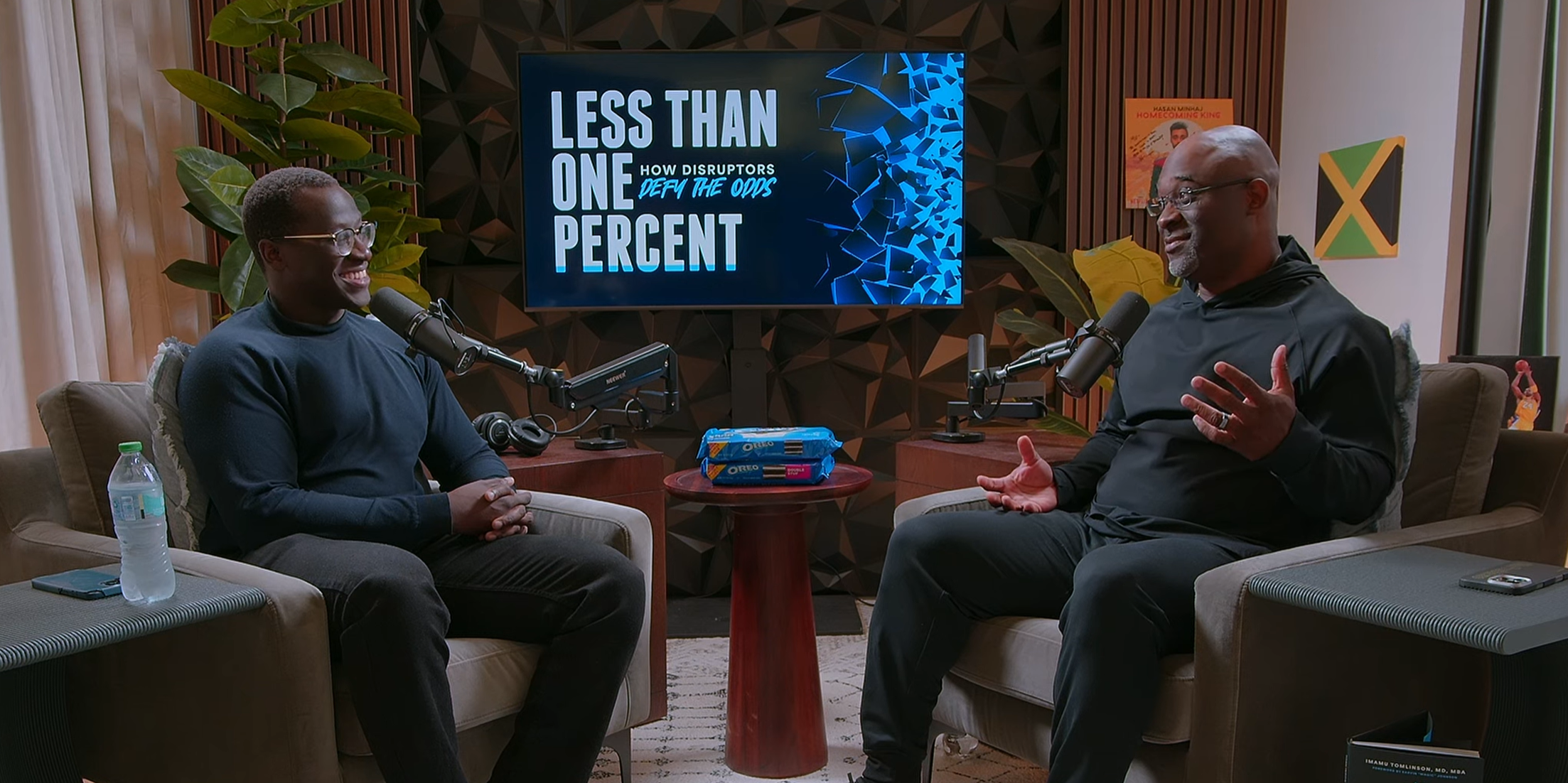

Meet Dr. Joel Bervell
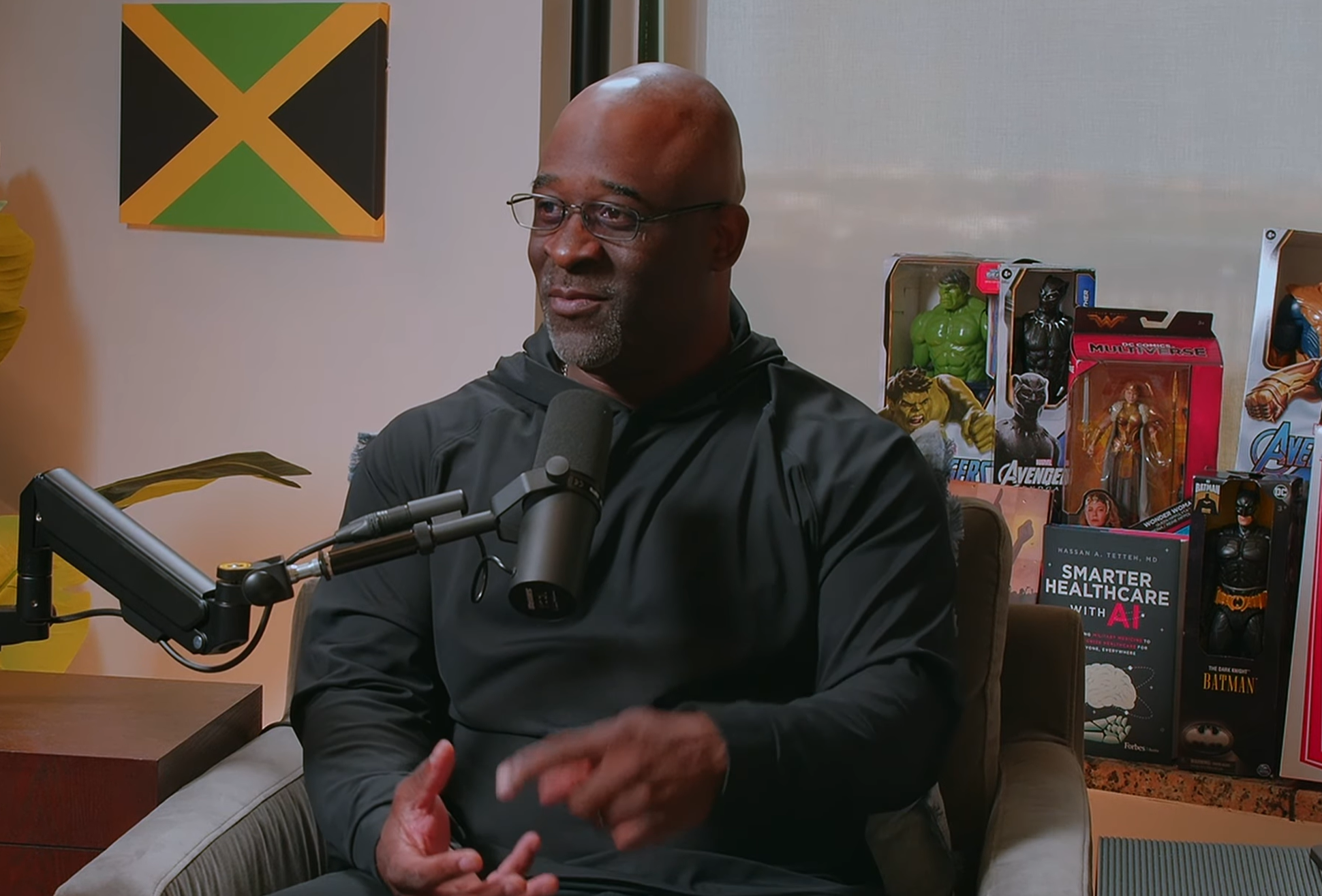
Why Dr. Joel Bervell started TikTok
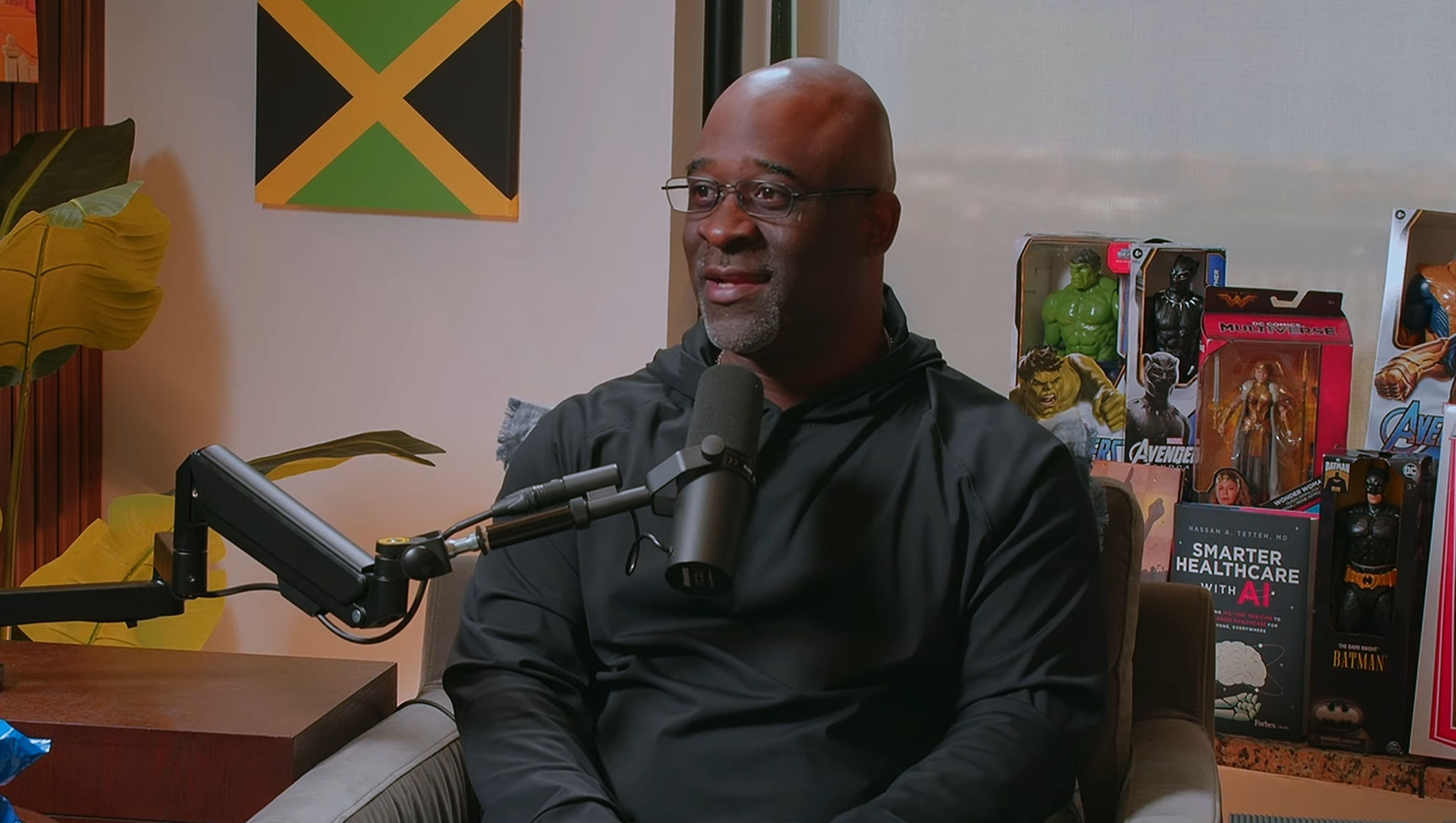
Joel Bervell’s superpower
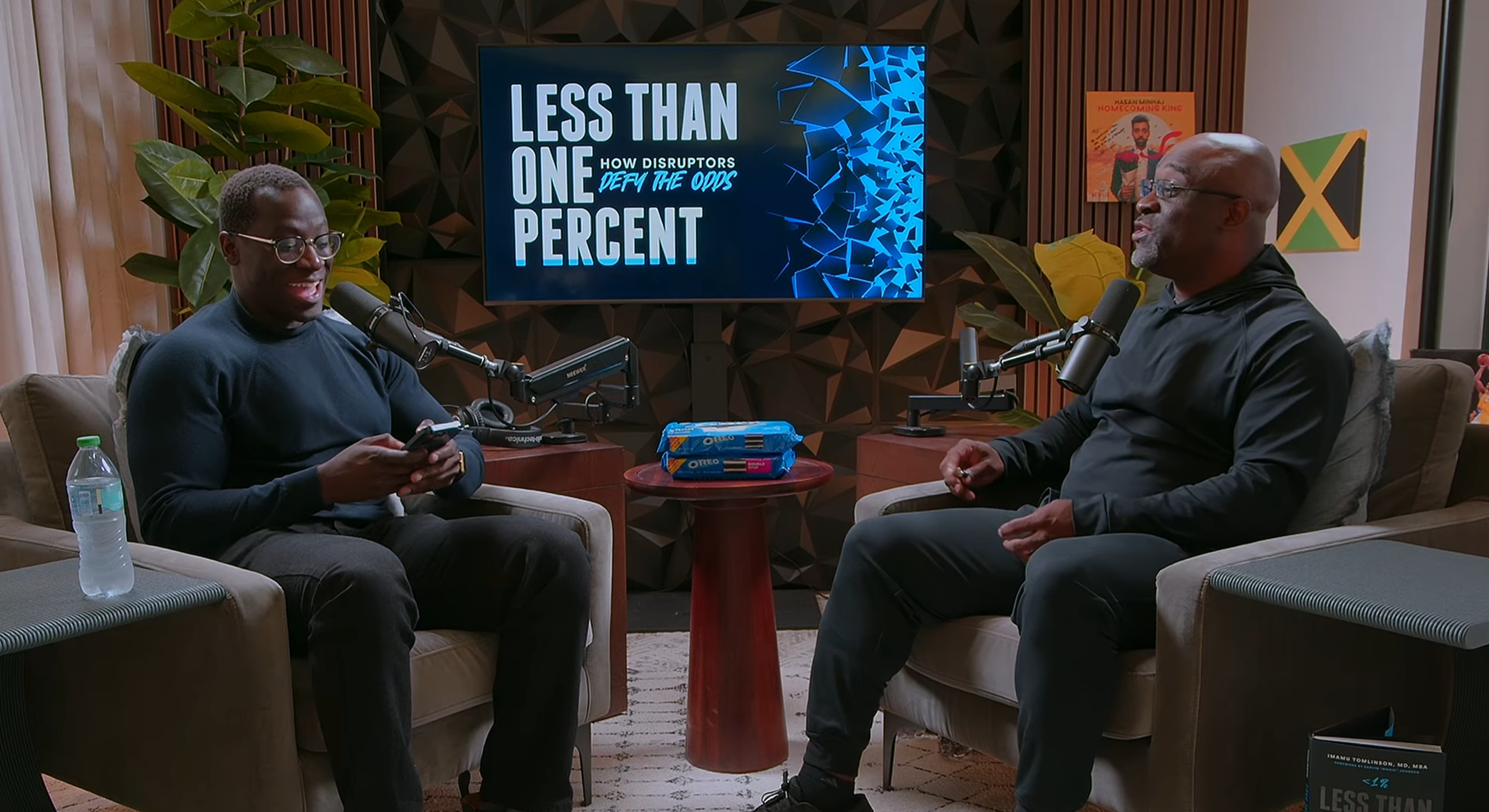
Mu and Joel get real about doubt, burnout, and changing the world
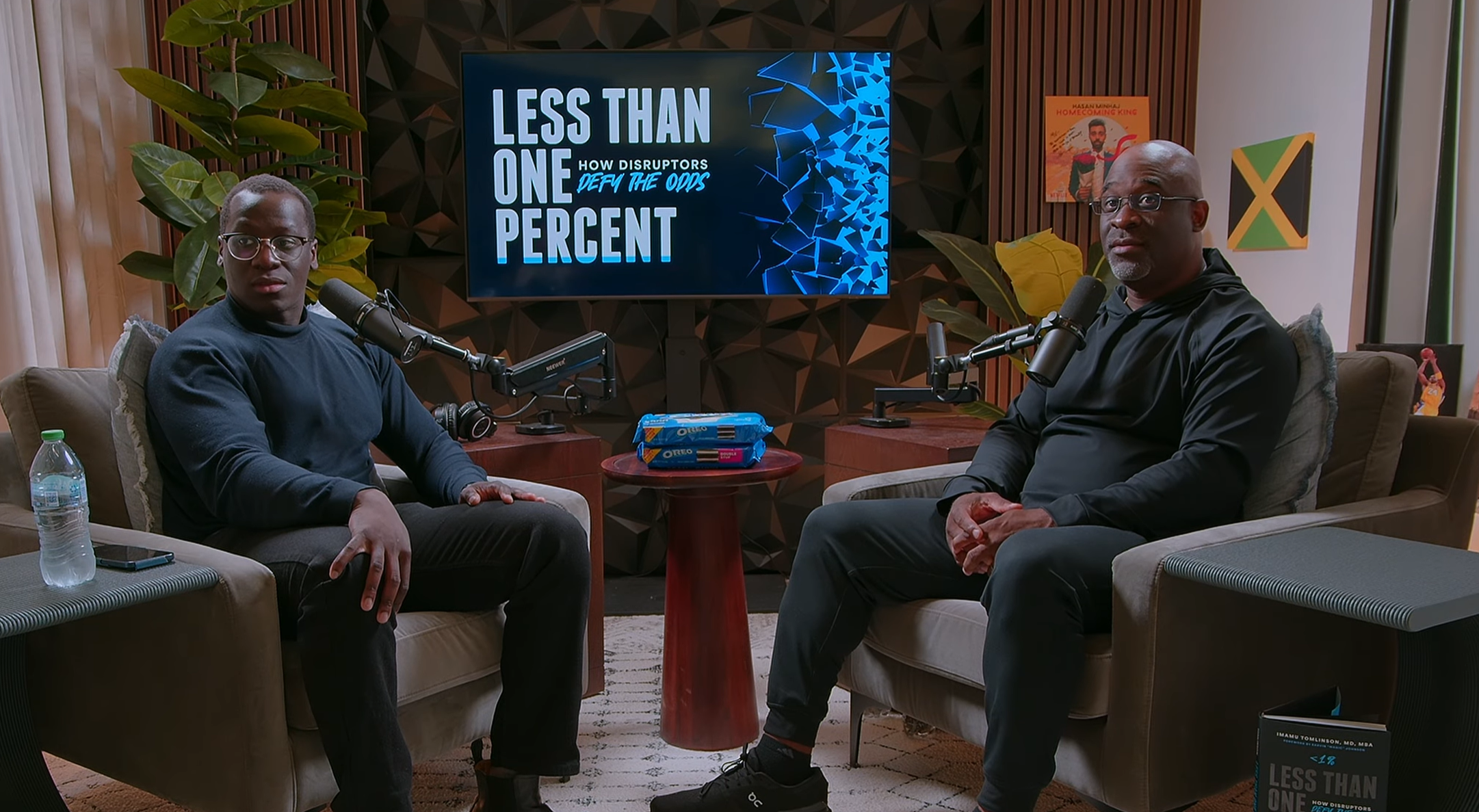
Heroes vs. Villains
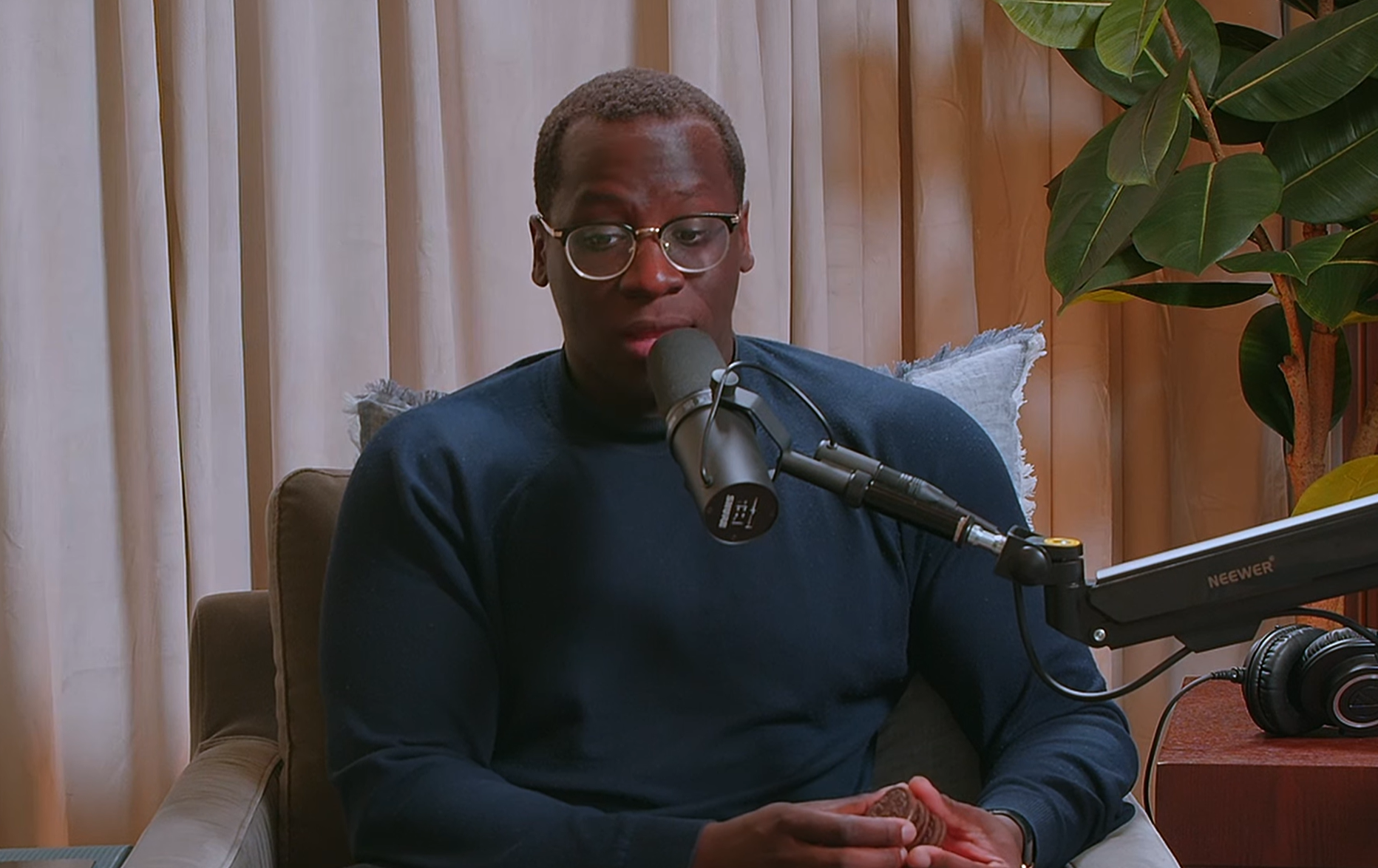
Turning “Oreo” into a symbol of his identity
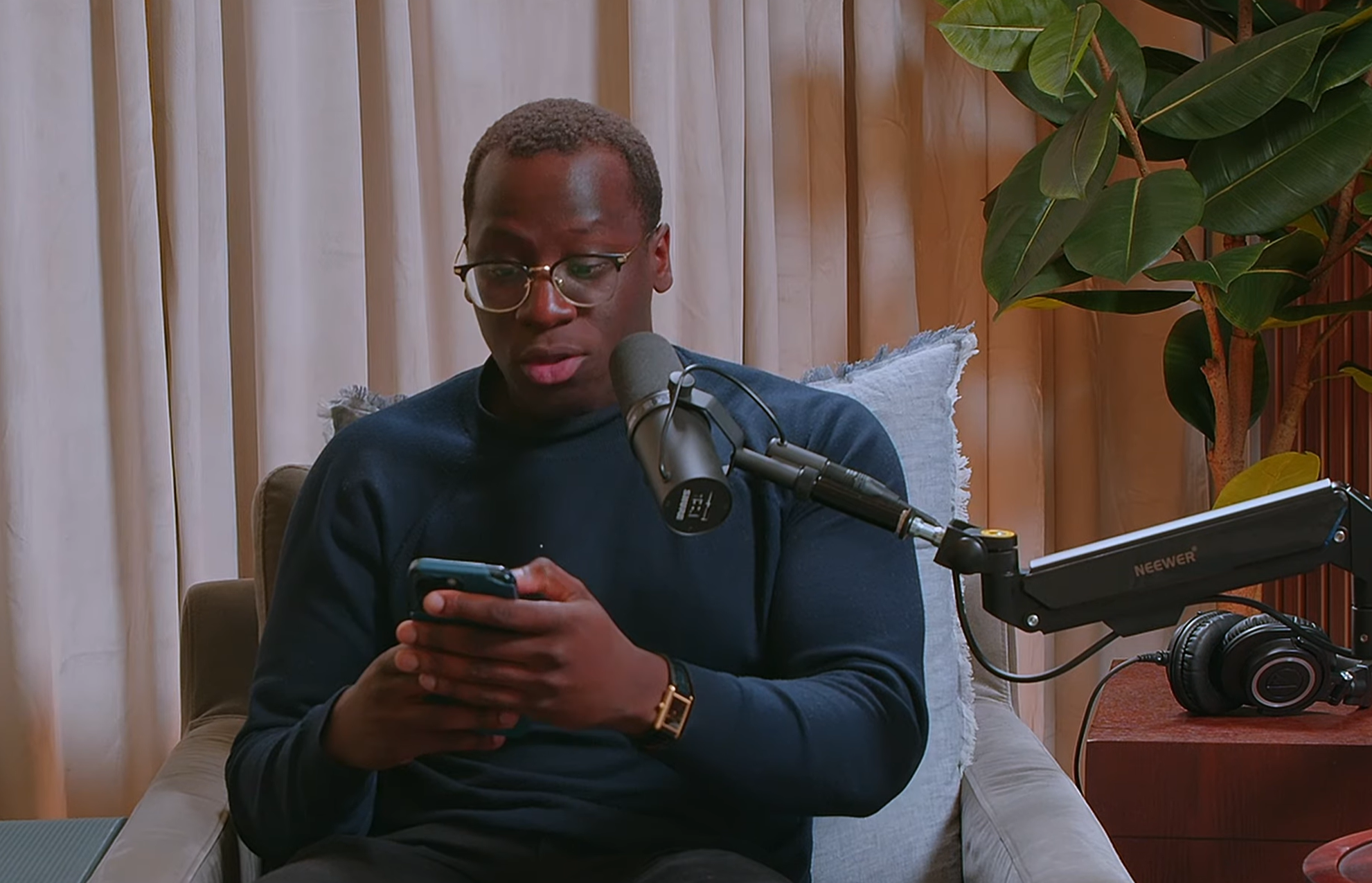
Joel Bervell’s superpower, according to his brother
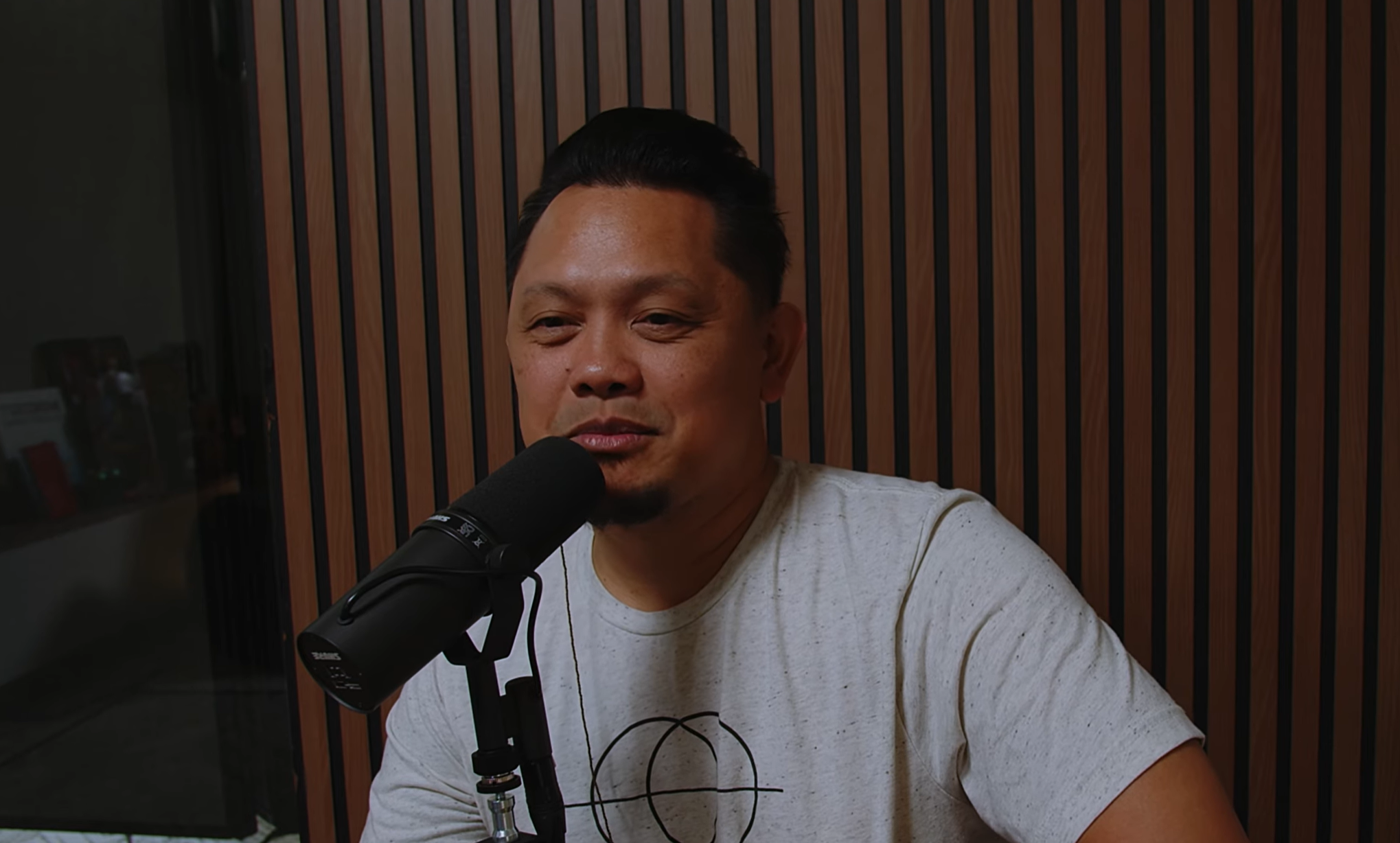
Closing thoughts: Joel’s Vision for Affordable, Accessible Healthcare

Timestamps
Transcript
1:32
Right. As of as of as of December last year. Yeah. 2024. Yeah. So so um so Joel Dr. Burll. Yeah.
1:41
Yeah. And uh and he is uh he's an amazing person. Um I'm not going to give you I
1:46
know a lot of you know him. Um he is essentially um worldrenowned because of
1:53
solving a problem that no one wanted to solve, communicating about things that no one wanted to talk about. So true
1:59
disruptor and you guys know how I have a propensity to try to find and uh fall in
2:04
love with disruptors. Uh definitely his story and we're going to talk a little bit about that later on and um the very
2:11
first one that you first disruption in the industry and then we can talk a little bit about why you did it. Yeah.
2:16
Um so so let's start let's let's kick it off and let's learn let's hear learn
2:21
learn your story. I'm excited for it. Yeah. So so I mean you know um we've talked a lot. Um we were at South by
2:28
Southwest together. Um and uh I saw you last week in St. Louis. Yeah. Yeah. Yeah. We just briefly
2:33
briefly it's it's almost like you're you're traveling in parallel universes. Mhm. Um but the one thing that that struck me
2:40
is and we'll we'll kind of start and you could tell me, you know, where that started, but um right before we had to
2:47
tell by Southwest, you were telling me about your story and of course, you know, you you're viral. You know,
2:52
you have a lot of people who follow you. Um you've made big strides in the industry, especially through co
2:58
um but what made you, you know, disrupt? What made you look at a situation and
3:04
say, "Wow, this isn't right and I want to have an impact." Yeah, I mean, I really have to go back to kind of the beginning to even start
3:10
to understand that. Um, both my parents are from Ghana, West Africa, and we were talking about being child of immigrants,
3:15
but I think that allowed me a certain type of freedom growing up. My parents from Ghana, West Africa. I was born in
3:20
Canada, but then I was raised here in the United States. Um, and I feel like h calling myself what I call like a third
3:26
culture kid. I felt like I never had one specific place where I had to be or had
3:32
to box myself into, but I could be anywhere. I could be anything that I wanted. We would go to Ghana and I
3:37
didn't totally belong there because I didn't speak chi, but then I would still felt like I belonged because I would be accepted naturally. In my hometown, I
3:45
wasn't thought of as necessarily black because I was also Ghanaian, but then I was able to be accepted into communities
3:50
there. And that was Canadian, too. So, it added this kind of flavor to it. And so I think I learned pretty early on
3:56
that I didn't necessarily belong anywhere, but I belonged everywhere at the same time. Wow. And that allowed me to look at problems
4:03
and things that did and didn't exist and look at them just kind of from like a third perspective of why we did things
4:08
um in the way that we did. I was also kind of the kid that always asked why to everything, which my parents absolutely
4:15
hated. My grandma hated as well, but I was just a naturally curious kid, always
4:20
asking like why do we do it this way? Why is this? Why? Why do we have to take out the dishes today instead of
4:26
tomorrow? Or why can't daddy drive me to my soccer game? I don't know, like
4:31
stupid things like that. But those why became bigger questions as I really started to try and figure out what my identity was. Um I I think as I
4:38
mentioned, I felt like I belonged everywhere and nowhere all at once. But being both black and gian, I always felt
4:44
this tension of like trying to understand like how I fit into the world and the conversations that were happening, especially when I got to
4:50
middle school in high school where other students are trying to put their identity of what they think you are um
4:56
on you. And I remember as early as seventh grade, sixth grade, I was always like trying to be not a stereotype. And
5:03
so someone would say, "Joel, why don't you do this because you're black?" And I like would push back against it immediately. Um, and so yeah, I think
5:10
being a disruptor has been like at a core of who I am since growing up. Um, and it's really come from just like
5:16
understanding that I'm I'm like a child of the world in a way. Um, but then also the fact that
5:21
I've always wanted to push back against what people think of as stereotypes and being put into a box in any way. Yeah. I mean, that's that's that you
5:28
know, you already know you I got little goosebumps. You you guys can't see them, but um the idea of being in a box,
5:34
right? You know, that's something I I mean that's what my whole book is about. you know that we bake these boxes
5:39
for people, society builds them for people, but more importantly, sometimes we build them for ourselves.
5:46
You know, imagine a world where you could be your authentic self and just change the world and have an impact in the world. That's when you're at your
5:52
best. Um, you know, Marty, uh, you remember Marty, uh, Mr. Tominoi, Mr. Tomino,
5:58
Marty Bennett was here a while ago and he talked about play. M um and he said that um remember uh
6:05
Jordan he said that play is where people are their best right
6:11
most creative too. Yeah. The most creative the the most you know um best performances and I thought about
6:18
it. I never really thought about that before but when you're playing you're you're most authentic. The playground is the most authentic place in the world.
6:25
Mh. Um, and so also vibing off, you know, we talked about this too, you know, not
6:32
from Ghana but from my parents from Jamaica, immigrated to Canada, then I left and came here. So in some ways I
6:38
feel like similar. Yeah. Yeah. Like I belong nowhere, but I actually belong everywhere. It also gives you I think a And you have
6:44
an amazing ability to connect with lots of different people. Exactly. That's your I mean that's I think one of your gifts,
6:51
you know. Yeah. Yeah. And Yeah. I I think I love connecting with people and I love telling stories. I've always loved
6:57
telling stories and I I think honestly it comes from my dad. Um this just coming to me. I haven't thought about this in a long time actually, but when I
7:03
was growing up my dad used to tell stories of a Nazi the spider. I don't know if you're familiar with Nazi. Wait a second. No, no, no, no, no, no.
7:10
We're going to have to stop recording. What you what you know I mean and that that is a Jamaican folklore.
7:16
It's also Ghanaian. Yeah. And so there's like different there's different stories of a Nazia across African diaspora.
7:22
After this one, we have to do a DNA test. This is getting this is getting a little freaky. Yeah, go ahead. I'm I
7:28
apologize. But a Nazi the spider like my dad would come into my room and so my brother we like my brother we had a bunk bed. He
7:34
would be above me or actually no I was above he was below. My dad would like sit down down on my brother's bed and
7:39
tell his stories every night about a Nazi the spider and he would I don't know if he was coming up with them or if he actually remembered them. Yeah.
7:45
But there were all these parables of of like a Nazi learning how to be a part of the world. And so
7:51
like storytelling has been in my DNA. My dad's a storyteller. My mom's a storyteller. Um and like hearing those
7:57
stories about a Nazi, it helped me shape my world view of what I wanted the world to look like. And I think implicitly,
8:02
again, like I said, I haven't really thought about this, but like I think implicitly I took the fact that he was a storyteller and used that in my own life
8:08
to storytell as well. Um, but a Nazi for me has like been I think I made made one essay about him in college about like
8:14
how core it was to my identity because so many of the lessons that I learned from a Nazi, whether it was like
8:19
being in the forest and learning how to work with the lion and the snake, you know, or even just the funny the funny
8:25
things that happened as well to a Nazi, they were ways of me understanding how I wanted to leave my mark on the world and
8:32
also like knowing right from wrong. Those those classic fairy tales, right? But the way that a Nazi was told and the way that my dad told me those stories
8:38
was just incredible. They made me want to be a storyteller, too. That's awesome. That's awesome. I remember. So, now I'm now you're taking
8:44
me way back. So, my grandmother used to tell uh stories and there was one where
8:49
um there was some beast, some kind of beast that they found and the mouth was open and they were
8:56
sort of getting meat and Nazi was getting there. He's cutting cutting and they said, "Don't cut the
9:01
heartstring." You know, you got to be careful. and he cut it and the mouth closed on it. You know, just little
9:07
things like that. You know, it's showing the greed. It's a greed. It's a greed parable. Yes. You know, don't go in there, get what you need, and
9:13
leave. Don't go in there and get too greedy because you might. And then what happens after that? Exactly. That's brilliant.
9:18
And so many of the stories were about greed, right? And like about the importance of community and how without community, you have nothing. And I love
9:25
that about African culture because everything is based in like not just yourself, but based in how do I connect
9:30
with the rest of the world? and not even the world itself, but like your ancestors both past and present um and
9:35
future and where you're going. And I think all those things are things that I think about a lot actually more more than maybe more than I should, but like
9:42
in a good way. How how that how those lessons get to you right in that oral history
9:47
um is amazing. I'm going to pick on you a little bit. Yeah. Okay. Pick on me. Go for it. Pick on you because you I have an older sister so I'm used to
9:53
being picked on. All right. So we have all these we have all this history. Our stories are so similar. Like I said, you're the, you
10:00
know, younger, better looking, more in shape version with hair of me. You were, you weren't able to avoid
10:06
going the hair's going quick, though. Yeah. You weren't able to avoid the glasses. No. But, um, so you so you so you're in the pandemic.
10:13
Mhm. And there's a lot going on with the pandemic, you know, most of which being around healthcare
10:20
is non-political. At the end of the day, you know, it's a virus. It's killing people. Yep. We're not we're not, you
10:27
know, I'm I'm I'm sort of I always joke that I'm apolitical. I really don't, you know, worry about politics,
10:32
but you not necessarily on a political end, but you kind of see and hear information and
10:39
you're just like, it's not like you had did years of practice. Like you're literally just learning Yeah. about the,
10:46
you know, about the body and about viruses and you decide to be a fact checker, mythbuster. Yeah.
10:54
A person who's like checking grown people on what they're saying. Tell me how do
11:00
you how do you how does that happen? How did that start? Yeah. So, during the COVID pandemic, as you noted, like I was in medical school.
11:06
I was in my first year medical school actually when the COVID pandemic hit. So, I started medical school in 2019. And if everyone remembers 2020, uh,
11:13
March 2020 was when really the COVID pandemic hit. Um, but so during my first year of medical school, we ended up
11:19
going entirely online halfway through. And I remember thinking, "Wow, this is interesting to be in medical school
11:26
learning about immunology and microbiology and viruses and bacteria and all that kind of stuff during a
11:32
literal pandemic." Wow. Um, and it was an amazing time. But I remembered that the way we were
11:37
talking about co When it came to black community specifically, often it didn't make sense to me. Yeah. We would say things, well, if you
11:44
remember first that people were saying that black people couldn't get CO. Yeah. And that it was like, oh, we were immune to it. And then suddenly everyone's
11:49
like, oh, now black people get CO more and we're dying more. Um, and so in medical school, we were often
11:55
saying that like black people were more likely to die of COVID. We never dove into the reasons why. And for me, I'd
12:01
gone to Yale for undergrad and we talked about the liberal arts education, the power of understanding not just one
12:06
discipline, but all disciplines. And so I was looking at this and saying,"Wh aren't we also talking about how specific communities are being
12:12
disproportionately impacted that are closer to areas that were redlined before or more exposed to pollution or
12:17
have asthma?" And and I was like, why aren't we talking about it in this way? Why are we just leaving it at black
12:22
people are more likely to get CO and then not talking about the rest of the things that we need to be doing to solve it? Um, and so I started I like I
12:31
started just talking online about things that I wasn't learning in medical school that I wish we were kind of infusing
12:37
more. Yeah. And this even when I first got into my medical school, myself and one other student were the first two black medical
12:43
students at my school. I have to caveat that by saying that my school had only been around for three years at that point.
12:49
But that meant 300 students had already been enrolled, none of them black students. So when I came in already, I was
12:54
thinking, what does it mean to be a black medical student? in a space where there's less than 6% of all physicians
13:00
that are black. Yeah. What does it mean to be at a school where there isn't any um kind of
13:05
organizations or clubs for students to join if they don't feel like they belong anywhere? And then the COVID pandemic
13:11
hit. So, I'm thinking, okay, what does it mean to be a black medical student during this time of COVID? During that same time period, there was a lot of
13:17
political things that were happening from George Floyd to Ahmed Aubrey to Bana Taylor. And these were stories that
13:24
I was seeing in the media, but that were affecting me as well. And because I was one of two black
13:29
students, my peers weren't actually seeing this in the same way that I was or feeling in the same way through those lenses through those lenses. And so I was
13:36
talking with them as well about like, are you thinking about this? Are you seeing this? And they weren't. I was I
13:41
was their kind of news outlet for that. So I began to realize that there were things that I was seeing that I could
13:47
bring into the narrative that other people weren't talking about that could give us a fuller picture of not just the
13:53
world around us, but medicine itself. Yeah. Um, and so I think one of the first videos that I created that really
13:59
combined everything was about this device called a pulse oximter. Yeah. Yeah. So we I'm going to stop you
14:04
for a minute because I want to we we got it pulled up. We got it pulled up. So let's let's let's watch it. Let's watch
14:09
it. What does racial bias in medicine look like? This is a pulse oximter. It
14:16
measures your blood oxygen saturation level and also helps guide medical decision-m. But studies have shown that
14:22
it doesn't treat all skin color equally. Because of differences in how the skin absorbs light, black patients are more
14:27
than three times as likely to have inaccurate, overestimated oxygen saturation levels compared to white
14:33
patients. And that has clinical significance for COVID since one of the main diagnostic criteria for CO 19 is
14:39
shortness of breath and low oxygen levels. Understanding racial bias in medicine can help save lives.
14:46
Listen, man. So he's he you told me you're into
14:51
Marvel. Yeah. I think this is your origin story. Yeah. No, it is your origin story. Your origin story.
14:57
That's what I was going to say. Is this your origin story? Cuz you have to think right
15:02
that no disrespect. Yeah. Just three days of learning medicine.
15:08
You mean like there I mean Yale is a great education but this literally three
15:15
hours of education and to be able to you know get the information study and
15:22
meanwhile you're studying the past right so you're also now studying you know to bring up the studies to find out the
15:27
information that is truly an origin story it's definitely why I think all of these videos resonate
15:34
with people it's not just you know if that were some expert Mhm. That was Fouchy.
15:40
Yeah. People would just be like whatever. Yep. Exactly. But here's a guy who is studying his
15:45
tail off and is still able to get that information. So that's brilliant. Sorry we we cut you off to play the video so
15:51
that you didn't have to explain the video. I mean seeing that video is so interesting because like that room that
15:56
I recorded that in is my childhood bedroom. Like that background there is like my where I grew up childhood bedroom.
16:01
That's awesome. And the reason why I was even there was I made this December 2020 I want to say
16:06
it was. Um, and so I was home during winter break. I had finished my first year medical school, started my second
16:12
year medical school, was home during winter break, was on Instagram, and someone had shared a New England Journal
16:18
of Medicine article um about that, about how pulse oximters don't work well on darker skin tones. And I literally read
16:24
it. I said, "There's no way that's not possible. I've taken cardiology, pulmonology, I've done most of my organ
16:30
blocks by this point, was getting ready to take step one and hadn't seen anything about this." I
16:35
was like, how's that how is it possible that a device that we use on every single person and nobody's talked about no one's talked
16:41
about it? This is the first time I'm hearing about it through an Instagram story. But I did research deeper and
16:47
literally goes all the way back until 1990 earlier if if so. Um Hlet Packard, who used to create some
16:54
uh pulse oximters, actually had an article, I think it was like 1989 or something like that that said that pulse oximters may not work well on darker
17:01
skin tones. Yeah, despite all this research being out there, we hadn't talked about it in a way that uh let
17:07
people know. And during the COVID pandemic, the FDA was telling people go out and buy pulse oximters so you can
17:12
understand like what your oxygen saturation was. And so the fact that there's nothing out
17:17
there, I was like, you know, let me go and make a Tik Tok about this. And so at the time, Tik Toks could only be 30 seconds. And so that video is literally
17:23
less than 30 seconds. It's 29 seconds. Um made a 30 second video about it as you just heard and posted it. And within
17:31
24 hours it had over half a million views. Wow. And there was doctors and nurses and a
17:36
lot of healthare professionals because a lot of healthare professionals were on TikTok at that time. Yeah. Um commenting and saying, "I never knew this and I use
17:43
this device every single day." And then patients saying, "I wonder if this is what
17:49
happened to me or to my loved one." Yeah. And why they're not here anymore. Yeah. And when two years later, actually, so I
17:55
think it was 2022. Yeah. 2022 a study came out that showed that because of discrepancies in how the
18:03
pulse oximter works more black patients were sent away from the hospital and not given supplemental oxygen that
18:09
contributed to the deaths during the co pandemic. Yeah. And so a full circle moment where you realize that this device
18:15
that you thought was equitable may not be working for everyone. And so I think when I go back to like why I even felt
18:21
the need to do it, I kept thinking, okay, there's this information that could be life-saving for someone that is
18:26
my mom, my dad, my brother or sister, yet for some reason we're not talking about it. Then wanting to like use
18:32
TikTok of all places to start talking about. I had no idea that it would do well. I was just like this information
18:38
needs to be out there. I don't know who needs to see it, but someone does. Yeah, that's that's amazing. You know the one thing that strikes me about you,
18:44
you know, talking I think what third or fourth time um is you have I think there
18:50
there are people you meet people you meet and you're just like hey how you doing and you walk by him and
18:56
you just whatever. Um and from the moment I met you and I'm sure others I mean you know you're you're you're super
19:03
humble and you are I mean I think that you are developing your ego. I always
19:10
say that, you know, when you're when you're real young and you're six, you have no ego. Yeah. And then you get, you
19:15
know, and then you learn things and you're developing your ego and you have a lot of people, I think, coming at you for different things, either to help you
19:22
or to help themselves through you or whatever the case may be. And I'm always struck by how grounded
19:27
you are. That that's I think that's part of your, you know, your your um multiple homes
19:33
but no home kind of thing. Um but you are super super grounded. I mean, I think it's just amazing what
19:39
you've been able to do in a short period of time. But that makes me ask another question.
19:45
Yeah. So, we got an origin story. Mhm. And now we, you know, cuz we're going to
19:50
have this debate. Yeah. To have this debate. But before we do that, um, what do you think your superhero
19:57
skill is? What do you think your superhero power is? And it can't just caveat. Let's I mean, I know it's first time I'm asking you.
20:04
It can't be I'm on time. Oh, it can't be like, "Oh, I I, you know, I never give up." Like, that's
20:11
just that's the kind of thing you say on an interview. But a superhero power is something that is so intrinsic to you.
20:17
Yeah. That is so authentic to you that you do without even knowing it. Yeah. But that power in the world is it it
20:25
allows you to do amazing things. So with that, I think I would say I'm a builder. And
20:30
what I mean by that, like if I had a superpower, like the way this would manifest in like a superpower is like, so I just finished watching Invincible.
20:36
Have you seen that yet? Oh, I love I love Invincible. I love Invincible. Like you know, Eve, we could change this podcast right now.
20:43
Invincible. Talk about Invincible. I watch every single superhero show that's out there. So like if there's one that you have suggestions for, let me
20:48
like I I love them. Um but Eve's power like to be able to build things out of nothing. Like I love that.
20:53
Oh man. But I think I do that with like just ideas and I I I'm someone who like if I have an idea, I know how to make it
21:00
come to life. Um I I think that's definitely my super Okay, so I'm going to jump a little bit
21:05
ahead. Um I wanted to ask you this question later, but I'm going to ask you now. Yeah.
21:11
What is what does the future then look like for you? Like what do you know like? So what are what are you thinking?
21:17
You know, you're you're going to go to residency. Yeah. Now listen, I'm going to let you I'm going to give you some advice. You've been on Kelly Clarkson. You come
21:23
in here, you going all these different places. Please lock down in residency. You're not going to be able to go to all
21:29
these places. I'm doing everything now. Like this, you're ready. I went to the Grammys. I went to the NAP awards. I'm trying to do
21:35
everything now before it starts. You were everywhere. So, but but aspirationally like like let's just
21:42
again save the you know save the um viralness of you know because that can
21:48
be fleeting you know that can rise and fall and and fall in and out of favor really quickly but you know fast forward to
21:55
when you're old like me. Um what's your aspiration? What do you want to be? What do or you know what
22:00
kind of where do you want to have that next impact in the world? Yeah, I heard a long time ago that the job you're
22:06
going to have in the future probably doesn't exist today. And I hold on to that really closely. Like I don't know exactly what my future
22:12
will look like, but I know it'll merge a lot of the different passions that I have. So I love medicine, I love
22:19
storytelling, I love tech, I love policy. And so I when I think like 20 years down the
22:24
line, I think I would want to create something that merges all those things together. Whether that's storytelling in
22:31
a way and bringing new media to life that inspires the next generation in in terms of medicine or even beyond.
22:37
Whether that's creating policies that have real world impact on the ground. So, I don't know exactly what my future
22:42
looks like, but I know it'll have hints of elements that are inspiring more people, using
22:48
stories um to drive change and wanting to really
22:54
leave I I I don't know why I I I always thought about legacy a lot and so like wanting to leave a positive legacy.
23:01
I remember I have this friend, her name's Then, first year of college, we were all sitting in a circle with a
23:07
group that later became called Turnt Central. They were like my best friends in in college. And Then asked this
23:14
question of like what is like your purpose in life? Like this big question, right?
23:19
And I didn't have an answer, but she said my like I want to leave a legacy. And then she talked about how there's three ways you die.
23:26
The first is when your heart stops beating. Yeah. The second is when you're put in the ground, and the third is when your name
23:31
is said for the last time. Yeah. Yeah. And I think when she said that I was like, "Huh, I don't know why,
23:36
but I want to make sure that when my name is said for the last time, it's at least for something that's made the world a better place."
23:42
Yeah. Yeah. And so I Yeah. I know that's not a direct answer. It is. It actually is. It is actually a
23:47
more direct answer than I think than most people. Most people will say, "I want to do this or I want to do that."
23:54
You know, I did a I did um something similar to this with Simon Synk. You know, um I've interacted with him a
24:01
bunch. He helped our strategic plan for vitality. And so he did a little why interrogation with me and you know and
24:08
I'm an emotional dude so he's asking me questions and I'm I'm really trying to introspect and and
24:14
I didn't know this. You may have heard this uh Jordan. He said my why was to inspire others to do the work to
24:22
be greater than they ever thought they would be. And when he said that I started crying. Wow. because my coaching, you know, when
24:29
I coach AU basketball, um what I do as a leader in vitu, I always wonder like,
24:35
you know, what is my why? Why am I doing this? Why do I feel this way? Why don't I'm always pushing? And it's because I I really want people
24:41
to do the work because I don't believe I do not believe that where people think they are is where they're going to be.
24:47
Yeah. Exactly. And it makes me angry when people get left behind. Yes. Yeah. Makes me angry when people don't get
24:53
their do get their due, if you will, when other people don't deserve it.
25:00
Because society's built these boxes around, you know, what what is and isn't going to be successful. Exactly. So, I love I love that you actually have
25:06
a why statement. It's not necessarily a goal or target in the sky. We we um do you mind if we call
25:13
somebody? Yeah. So we we do this thing where we call family member, friend, whoever you
25:18
want. And we ask them what your superpower is. So just for the record, because we don't want you to change it.
25:24
So your superpower is that you're a builder. A builder. Yeah. Yeah. Yeah. With a little bit of storytelling. Yeah. A little bit of
25:29
storytelling. Okay. So So let's uh let's do it. So you have to um Jordan,
25:36
I think I'll do my brother. My brother will be a good one. He'll have a good answer. Oh, is he older? He's younger. So we've been My brother
25:42
and I have always been super close. Um, and he's he's so smart. Yeah. He's like he's a he he's the one who said, "I will
25:49
not go to medical school. I will go to business school." And he's killing it. He has a startup he's doing out in New York right now.
25:54
It's AI. Um, he went to Harvard Business School, Harvard for Undergrad. That's awesome. He's like, "Yeah, if I need to I need if
26:00
I need to bounce ideas off someone, he's the one I go to." And you might want to put the headphones on.
26:05
Yeah. Let's see if he picks up. Yeah. That's always a risk, right? Yeah. If he doesn't pick up, call my
26:10
dad. My dad always picks up. Yeah. Because this isn't planned. So there's always a risk someone's not
26:15
going to pick up. Oh, cool. So one day we're going to when we ask somebody, they're going to say no. I'm not calling anybody.
26:24
I mean, this is this is nice though because it's nice to call someone. I was just thinking I need to call my family more. Yeah.
26:29
I don't call them enough at all. And so I call them all the time. My parents have no idea where I ever am. Like they find my friends. That's how
26:35
they know if I'm not in the city. Yeah. But as they get older, I mean, call them all the time. They they want to know how you're doing. And
26:41
Mhm. It's um you know it's it's Yeah. Yeah. You know you know the reasons.
26:47
Yep. Yep. Okay. Should I call him? All right. Let's go. We'll see if he picks up.
27:06
He might not figure. He might be in the meeting.
27:12
He's making money. He's making Exactly. Okay, I'll do my dad next.
27:19
Hi, Michael Devel. Let me call my dad.
27:36
Uh, is no one picking up? Oh, yes. Hello.
27:41
Hey, Daddy. How's it going? Good. John, I I'm good. So, I'm on a podcast right
27:47
now and they're having me call someone and Well, I don't know. Do you want
27:52
Yeah. Yeah. Yeah. Hello. How are you, sir? Hi. Good. Good. I I'm sitting here with your
27:57
wonderful son. First, I just want to say you've done a magnificent job. He is a wonderful human being, and I know that
28:04
is 98% from you. Thank you. Thank you.
28:10
Yeah. So, um, we do this thing and I appreciate your time. I know you're probably busy, but we do this thing where we ask, uh, we asked your son and
28:17
said, "Hey, what's your superpower?" Right? Because we try to think of what people's superpower are. What is their
28:22
thing that they can do all the time to impact the world? And so, he gave an answer. And then what we do is we go
28:28
ahead and call a parent or family or friend. And he chose you to call. And so, that question is to you. So, what do
28:34
you believe that your son's superpower is? Wow, that's a
28:43
that's a difficult question. Well, you know, I'm sure you believe he
28:49
has many, but but if you could choose one. Well, uh I I think he has a soft
28:56
spot to help uh the needy and um he looks out for art for um people and so
29:04
his superpower I know he used to tell stories of he reading uh comic books
29:10
about super uh Superman and all that and that he got ideas from those but uh yeah
29:17
I think his superpower is his soft heart to help others. Oh, that's uh that's so
29:23
amazing. That's so amazing. Well, I like that. Thank you.
29:29
Yeah. So, any Oh, go ahead. Well, I was just gonna say D was telling them about how you used to tell stories of a Nazi the spider.
29:35
Yeah. And I said the spider I mean has all those uh traits and characteristics
29:41
that uh embodies uh humanity and you know the vices and virtues of humanity
29:48
and and and and I and I feel that um Joel learned a lot of the good things out of
29:55
those stories of the um the spider. Wow. Wow. That's Yes. He and he he he
30:03
related a lot of those stories and um and just so you know he he um attributes
30:09
a lot of his success and who he is to you know you and and the way he was
30:14
brought up. So I I'm actually like emotional cuz I my parents are from Jamaica and we we had those same stories
30:21
too. So, um I can remember sitting there and my grandmother telling me stories and and uh so we I I feel like uh I'm
30:29
his I'm his big brother that uh that uh you know some so I told him I said I'm
30:34
going to do a a DNA test because we we're so we're so similar. So I
30:39
appreciate your time. I know I know you're busy. So thank you so much. Thank you very much. Thank you for calling. Yeah.
30:44
Okay. Good day. I'll see you on Friday. Bye bye.
30:50
Wow. This that is amazing. That's amazing. Yeah, that's amazing. A that was nice.
30:56
That's the honestly like you know how I get emotional like
31:01
you know hearing so grow up growing up in Toronto Yeah. you the thing that the difference
31:07
between living in Toronto and living in America is accents. Yes. Yep. You understand? Yeah.
31:12
Like if you're in Toronto your your friends all sound Canadian. Mhm. But then you go home you go to their
31:19
houses. Yeah. And whether it's Italian or you know Pakistani or if it's Ghanian or you
31:25
know whatever it is. Yeah. And when I hear his voice I hear the culture.
31:30
Yep. You know you you automatically hear the stories. You can feel what is embodied
31:36
in you. Yeah. It's is is amazing. So I lowkey want to call my mom now too.
31:42
I just want to see what she says. Like because I'm like I was curious. My dad said that. I'm like you know what would my mom say? And she will love me
31:48
calling. Like I said, I do not call my mom enough. And you know, you know what the problem is? I like this that we can see what she has
31:54
to say, too. Yeah. But the problem is is this too. If you call dad and then mom Exactly.
32:00
She's I know. She'll be upset. She'll be like, "I heard you talking to daddy on the phone. You Cuz he's going to call her immediately like so I need to be
32:05
Yeah. Yeah. So, let's on that note. Okay. Let's see what mom says. She'll
32:11
pick up pretty quick. I know she will.
32:20
Or maybe not.
32:32
You might not pick up. She's in a meeting then. Yeah.
32:38
At some point she'll probably she'll definitely call back. We'll take it. We'll take it. Yeah.
32:45
Please leave your message for Yeah, she'll call back. Yeah, we'll get her back. She's gonna be like, "Oh my god."
32:51
Yeah. What happened? What happened? The first What happened first? That's going to be the first. Are you okay? Are you okay,
32:57
man? That's so amazing. That's so amazing. I think it's so funny that he mentioned the superheroes in the comic books and stuff
33:02
and mentioned the this the storytelling, you know, like that. Again, you know, I mean, your superhero power is evident
33:09
from, you know, with other people. That's why I ask because a lot of times we have in our mind um what what we think it is but then you
33:15
you have other people talk to you and it's like again let's let's talk about um SNMA
33:21
you know and like like I went there and I'll be honest with you I was I was a little down you know I've been bouncing back and
33:28
forth just like you you know event to event to event you know healthcare is challenging and
33:34
we have all these different things going on and I was like you know I'm just I'm just I'm done like
33:39
I don't even know if this is really the thing that I want to do. Wow.
33:44
Right. Like seriously, like I mean I it's like I know what I want the impact I want to have, but I feel like I've been a jack of all
33:50
trades. I can do it in other ways. I'm like and I'm down. I'm down. So, but I'm but I'm I got my game face. So,
33:56
I get up there and I and I go up there and I do that that that you know I give
34:01
the give the keynote the opening ceremony and they poured into me. Like I was
34:07
like, "Okay, first of all, I'm here to pour into you and standing ovation." They poured into me.
34:13
And you could see what I love about them, which I see in you, too. I see. You don't have and maybe you'll
34:20
never have, but you don't have the calluses of the industry, the calluses of
34:26
healthcare, the burnout, the wash out. Yeah. Um the payer problems, the the things
34:31
that end up being world hunger. You don't have those yet. So in your mind and in your actions,
34:37
you are literally wake up every morning like I'm going to change the world. Exactly. Yeah. And that's what all of these students
34:42
had. Yep. And it reminded me that that's how I am.
34:47
Yeah. But I need to be reminded by someone else. Like you wake up I wake up every day. I'm like, "Okay, I'm going to go I'm I'm going to go change the world."
34:52
Yeah. And everybody laughs at me. They're like, "Moo, you can't. What are you talking about? You're not going to change the world." Like literally,
34:58
you're one person, but I feel like I can. Yep. And I I see that in you. Yeah. I appreciate that. Yeah, it's
35:03
amazing. I mean, I love that you said that because like I I like I am worried for the future
35:09
just in general. Like just knowing that like that does happen to so many people in medicine, right, that you get burnt out or the things that you thought you
35:15
could change you feel like are immovable. Um I know like a lot of my like a lot of my friends when I started
35:21
doing social media, like I mentioned, I lived in a house with five of my other roommates and so they saw they've seen this whole journey from the first video
35:28
to like where I am today. And a lot of my friends now are in residency and often what they'll say is
35:33
well like a lot of the things you talk about yes they're real but like when you get to residency that's when like yeah that's when it's actually going to show
35:39
if like if it all if it all holds up you know and that makes me nervous a little bit sometimes but at the same time I see it
35:45
as a challenge and like I've told some of my best friends who are in residency doing surgery and anesthesia and every opthalmology every
35:52
specialty. Um but like I'm like we'll see like I hope I hope that I keep this like wake up every day feel like I can
35:58
change the world. um mentality about it because I think it's we need more people like that that are within the field too.
36:03
Not just looking from the outside in, but actually in it and feel like they can. And and I will say to you just like they
36:09
poured into me. Um you don't have to wake up every day and feel like that. And I and I'm an example.
36:16
Yeah. But you have to have people around you. And I and I told you this from from we met like I mean I again um I don't know
36:24
what I think we all have sort of resources in the world whether it's cap social
36:29
capital or whether it's you know being a CEO or whatever it is or you know whether it's being you know ability to
36:35
affect the world through social media like whatever it is. Yep. Is that like you know what what what's
36:40
mine is yours. Mhm. And I think that that's the moment, you know, when you drop and you're like, "Oh, today I can't change the world cuz
36:46
I I'm on trauma rotation and I'm tired." Someone's going to pour into you. Yeah. You know?
36:51
Yeah. And I think being at Amech, I like you said, like you felt like you poured into I had this one girl who came up to
36:56
me and she said, this this was so crazy to me. She's like, "I went to medical school because of you." Oh, wow.
37:02
And I was like, "Wait, wait, how's that possible? I'm like like I'm young still." Yeah. And she's like, "Well, when I was a senior in high school, like
37:10
she she was now a a first year med student, but she started watching me when she was a senior in high school." And I realized I've been making videos
37:16
for 5 years now. So that's enough time for someone to be a senior in high school, go all throughout college, and now to start medical school. And it was
37:22
this moment where I said like, I don't think I'd realize like the impact I was having just by posting videos.
37:28
But I had so many people come up to me throughout the week. It was a little overwhelming, but saying like, I've been watching your videos for x amount of
37:33
years. is like I've seen you do XYZ. It's made me want to like continue in and like feel hearing that was like my
37:40
reminder that like you said you don't have to wake up every single day. Yeah. That you're going to change the world. Like I've already changed someone's life
37:46
which that's enough for me. Just even one just need one. Um and when I was in high school, there was this guy named John Norland
37:52
who would come to our school every single year and talk about servant leadership. Yeah. And he would always do this kind of
37:58
model where he would put up his pinky and he would shake it like this and he'd tell everyone in the assembly, move your
38:03
pinky like this. right now and everyone would and he would say what's happening right now is you're hitting all the
38:09
atoms in this room. Those atoms are hitting more atoms. You could be building a tsunami right now all across
38:14
the world. Yeah. But the point that he was trying to make was this thing called the amazing law of influence. Yeah.
38:19
One life touches another life, potentially both lives are changed. One life touches another life, potentially the whole world is changed.
38:25
Yeah. The idea of the ripple effect and how you don't even know how one positive action that you have. Right.
38:31
So, in high school, we were talking about things like holding the door. We would hold the door every single morning open. Yeah. For
38:36
every student coming in. Yeah. When I was student body president, um I was actually student body president all four years. Um from my well, class
38:42
president freshman to junior and then student body president senior year. I learned everyone's name in my high school, 2,400 students. I had a little
38:48
sheet and I would go through and check off every single one. But all those little things I realized were like the things
38:54
that brought me joy and like my way of connecting with people that feel like they weren't connected to something greater. And that's like my always my
39:00
goal in life is just like to be a connector, to be a builder, to want to make the world a little bit better and
39:05
whatever that means. So that's that, you know, butterfly effect, too. That's that's the same, you know, the wheat the beat of the beat of
39:11
the wings of a butterfly here can be a tsunami somewhere else. Exactly. You should run for president. Yeah. I was born in Canada, so
39:17
definitely would not. Neither of us neither of us can run. You know, it's funny like I had elementary school teachers saying that
39:24
like we can see being president. I was like, what in the world? Why are you telling me that now? And but that's another thing, right? someone saying that they can see you in a position.
39:30
That's all that kind of stuff. That's all you need. That's all you need. That's all you need. Or or for me,
39:35
someone who says you can't. And so that's what happened. Exactly. That's what the book my book is all about. You know, the the fact that you
39:42
know I had a coach kind of say that to me, but how many times do we do that, right? How many times? And and I think there's a group of people who when you
39:48
say they can't, you just can't. And then there's a group of people that say, "Oh, really?" Yeah. Let me show you around. Watch me.
39:54
Exactly. Okay. So now let's do the superhero thing, Jordan. So, who who uh who's your favorite? Who's the favorite superhero?
40:00
Let's do this. Let's do this superhero battle. That's easy for me. I I'm curious. You probably know him. Static Shock.
40:06
Oh, yeah. I know. Static. Static. You know me. The TV show
40:11
murder. Oh my gosh. So, there was one episode from Static Shock that I actually wrote my college essay about. That's how like
40:16
profound it was for me. And it was he went to Ghana. Yeah. Yeah. And he meets a Nazi the spider in a
40:22
superhero form. I remember that. And it just blew my mind. I was like, "This is I had literally just come back
40:28
from God like the week before and I had randomly turned on the TV. Here's this episode." Um, and it was literally him
40:34
just like connecting with his roots. The same conversations like that I was having of like Black versus African, you
40:40
know? You got Jordan, you got to I'm sorry to do this. You got to pull up the While we're talking, you got to pull up
40:46
No, don't even pull up I don't know if you get the episode, but get the the the the trailer the music cuz I can hear the
40:52
music in my head. Go. I can't even go. Wow. Oh my gosh.
40:59
Yeah. So, yeah, he's my favorite superhero. I think there needs to be a if there's a live action that comes out, it has to be good. It has to be good. I
41:04
can see a live action of that. But I think all like what I felt about Static was like I was
41:10
this high school kid. Here it is. Let's see.
41:23
Hey,
41:28
this is so niche.
41:34
Superhero. I can't believe this is happening. Hey, this podcast is about to get
41:40
cancelled, bro. Wow, man. You don't even I got chills up and down right now. That was my show.
41:47
That is awesome. It would I 10:00 a.m. Yeah. We would have to go to Kuman. I'd say, "No, I'm watching Static Shock first."
41:53
I think it was It was 10:00 a.m. I think it was 10 a.m. I think it was 10 a.m. Cuz like sometimes I wouldn't be
41:58
able to watch it cuz I was like going to piano practice. I'd be like, "No, I got to see Static Shock." Yeah. Yeah. So So my So let me Jordan, your What's
42:06
your superhero? Your favorite number one. I You got to pick one. Yeah. Yeah. Yeah. Oh god.
42:11
And none of this Tai stuff. None of this Tai stuff. Number one. No. I I mean uh I think for me it would
42:17
have to be um it would have to be Iron Man.
42:23
The fact that he had no secret identity too. Yeah. You know that's crazy. He's just out there in the world. Yeah. He's just
42:28
he was just cool. Yeah. Come get me. Come get me. I mean kind of about what we were talking about like merging like
42:34
different lives, right? He didn't separated out. He put them together. He did put them together. Yeah. He was who he was. Yeah.
42:39
Yeah. That's a great point. So, so, so I just said you can't have two, but then
42:45
you break the rules. I'm asking the question, so I can do what I want. Um,
42:50
so my favorite favorite. I actually have a favorite and a most respected. Let me start with my most respected is
42:56
Batman. Okay. Okay. And the reason my most respected is Batman is for two reasons. One
43:01
is he has no superpowers. I mean if unless you think being rich is a superpower, but he but he literally is
43:07
going to fight people who have major superpowers and he's using his mind,
43:13
his wit, his guile. Yep. So totally respect, respect, respect. That's cuz that's a tough road. And the
43:19
way he channels anger. Yep. Cuz it's all anger. Yeah. It's all right. Even the voices they try
43:25
to go because it that channel anger and and my my base emotion is anger. So I
43:31
understand that. Um, but my favorite is actually Superman
43:36
and and I'll tell you why. Because I little different time, but you know, it's the Superman, Spider-Man. I'm
43:41
watching all these different superheroes. Yep. The thing I love about Superman, and they're probably going to change this, and I hope
43:47
I hope that they don't go Netflix, you know, good. One episode you're amazing, next
43:52
episode you're the you're the you're the zero, then you're the hero, then you're the villain. Mh.
43:58
Because Superman does what's right every single time. Like how nauseating is
44:03
that? Yeah. Right. That every time when you're mad, you're angry, you're sad, you know, your your your girlfriend just got, you know,
44:11
killed and you go, you know, and you do the right thing every time. Yeah. Like that's his like super strength is
44:18
not his thing. Yeah. The other thing that I love about him is he he literally can kill somebody. Mhm.
44:27
every time. Mhm. And he has to know exactly how much power to use to subdue him but not to kill
44:34
him. Exactly. There's actually one time he messes up and it's when he um when he fights uh
44:40
what is the one they made uh they made uh they took his DNA and made a bad guy.
44:45
Um it's called um not Bizaro. Is it? It was um
44:53
I can't remember his name. It's not Super Boy, is it? No, no, no. They made took his DNA and they made him It made this uh this
45:00
villain. He's ugly dark. Oh, I No, no, no. His name It's on the tip of your tongue. The one who killed him. Really?
45:06
Yeah. So, so he he's he fights him and he realizes
45:11
he's just as strong. Mhm. And he says, "I'm so glad." He gets angry. He says, "I'm so glad that I can
45:18
finally use all my power." Oh, wow. Yeah. So, you imagine how that restraint,
45:23
right? How much power do you have? And you have to have resp
45:30
Yeah. Anyway, goosebumps thinking about that. This is interesting how superheroes like over here
45:35
how superheroes really are kind of set the bar, the ethical, the
45:42
the standard and the inspirational bar for a lot of people. I mean, you think about how they were built out of, right? You know, like
45:48
built out of um oppression and tragedy like at a time. And that's that's why I think so many like young black kids saw
45:55
themselves in superheroes. This this like higher ideal of what we can be. Um but then also like you're saying
46:01
having lots of power but being able to like be self-restrained or like what I what I love about superhero stories in general is the idea that
46:07
there's always the nuance of each story of just like having these amazing powers but then
46:13
still being human at the end of the day and that in between of like what do you do within that gap of having power, not
46:19
having power and then doing things within there. So, I have a question for you. Uh, with using social media as a megaphone.
46:25
Yeah. Um, how do you balance um medical accuracy
46:31
with, you know, mass appeal? Yeah. You know, obviously you you have a ton of success right now.
46:37
You know, just you were just on the uh Kelly Clarkson show, Grammys. You just won a Webbby. Yeah.
46:42
Congratulations, by the way. When is this coming out? This podcast episode. Whenever you want.
46:48
Okay. Because if it's coming out after m May 1st, I can also announce something that like I haven't announced yet
46:53
after May 1st. After May 1. Yeah. Well, so I got I got a Peabody, too. Wow. Body award. Yeah. Wow.
46:59
I found out literally two days ago. That is so awesome. Which is crazy. And I told like my podcast team, they're like, "Oh my
47:05
gosh." And Jod, who's my producer, she produces um um what's the New York Times episode? Uh
47:10
Anthony Barbaro. Yeah. Yeah. Yeah. Yeah. I know. She produces that as well. But she was like that's like my like my life goal.
47:16
And I was like this is crazy. Like I just got a pea body for the work I'm doing online. That's amazing. Congrat Yeah. So how do
47:22
you balance that? Yeah. Um that's a great question. Like I think the way I approach everything that
47:29
I I make online is things that I see as interesting for myself that I wish that I like I remember grow like when I was
47:35
growing up like I would be following on people like Adam Braun Pencils of Promise like those were my like heroes
47:42
you know Barack Obama loved him and like I was like we don't get enough of those stories of like how they got to where
47:47
they are or the goodness that's out there in the world people doing nonprofit work and so like I I always found natural interest in those kinds of
47:53
stories and I was like I know these other people that are interested in this too. Yeah. And so I don't think about like what's
47:59
going to necessarily bring mass appeal. I think about like what younger Joelle would be watching or like what I even want right now want to be watching or
48:05
the news that I want to hear about. Um and so I there's a book um that I would I don't you might have read it already.
48:11
It's called Made to Stick. Yeah. By Chip and Dan Heath. Yeah. Yeah. And every video I make um I try and
48:17
apply like what they talk about in the book. And their model that they use is called success. Simple, unexpected,
48:23
concrete, credible, emotional. They should have a story. Yep. And so whenever I'm thinking about something that's important, like one, I
48:29
have all those elements in there. Two, I make sure it's something that will actually is actually actionable for
48:35
someone so that they can say, "I've learned this. I can actually apply it to my life." And three, that it's like you said, accurate that I can do the
48:42
research, I can go down and there's actually research that backs it up. Oftentimes, I'm like at the forefront of talking about something, but even so,
48:48
I'm always making sure there's research to back it up. if there's not adding that caveat and saying we need more research done and then trying to work on
48:54
that research that's there. Yeah. And so it's it's a fine balance I try and strike. But it's all about one
49:00
finding things that I would find interesting, not necessarily that like I think will do well, but that's just I find naturally interesting. A lot of my
49:06
videos don't do well, right? Because there's just things that I want to hear. Like I'm like this I think this is important. I would want to use this in
49:12
my own practice. I want my family members to know about this. And then two, like wanting to make sure that I
49:17
put it in a way that's accurate, but also still engages people into wanting to hear it. So yeah, it's it's it's not
49:24
easy. It fails half the time. 50% of my videos do well, 50% of my videos don't do well, but it's because I'm always
49:29
trying to be as authentic to what I think is the the stories that are not getting heard enough out there.
49:35
But and I and I would argue, no disrespect to the book, I would argue that you figured that out
49:42
with your first post. Yeah. Yeah. Yeah. So that you know, you're kind of I mean because you're a researcher and you're a
49:47
reader and you're like I'm going to figure it out because I want to continue to be better. But the truth is is that
49:53
what you found early on which was tell a story tells you know that was passion to you
49:59
and it was passion to a bunch of other people. So Exactly. I mean that's that's amazing. Yeah. And it's got I will say it's
50:04
gotten easier now that like videos can be longer. When it was 30 seconds man Yeah. You Yeah.
50:09
That was hard because I wanted to be as accurate as I could. you only explain things really. It's just like you
50:16
basically I could only lay out the problem. I couldn't lay out the solutions which I hated. Now I actually do longer five minute videos where I can
50:22
like lay out the problem, the history and the solutions all in one. And I love that a lot more because I think it gives people a little bit more of an
50:28
understanding of what's the issue and how can I fix it. Yeah. Well, I I want to ask you um
50:34
because I I have an answer to this and we talked about superheroes and I want to also want to get to healthcare, too. I think um
50:40
you know, obviously you're you're at a different stage of healthcare. I'm at a different stage like how how do you see healthcare? But before we get to that,
50:46
we go back to the superhero thing. So, if you look at the origin story, your
50:52
origin story, um origin story is superheroes. Mhm. It's not that different than super
50:58
villains. Yeah. Yeah. Yeah, right. Like I mean you know spider bit you or you know something happened or
51:06
you fall out of the sky, you fall into a vat of acid like you know like all of these I mean you could actually just
51:12
take origin stories and without any other context and you could not maybe figure out
51:18
whether there's a hero or villain that was created from that origin story. Absolutely. So the question for you is what's the
51:24
what is that difference? What is that difference where you have that moment where something happens to you like
51:29
something happened to you and like you're like I want everybody what what makes you a villain versus what makes you a hero?
51:35
The people around you. Think about Superman. Aunt Aunt May or Yeah. And or was it
51:40
Ant-Man? That's Spider-Man. Who's his is it? Remember he he landed and the family adopted him. Yeah.
51:46
Yeah. But what's their what's his parents' names? The ones that adopted him. I can't remember. But yeah, so Superman had his parents. John John and
51:53
um same name as Batman's Batman's the Kent
51:58
Jonathan and um my memory is gone. Yeah. So, but yeah, the people around you. So, Spider-Man, he had his parents, the Kent
52:06
or sorry, Superman had his parents, the Kent. Spider-Man had Uncle Ben that's just like with great power comes great
52:12
responsibility, you know? I think even Static Shock had his dad who was a police officer at the same time, too.
52:17
And like instilling those values in him. And I think if you go through every superhero, even the ones that don't have family, you know, who are passed away,
52:23
they have someone. And for me, I mean, we just talked to my dad and myth. Sorry. Martha, there it is. Martha Katz. Yep.
52:30
Um, I think that's what makes the difference. And and and actually Batman had um uh the butler.
52:36
The butler. Yeah. What's his name? But even his parents, right, his parents were so good at their core too, even
52:41
with lots of money. Want the ways wanted to do a lot in the city. Um, and so I think if you go back to
52:47
every story, Alfred Alfred, and then on the flip side, you think about the villains. A lot of them had
52:52
didn't have people in their life, you know, or after they got their powers, someone ostracized them in some way and they wanted to lash back out to the Too
52:59
Faced and they wanted to lash back out at the world. You have to realize that what you just said is brilliant. This is this is this
53:06
is I mean we got to forget viral. I don't even care if anybody likes that part. That's amaz
53:11
That's an amazing thing. the people around you when you have an an in an an inciting
53:16
event, positive or negative, the people around you are who build you up or break you down. Build you up or break you down.
53:22
Yeah. I think about this a lot actually in my own life like like how I stay humble. Um and like I know like my
53:28
friends will always keep me honest like I I talk about my best friend Athena all the time. We just went on a trip to
53:34
Costa Rica. Yeah. Yeah. I saw I saw the the pictures. Yeah. And she's like I love her to death cuz she will break me down in the best
53:40
way. I mean, like where like people will be like, "Oh, Joelle did this." And she's like, "I don't care." Like, you're
53:46
still Joelle. Like, I know who you are at your core and no matter where you go, I'll remind you of like who you are and
53:51
why you got into this in the first place. We need more people around us like that. So, my daughter's name is Athena. All
53:56
these parallels. It's a good name. It's a good name. Yeah. I love the name. So, one of the things I ask people to, you
54:03
know, we obviously um I'm I'm I'm doing this podcast for lots of reasons. M
54:09
um obviously I'm a healthcare leader and I've been in healthcare that's that's where you know most people know me but I
54:16
have all these other lives that you know hopefully in the podcast we can bring together because I feel like in
54:22
healthcare we're stuck solving problems that other people have solved in other industries
54:27
but we're so reticent to be to to talk to them or to connect with them. You know this podcast we have healthare
54:33
people we have people in medical school we have you know in residency we have people who are athletes and entertainers
54:40
and comedians and people ask like moo why do you you have what is this podcast about it's about disruption it's about
54:47
finding those less than 1% people those people who have impact greater than they ever thought they would y
54:53
and how they're going to change the world and I think that that's I I think when you mentioned that it
54:59
made me think of it of The reason for the podcast Yeah. is because I want different people
55:05
around the problem. The problem is healthare, but I just don't want to solve it with people in healthcare. I want all of these people
55:10
to be around me so that now we can elevate healthcare into a totally new and ch actually change it from health
55:17
care care to health, right? Because that's really what it is. It's not just the care when you're sick.
55:23
But that's uh that that that was a brilliant that was you said a few brilliant things. We'll edit out all the
55:29
other stuff. All the other dumb stuff I said. Keep only make me look brilliant.
55:34
The brilliant things. Um, Oreos. Oreo. Oh, yeah. What is What is this?
55:39
Well, so Okay. This is It's an interesting story, but we can we can No, we can have Oreos. So, which one? You want the double stuff
55:46
or I like I like the regular. Okay. Too much stuffing for me. I'm I'm going to open it while you tell
55:51
us the story. So, okay. Oreos. I've always loved Oreos as a kid. Like, I don't know. But I think there's like a double meaning to
55:56
it for me. Like not not the happiest, but like I mean so growing up like like I mentioned I went I I don't think I
56:03
mentioned this actually. I grew up I'm killing the sound. You are. It's all right. I grew up in um a town north of Seattle
56:09
by about an hour. It's called Muckle, Washington. Um it's kind of this beach town. Beautiful place to grow up, but it's
56:15
very white and it's white and Asian basically. Um, and so in my med in my high school, as I
56:22
mentioned, this 2,400 students, but myself, uh, and my brother were one of like 10 black students in the entire
56:28
school. And so I was always very used to being one of the only, but people used to call me Oreo.
56:34
Wow. That's not a good thing. Not a good thing. And so they would say like I was black on the outside, white
56:39
on the inside. And but I I mentioned too like I learned how to ask why a lot to people.
56:44
No, listen. You didn't Did you get pissed off? I mean, honestly. Oh, I would get so mad. And so, I mean, I talked about like why I didn't like
56:51
stereotypes of being built in a box. That's why cuz people would put me into a box so much about like just because of my blackness, like who I was. And so,
56:58
high schools when they start people would call me Oreo or they wouldn't call me or they'd be like, "Joel, you you act like an Oreo."
57:03
And I would ask them, "What does that mean?" And they would say, "Well, you're black, but you act white." They be like, "What does it mean to act
57:09
white?" And they'd say, "Oh, you're student body president. You're in all EP classes. You do XYZ." And I I'd ask
57:17
them, okay, well, why is that only something that someone that white can do? And they'd say, 'Oh, that's not what I meant. I'd be like, what do you mean?
57:24
And they'd say, 'Oh, I guess that is what I'm what I'm saying. And so Oreos for me are this like symbolism of asking
57:30
why, of having people like pushing people beyond what they think and like trying
57:35
to get people out of their like out of these stereotypes they have of other people.
57:40
Yeah. In about two years ago, I had this I can't remember her name now, but someone reached out to me on Facebook.
57:46
And they actually they wrote the message. They said, "Joel, I have been trying to figure out how to say this for
57:51
years, but I want to say I'm sorry. I realized like I used to call you an Oreo and make these assumptions about you
57:56
XYZ." And now that I've gone through like college and had so many conversations, I realize how harmful that was and how that was like literally
58:04
not allowing you to be the full person who you could be. And I was like, "Thank you so much for that message." So I was I was excited to
58:10
you asked and you said this is what you like and I brought you know like eight and then I even while you're telling the
58:16
story I ate one and then I'm like now I heard the story I'm like I don't even want to eat one anymore like you just
58:21
killed it for me. That's why I tried to preface it. But no, for me Oreos are like my power. This
58:27
was the first time you taking ownership of it. I took ownership of your less than 1%. It's my less than 1%. It's the first
58:32
time I was able to push people on something that they believed about me and actually got them to change their mind. Yeah.
58:38
And realize and got them to realize that in a in a ripple effect way where they were like, I'm not just going to take this lesson. I'm actually going
58:44
to move forward in life and not apply it anywhere else. That's awesome. That's that's amazing. Yeah. But I also just love Oreos. They taste
58:50
okay. Well, I mean like like I love them cuz like maybe maybe you know maybe I wasn't that was the wrong thing to do. I
58:56
was totally like I saw them. I'm like I'm about to eat them. No, I truly like I love Oreos. They're so good. Okay.
59:01
But like as I've gone through life I've like realized that they just have a different meaning to me as well. Yeah. Yeah. So I eat them just like
59:07
That's awesome. Yeah. Power. Yeah. There you go. So, um, you want to try mom again?
59:14
Yeah. She actually might have called back. I'm not I think I'm on do not disturb. Yeah, let's let's try mom again.
59:20
Oh, my brother called me back. Okay, there you go. Yeah, do that. Is it still uh is it still hooked up? Yeah,
59:25
he called me back twice. Let me call Mom surprisingly did not call me back.
59:32
I hope she's okay now. Let me call him back. He called six minutes ago.
59:46
Hey yo, how's it going? Good. What's up? Are you working right now? Yeah.
59:52
You have a few minutes? Yep. So, I'm on a podcast right now with Moo. Oh,
59:57
he'll introduce himself. Hey, how you doing? Good. How are you? I'm I'm sorry. I'm sorry to bother you.
1:00:03
He told me that um every second that we are on the phone with you that you're losing millions. So I apologize.
1:00:10
Should should be billions. It should be. There you go. What's going on here? There we go. So hey, so um he's on this
1:00:16
podcast. First of all, he's amazing. He's just a an amazing person. And um one thing we ask on this podcast is what
1:00:23
what are people's superpower? You know, their individual superpower, the thing that they have that is really going to
1:00:29
impact the world. Then it can't be I'm on time or it can't be you know I uh I never give up but something you know
1:00:36
intrinsic to only him uh that makes him that that is his superpower. So what
1:00:41
what say you? What do you think that is? I mean I was going to say that he runs
1:00:47
through walls like and what I imagine is like you see a concrete wall and someone would would
1:00:53
like maybe knock on it and be like this that's too hard. I'm going to do something else. But he just Joel just keeps running into
1:01:00
the wall to the point of delusion and then
1:01:06
Okay, we might have to edit that because you just said that your brother was delusional, but uh
1:01:11
in a great way in a great way. Right. Obviously. And I love him for it and that's what inspires me a lot. Oh wow. Um, and you know, I think
1:01:19
publicly it's really easy to see, you know, the rubble, which in this case are like the awards and the followers and
1:01:25
the numbers, but you don't see the like hours and hours of repeated work and grind and sweat that goes into it. And
1:01:33
obviously, I see it all the time because we text daily that we call like frequently and see each other in person
1:01:39
both times a year. So, like I see it, but it's something that I really try to aspire to and live
1:01:44
up to. I think it's something that he does like if he was the top 0.01% I think that that grit that's what that's
1:01:50
what it is. Wow. That is awesome. Do you see why I go to this guy for advice?
1:01:56
Listen, I don't have a brother. Can you be mine? Oh, man. That's great. That's great.
1:02:02
Well, appreciate you. Uh, thank you. I I know you're busy. Um, and thank you so much.
1:02:08
Yeah, of course. No, I'm glad I'm glad this is fun. Wow. I wish I was on this podcast. Hey. Hey. He's pretty
1:02:14
impressive. Let's go. Let's go. We'll get We'll get you on here, too. For sure. For sure. Michael, I'll be in New York soon, so
1:02:19
I'll hit you up. Yeah. Yeah. Text me. You can crash my place whenever. Sounds good. All right. Good meeting you.
1:02:24
Bye. Bye. That's awesome. That's interesting. That's awesome. Cuz you told us you're a builder, but
1:02:31
your brother says, "No, you're breaking walls down. You're smashing the buildings. Smashing to the point of delusion." That's what I
1:02:37
loved. I was just thinking like I'm hitting my head against the wall, but he's like, "No, you the He said rubble." I was like, "Good. I got through the wall at
1:02:42
least. Yeah, that's that's that's brilliant though. That that is so awesome. I mean I think so I mean hopefully you
1:02:50
learned something about yourself in in this. Yeah, we we we think it's a we don't think anybody does this.
1:02:56
Somebody's going to steal it. It's all right. I I love it though because steal it. So I mean there's this thing I talk
1:03:01
about a lot um like what is brand versus like reputation. M
1:03:07
I don't know if you've like heard this before, but like the idea that like reputation is how people see you, right?
1:03:12
And like how they expect like just the things you've done, how they see you. Then there's brand, which like how you want to be perceived by other people.
1:03:18
And so it's always interesting to me like where does that match up? Where does it not match up? Um and yeah, I don't know. I I I think I
1:03:24
would have expected my dad's answer. I don't think I would have expected my brother's answer though. Yeah. Your brother's answer is
1:03:30
your brother's answer is the behindthescenes answer. Yeah.
1:03:35
Right. It's it's the answer that's not obvious that I mean, let's face it, right? We're
1:03:42
we're family now officially. Yeah. Absolutely. Talk to half. We have to do the DNA test to
1:03:47
double check on that. Yeah. Yeah. I don't know. We'll see. We'll be on Mory. Is Mory still on? No, I think it's gone now.
1:03:53
Yeah. Mory Povich. I was like, you are not down here. Um, you are not the one. Yeah. Yeah. You are not. But um yeah, I think I
1:04:01
think that that's um I think it's it's it's an opportunity to learn because I
1:04:06
think no matter what externally even when we walk out of the door, we have a face on.
1:04:12
Mh. And so these people, family members and close friends, they see the face, you
1:04:17
know, they see me before Visine, you know, like, "Oh man, Moo, you look tired today." Because I am. But I don't give
1:04:24
that out into the world. So that's awesome. Yeah. Okay. Uh, two two more questions. I have
1:04:31
one. Yeah, go ahead. Yeah. Um, I guess at this point I the question was, do you consider yourself
1:04:38
as a disruptor? But I think we can all agree that yes, you are. Yeah. Um, being a disruptor then
1:04:45
what um if if if you could disrupt one thing in
1:04:51
medicine tomorrow, oh man, what would it be? That's a great question.
1:04:59
I don't know how feasible this is and this will like I think as I get into residency I'll figure out if this is like something that can actually work
1:05:04
but and maybe I mean I'm actually curious about your answer to this but I've coming into medicine like I came into
1:05:10
medicine knowing I wanted to be a disruptor like that's actually why I went into medicine. Yeah. I haven't talked about this very often but I almost quit after my first year of
1:05:17
college. Did not do very well. Got a really bad grade in some of my classes. Um I remember one class in particular
1:05:23
chemistry. Yeah. I went to my professor was like, "Oh, I'm going to go to office hours, like get some help." His first question he asked me is, "Are you an
1:05:29
athlete?" Because if so, don't worry. So many athletes drop out and like you you can drop out of this class. Maybe take another time. And I was like, "Is it cuz
1:05:36
I'm black?" Like I was a very I'm like not as scrawny now, but I was a scrawny kid. Like you see pictures of me in
1:05:41
first year and you're like, "No, that kid does not play sports. He gets ran over. He's a water boy." Um, but like I remember there's so many
1:05:47
times that like discouraged me and so I was like, "I don't know if I want to go into medicine." But I took a health policy class. Yeah.
1:05:53
And that's what actually got me to want to stay in medicine because I was like there are so many thing wrong so many things wrong with our healthare system
1:05:58
right now that want to fix it. I think one of the things I would disrupt is just how pricing works and
1:06:04
having more transparency within a price. I always think what if we had an sounds weird but like an allocart hospital
1:06:10
where you go up and all the prices are listed there for patients. Right now they're behind the scenes like doctors
1:06:15
often don't know how much things cost right insurance companies have to do so much negotiation. I think there's so much fat that could be slimmed in order
1:06:22
to make it just a little bit more understandable for consumers to know what they're getting into and not exactly like a McDonald's where you can
1:06:28
see all the prices but a little bit more similar. There's at least this budget that people can look at and it exists in
1:06:33
some ways but I think there isn't something that's very clear right now. And so I'm curious about your thoughts
1:06:39
on that if it's accurate if it's inaccurate if you think people are working on that. I think I think um I would take it a little higher because
1:06:45
you know that you know payers and it's so complex because that's my like it's so it shouldn't be
1:06:50
complex. Well I don't I I actually think there should be a way for healthcare to be so much simpler than it is but it's complex
1:06:56
because there's so many stakeholders in it right now. Yeah. So I so I want to take that and and I think that's similar to my version
1:07:03
of disruption which is one is I the thing I'd love to disrupt Jordan is bureaucracy
1:07:08
right bureaucracy and again not not I'm not talking politics and I and I I don't like you know to talk about politics and
1:07:15
uh per se but the levels of complexity that is created by human beings
1:07:22
because at the end of the day you're sick or you're not sick or you're healthy or you want to get checked and you want someone to do it
1:07:27
and That's it. But and you know, if you want to get if you want to get from here to the
1:07:33
to the hotel, it it's a very nonbureaucratic way. You click your
1:07:38
button. You we're going to have lunch later. I'm going to click the button. I'm going to get some Jamaican food. And it comes and so the bureaucracy for
1:07:46
me, which really comes from humans. Yeah. As humans and stakeholders and we'll layer here, layer here, layer here. The
1:07:53
second thing in in in so far as the costs um for me my perception of cost is
1:07:59
different. Absolutely. Because of how the healthc care space is wired because I have to charge
1:08:05
somebody who can afford it lower than somebody who can and then we do that with taxes. We do we
1:08:10
just in life we just feel like hey if you're you shouldn't not get healthcare if you're poor
1:08:16
but I have to charge you something. You have to have some stake in the game. Mhm. And so that's one. So that's I think why one
1:08:21
of the reasons there's no transparency. But to that point, what you mentioned with the Alocard, I love that is the other disruption I think is consumerism.
1:08:28
Yeah. And just like this podcast, I would love for healthcare not to be called healthcare.
1:08:34
Yeah. for healthcare to be part of your everyday uh existence
1:08:39
whether it's business or play or whatever it is that is actually part where where we don't have a conference
1:08:45
where we just get a bunch of doctors to stand behind podiums we actually get a conference which a lot of different people from a lot of different areas
1:08:51
that can solve multiple problems and I guarantee you someone like your brother or even you
1:08:56
could solve these problems like that but you have to go through all these bureaucratic steps and now we're dealing with all that so
1:09:02
to me that I think I think we can do. I think Vitui has done a lot of that in
1:09:07
different ways. I mean, our foundation, we see patients for free. Yeah. Um, we go out and write their names now
1:09:13
and care for them. I think last year was like $8.5 million of care that we delivered. That's amazing. Um, but you know, again, world hunger,
1:09:20
it's a small scale and hopefully that can go higher. Exactly. And so, yeah. Yeah, it's like it's it's something that's hard and as
1:09:26
you mentioned, you just listed a lot of the complexities within there. Um but I yeah I think there's that like wanting
1:09:31
to make sure that people understand where the healthcare is coming from and like at the end of the day everyone deserves
1:09:36
healthare you know it's something that shouldn't there should never be a financial burden to it at all. Um
1:09:42
Mike so I have a question about your future um how you want to impact but I want to ask
1:09:48
you this. So we often ask people why you know why'd you come? I mean, obviously, you know, we're we're friends, brothers,
1:09:54
you know, family at that point, and you're like, "Hey, I want to go do this thing." But your time is precious. Your time is important to you. You're in a
1:10:01
lot of different things. You've got to get all this done before July 1st. Um June 9th. June 9th. Okay. Right. So, yeah.
1:10:07
So, my question to you is, what do you want out of sitting here
1:10:13
today with me and Jordan on less than 1%? What would you want to tell the audience? um the people who are
1:10:19
listening watching um you know you and and like they're like hey
1:10:25
Joel's on Moo's podcast and uh what what what do you want to give them? Yeah.
1:10:33
Well, it sounds like you just did it because we cuz we're family. Well, I mean, actually something that you said earlier today, um,
1:10:40
it's the idea that like everyone has a superpower and the difference between a superpower
1:10:46
um, how do I say this? Like, have you I'm going to go back to another show. Have you seen The Boys?
1:10:51
Yeah. Yes. Oh, yeah. So, The Boys, you know how there's like weird weird superpowers on there, right? Yes. Yeah, they're all
1:10:58
Okay. We're PG. Yeah. PG. So maybe don't go watch it if you're under 18, but there's like really
1:11:04
weird superpowers on there. But I think everyone has a superpower, but the whether you see your superpower
1:11:10
as like a benefit or as a detriment is all about like how you see it. Yeah.
1:11:15
And I think for me like whether it was being called an Oreo, something that was detrimental to me, but I turned that into a strength to be like how am I
1:11:21
gonna use this to inspire other people and ask them have them ask why, get to the root cause of issues. Um, I think
1:11:27
what I would want to leave with people is that we all have a superpower. It's all about how do you surround yourself with people that are going to uplift
1:11:33
that superpower so that you can figure out your way that you want to change the world. I love that. And years ago, I when my sister my
1:11:39
sister went to Harvard and when she was graduating, Oprah was speaking is still to this day one of the best speeches
1:11:44
I've ever heard. And I'm going to get this exact wrong exactly what she said, but she essentially said, "Build a
1:11:50
resume that doesn't tell about what you want to do, but why you want to do that." And that left such an impression
1:11:56
on me because I think I' in high school especially I've been running this rat race of doing everything and doing it for to get into college get to a good
1:12:02
college then I got into a good college and Yale was amazing but I was like I don't like I I've done what I wanted
1:12:09
to do for so long how do I seek out something more and I think I had to really reframe that like I wasn't doing
1:12:15
things for the accolades but figuring out the deeper why of who I was and what I wanted to do and I wanted to find that
1:12:21
out early so that I could like live the rest of my life not having to think about running a rat race but doing something that was greater than me. I
1:12:28
think that's what I want to leave with everyone. Find your superpower. Find the people that surround you that
1:12:33
will uplift you. And then figure out what it is that you want to leave in this world for the next generation.
1:12:40
Well, I had another question, but I think I'm going to stop there. You can stop it right there.
1:12:46
That is so brilliant. That is so brilliant. Brother, thank you so much for being here. Um, I know you're busy. Good luck
1:12:52
in residency. I don't I shouldn't even say good luck. I know you'll kill it in residency. I'm excited for residency.
1:12:57
You know, again, Jordan and I, you know, all the people at Vuitton
1:13:06
someday, you know, uh um and uh appreciate your time. Thank you so much for being here.
1:13:11
I appreciate you. All right, man. Thank you for having me, truly. Yeah. All right. Awesome, man. Hey, come
1:13:18
here.
Key Takeaways
- Your unique perspective can become a powerful force for change when you use it to challenge the status quo.
- Storytelling is a tool to reveal truth, build community, and drive equity.
- Embrace the spaces where you feel “in-between,” because that tension can fuel your greatest impact.
Share with a friend
Episode Guests
Dr. Joel Bervell
Dr. Joel Bervell, MD is a Peabody Award-winning Ghanaian-American physician, science communicator, host of The Dose podcast with The Commonwealth Fund, and creator of the YouTube animated series The Doctor Is In.
Widely known online as the “Medical Mythbuster,” he uses viral digital storytelling to uncover racial disparities, challenge bias in healthcare, and reveal hidden histories in medicine. His social media platforms (@joelbervell) have grown to over 1.5 million followers, 500 million+ impressions, and a monthly reach of more than 10 million people.
Joel earned his BA in Molecular Cellular Developmental Biology at Yale University, where he was active in student government and community mentorship. He went on to complete a Master’s in Medical Science at Boston University and clinical research at Providence Hospital before attending Washington State University’s Elson S. Floyd College of Medicine. There, he served as Medical Student Council President, founded the Coug Health Academic Mentoring Program (CHAMP), and co-founded a chapter of the Student National Medical Association to expand opportunities for underrepresented students in medicine.
His work has been featured by the White House, The New York Times, NPR, Good Morning America, The Kelly Clarkson Show, Today.com, Vox, HuffPost, Yahoo News, WebMD, Al Jazeera, Brut Media and more. He has spoken at leading stages including at the White House, FDA, Congressional Black Caucus, Clinton Foundation, TED, SXSW, Aspen Ideas: Health, the Milken Global Conference, Google, Meta, TikTok, the AMA, and the Association of American Medical Colleges. He partners with organizations such as the United Nations, World Health Organization and the Council for Responsible Social Media to combat misinformation and advance equity.
Joel has also collaborated with global brands including Google, Neutrogena, Microsoft, Meta, Samsung, Listerine, BET, and the American Medical Association to build campaigns that advance health equity and reach diverse audiences with evidence-based storytelling. His academic work has been published in the Journal of Bone and Joint Surgery and the Clinical Journal of the American Society of Nephrology.
His contributions have earned recognition across both mainstream and medical communities. He is a TIME 100 (Creators), 2025 Peabody Award recipient (Interactive & Immersive), 2025 Webby Award winner (Health, Wellness & Fitness), and a 2025 Forbes 30 Under 30 honoree in Social Media. He is also a 2024 TED Fellow, Smithsonian Channel “Cyclebreaker”, Scientific American “Revolutionary”, Rock Health Top 50 Leader in Digital Health, 2023 Anthem Award Gold Winner, and **2022 National Minority Quality Forum “40 Under 40 Leader in Minority Health.” He received the National Medical Association’s Emerging Scholar Award, the organization’s highest academic honor for a student. Mashable described him as “your next must-follow creator.”
Beyond medicine and media, Joel is the co-founder of Hugs for, a nonprofit dedicated to empowering the next generation of global youth leaders. The organization has mobilized hundreds of volunteers, raised over $500,000 in donations, and successfully planned service trips to Ghana, Kenya, Tanzania, Sierra Leone, and Uganda. He also serves in advisory roles with Every Cure and the Ron Brown Leaders Network Council.
For more on Dr. Joel Bervell and his work, check out: http://joelbervell.com/
